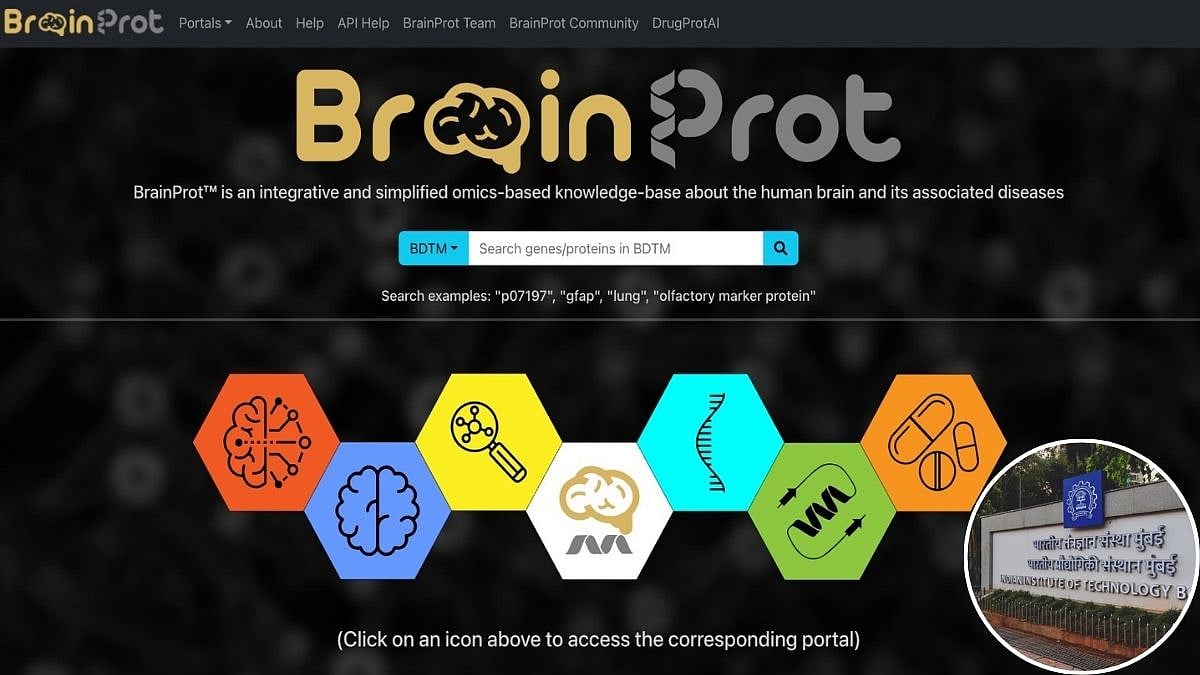
Mumbai, Jan 22: A team of scientists at the Indian Institute of Technology (IIT) Bombay, working with researchers from several institutions in India and abroad, has developed BrainProt v3.0, an advanced biological database that brings together large-scale information related to the human brain.
The platform is designed to help researchers gain deeper insights into brain function and support improved diagnosis and treatment of neurological and psychiatric disorders.
Brain diseases such as Alzheimer’s, Parkinson’s and brain tumours pose complex challenges to researchers. Although a wealth of data exists—from genes and proteins to clinical observations—it is scattered across different databases.
Linking this information is essential to understand how brain diseases develop and progress. BrainProt v3.0 addresses this by integrating genomics, transcriptomics, proteomics and biomarker data into a single platform.




Integrated view of brain disorders
“BrainProt allows researchers to see the connections between genes, proteins and brain diseases all in one place,” said Prof. Sanjeeva Srivastava from IIT Bombay’s Department of Biosciences and Bioengineering. “This integration reduces the time needed to analyse complex data and helps identify patterns that could reveal disease mechanisms.”
The platform includes data on 56 human brain diseases, with 52 multi-omics datasets from over 1,800 patient samples. Users can explore gene and protein activity in various brain regions, compare findings across diseases and track how strongly each marker is supported by scientific studies. BrainProt also provides unique insights into protein differences between the left and right hemispheres across 20 brain regions, a first-of-its-kind feature.
Tools for discovery and drug development
Dr Deeptarup Biswas, lead author of the BrainProt study, said: “By making research outcomes accessible in a user-friendly platform, we allow stakeholders to explore, visualise and interpret the data effectively. This helps accelerate discoveries.”
To help identify the most relevant disease markers, BrainProt calculates the Brain Disease Marker Curator (BDMC) score. This score ranks genes based on how consistently they appear in curated databases and scientific literature for each disease.
“We wanted to ensure that researchers can find the most important markers quickly, much like finding a needle in a haystack,” said Sanjyot Vinayak Shenoy, co-developer of BrainProt.
BrainProt also features the Brain Disease Drug Finder (BDDF), a catalogue linking drugs, chemicals and clinical trials to molecular targets for 53 brain diseases. Complementing this, DrugProtAI uses artificial intelligence to predict whether a protein is likely to be druggable before costly experiments are undertaken.
“DrugProtAI generates a druggability index, helping researchers prioritise proteins that could become effective drug targets,” said Dr Ankit Halder, co-author of the study.
By integrating these tools, BrainProt creates a seamless workflow—from identifying disease markers and examining their activity, to evaluating druggability and exploring existing compounds—all within a single platform.
Also Watch:

Future expansion plans
Both BrainProt and DrugProtAI are publicly available and are regularly updated to incorporate the latest scientific findings. The team plans to expand the platform further by integrating medical imaging and additional data types, aiming to build a comprehensive human brain knowledge base in the coming years.
To get details on exclusive and budget-friendly property deals in Mumbai & surrounding regions, do visit: https://budgetproperties.in/