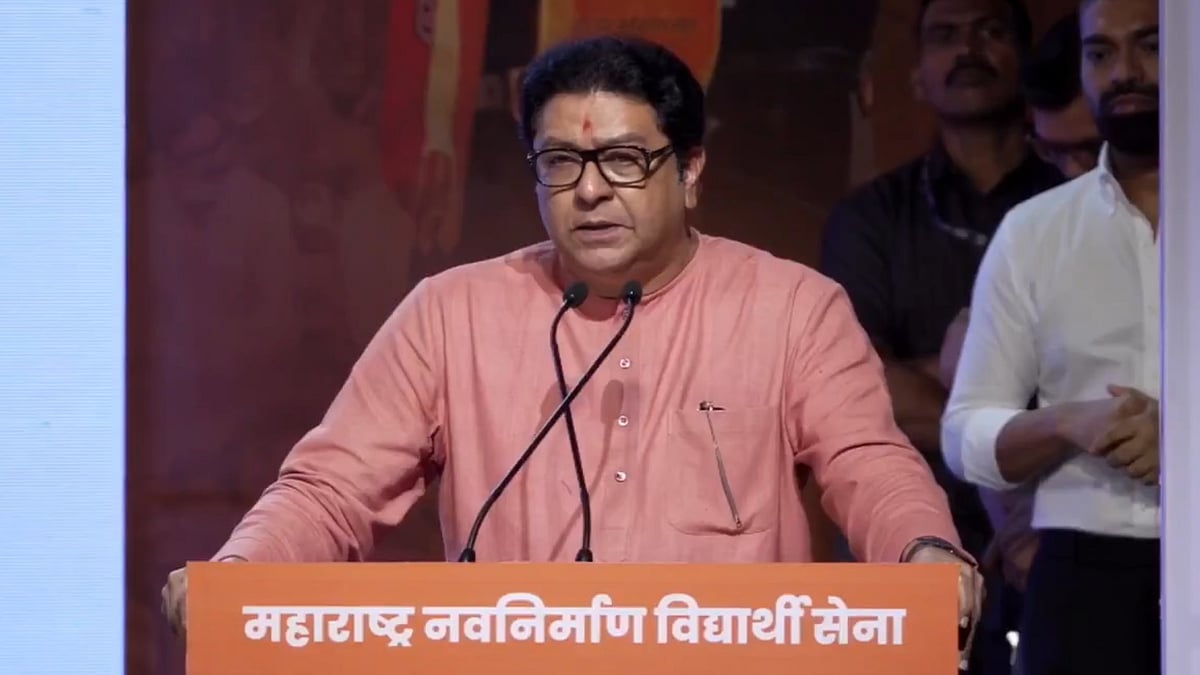
Mumbai: Maharashtra Navnirman Sena (MNS) chief Raj Thackeray on Saturday questioned actors Vivek Oberoi and R. Madhavan for residing in Dubai despite publicly praising Prime Minister Narendra Modi and the BJP-led government's development agenda.
Speaking at a rally marking the 20th anniversary of the Maharashtra Navnirman Vidyarthi Sena (MNVS), the student wing of the MNS, Thackeray said the migration of students, entrepreneurs and professionals reflected growing dissatisfaction over opportunities in India.
Referring to figures he claimed were presented in Parliament, Thackeray said expenditure by Indian families on overseas education had increased sharply. "Today, around ₹5.85 lakh crore is being spent as our children go abroad for education. That money is leaving the country," he said. He also alleged that "thousands of industrialists" had shifted abroad before taking aim at Vivek Oberoi and R. Madhavan.
"Vivek Oberoi, who played Narendra Modi in the film on his life, now lives in Dubai. R. Madhavan, who keeps praising Modi and says the country has changed, has also settled in Dubai. If you love India so much, if you believe Prime Minister Modi has transformed the country, then why are you living abroad? Why are you staying in Dubai with your families?" Thackeray said.
He further alleged that such personalities come to India to work in "government-sponsored films" before returning overseas.
Rally Focused on Youth Issues
The event was organised to commemorate 20 years of the Maharashtra Navnirman Vidyarthi Sena. During his address, Thackeray said the organisation must understand the concerns of both urban and rural youth, particularly in the aftermath of nationwide protests over alleged irregularities in the NEET examination.
He argued that the demonstrations were not driven solely by the NEET controversy but reflected wider frustrations among young people over unemployment, inadequate infrastructure, privatisation, and the lack of educational opportunities.
Thackeray also criticised the government's spending on education, claiming that education expenditure had fallen from 3.2% in 2004 to 2.8% in 2026, while citing issues such as vacant teacher posts, inadequate school infrastructure and the absence of basic facilities in many educational institutions.

