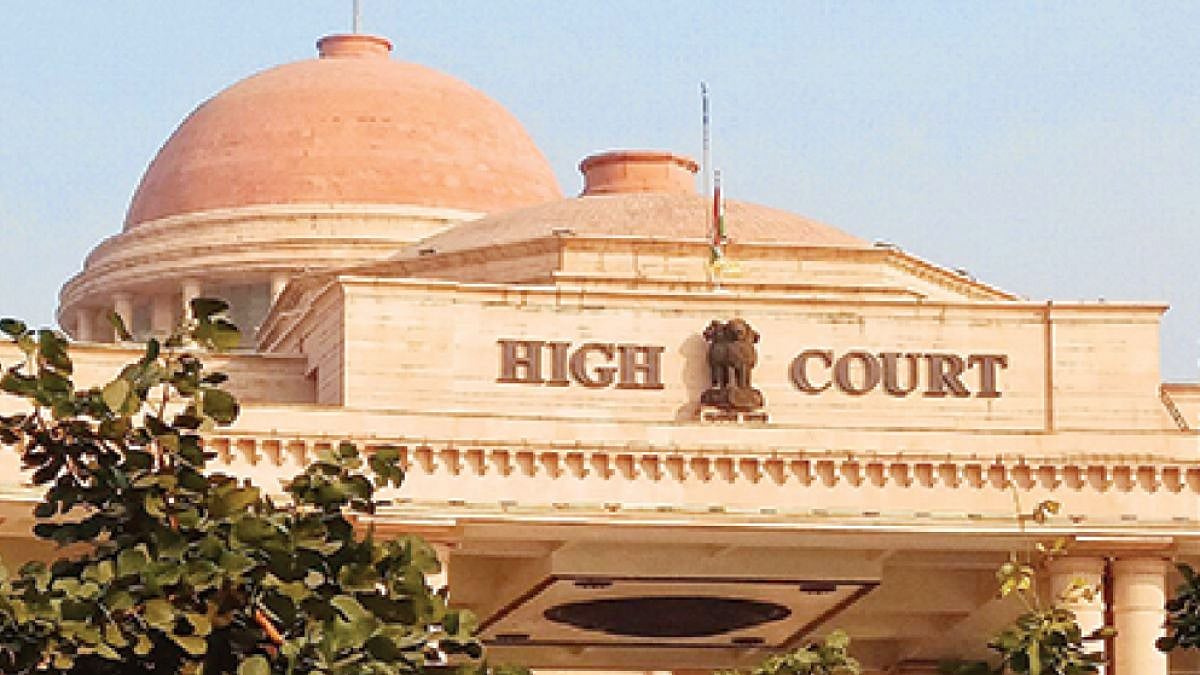
Mumbai, April 3: A candid remark by an Allahabad High Court judge about feeling “hungry, tired and physically incapacitated” after hearing a case at length, after the court working hours, has reignited debate within the legal fraternity about the mounting pressure on judges and the growing burden on India’s judiciary.
“…hearing of this matter was commenced at 4.15 p.m. and it has concluded at 7.10 p.m. Since I am feeling hungry, tired and physically incapacitated to dictate the judgment, the judgment is reserved,” Justice Subhash Vidyarthi of the Allahabad High Court (HC) recorded in his order. The matter was a Supreme Court-expedited matter, and the six-month timeline set by the apex court was expiring on that very day.
Heavy case load before bench
Highlighting the workload before the bench, the court noted that on that day there were “92 fresh matters, 101 regular matters, 39 fresh applications and three matters listed in the additional/unlisted list-I, II and III. Only fresh cases up to serial number 29 could be heard.”
Legal fraternity raises concerns
The order has triggered discussions among the legal fraternity about the pressure faced by the judiciary, with suggestions ranging from increasing the number of judges and holding court on alternate Saturdays to reconsidering court vacations.
Similar concerns have also been flagged at the Bombay HC, where long cause lists often make it difficult to conclude hearings in all listed matters despite judges sitting beyond official court hours — 11 am to 5 pm. At present, the Bombay HC functions with 79 judges, as against the sanctioned strength of 94.
Judges speak about mounting stress
Last week, Justice Ravindra Ghuge of the Bombay HC spoke candidly during a hearing about the stress judges face and urged lawyers to respect the system even while arguing for their clients.
He noted that judges sometimes reprimand lawyers during arguments but do not hold grudges against them, as the same lawyers may receive favourable orders in the very next matter based purely on merit.
“If we carried everything home with us as baggage, by now we would have been in the hospital. The pressure is huge on this side,” Justice Ghuge said.
Past instances of workload challenges
The issue of judicial workload had also come into focus last year when Justice Madhav Jamdar of the Bombay HC attributed a six-month delay in delivering a judgment to his overwhelming workload.
In an 85-page judgment, he explained that the delay in uploading an order — dictated in open court on December 19, 2024 — was due to the volume of pending work that kept him occupied late into the night and on weekends.
He noted that judges often continue dictating orders in their chambers until nearly 11:30 pm after court hours, before spending late nights reading case papers at home — sometimes until 2 am — and again early the next morning. He added that judges frequently work on weekends and holidays to keep up with judicial responsibilities.
Former judges weigh in on reforms
Former judges have echoed similar concerns about the pressure on the judiciary.
Former Bombay HC judge Justice S.J. Kathawalla said appointing more “competent judges” would help ease the burden. “Give more competent judges. You cannot put the burden on a few judges,” he said.
Justice Kathawalla, who at times worked past midnight and even held hearings till 3–4 am, said the growing pendency of cases makes it essential to strengthen judicial strength.
He emphasised that a judge’s workday does not begin and end with court hours. “They have to write judgments and read matters which will come up for hearing the following day,” he said.
Debate on working hours and vacations
Former Bombay HC judge Justice Gautam Patel, however, stressed that “institutional hours must be preserved”, noting that long working hours affect not only judges but also their staff and lawyers. They too must prepare for the next day’s hearings and balance professional responsibilities with family life, he pointed out.
During his tenure on the bench, Justice Patel was mindful of the wellbeing of staff and lawyers, particularly during days of heavy rainfall or disruptions in Mumbai’s local train services, when commuting becomes difficult.
“There is a lot that goes behind the curtains besides the court working hours,” he said.
Commenting on the Allahabad HC order, Justice Patel also expressed reservations about the judge recording his personal condition in a judicial order.
“It is very injudicial to put such a thing in an order. As a judge, you are not there to voice your personal point in a judicial order,” he said, adding that such observations can instead be made during hearings.
Need for systemic solutions
While some voices in the legal fraternity have argued for scrapping court vacations — describing them as a colonial-era practice — former judges say the breaks are essential for the physical and mental wellbeing of judges and court staff.
“Vacations are required; otherwise the judges will get affected. From a distance everything looks good,” Justice Kathawalla said.
Also Watch:
The debate comes amid mounting case pendency across courts in India, with more than five crore cases pending at various levels of the judiciary. Legal experts say that while increasing the number of judges could offer immediate relief, long-term solutions may lie in strengthening mediation and alternative dispute resolution mechanisms to reduce the burden on courts.
To get details on exclusive and budget-friendly property deals in Mumbai & surrounding regions, do visit: https://budgetproperties.in/

