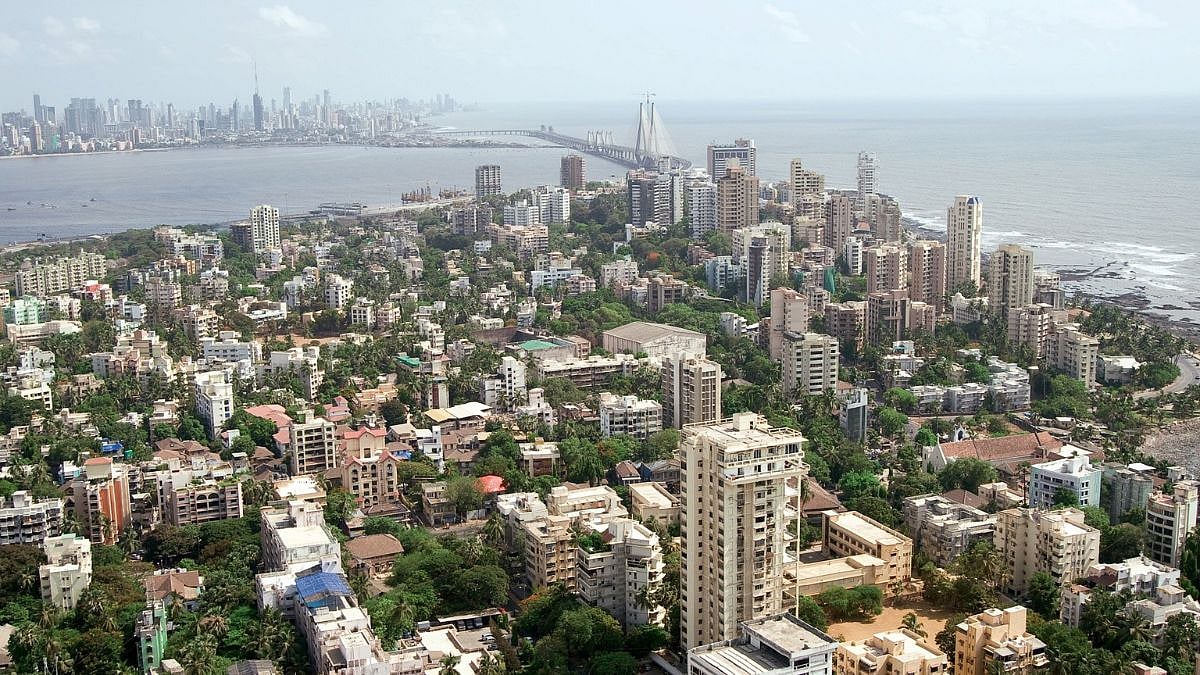
Two societies on adjacent Bandra lanes can run apparently identical redevelopments and end up with materially different tax positions. The difference is rarely the building. It is the structure of the agreement. This article sets out why, what the three common structures do, and the second GST leg transfer of development rights that most society briefings skip.
The thing being taxed is not obvious
The intuitive reading is that the developer builds flats and hands some to members for free, so nothing is being supplied for consideration and nothing should be taxed.
The revenue view runs differently. The developer receives development rights from the society. In return, the developer supplies constructed flats to members. That is an exchange, and each side of an exchange can be a supply.
The Maharashtra Authority for Advance Ruling has followed exactly this reasoning. In In re Sharda Vastu Nirmitee Pvt. Ltd. (Order No. GST-ARA-40/2024-25/215, 30 April 2025), on a redevelopment of Shree Dutta Vihar Co-operative Housing Society Ltd., Thane, the Authority treated units supplied free of cost to existing members, including equivalent area, additional area, amenities, parking, and stamp duty and registration borne by the developer, as a taxable supply of construction services, on the basis that the developer had received development rights in exchange.
The same order treated rent for alternate accommodation, brokerage, shifting charges and corpus (to members and to the society) as part of the consideration paid for those development rights, not as a separate supply by the members. That is this Authority, on these facts. It is not a High Court. It binds the applicant and the jurisdictional officer, not the society next door.
So the phrase “free flats” is a description of the member’s cash outlay, not a description of the tax position.
Where GST is found payable on the rehab component, the rate that is generally applied to specified residential construction commencing on or after 1 April 2019 is 1% (affordable residential apartment) or 5% (other residential), without input tax credit, under Notification No. 3/2019-Central Tax (Rate) dated 29 March 2019. Affordable, for this purpose, is a unit whose carpet area does not exceed 60 square metres in a metropolitan city or 90 square metres elsewhere, and whose consideration does not exceed ₹45 lakh. The GST 2.0 rate revision effective 22 September 2025 left these residential rates unchanged. Sale of a building after issuance of a completion certificate, or after first occupation, is outside GST.
Valuation, on the AAR’s reasoning, is not zero because the member paid no cash. It is the value of similar apartments sold by the developer to independent buyers nearest to the date the development rights were transferred.
Where the High Court actually drew a line
The Nagpur Bench of the Bombay High Court has held that GST under Entry 5B, the reverse-charge entry on transfer of development rights or FSI, does not apply where the agreement does not transfer TDR or FSI as those terms are understood in the planning regulations.
In Shrinivasa Realcon Pvt. Ltd. v. Deputy Commissioner, Anti-Evasion Branch, CGST & Central Excise, Nagpur (Writ Petition No. 7135 of 2024, decided 8 April 2025), a landowner appointed a builder to construct a multi-storeyed building on the landowner’s plot. Consideration was ₹7 crore in cash and two apartments. No TDR or FSI was purchased from any third party; the builder was to use the FSI already available on the plot. The Court (Gharote and Mantri JJ) held that Entry 5B of Notification No. 13/2017-Central Tax (Rate), as amended by Notification No. 5/2019-Central Tax (Rate), speaks of TDR as defined in clause 11.2 of the Unified Development Control and Promotion Regulations, compensation in FSI granted by a planning authority, and not of the contractual right a developer derives from a landowner under a development agreement. The show-cause notices and the demand were quashed. That is a narrow and important distinction. It is also easy to over-read.
Two GST legs, not one
A joint development of a society building typically has two supplies, not one. Competitors who only write about “free flats” leave the second leg out.
Leg 1 — the society’s side. Transfer of development rights or FSI to a promoter, on or after 1 April 2019, is notified as a reverse-charge supply. The promoter pays, not the society. See Entry 5B of Notification No. 13/2017-Central Tax (Rate), inserted with effect from 1 April 2019.
That supply is then partly exempt. Notification No. 4/2019-Central Tax (Rate) exempts TDR or FSI used for construction of residential apartments intended for sale, except where the entire consideration is received after completion certificate or first occupation. The exemption is clawed back on the unbooked residential carpet area as on that date. The tax so payable is capped: it shall not exceed 1% of the value of unbooked affordable apartments, or 5% of the value of other unbooked residential apartments. The commercial portion of the project does not get this exemption; the rate there is 18%.
Time of supply for development rights received against construction of apartments, and for the construction service given in return, is, under Notification No. 6/2019-Central Tax (Rate), the date of the completion certificate or first occupation, whichever is earlier. That is why developers often prefer a joint development agreement even where GST is payable: the cash-out is deferred to OC, not booked on the day the development agreement is signed.
Leg 2 — the developer’s side. Construction of the members’ rehab flats, if it is a taxable supply, is a forward-charge construction service. That is the Sharda Vastu question. The 1% / 5% rates above are the ones generally applied to specified residential construction without ITC.
A society that is told “GST on TDR is exempt for residential” has been told about Leg 1. It has not been told about Leg 2. Ask for both.
Three structures, three positions
Joint development agreement. The society grants development rights to the developer. The developer becomes the promoter under RERA, markets and sells the free-sale flats, and carries the project risk. This is the standard Mumbai structure. Development rights are transferred, so both GST legs are in play on the recognised lines. MahaRERA Circular No. 12/2017 also treats a landowner with an area share or a revenue share as a promoter in that project — which is why the development-agreement clauses that allocate who is “promoter” are not boilerplate.
Development management. The developer acts as a service provider to the society. Development rights stay with the society. The society is the promoter. The developer earns a fee. On the Shrinivasa reasoning, Entry 5B reverse charge on TDR does not arise, because there is no transfer of TDR or FSI. Construction services the manager supplies to the society are a different question, and they are not free of GST merely because TDR was not transferred.
Barter-based construction. Flats are given as consideration for construction, without transfer of development rights. Same caution. Shrinivasa helps on Entry 5B. It does not by itself extinguish GST on the construction.
The second and third structures look attractive on tax. They carry real practical costs. A person who is not the registered promoter cannot independently advertise, market, book or sell apartments (section 3 of RERA). That changes who raises the money, who takes the risk, and who the buyers contract with. Societies that adopt these structures generally do so because they want control, not because they want a tax outcome.
Stamp duty is a separate conversation, and it does not follow the GST analysis. See stamp duty on redevelopment.
What this means if you are a society member
Four practical points.
· First, ask which structure your draft agreement uses, and ask who is the promoter under RERA. The answer determines a great deal beyond tax.
· Second, ask who bears GST under the agreement — on the rehab units, and on any reverse-charge TDR. Where GST is payable on the units supplied to members, the agreement should say expressly that the developer bears it. Silence in a draft has, in practice, sometimes been read against members.
· Third, treat any promise of a “GST-free structure” as a claim to test rather than a benefit to bank. The structures that reduce exposure to Entry 5B also transfer project responsibility to the society. That may be the right trade. It is a trade.
· Fourth, if the developer is valuing your “free” flat for GST at the price of a free-sale flat sold to an outsider, that is the AAR’s valuation method. It is not a number you should first see on an invoice.
What this means if you are buying a free-sale flat
Your position is more conventional. You are buying an apartment from a promoter, and GST on under-construction residential apartments applies on the ordinary basis, 1% or 5% without ITC, unless the entire consideration is paid after completion certificate or first occupation.
What matters to you is that the rate and the amount are stated in your agreement, that the developer’s own input position is not being passed to you through some other head, and that no part of the members’ rehabilitation cost is being recovered from you as a separate charge.
Read the payment schedule and the “other charges” annexure together. That annexure is where costs migrate.
The honest summary
There is no single answer to “is GST payable on redevelopment”. There is an answer for your structure, on your facts, and it should come from a tax practitioner who has read your agreement rather than from a brochure or from this page.
What you can do without a practitioner is identify which of the three structures you are in, and whether both GST legs have been priced. That takes one clause, and one line in the financials.
FAQ
Are flats given to society members in redevelopment taxable under GST?
A Maharashtra advance ruling (Sharda Vastu Nirmitee, 30 April 2025) has treated units supplied free of cost to members as a taxable supply of construction services, on the reasoning that the developer received development rights in exchange. The ruling binds only that applicant. The position is fact-specific and contested.
Is there any structure where GST does not arise?
The Bombay High Court (Shrinivasa Realcon, 8 April 2025) has held that reverse-charge GST under Entry 5B does not apply where the owner engages a builder without transferring TDR or FSI as defined in the planning regulations. That is not a holding that construction services are GST-free, and it is not a typical society redevelopment. Do not bank a “GST-free” claim on the citation alone.
Who pays the GST on the members’ flats?
Whoever the agreement says, as between society and developer. As against the department, the supplier of the construction service is the person who must discharge the tax. Where the agreement is silent on who bears the economic burden, disputes follow. Have it stated expressly.
Does GST apply to transit rent and corpus?
In Sharda Vastu, rent, brokerage, shifting charges and corpus were treated as part of the consideration for development rights, not as a separate taxable supply by the members. That treatment is not settled for every project. Take it up with a practitioner who has read your agreement.
Is GST payable on the society’s transfer of development rights?
From 1 April 2019, the promoter generally pays GST under reverse charge on TDR or FSI received for construction of a project (Entry 5B). A residential exemption applies to the extent apartments are booked before completion certificate or first occupation; the unbooked residential slice is clawed back, subject to a 1% / 5% cap. Commercial area is not exempt. Time of supply is generally completion or first occupation (Notification No. 6/2019-Central Tax (Rate)).
What is the GST rate on an under-construction free-sale flat in 2026?
Specified residential construction commencing on or after 1 April 2019 is generally 1% (affordable) or 5% (other residential), without input tax credit, under Notification No. 3/2019-Central Tax (Rate). Those rates were not changed in the September 2025 GST 2.0 revision. No GST applies if the entire consideration is received after completion certificate or first occupation.
This article is part of Pantheion Real Estate’s Insights on Mumbai Redevelopment series. Pantheion specialises in society and luxury redevelopment projects in Bandra West and Khar West, with a focus on design-led, neighbourhood-sensitive development. The views expressed draw from the firm’s work on projects such as Palmera (Bandra West) and Luminaara (Khar West).
Have a specific question about the redevelopment process for a society in Bandra or Khar? We are happy to share practical observations from projects we have worked on.

