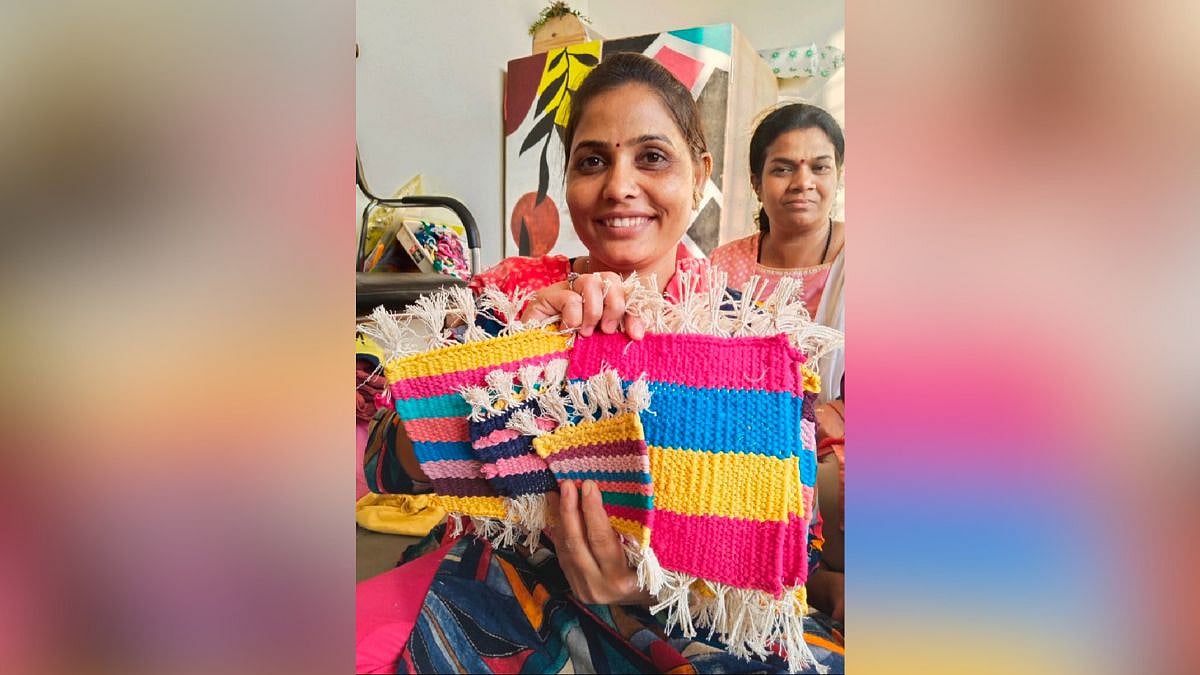
What was once discarded as waste is now becoming a source of dignity, income and environmental change in Navi Mumbai. Under the Swachh Bharat Mission–Urban 2.0, the Navi Mumbai Municipal Corporation (NMMC) has turned textile waste into an opportunity reshaping not just waste management practices, but lives across the city.
India's First Municipal Textile Recovery Facility in Belapur Leads the Way
At the heart of this transformation is the Textile Recovery Facility (TRF) in Belapur, India’s first municipal initiative of its kind. But beyond technology and systems, the real story lies in the people driving this change—particularly women from self-help groups who are now at the forefront of a growing circular economy.
Across housing societies, textile bins have are being placed . Officials informed that 140 bins have been placed and 250 more are to be installed.
Over 1.14 Lakh Households Reached Through 75 IEC Workshops
"Families are no longer simply discarding old clothes; they are contributing to a larger movement. Over 1.14 lakh households have already been reached, through outreach efforts, conducted over 75 IEC workshops and onboarded 350+ society representatives, reflecting how citizen involvement is central to the initiative’s success," said an official.
At the interim TRF, established in a repurposed urban health centre in Belapur, the focus is on Scientific Sorting and Traceability. Collected textiles are weighed, tagged and systematically categorised into reusable, recyclable, upcyclable, down cyclable and reject streams.
Discarded Sarees and Denim Reimagined into Bags, Mats, and Home Décor
Inside the TRF, discarded sarees, uniforms, denim and household fabrics are carefully sorted, cleaned and reimagined. " Bags, mats, garments and home décor items are handcrafted by local women, giving new life to materials that would have otherwise ended up in landfills," said the official.
For many women, this initiative has been life-changing. Over 150 women are now earning between Rs 9,000 and Rs 15,000 per month through textile sorting and upcycling work. “This has given homemakers a chance to step into skilled work and earn with dignity,” officials said, highlighting the shift from dependency to empowerment.
300+ Women Trained in Fibre Identification, Repair, and Upcycling
Training has played a key role in this journey. More than 300 women have undergone structured programmes to learn fibre identification, repair techniques and upcycling skills—transforming them into contributors to a sustainable urban economy.
The impact extends beyond livelihoods. The initiative has processed over 41,000 textile items and recovered more than 25 metric tonnes of waste, significantly reducing the burden on landfills.
Innovative experiments, such as producing paper from rejected textile waste, are underway.
Equally important is the growing awareness among citizens. Through workshops, exhibitions and community engagement, the idea of reuse and recycling is slowly becoming part of everyday life. Residents are not just consumers anymore—they are participants in sustainability.
Challenges such as initial resistance and lack of awareness did emerge, but were overcome through continuous outreach and community involvement. Today, the project stands as a model of how urban initiatives can succeed when people are placed at the centre.
With plans for a higher-capacity Textile Recovery Facility in Koparkhairane near Nisarg Udyan, Navi Mumbai’s textile recovery model is set to expand its impact
offering a glimpse into how cities can tackle waste while empowering communities.
To get details on exclusive and budget-friendly property deals in Mumbai & surrounding regions, do visit: https://budgetproperties.in/
