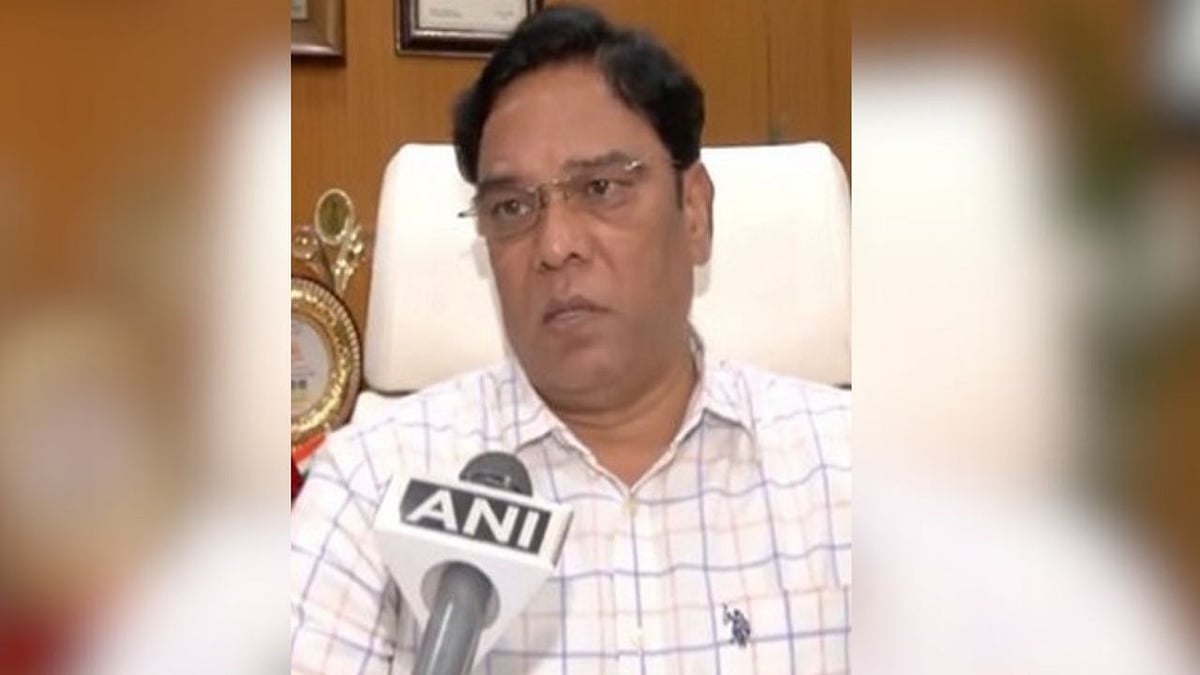
Mumbai witnessed an unusual winter this year. January and February were two of the hottest months, with maximum temperatures crossing 38 degrees Celsius. Additionally, the summer 2025 outlook released by the Indian Meteorological Department (IMD) has forecasted above-normal temperatures from March to May. With the change in weather conditions, the Free Press Journal spoke with IMD Mumbai Director Sunil Kamble on the reasons behind soaring temperatures.
The Excerpts From The Interview
Q1. Mumbai witnessed its third hottest January this year and a heatwave in February. What are the reasons for this sudden weather change in the winter season?
Answer: February is the transition period and Mumbai receives easterly winds, which are dry, resulting in a rise in mercury towards the end of the month. This is a yearly phenomenon. While in January, we receive western disturbances due to snowfall in the Jammu Kashmir region. However, this year, there was no severe snowfall. The snowfall was moderate, which resulted in a rise in the mercury.
Q2. IMD’s outlook for summer 2025 predicts heat waves and above-normal temperatures in Mumbai from March to May…
Answer: Everyone has accepted climate change and the rise in temperatures globally by one to two degrees. Considering the prevailing weather conditions in western India and global climate change, the temperatures in summer are most likely to be 1 or 2 degrees above normal. Additionally, we did not receive strong westerly winds in the winter as expected, due to which the minimum temperature did not fall much.
Q.3 Will the above normal temperatures in summer affect the monsoon?
Answer: The outlook for the monsoon 2025 will be released by the end of April. However, the unseasonal rains the state receives in March are predicted to be within the normal range. The region gets rainfall with thunderstorms in March because of the rise in temperatures.
Q.4 What precautions should citizens take during the soaring temperatures and heat waves of the summer?
Answer: Whenever heatwave warnings are issued, citizens, especially the senior citizens and children should take health precautions for the next two to three days. Most importantly, they should avoid prolonged exposure to sunlight, especially from 2 to 4 pm, be hydrated by drinking plenty of water and juices and wear loose cotton clothes.
Q.5 The Air Quality Index (AQI) in Mumbai worsens in the winter season. How weather conditions play a role in AQI.
Answer: Every year in November-December we record poor AQI and there are several factors to it. Change in wind patterns, calmer winds and at the same time increased construction activities post-monsoon contribute to poor AQI. Due to calm winds, the dust particles do not settle on the and stay suspended mid-air for a longer period because of which we record poor AQI. As the winds get stronger, AQI improves.
Q.6 IMD this year is celebrating its 150th anniversary. On this occasion, PM Modi launched the IMD Vision 2047, also known as Mission Mausam. What are its main highlights?
Answer: We are doubling the network of doppler weather radar and starting more balloon stations- that is balloons that can take observations up to 40 km from the ground. At the same time, we are increasing the network of observations. The more observations, the more weather prediction reliability. We have already installed six radars in Mumbai, and in the next two years, doppler radars will be installed in cities like Nashik, Pune, Solapur and Chhatrapati Sambhajinagar.
Q.7 Union minister of state Dr Jitendra Singh recently said IMD’s weather prediction has increased by 50% in the last 10 years. What technological advancements has IMD worked on to achieve this?
Answer: The increased observational network and monitoring have increased the numerical predictions. We have also invested in research because of which IMD’s prediction capabilities have increased. We have also increased the predictability of monsoons at the highest level.

Q.8 But Mumbaikars complain that IMD issues warnings for heavy rainfall and flash floods at the last moment, giving them hardly any time to be prepared…
Answer: We issue predictions 48 hours in advance, but when there are extreme weather events like thunderstorms, lightning and flash floods, the warnings are issued in Nowcast, which is three to four hours before the extreme weather event. The Nowcast is posted on the IMD official website, X handle and disaster managers and emergency control rooms are also informed. The disaster management authorities have to take further action in informing the citizens via sms, email etc based on IMD inputs.
