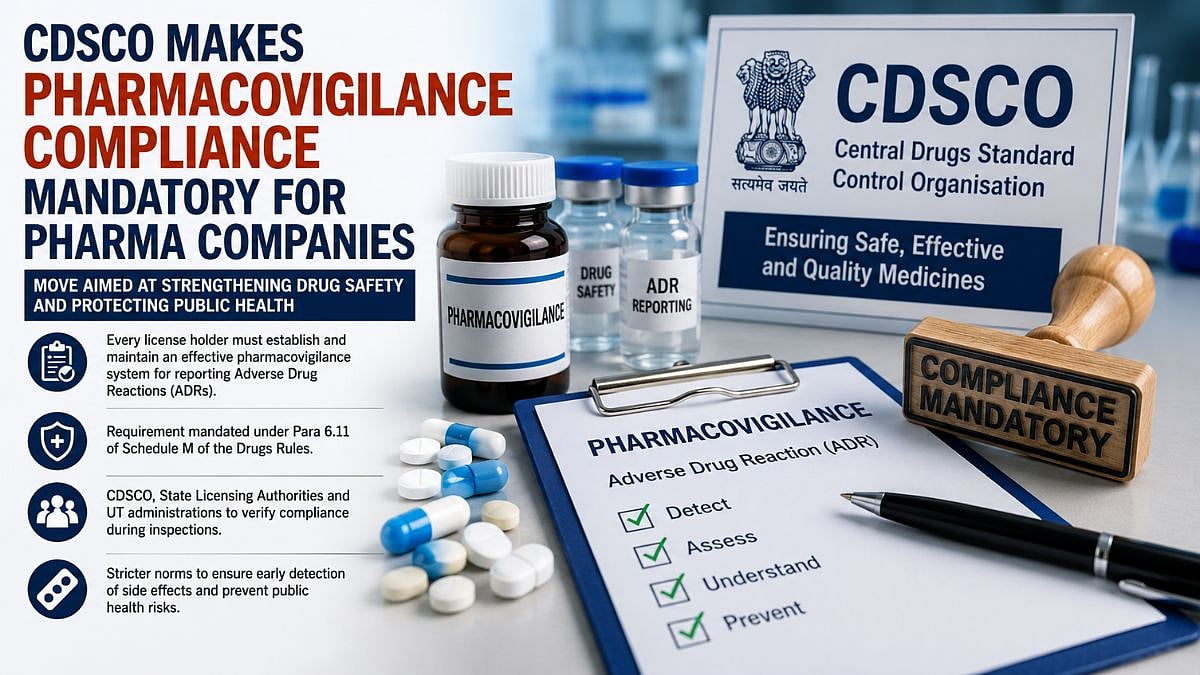
Mumbai, June 6: In order to prevent the possibility of unexpected side effects of medicines, India’s apex drug regulator has tightened pharmacovigilance and drug safety monitoring norms for pharmaceutical companies across the country. Cases of side effects from medicines were reported only after they had already been widely used.
In a circular issued early this week, the Central Drugs Standard Control Organisation (CDSCO) reminded drug manufacturers and other stakeholders that they are required to establish and maintain effective pharmacovigilance systems for collecting and reporting adverse drug reactions associated with medicines they manufacture or market.
The circular, issued by DCGI Dr Rajeev Singh Raghuvanshi, refers to Para 6.11 of Schedule M, which mandates that every licence holder must have a pharmacovigilance system in place for collecting, processing and forwarding reports related to adverse drug reactions (ADRs) arising from the use of drugs manufactured or marketed by them.
Schedule M and GMP norms
Schedule M lays down Good Manufacturing Practices (GMP) and quality standards for pharmaceutical manufacturing units in India. It includes norms related to factory premises and hygiene, equipment and manufacturing processes, quality control systems, documentation and record keeping, staff qualifications and training, storage and distribution, and pharmacovigilance and adverse drug reaction monitoring.
The provisions apply to manufacturers producing a wide range of medicines, including tablets, capsules, syrups, injections, antibiotics, vaccines, sterile products, biological products, and medical products requiring special storage or handling. Separate GMP provisions are also applicable for Ayurvedic, Siddha and Unani medicines.
The recent amendments to Schedule M have strengthened compliance requirements by aligning Indian GMP standards more closely with global benchmarks laid down by the World Health Organization (WHO).
Post-marketing surveillance
The circular assumes significance after contaminated cough syrups allegedly containing toxic substances such as diethylene glycol (DEG) and ethylene glycol were linked to multiple child deaths abroad, triggering worldwide concerns over pharmaceutical quality control and post-marketing surveillance mechanisms.
Health experts say the latest pharmacovigilance directive is a crucial step towards improving post-marketing surveillance, early detection of adverse drug reactions, and accountability among pharmaceutical manufacturers.
A robust PV system can help regulators identify safety signals early, initiate product recalls where necessary, and prevent large-scale public health crises.
Also Watch:

According to the circular, officers from the Central Drugs Standard Control Organisation (CDSCO), State Licensing Authorities (SLA), and Union Territory administrations may verify adherence to these pharmacovigilance requirements during routine inspections and other regulatory activities.
To get details on exclusive and budget-friendly property deals in Mumbai & surrounding regions, do visit: https://budgetproperties.in/

