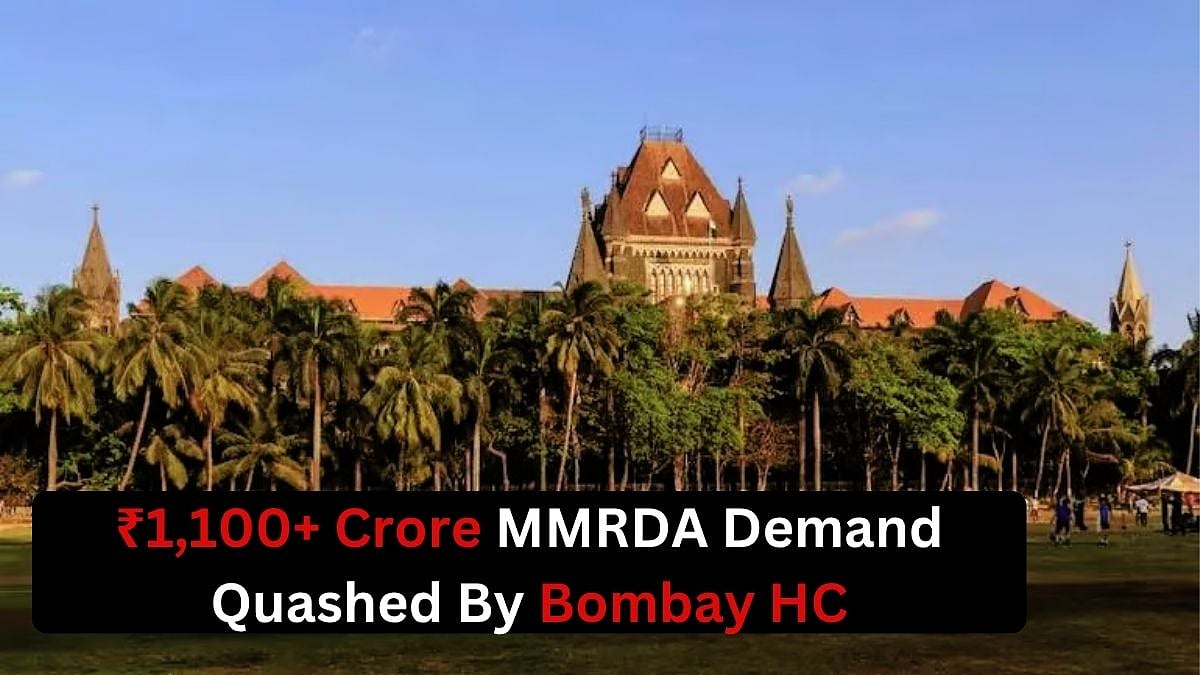
Mumbai: The Bombay High Court on April 8 set aside demands exceeding Rs 1,100 crore raised by the Mumbai Metropolitan Region Development Authority against Reliance Industries Limited over alleged delays in completing a convention-cum-commercial project in the Bandra-Kurla Complex (BKC).
According to a Bar and Bench report, a division bench comprising Chief Justice Shree Chandrashekhar and Justice Suman Shyam ruled that the additional premium imposed by MMRDA was 'illegal, arbitrary and violative of Article 14 of the Constitution.'
The court quashed a 2017 demand-cum-show cause notice and a 2019 communication through which MMRDA had sought Rs 1,116.83 crore from Reliance as additional premium for extending the construction timeline. It further directed the authority to refund Rs 646.77 crore already recovered from the company under protest within 90 days. The court added that failure to comply would attract interest at the same rate MMRDA charges lessees for delayed payments.
BKC Lease & Expansion Of Development Rights
The dispute dates back to 2006, when Reliance was leased approximately 1.15 lakh square metres of land in BKC for Rs 1,104 crore. Over time, MMRDA increased the permissible Floor Space Index (FSI), allowing additional development on the same plot. This expanded the total development potential to 3.12 lakh square metres, for which Reliance paid an aggregate premium of Rs 4,005 crore.
According to the report, a key issue before the court was whether the original and later added areas could be treated separately for determining construction deadlines. The bench held that the project was conceived as a single composite structure and could not be artificially segregated for such purposes.
Court Rejects MMRDA’s Stand, Orders Refund of Excess Recovery
MMRDA had argued that the construction was required to be completed within four years of the lease agreement and that any delay, regardless of reasons such as regulatory approvals or court-imposed restrictions, would attract an additional premium. However, the court rejected this contention, ruling that time was not an essential condition of the lease.

The bench clarified that the construction period should be calculated from the date of the first commencement certificate, issued in June 2008. It also held that MMRDA’s 2015 policy extending the construction period from four to six years could not be applied selectively to leases executed after August 2015.
Terming the pre- and post-2015 distinction as arbitrary and discriminatory, the court extended the benefit of the six-year period to Reliance, placing it on par with similarly situated lessees.
Importantly, the court observed that payments made by Reliance were under coercion, as the company faced the threat of lease termination and denial of occupation certificates. Such payments, it held, were liable to be refunded.
To get details on exclusive and budget-friendly property deals in Mumbai & surrounding regions, do visit: https://budgetproperties.in/

