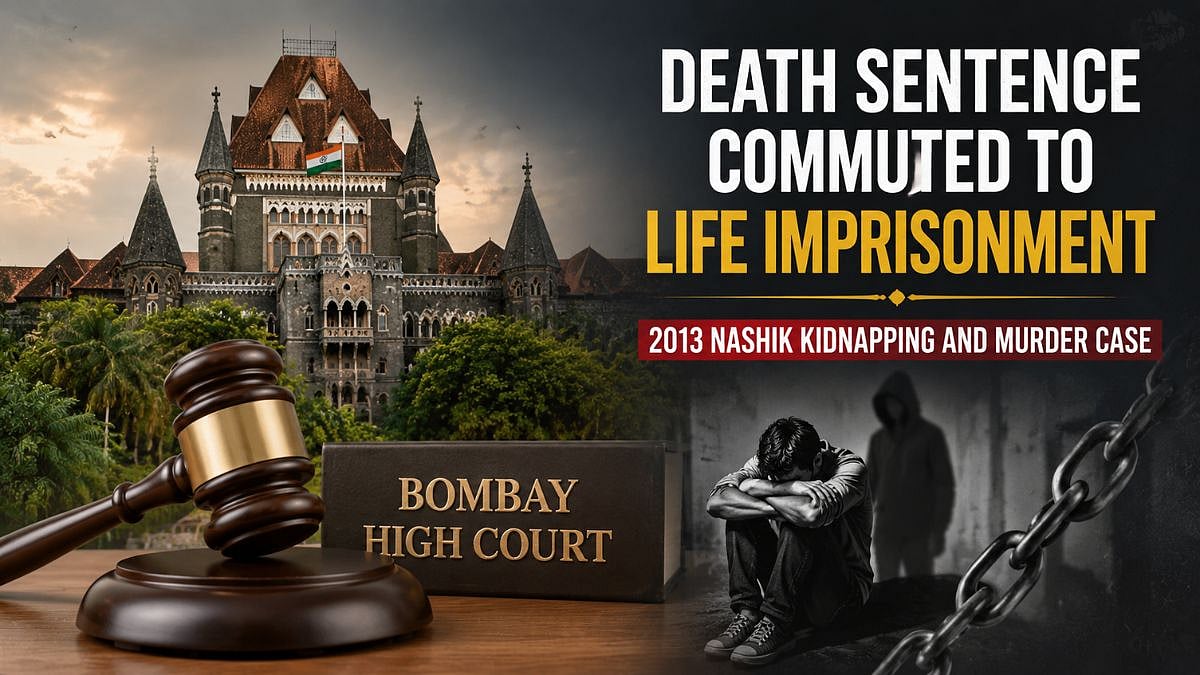
Mumbai, July 9, 2026: Observing that two young men were lured by the prospect of easy wealth into kidnapping and murdering a college student for ransom, the Bombay High Court has commuted their death sentence to life imprisonment. The court held that the crime, though brutal and premeditated, did not fall within the “rarest of rare” category.
A bench of Justices Bharati Dangre and Manjusha Deshpande upheld the conviction of Chetan Yashwantrao Pagare and Aman Prakatsingh Jat for kidnapping Nashik youth Vipin Bafna for ransom, murdering him and destroying evidence, but modified the sentence imposed by the trial court.
The 71-page judgment, delivered on June 25 and made available this week, said the accused, aged 25 and 22 at the time of the offence, were driven by the desire to become wealthy through illegal means.
“We must note that the accused persons… were two young persons and, in an attempt to acquire wealth by foul means… chose a simple mechanism of abducting a boy known to them,” the bench observed.
Court Declines Death Penalty
The judges noted that while the murder was “abhorrent”, involving multiple injuries and disposal of the body at an isolated place, “that itself is not sufficient to categorise the case in the ‘rarest of rare’ category for imposition of death sentence.”
The court also took note of the fact that although criminal cases had been registered against the accused, they had not been convicted in any of them.
“They were not even professional killers but were lured by the temptation of wealth pursuit,” the bench said. The judges observed that when the ransom calls failed, the accused, “typical of young men, being impulsive,” decided to eliminate the victim, fearing he would expose them if released.
The bench described the kidnapping, confinement and murder of Bafna as a “preplanned and concerted effort” and said the crime was “inhuman, cruel and ruthless”, deserving a stern punishment.
“But when we proceed to answer the question whether it is one of the ‘rarest of rare’ cases, our answer is in the negative,” the judges held. “Imposition of every penalty is intended to create a deterrent effect, but it is not every murder where the Court is justified in imposing a death sentence.”
Conviction Upheld
The bench found that the prosecution had established an unbroken chain of circumstantial evidence, including witness testimony, recoveries, forensic evidence, call detail records and video recordings recovered during the investigation, proving the guilt of the accused beyond reasonable doubt.
Also Watch:

The court accordingly dismissed the convicts’ appeals against their conviction and allowed their appeals on sentence, commuting the death penalty to imprisonment for life.
The court also disposed of the State’s confirmation case seeking confirmation of the death sentence. Any death sentence awarded by a trial court has to be confirmed by the High Court.
To get details on exclusive and budget-friendly property deals in Mumbai & surrounding regions, do visit: https://budgetproperties.in/

