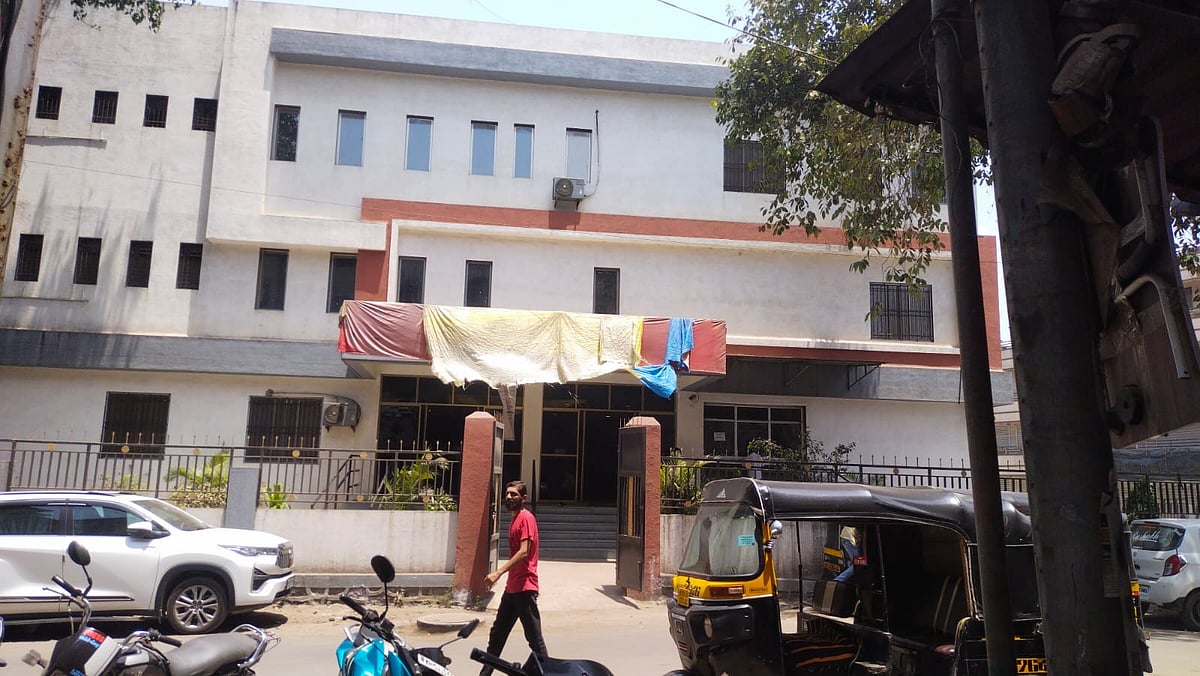
Bhiwandi: For thousands of poor, working-class and middle-class families in Bhiwandi, access to affordable healthcare remains a major concern. At a time when treatment in private hospitals is increasingly expensive, the civic administration's decision to hand over the management of its newly constructed Bai Gulbai Petit (BGP) Hospital in Mandai to a private agency for 10 years under a Public-Private Partnership (PPP) model has raised serious questions about the future of public healthcare in the city.
The Bhiwandi-Nizampur City Municipal Corporation (BNCMC) Health Department issued a tender on November 5, inviting private agencies to operate and maintain the hospital for a decade. The estimated contract cost is Rs 4 crore. While the arrangement is being projected as a way to operationalise the hospital and provide medical facilities, the tender conditions have triggered concerns over treatment costs, free healthcare for economically weaker patients and the corporation's accountability towards residents.
The larger question is why a municipal hospital, built with public money to serve local residents, cannot be directly operated by the civic body. Bhiwandi has a substantial population of powerloom workers, daily-wage labourers and economically weaker families, for whom even routine medical expenses can become a financial burden.
From IGM to BGP, hopes of a municipal hospital remain unfulfilled
The issue assumes significance because BNCMC does not currently have an independently operated municipal hospital serving the city's population. The Indira Gandhi Memorial (IGM) Hospital was handed over to the Maharashtra government's Health Department on October 29, 2011. Residents subsequently looked towards the BGP Hospital as an opportunity for the civic body to establish its own hospital and provide affordable treatment.
Constructed at the site of the old BGP dispensary in Mandai, the new hospital is proposed to have 50 general beds, five Neonatal Intensive Care Unit (NICU) beds and two Intensive Care Unit (ICU) beds, taking its planned capacity to 57 beds. The facility was expected to strengthen local healthcare infrastructure and reduce residents' dependence on expensive private hospitals. However, the proposed PPP arrangement has raised concerns that the management of another important public healthcare facility is being placed in private hands.
15% rate escalation every three years
A significant provision in the tender is the proposed 15 per cent increase in the basic per-bed, per-day rate after every three years. Payments to the private agency will be linked to actual bed occupancy. The payment is intended to cover medicines, diagnostic investigations, surgeries, meals for patients, ambulance services and salaries of medical and other staff.
This raises an important question about the long-term financial commitment of the municipal corporation. With a 15 per cent escalation every three years, how much additional expenditure will the civic body incur over the 10-year contract? Will the increased expenditure translate into better facilities and affordable treatment, or will the financial arrangement primarily benefit the private operator? The administration needs to make the proposed payment structure and its financial implications public.
Free treatment guarantee needs clarity
The tender mentions that the first laboratory investigation and the first sonography will be provided free of charge. Subsequent investigations and sonography can be charged at rates prescribed under the Central Government Health Scheme (CGHS).
However, the conditions do not provide sufficient clarity on the complete range of free services available to poor patients. Will economically weaker patients receive free consultations, medicines, surgeries and hospitalisation? Will there be a defined quota of free beds? What mechanism will prevent patients from being asked to pay additional charges for services covered under the contract?
These are crucial questions for families who depend on public healthcare. The corporation must disclose a clear list of free and chargeable services before finalising the agreement. It must also establish a transparent grievance redressal mechanism and penalties for any violation of patient rights.
250-bed experience required for a 57-bed hospital
The tender requires participating agencies to have an average annual turnover of Rs 5 crore over the preceding three financial years, bank solvency of Rs 50 lakh and experience in operating a 250-bed hospital.
Since BGP Hospital has a proposed capacity of only 57 beds, the requirement of experience in running a 250-bed facility has raised questions about the technical rationale behind the eligibility criteria. The administration should explain why such a condition is necessary and whether it could restrict participation by smaller but competent healthcare organisations.
Civic responsibility cannot be outsourced
Section 63(6) of the Maharashtra Municipal Corporations Act, 1949, includes the maintenance of public hospitals and dispensaries among the obligatory duties of a municipal corporation. Even if operational responsibilities are assigned to a private agency, the corporation remains accountable for ensuring public access, service quality and patient welfare.
Manoj Shrivastav president of Swadheen Sanstha criticised the move, linking it to the civic body's proposed plan to outsource property tax collection from commercial properties. He questioned why the corporation was unable to provide basic services directly to residents. He said that if the administration failed to reconsider the decision, his organisation would launch a public agitation.

Dr Intikhab Alam Bhiwandi city president of MPJ, said the BGP Hospital had remained ready for inauguration for years, but instead of being directly operated by the corporation, it was now being handed over to a private agency through a tender issued without adequate public discussion. He expressed disappointment over the silence of nominated public representatives on an issue affecting the city's poor and working-class population.
Both representatives warned of a public agitation against the proposed arrangement.
For residents, the issue is not merely who will manage a hospital, but whether a facility built for public welfare will remain affordable and accessible to those who need it most. Before finalising the 10-year agreement, BNCMC must publicly clarify the free-treatment guarantees, user charges, monitoring mechanism, financial obligations and safeguards against exploitation of patients. Public healthcare cannot be judged only by the number of beds or the infrastructure created; its real measure is whether an ordinary citizen can afford treatment when illness strikes.
To get details on exclusive and budget-friendly property deals in Mumbai & surrounding regions, do visit: https://budgetproperties.in/

