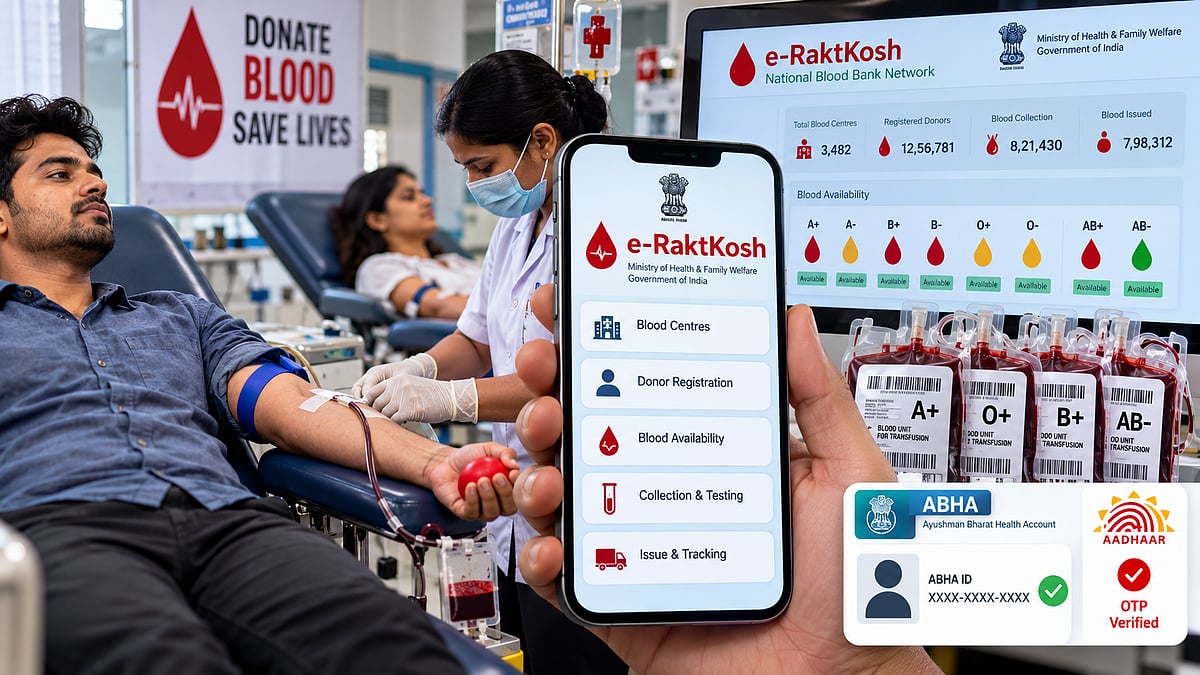
Mumbai: People needing blood in emergencies could benefit from a proposed nationwide digital tracking system that would allow blood centres to access more reliable information on blood donation, while helping prevent deferred or high-risk donors from donating at multiple centres.
e-RaktKosh Registration Proposed
The Drugs Technical Advisory Board (DTAB) has recommended statutory provisions under the Drugs Rules, 1945, making registration of blood centres on the government’s e-RaktKosh portal mandatory. Blood centres would also have to upload data related to blood collection, testing and issuance.
The proposal also seeks authentication of blood donors through their Ayushman Bharat Digital Mission (ABDM) ID/ABHA or Aadhaar-linked OTP verification. The recommendations were made at the DTAB’s 94th meeting on August 27, 2026.
Patients Could Benefit
For patients and their families, the proposed system could mean better visibility of blood availability and a more reliable record of blood movement from collection to testing and issuance. In an emergency, such a centralised system could help blood banks and authorities identify available blood resources more efficiently, although the proposal itself does not guarantee that a particular blood group will always be available.
For donors, digital authentication could create a record of their donations and enable post-donation follow-up. It could also reduce the possibility of a donor who has been temporarily deferred for health or safety reasons donating at another centre without the relevant information being known.
Blood Banks Get Centralised Data
For blood banks, mandatory e-RaktKosh registration and data uploading could help create a more standardised record of blood collection, testing and issue. It could also improve coordination between centres and authorities during situations where there is an urgent requirement for particular blood groups.
The move follows deliberations at the 69th meeting of the Drugs Consultative Committee (DCC) on June 24, which recommended mandatory registration of blood centres on e-RaktKosh and uploading of relevant data. A sub-committee was subsequently constituted to examine donor authentication, including biometric authentication at blood centres and donation camps.
The sub-committee recommended authentication through ABDM ID/ABHA or Aadhaar-linked OTP verification for donor traceability and follow-up. DTAB has now recommended incorporating the necessary provisions into the Drugs Rules.
However, the recommendation is not yet a legal requirement. The proposed provisions will have to go through the prescribed regulatory process before they become enforceable.
To get details on exclusive and budget-friendly property deals in Mumbai & surrounding regions, do visit: https://budgetproperties.in/

