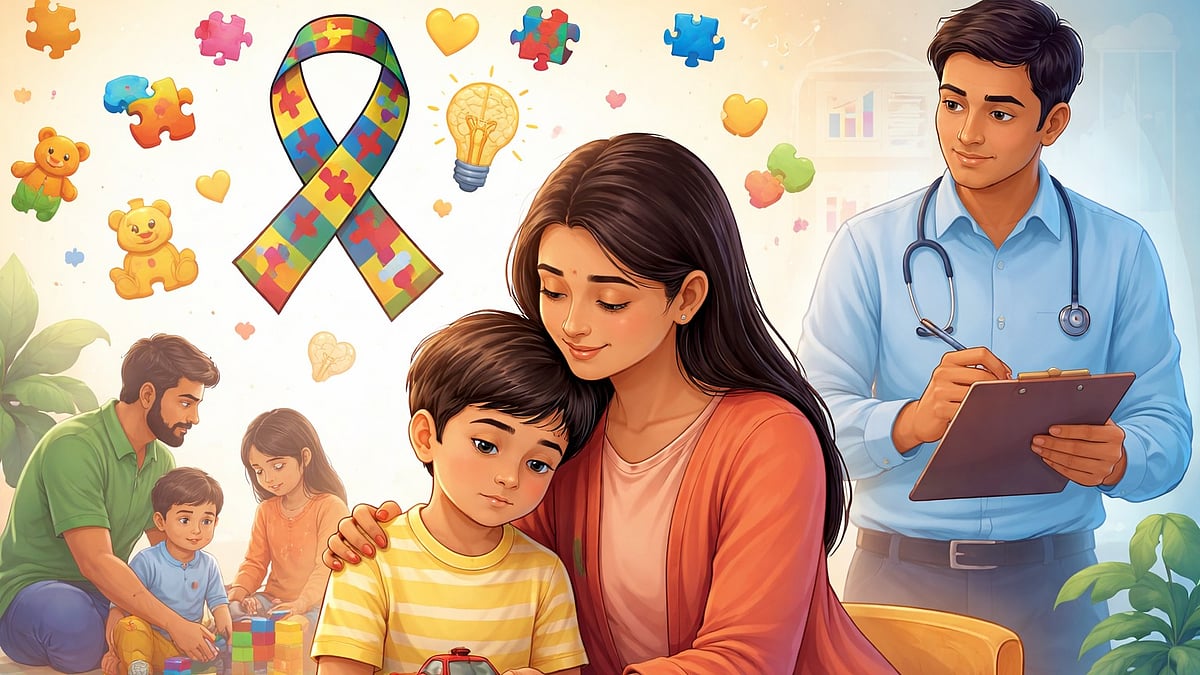
Mumbai: Sushmita was a quiet child, but her parents grew concerned when she stopped using the few words she had learned and began avoiding eye contact. She spent long hours lining up toys and resisted any change in routine. Initially dismissed as a phase, these behaviours gradually pointed to something more significant.
Sushmita's Journey from Silence to Smiles Highlights Power of Early Intervention
A diagnosis of Autism Spectrum Disorder (ASD) brought both fear and clarity. With early therapy and consistent support, Sushmita slowly began to reconnect—first through a smile, then gestures, and eventually words. “We learned to celebrate every small victory,” her mother says.
ASD is now increasingly recognized as a major developmental concern worldwide. Current estimates suggest that 1 in 100 to 130 children are affected globally, with some regions reporting rates as high as 1 in 36. In India, earlier estimates of 0.1% are now considered outdated. Recent urban data indicates prevalence closer to global figures, pointing to years of underdiagnosis rather than a genuinely low incidence.
Underdiagnosis in India Led to Historically Low Estimates, Experts Clarify
With increasing awareness and improved diagnostic practices, the understanding of ASD in children is evolving rapidly, says Dr. Aarti Javeri, Doctorate of Medicine in Pediatric Neurology at Sir H.N. Reliance Foundation Hospital. “The earlier lower numbers in India were largely due to underdiagnosis rather than rarity of the condition,” she explains.
Doctors emphasize that autism is a complex, lifelong neurodevelopmental condition affecting communication, behaviour, and social interaction. Dr. Viraj Sanghi, Senior Consultant – Paediatric Neurology, explains, “The word ‘spectrum’ is key — autism presents differently in every individual, ranging from those who need substantial daily support to those who live and work independently. Core features typically include differences in language development, social communication, the presence of repetitive behaviours or focused interests, and variations in sensory processing.”
Delayed Diagnosis in India Remains Major Challenge Despite Early Onset Signs
ASD typically manifests within the first two years of life due to early differences in brain development. However, delayed diagnosis remains a major challenge in India. Dr. Arun Shah, Director of Neurology at Sir. H.N. Reliance Foundation Hospital notes, “Although autism can often be identified as early as the age of two, many children are diagnosed much later. This delay reduces the effectiveness of early intervention, which is crucial for improving developmental outcomes.”

In recent years, steps have been taken to bridge these gaps. The Rights of Persons with Disabilities Act, 2016 recognizes autism as a disability and provides a framework for support in education and employment. There is also growing emphasis on inclusive education and structured early intervention programs.
In Mumbai’s Nagpada area, BMC’s “Early Intervention and Rehabilitation Center,” set up for children with autism and other special needs, has emerged as a vital support system. Over the past two and a half years, nearly 600 children have received specialized care here. The center’s coordinator, Dr. Henal Shah, explains that children are provided speech therapy, behavioral therapy, social skills training, educational support, and psychiatric care. Additional concerns such as epilepsy, vision, and dental health are also addressed under one roof.
As World Autism Awareness Day 2026 approaches, the focus remains on acceptance, inclusion, and timely support. Greater awareness, early diagnosis, and accessible services can help ensure that every child with autism has the opportunity to reach their full potential.
To get details on exclusive and budget-friendly property deals in Mumbai & surrounding regions, do visit: https://budgetproperties.in/

