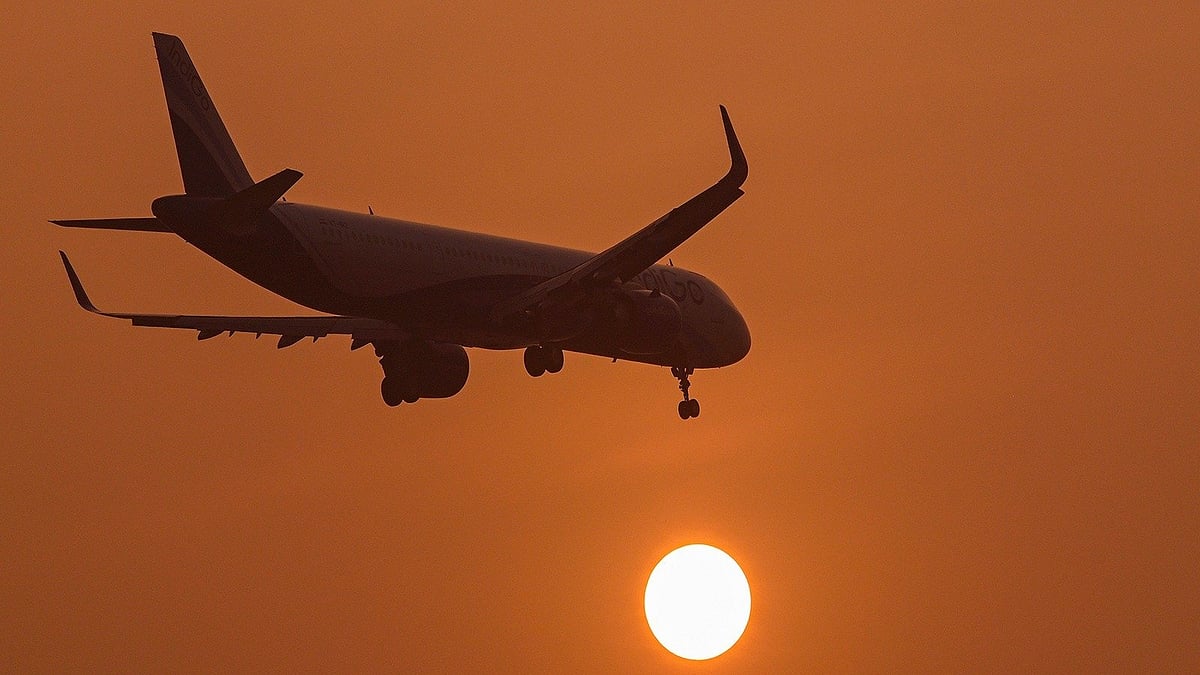
Mumbai, October 31, 2026: Air travellers in India wanting to visit their hometown or fly for their holiday during Diwali are facing an unprecedented squeeze on their budgets this festive season, as domestic airfares have skyrocketed by more than 450% amidst a regulatory vacuum.
Domestic airfares have surged to become more expensive than multiple short- and long-haul international routes, with the trend extending through the season’s peak during the year-end holiday period.
Despite explicit assurances in the Supreme Court, the Union government has missed its self-imposed deadline of October 30 to publish and enforce a new regulatory framework aimed at curbing dynamic pricing caps and volatile airfare spikes.
In the absence of government oversight, carriers have surged prices across key trunk and regional routes to record highs, creating an anomalous market where flying across the country is now substantially more expensive than taking a long-haul flight to London or major Asian hubs.
The Free Press Journal analysed airfares around peak travel dates surrounding the Diwali period, which highlighted a dramatic divergence from standard base tariffs.
Routes connecting Mumbai to high-demand regional destinations have seen tickets selling for five to six times their typical cost before the festival and on the return route after the festival.
Domestic Airfares Witness Sharpest Hikes
The sharpest increase is registered on the Delhi-Mumbai route, which sees the most number of connections in the country. A one-way ticket on November 7, ahead of the festival, on Air India has touched Rs 26,560, marking a 431% hike from the regular fare of around Rs 5,000. Similarly, a return flight on November 15, operated by SpiceJet, is priced as high as Rs 28,130, a staggering 462% surge.
High-density corridors serving regional hubs are experiencing equivalent pressure. A November 6 Air India flight from Mumbai to Ahmedabad is currently listed at Rs 12,545, 318% above normal, while the same airline’s Mumbai-Patna flight on November 8 stands at Rs 28,221, recording a 303% hike.
Even lower-density regional sectors have not been spared from this predatory festive pricing. Star Air’s thrice-weekly service between Mumbai and Kolhapur has climbed to Rs 9,820 on November 6, representing a 145% increase over its usual fare of around Rs 4,000. Flights to Nagpur now cost as high as Rs 21,008, recording a 320% hike in airfares.
International Flights Cheaper Than Domestic Routes
The surge in domestic pricing has led to a striking market distortion, as international travel for the same peak period is significantly cheaper than flying domestically. Passengers flying outbound from India on November 7 can secure international long-haul and short-haul flights at tariffs lower than a one-way domestic ticket between Mumbai and Delhi or Patna.
Most notably, a long-haul flight from India to London by carriers such as Etihad Airways or Azerbaijan Airlines is available for Rs 25,500, cheaper than Air India’s Rs 26,560 Mumbai-Delhi flight on the same day. Similarly, one-way flights to Bangkok, Dubai, Colombo, Singapore and Phuket range between Rs 15,000 and Rs 22,000.
The current price spikes follow months of debate regarding price-capping mechanisms. The ministry had committed on October 16 to releasing finalised regulatory rules within 14 days to prevent artificial yield maximisation during national holidays.
With that deadline now missed, industry analysts point out that algorithms managing airline yield optimisation are operating without upper boundaries, penalising festive and emergency travellers.
Air travellers on social media have voiced sharp criticism over the delay, warning that without immediate intervention or transparent fare-bracket guidelines, domestic air travel will remain out of reach for average citizens during peak holiday periods. Industry observers anticipate that pressure on the Centre will intensify as return-journey bookings continue to surge heading into mid-November.
New Year’s Eve Already Getting Costlier
Looking further ahead into the winter peak, the absence of regulatory caps is already hitting year-end holidaymakers, with airfares for December 30 skyrocketing to popular holiday and metro destinations.
Coastal party hub Goa has witnessed the sharpest spike, with an Air India ticket from Mumbai to Goa climbing to Rs 13,469, a 284% increase over the usual Rs 3,500 standard fare.
Other key routes originating from Mumbai are following a similar upward trajectory for New Year’s Eve travel, with flights to Bhuj on Air India standing at Rs 13,522 (up by 170%), while Air India Express’s Mumbai-Bengaluru service has touched Rs 11,777 (a 161% hike).
Even the trunk Mumbai-Delhi corridor on Air India is listed at Rs 11,713, marking a 134% surge over normal baseline rates, confirming that the pricing frenzy will extend well beyond the Diwali period.
Railways Sees Increased Demand
The rush has also engulfed Indian Railways, which has seen huge demand for trains to Delhi, with almost all trains between the two cities running full during the festive week. Both Tejas Express services departing from Mumbai Central are nearly fully booked for the Diwali week.
Also Watch:

Western Railway’s Chief Public Relations Officer, Vineet Abhishek, said the railway is operating more than 2,000 special trains to accommodate the festive rush. He added that additional special train services are being planned and further announcements are expected in the coming weeks to facilitate passenger travel and ease congestion during the festive season.
(With inputs from Abhishek Pathak)


To get details on exclusive and budget-friendly property deals in Mumbai & surrounding regions, do visit: https://budgetproperties.in/

