The months of Chaturmas are considered to be very solemn and sacred and are specially the months of fasts and austerity, writes MEERA S. SASHITAL.
Chaturmas are the four months corresponding with the monsoons in India. Four months of Monsoon are called the holy months of the year or Chaturmas and coincide with many festivals too. Chaturmas begins on the Ekadashi in the month of Ashad and ends with the Ekadashi in the month of Kartik according to Hindu calendar. It has got both spiritual as well as health implications. These four months are considered to be very solemn and sacred and are specially the months of fasts, vratas and austerity.
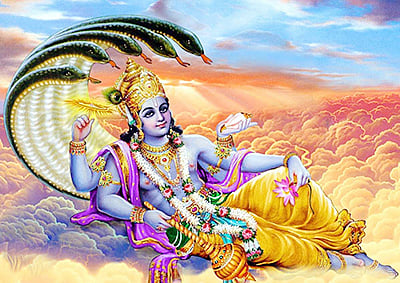
It is said that Lord Vishnu goes to sleep on the coils of the great snake Vasuki on the Milky Ocean on the Ekadashi day the bright half of Ashad. Then after two months that is in Bhadrapad He turns to the right side and during the bright half of Kartik He wakes up. So the bright half of Ashad Ekadashi is known as Shayan Ekadashi or Devshayani-Ekadashi (God’s sleep) and the day He wakes up is called Prabodini Ekadashi or Utthana-Ekadashi (God’s waking up).
It is also believed that Lord Vishnu remains in deep meditation or Yogic sleep (Yoga Nidra ) during this period and the Hindu Gods and Goddesses also rest. Again, according to Kartik Mahatmya, the giant Shankasur is supposed to have carried away the Vedas to the bottom of the sea, and it took Lord Vishnu four months to recover them. It is believed that since Lord Vishnu, the Preserver retires to sleep, we humans need to keep vigil against evil forces that may be rampant taking this advantage.
During Chaturmas months restrictions about food, sleeping habits and travelling have been prescribed. The probable explanation may be that on a practical level this period being the season of heavy rainfalls, it would be impossible and hazardous for the wandering sages and preachers to travel and impart spiritual guidance. The Sanyasis or the Sages observe ‘Maun’ (Silence) during this period and remain at only one place during these four months.
Chaturmas are especially important months when our Spiritual Leaders or Heads retire to one solitary place for recluse and with more time to spare, our sages, ascetics and Gurus (Spiritual leaders) are able to devote their valuable time to Prayers, Meditation, Spiritual Studies and Knowledge. In Ramarchan –Chandrika it is mentioned how Vaishnavas should do taptamudra on Ashad and Kartik Ekadashi.
Certain food items are inimical for health during rainy seasons, hence realizing these to be unsafe, fasts and penances have been prescribed by the scriptures more in the interest of health, discipline and religiosity. The whole four months are full of various vratas, Ekadashis and fairs but no marriages or auspicious functions are held during this period of four months.
These four months of monsoon are called the holy months of the year or ‘Chaturmas” and coincide with many festivals. Chaturmas commences with Guru Purnima. The Full moon day of Ashad (July-August) is an extremely auspicious and holy day of Guru Purnima. On this day, sacred to the memory of the great sage, Bhagavan Sri Vyasa, Sanyasins settle at some place to study and discourse on Brahma Sutras composed by Sri Vyasa and engage themselves in Vedantic, philosophical investigations. Sri Vyasa is well-known for editing the four Vedas, writing the eighteen Puranas, the Mahabharata and the Srimad Bhagvata.
In honour of this personage, all spiritual aspirants and devotees perform Vyasa Puja on this day, and disciples worship their spiritual preceptors or Gurus. The period Chaturmas (the four months) begins from this day. As told earlier, Sanyasins stay at one place during the ensuing four rainy months, engaging in the study of the Brahma Sutras and the practice of meditation.
Next comes the month of Shravana in which Mondays are worshipped for Lord Shiva and the Tulsi plant is worshipped every Friday and Sunday. The Narali Purnima in this period marks the end of heavy rains and throwing of coconuts in sea appeases the sea and it calms down. Nag Panchami, Gokulashtami are part of this month.
Bhadrapad is the next month the first half of which dedicated to the worship of Lord Ganesh the remover of all obstacles and the second half to ‘Shraddha’ when religious ceremonies are held in memory of the departed souls.
The month of Ashwin starts with the Navaratri through Dussehra to Diwali. Kojagiri Purnima in this month is the bright Purnima. The last two days of Ashwin and the first two days of Kartik are usually the days of Diwali festival. The Ekadashi in the first half of the month of Kartik marks the end of Chaturmas.
There are many ceremonies observed during Chaturmas. One of them is the worship of cow’s foot prints. It seems once the Gods found that their musical instruments produced discordant notes the string being broken It was suspected the cause was due to not performing pujas by some individuals and that the offender’s skins be used as strings. Lord Krishna got alarmed as he thought his sister Subhadra must have missed performing puja, Lord Krishna orders her immediately to perform the puja during these four months by drawing three foot-prints of cows and worshipping them. Subhadra observed the ceremony and thus escaped the punishment.
Observing fasts on the Chaturthi or the fourth day of the dark half of every month known as Sankashti from sankashth (trouble or distress) and chaturthi meaning the fourth day is regarded as very efficacious. It is said to remove difficulties as it is sacred to Lord Ganesha, the remover of obstacles and giver of Success.
Of all the fairs, the fairs held at Pandharpur, the famous shrine in Maharashtra are popular. Two great fairs are held, at the beginning and end of the four months i.e. Chaturmas. Devotees known as Varkaris trek from all over Maharashtra singing and dancing all the way to Pandharpur.
Furthermore, Chaturmas Ekadashis are considered to be very sacred and auspicious. The eleventh day of the light halves of Ashad and Kartika (the beginning and end of four months’ rainy season) are specially important, being known as Mahaekadashi. Similarly, the Kamikarkadashi (wish granting eleventh) Ashad dark half, fulfills one’s great desire if the person fasts on this day constantly praying with his desire in mind.
There are many more Ekadashis but most important and the second of the two great sacred Ekadashis is the Prabodhinekadashi (awaking eleventh) in Kartik, light half. This marks the end of Vishnu’s four months sleep. The celebrations are closely connected with those of Tulsi’s marriage on the following day and commencement of auspicious season of marriages. With this great Ekadashi the holy four months of Chaturmas of austerities, fasts and penances come to an end. Chaturmas is the holy four months specially observed by spiritual leaders, ascetics, saints and sages thus enhancing its prominence and holiness
This year The Holy Chaturmas has begun from Guru Purnima in the month of Ashad and will be ending on Anant Chaturdashi in the month of Bhadrapad (September 9).

