It’s a historical fact that most towns around the world sprung up around rivers, ports or ancient trade routes. But then, there are also those that began with a corporate vision. Here, industry did more than provide employment: it gave shape to streets, houses, schools, parks and, sometimes, the social lives of everyone who lived there.
These were corporate experiments on an urban scale. Their founders were not simply selling soap, chocolate, steel or cars; they were, in varying degrees, attempting to create a particular way of life. Some became enduring communities. Others collapsed spectacularly. Together, they reveal the strange intersection of commerce, idealism and control.
Sweetness, soap & social reform
It begins in 19th-century England with a bar of soap. On the Wirral Peninsula, across the River Mersey from Liverpool, Port Sunlight was founded in 1888 by William Lever of Lever Brothers, now part of Unilever. He built it for workers at his Sunlight Soap factory, but this was no grim industrial settlement.
Lever enlisted almost 30 architects to create a village of distinctive houses, gardens and public buildings. There was an art gallery, a concert hall and generous green space. The experiment was hardly free of self-interest—healthier, happier workers were likely to be more productive—but Port Sunlight was remarkably progressive in its approach to worker welfare.
Near Birmingham, the Cadbury brothers were pursuing a similarly ambitious idea, though theirs was scented with cocoa rather than soap. Bournville emerged in the 1890s from George and Richard Cadbury's desire to move their business away from the pollution and overcrowding of the city.
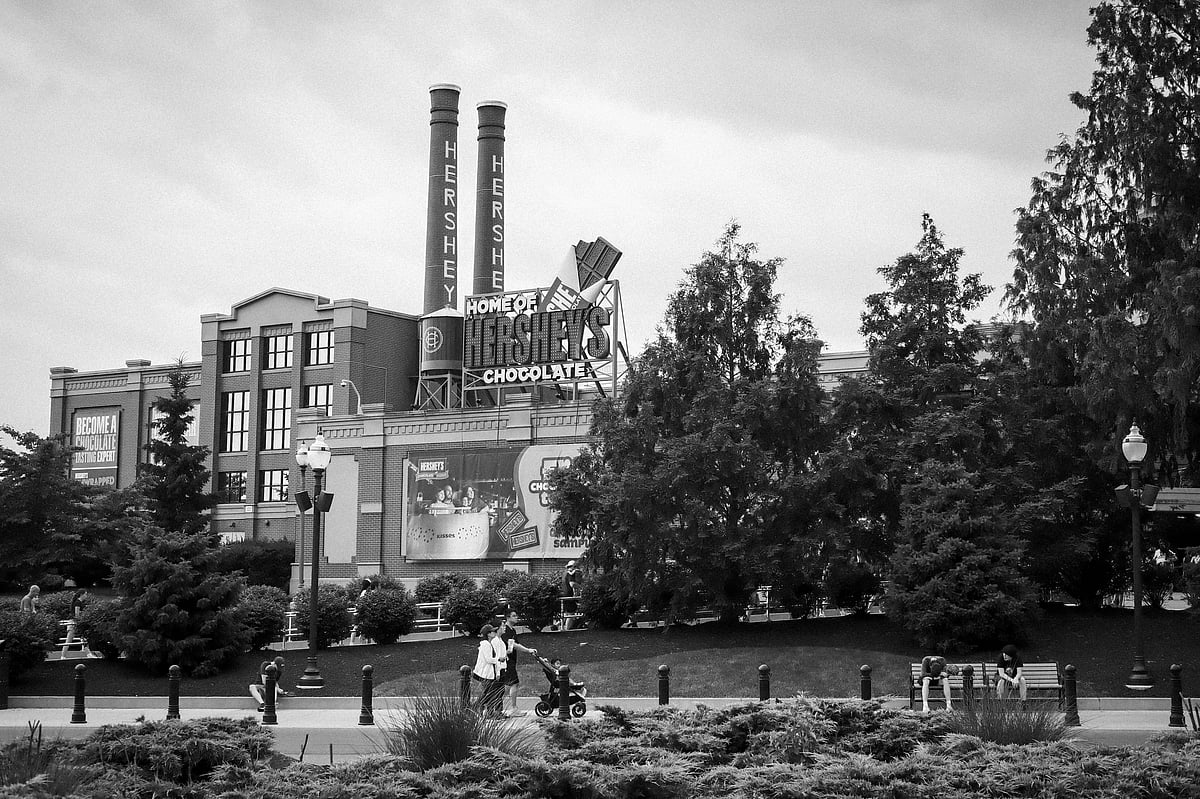
Hershey | Pic: unsplash
Their Quaker beliefs shaped the settlement. Homes had gardens, recreation was encouraged and alcohol was discouraged, with no pubs in the village. Cricket pitches and swimming facilities reinforced an ideal of healthy living. Bournville was both a chocolate town and a social experiment, built around the belief that industry could improve, rather than merely exploit, the lives of its workforce.
Across the Atlantic, Milton S. Hershey took that idea and enlarged it. In Pennsylvania, he began building Hershey in 1903 alongside his chocolate factory. Tree-lined avenues, schools, a trolley system and an amusement park transformed a company settlement into a recognisable American town.
During the Great Depression, Hershey launched major building projects to keep local people employed. Today, chocolate remains woven into its identity, from Hershey's Kiss-shaped streetlights to attractions devoted to the famous confectionery brand. Few places have turned a product into such an unmistakable civic personality.
Steel, Cars and industrial city
India's most significant example is Jamshedpur. Conceived by Jamsetji Tata as a steel city built around planning and worker welfare, it took shape in the early 20th century and was named after him in 1919. Inspired by industrial centres in Europe and America, Tata imagined wide roads, green spaces and decent living conditions alongside the furnaces.
Tata Steel remains central to the city's identity, while the wider Tata ecosystem continues to play an important role in civic infrastructure. Parks, sporting facilities and carefully planned neighbourhoods reflect an industrial vision that went far beyond the factory gate.
Japan offers an even more literal example. Koromo, once associated with silk production, was transformed by the growth of Toyota's manufacturing operations. In 1959, the town renamed itself Toyota City, permanently binding its identity to the carmaker.
Today it is a major industrial centre, but one that has evolved with the company, embracing research, technology and environmental initiatives. Its very name demonstrates how completely a corporation can reshape a place.
Wolfsburg tells a comparable story in Germany. Created in the 1930s around Volkswagen's vast factory, it grew into a full-fledged city. Volkswagen remains its defining presence, but Wolfsburg now has museums, cultural institutions, a major football club and Autostadt, the carmaker's sprawling visitor complex. The factory may have come first, but an entire urban identity followed.
When dream went wrong
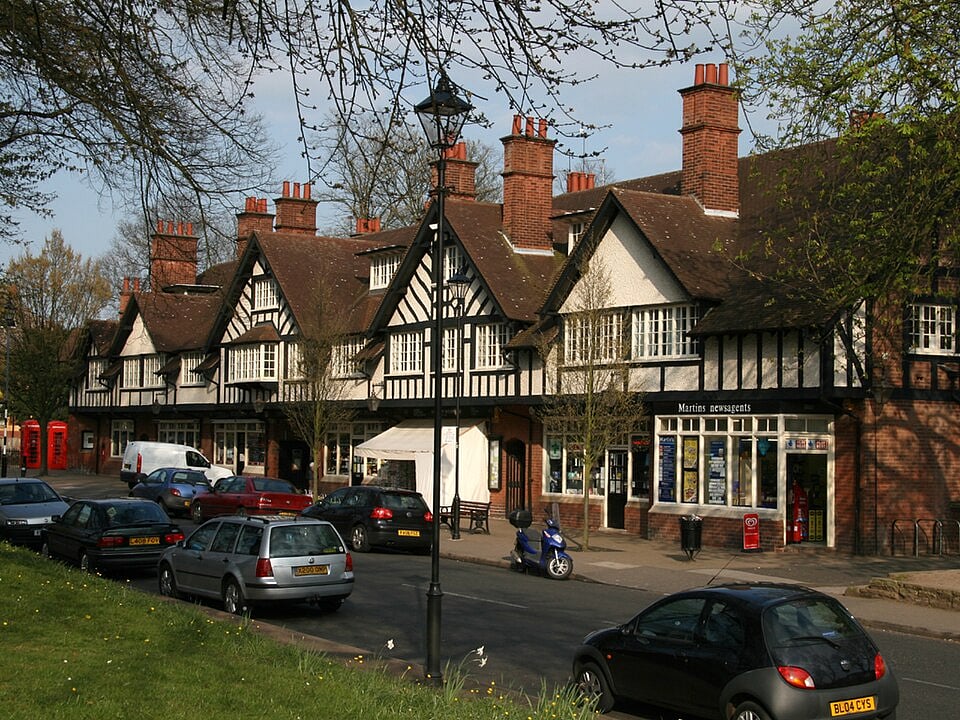
Bournville | Pic: Wikimedia Commons
Not every corporate utopia survived contact with reality. Fordlândia, Henry Ford's ambitious settlement in the Brazilian Amazon, remains one of the most extraordinary failures of industrial planning. In the 1920s, Ford wanted a reliable supply of rubber for his growing automobile empire and decided to create an American-style town deep in the rainforest.
Clapboard houses, manicured spaces and cafeterias attempted to transplant Midwestern life into an environment that obeyed very different rules. Workers resisted the unfamiliar food and strict routines, while the rubber trees themselves were vulnerable to disease. By the 1940s, Fordlândia had been abandoned. Today, its decaying buildings stand as a warning against corporate confidence untethered from local realities.
Pullman, in Chicago, exposed another flaw in the company-town model: paternalism could quickly become control. Founded in the 1880s by George Pullman's luxury railway-car company, the settlement offered orderly housing, shops and cultural facilities.
But the arrangement depended on workers accepting the company's authority over both employment and daily life. When wages were cut in 1894 while rents remained unchanged, anger erupted into the Pullman Strike, one of America's defining labour conflicts. The supposedly model town became a symbol of the tensions beneath corporate benevolence.
These places tell a story that is more complicated than corporate philanthropy or branding. They were experiments in how people might live when a single company held enormous influence over work and home. Some produced healthier environments and lasting communities. Others revealed the dangers of excessive control or cultural arrogance.
In an era of remote work and increasingly fragmented workplaces, their legacy feels particularly curious. The company town may no longer represent the future, yet these places remain fascinating reminders of a time when industrialists believed that building a successful business might also mean building an entire world around it.
(The writer is a food and travel columnist and editor)

