
Two sentences into his new book, Dr S. Y. Quraishi makes you smile. This is how the book starts: “I was not born free. But my birth on 11 June 1947 meant that I lived as a subject of the British Empire for barely two months. Perhaps I managed in two months what Mahatma Gandhi and his colleagues struggled for half a century to accomplish: freedom.”
Throughout the book, the author has a talent for surprising the reader. The popular image of a bureaucrat, one who rose to become the Chief Election Commissioner, one of India’s highest constitutional positions, is of a staid personage. The image that comes to mind is from Yes Minister, the popular BBC television series of Sir Humphrey Appleby and the red tape emerging from his briefcase.
Then you start reading the book and realise that Quraishi was a rocker, playing guitar (after making it himself) in a St Stephen’s College rock band whose lead singer was Sharon Prabhakar. His love for music was so strong that he even missed one of his papers in his first IAS exams because the band had a music gig. He then describes how he and his fellow trainees formed a band in the IAS academy. Vignettes like this make the book special.
Generally speaking, memoirs of retired senior bureaucrats tend to be on similar lines. They either devolve into self-glorifying manifestos where every committee note reads like an act of divine intervention, or they sink beneath the dead weight of administrative arcana—leaving the reader stranded amid dry rosters of postings, gazette notifications, and official minutes. The human dimension of the state, with all its chaotic negotiation, quiet improvisation, and personal fallibility, is routinely edited out to preserve an aura of detached competence.
In India and I: A Hundred Memories, Not a Memoir, Dr S.Y. Quraishi departs from this tradition, refreshingly so. As the subtitle insists, this is not a formal memoir constructed along a predictable, cradle-to-retirement arc. Instead, the author takes you on a joy ride over an eclectic mosaic of modern Indian public life. Each story, strictly two pages long, offers a sharp, nimble, and disarmingly candid chronicle that strips away the pomposity to reveal the precarious human machinery beneath.
Dr Quraishi begins by recounting his upbringing in a pious but liberal Old Delhi Muslim family that valued education above all else, then moves into his career as a bureaucrat.
The book includes several vignettes about his work, especially in education and youth affairs in his home cadre state of Haryana and later at the centre, as well as during his tenure at Doordarshan. Some of them tend to stay with you much longer than others.
Here, for example, is a story of when, fresh out of the training academy, he was posted as a Sub Divisional Magistrate in Sonepat. The bungalow that came with the post was a colonial-era relic with big, sprawling lawns. An old gardener tended them. Seeing him moving slowly, a young, arrogant Quraishi scolded him. The gardener folded his hands and said, “Sir, you are my 28th SDM.” As the author puts it, “Those six words demolished whatever illusions of importance I had. Here I was, a chit of a boy, barely settled into my chair, lecturing a man who had been tending these lawns for decades. He had seen twenty-seven officers before me come with similar self-importance and certainty. And he would see many more after I left. I was temporary. He was the constant.”
Another concerns murals by M F Hussain. In 1976, at the height of the Emergency, a Congress session was held in Haryana, and all states were mandated to put up pavilions. Quraishi, as head of public relations for the Haryana government, contacted Hussain to create murals on Indira Gandhi’s Twenty Point Programme. Not surprisingly, Haryana’s pavilion was adjudged the best. Years later, Hussain contacted the author and offered to buy the murals back. By then, Quraishi had long been transferred and Hussain’s murals, unrecognised, undocumented, and unloved, had been sold as scrap!

The book moves fluidly across time and space. Readers encounter discussions with heads of state and Nobel laureates alongside poignant conversations with personal drivers, domestic aides, and ground-level field officers. In Quraishi’s telling, a nation's character is illuminated as vividly in the casual observation of a village schoolmaster as in the formal deliberations of the Union Cabinet.
Quraishi’s prose is distinguished by a dry, self-deprecating wit that is all too rare among Indian civil servants. He writes without score-settling or malice, showing an acute awareness of the ephemeral nature of public authority. Yet this vignette-based structure is also the book's primary limitation. If you expect a dissection of how the Election Commission functions, especially given the current controversy, you will be disappointed. With the brisk, episodic tempo, Quraishi prioritises breadth of canvas over analytical depth.
In the author’s defence, he has already done this in his magisterial An Undocumented Wonder: The Making of the Great Indian Election. If you want a deeper understanding of India’s election process, that is the book to read.
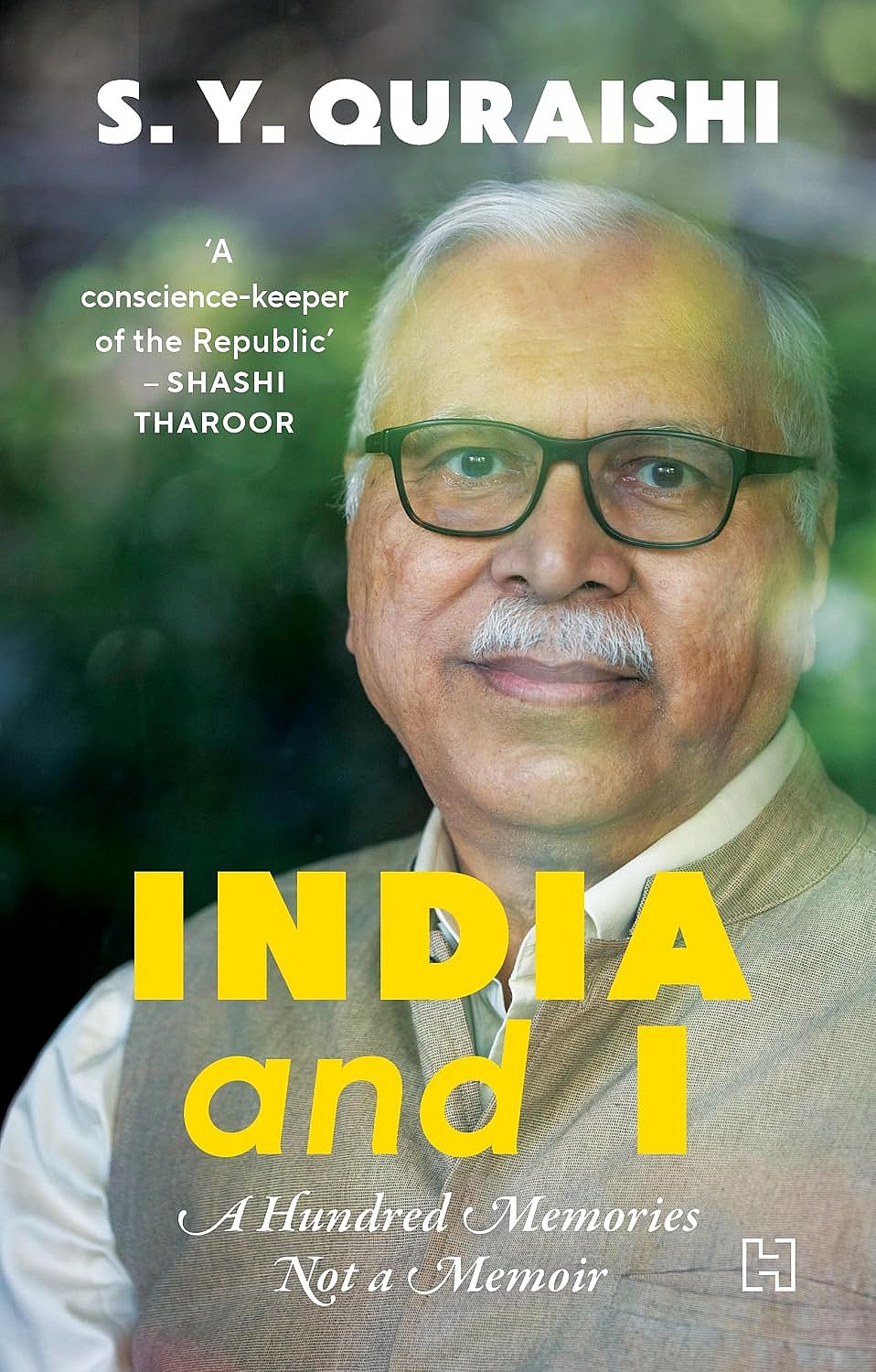
Title: India and I: A Hundred Memories, Not a Memoir
Author: S.Y. Quraishi
Publisher: Rupa Publications
Pages: 232

