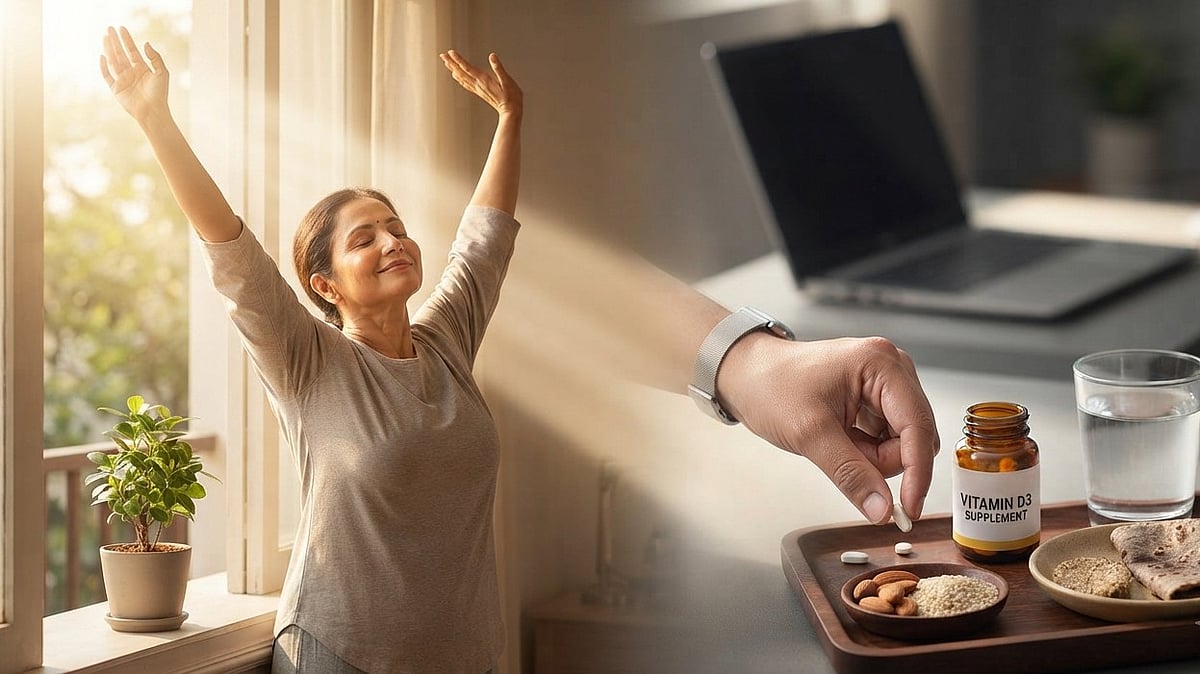
India has no shortage of sunlight. Yet, in consults, reports, and conversations around health, I repeatedly see one pattern: low Vitamin D levels, weak bones, fatigue, muscle aches, poor immunity, low mood, and people reaching first for a pill instead of asking why the deficiency exists in the first place.
Vitamin D supplements have a place. If you are deficient, if your doctor prescribes them, or if your lifestyle, medical condition, age, or absorption issues demand support, supplementation can be important. But India’s growing dependence on calcium and Vitamin D pills should also be a lifestyle wake-up call.
The question is not “supplement or sunlight?” The question is: why has the human body become so disconnected from something as basic as the sun?
Not enough sun exposure
Many Indians spend most of the day indoors: offices, schools, cars, homes, malls, gyms, and screens. Children play less outdoors. Adults avoid the sun because of heat, tanning, pigmentation, pollution, work schedules, or fear of skin damage. Many step out only when the sun is too harsh, and then avoid it completely.
Vitamin D is made in the skin when it is exposed to UVB rays from sunlight. But timing, season, pollution, clothing, skin pigmentation, sunscreen use, age, body composition, and health status all influence how much Vitamin D the body can actually produce.
A 2024 study published in Scientific Reports on 982 adults aged 45 years and above from South India found that 58% were Vitamin D deficient and 23% were insufficient. Only 19% had normal levels. This is important because it shows that deficiency can exist even in a sun-rich country.
Calcium isn’t enough
The calcium-Vitamin D boom is also driven by fear: fear of weak bones, fractures, ageing, fatigue, and deficiency. But bone health is not built by calcium alone.
Vitamin D helps the body absorb calcium. But the body also needs magnesium, protein, movement, strength training, gut health, hormonal balance, and adequate nutrition. Bones respond to load. If a person takes calcium but remains sedentary, sleep-deprived, stressed, inflamed, and undernourished, the foundation is still weak.
This is something we have spoken about often: strong bones need more than calcium and Vitamin D3. The body is not a storage tank where we throw in nutrients and expect automatic health. Absorption, utilization, lifestyle, and balance matter.

Supplements are tools, not replacements for lifestyle
There are people who genuinely need supplements. Pregnant women, older adults, people with severe deficiency, those on certain medications, people with malabsorption, liver or kidney conditions, autoimmune concerns, limited sun exposure, or specific medical needs may require doctor-guided supplementation.
But self-prescribing high-dose Vitamin D or calcium without testing is not wisdom. More is not always better. Excessive or unnecessary supplementation can create problems, especially when taken without understanding blood levels, kidney function, medical history, and other nutrient relationships.
The better approach is simple: test, correct, monitor, and build the foundations alongside.
Foundations-first approach
At the level of Lifestyle as Foundational Medicine, Vitamin D and calcium cannot be separated from daily life.
Get safe sunlight exposure regularly, preferably when the sun is gentle and without burning the skin. Move outdoors when possible. Walk. Build strength. Eat protein-rich, mineral-rich meals. Include natural sources of calcium where suitable: dairy, sesame, ragi, leafy greens, nuts, seeds, legumes, and small fish with bones for those who consume them. Support gut health so the body can absorb nutrients better. Sleep deeply. Manage stress. Breathe. Spend time in nature.
These are not glamorous interventions, but they are powerful because they work with the body’s design.
Real wake-up call
India does not need to choose between modern medicine and nature. We need both, used intelligently.
Take the supplement if your body needs it, only after your doctor prescribes it. But do not forget the basics: sunlight, movement, food, sleep, gut health, and rhythm.
The body was never designed to live indoors all day and depend only on pills for what nature, food, and lifestyle were meant to provide.
Vitamin D deficiency is not just a lab value. It is often a signal that our foundations need attention.
Disclaimer: This article is for general awareness only and should not replace medical advice, diagnosis, or treatment. Vitamin D, calcium, or any supplement should be taken only after appropriate testing and guidance from a qualified healthcare provider, especially in pregnancy, kidney disease, liver disease, thyroid/parathyroid disorders, osteoporosis, autoimmune conditions, or when taking medication.
(Luke Coutinho, Foundational Medicine & Lifestyle Expert)

