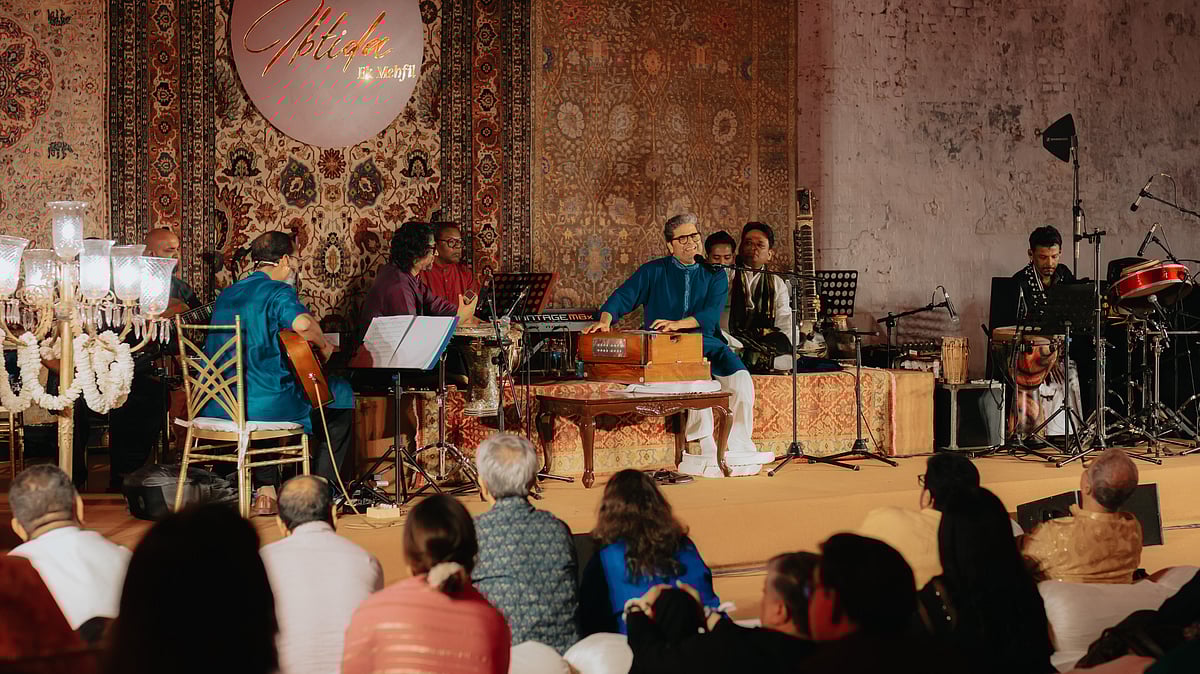
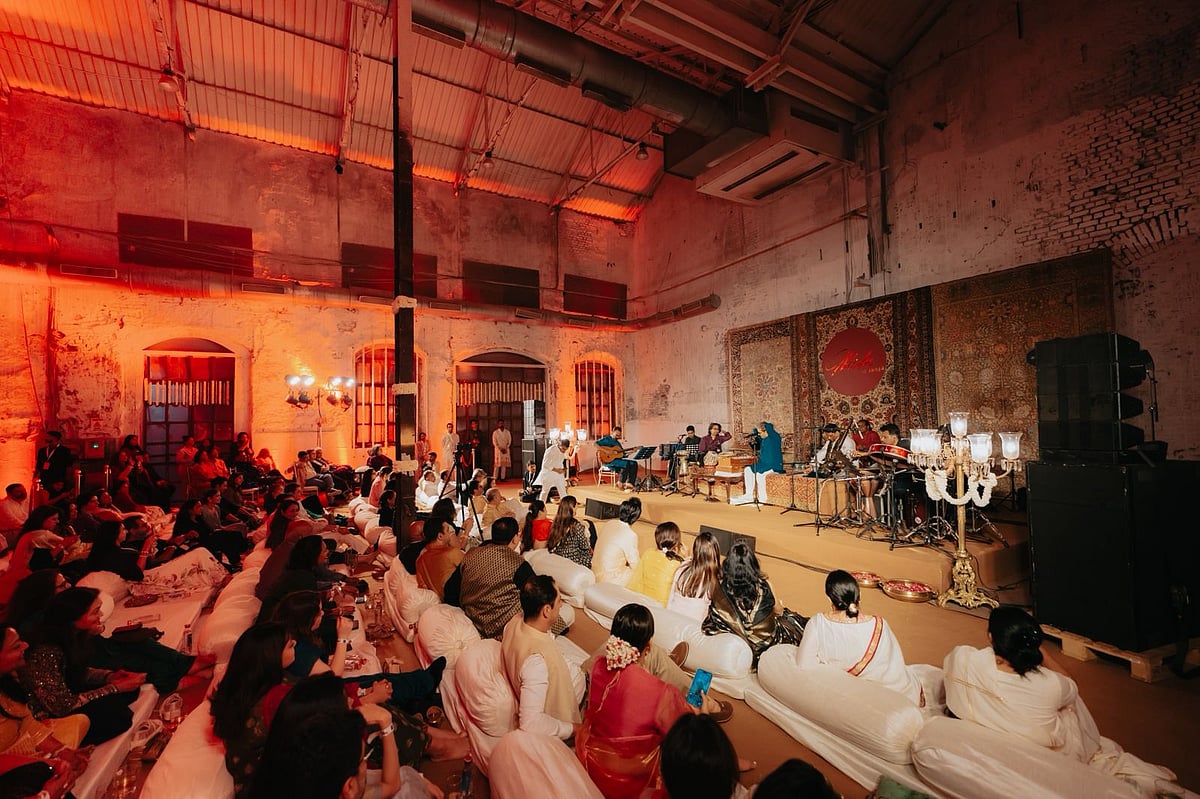
In a city chasing stadium concerts and global headliners from Ed Sheeran to John Mayer, I chose something quieter on a Sunday evening: to sit still and listen. At Mukesh Mills, IBTIDA – Ek Mehfil transformed the bare mills into an intimate, old-world mehfil. When was the last time you dressed in Indian finery, jasmine at your wrist, and simply let the music wash over you?
At the latest edition of Qissa, the newest chapter in IBTIDA’s Archival series, helmed by curators Tanvi Singh Bhatia and Anubhav Jain, the experience unfolded like a quiet act of return. Filmmaker and musician Vishal Bhardwaj had the audience in rapt attention as he presented a unique dialogue with music and poetry. What followed wasn’t a performance in the traditional sense. It felt closer to a conversation between artist and audience. Bhardwaj didn’t just sing; he narrated, paused, and reflected.
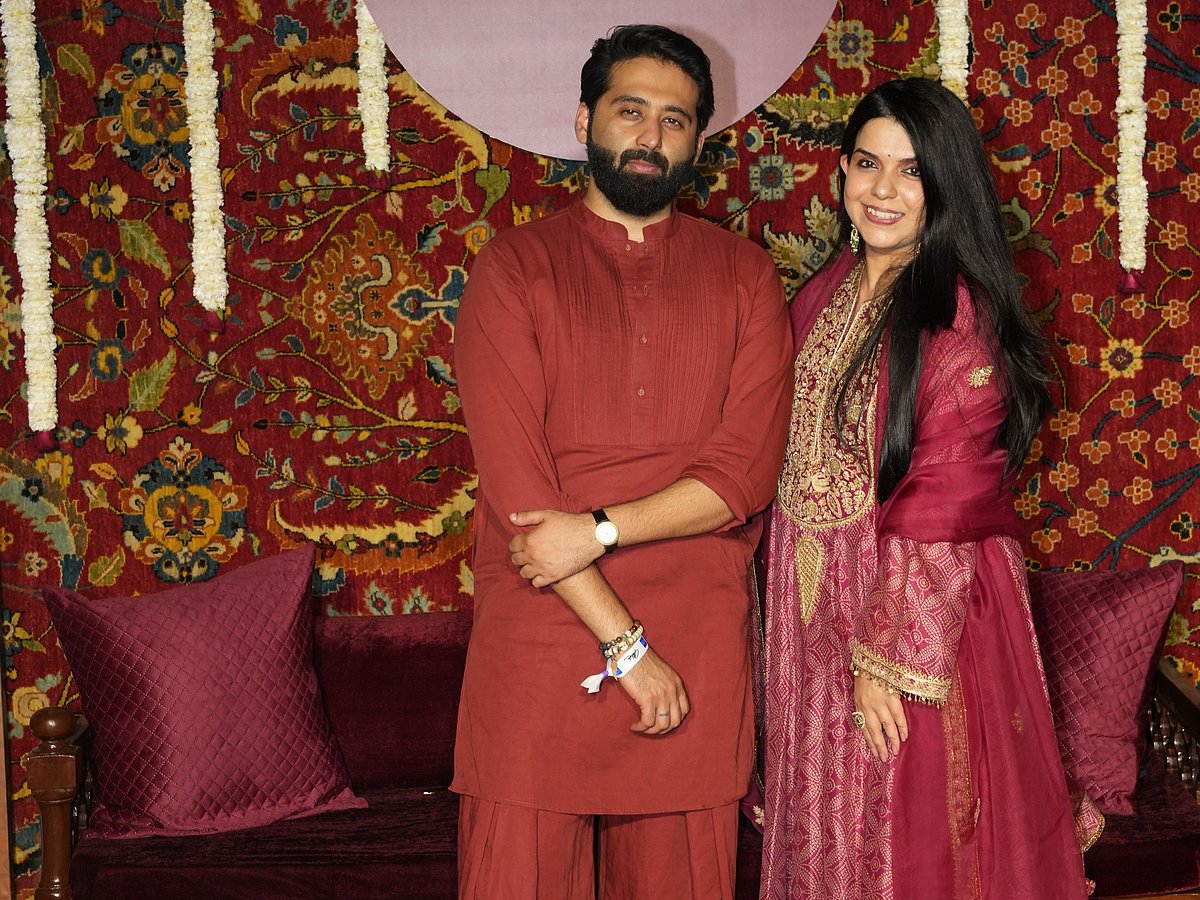
Founders Tanvi Singh Bhatia and Anubhav Jain opened the third season of IBTIDA - Ek Mehfil titled Qissa at Mukesh Mills |
This is perhaps what IBTIDA-Ek Mehfil understands so instinctively. IBTIDA didn’t begin as an “event property” in the traditional sense. It emerged from a sharp cultural observation: India’s finest artists were often performing to half-empty auditoriums, while the same cities pulsed with packed nightlife venues. The disconnect, Bhatia realised, wasn’t a lack of appetite—it was a failure of presentation. Watching Bhardwaj that evening, it became clear what she meant. Around me, I noticed that the audience wasn’t what you might traditionally expect at a mehfil. There were younger listeners, not restless, not distracted, but present. It felt like a quiet shift, one that has been building for a while now. “Modern events often lack the depth needed to create meaningful connections between artists and audiences. We wanted to educate the younger audience with Ghazals, Kalams and Nazms,” Bhatia reflects. IBTIDA was her response, a space where music, setting, food, and conversation come together in service of a single feeling: that India’s cultural gold is not lost, merely waiting to be rediscovered. “IBTIDA means beginning. We set out to promote and position the India story with the packaging and visual aesthetics it deserved,” she adds.
The roots of this vision are deeply personal for Bhatia, who was raised in a home steeped in Hindustani classical traditions. In its early days, the format was almost simple. One of the first gatherings took place inside a Banarasi saree store, a setting where textiles, history, and music converged into something immersive and quietly transformative. These formative experiences shaped IBTIDA’s enduring philosophy: authenticity over scale.
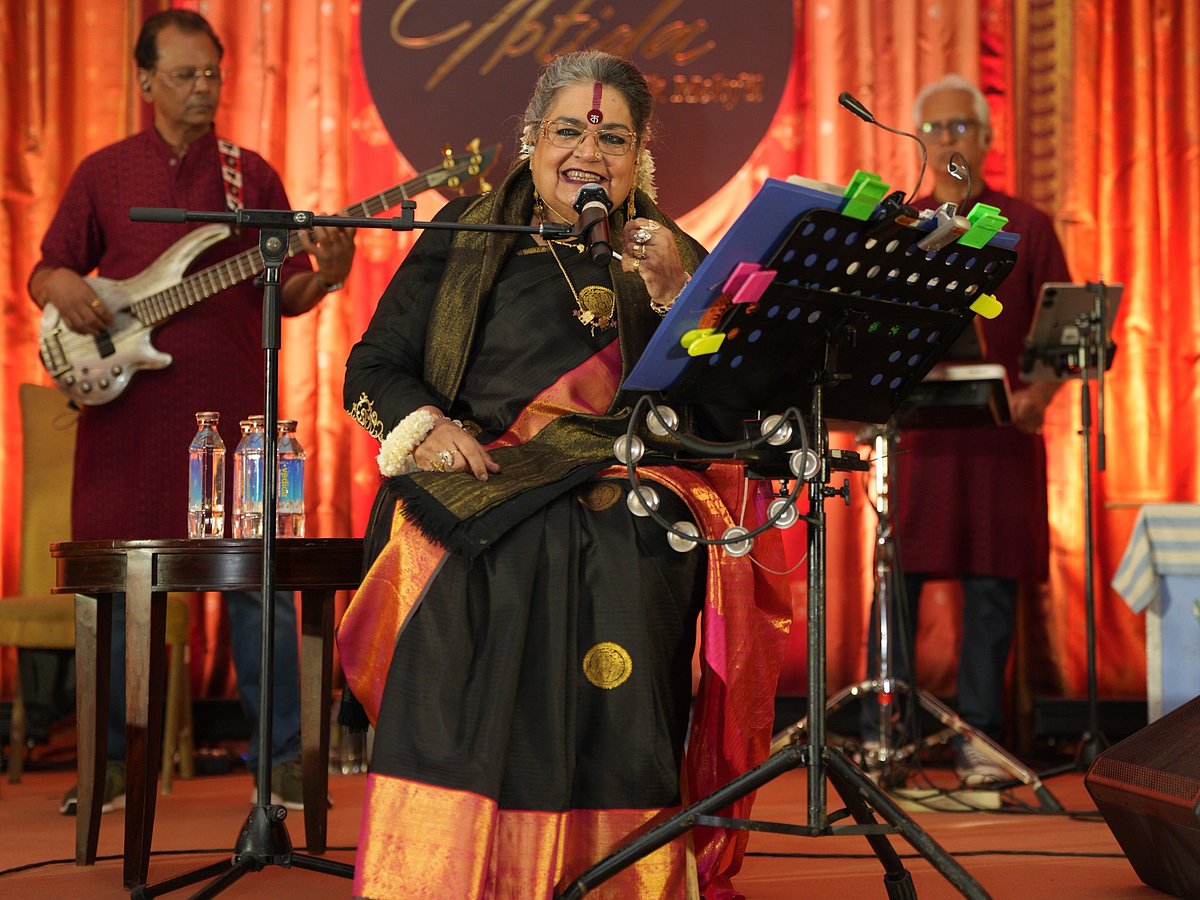
Usha Uthup regaling the audience in Bengaluru |
Even as it has evolved into a cultural IP, that core remains intact, the closeness between the artist and the audience, and the idea of creating spaces that feel personal rather than performative. Initially appealing to older connoisseurs and culturally curious millennials, the platform has, in recent years, shifted gears to engage with young audiences. “Young audiences have grown up with infinite content and they know the difference between consuming something and actually experiencing it. The mehfil moves them. The concert entertains them,” shares Bhatia.
At a broader level, IBTIDA’s rise also reflects a larger cultural rebalancing. India today is not just consuming global culture—it is asserting its own. “Culture today occupies the same space that fashion once did,” Bhatia observes. And yet, within this larger boom, IBTIDA occupies a distinct position. It does not compete with large-scale concerts—it complements them.
“The fact that global artists are increasingly choosing to come here reflects how India is no longer just a passive audience, but an active, influential cultural force. The entry of global artists creates a dialogue where international and Indian voices coexist and elevate the overall ecosystem,” shares Bhatia.
The Qissa series was a result of shaping this idea further. With artists like Rekha Bhardwaj, Usha Uthup, and Nizami Bandhu, the series spanned cities while adapting to each one’s unique cultural rhythm. In a world where global sounds are increasingly dominant, Bhatia feels a deep responsibility to spotlight Indian classical traditions—not as relics, but as living, evolving art forms.
As the evening drew to a close, it became clear how IBTIDA, is quietly and deliberately building a cultural movement around that truth.

