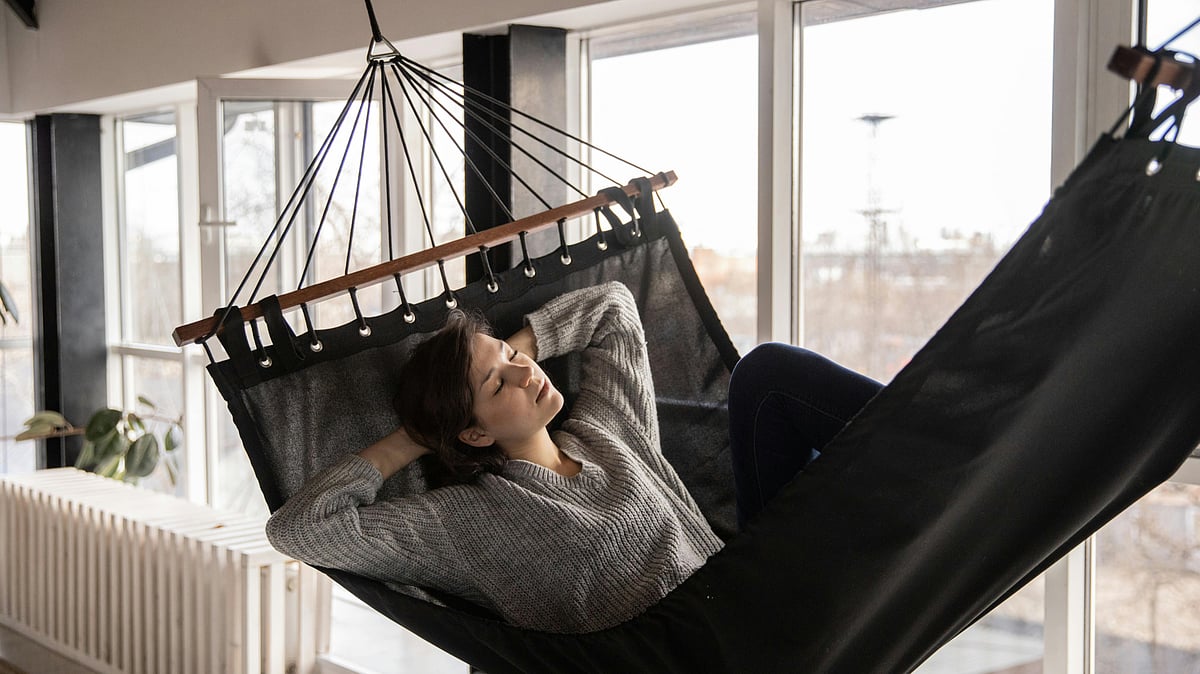
Sleep puts human body to rest and calms the mind. It acts as a de-stresser. The natural tendency of a person is to look for a cosy corner when he or she feels drowsy or wishes to lie down at ease so that the snooze button can be immediately switched on.
Be it in office at one’s work desk or while taking a cab ride or travelling aboard a bus and on a flight or sitting reclined in an armchair and reading with the glasses on — anybody can slip into sudden slumber anywhere at anytime. That’s why making a cushy bed or an instant D-I-Y comfortable crib to nap at length comes in handy on a given day whenever the need arises.
Having gone viral via social media, the idea of a potato bed has set a new lifestyle trend of late.
Sleep Tight
In an age when people are living out of a suitcase in shifting time zones with frequent jetlags whenever work beckons them to shuttle different stations or chase sky-high, near-infeasible dreams as an ambitious Gen Z-ite, then grabbing even forty winks becomes a thing of luxury indeed.
From a daily wage labourer pushing his wheelbarrow, a rickshaw puller carrying passengers in the seat of his humble mode of transport, a corporate clerk in between updating an array of tedious spreadsheets to a round-the-clock active homemaker — all need a potato bed at the end of a hard day’s toil to soothe their tired nerves. A soft mattress, a padded sinking sofa, a floor mat, a beanbag, a slouch couch or a rug can be sufficient to doze off for some hours only to recharge the body batteries.
For the unversed, a potato bed simulates a baked potato being wrapped in its skin with a warm stuffing using soft, fluffy pillows and blankets encircling a central area. This provides a sense of shelter and convenience, similar to deep pressure stimulation, which can help people relax and fall asleep more effortlessly.
Bedtime Stories
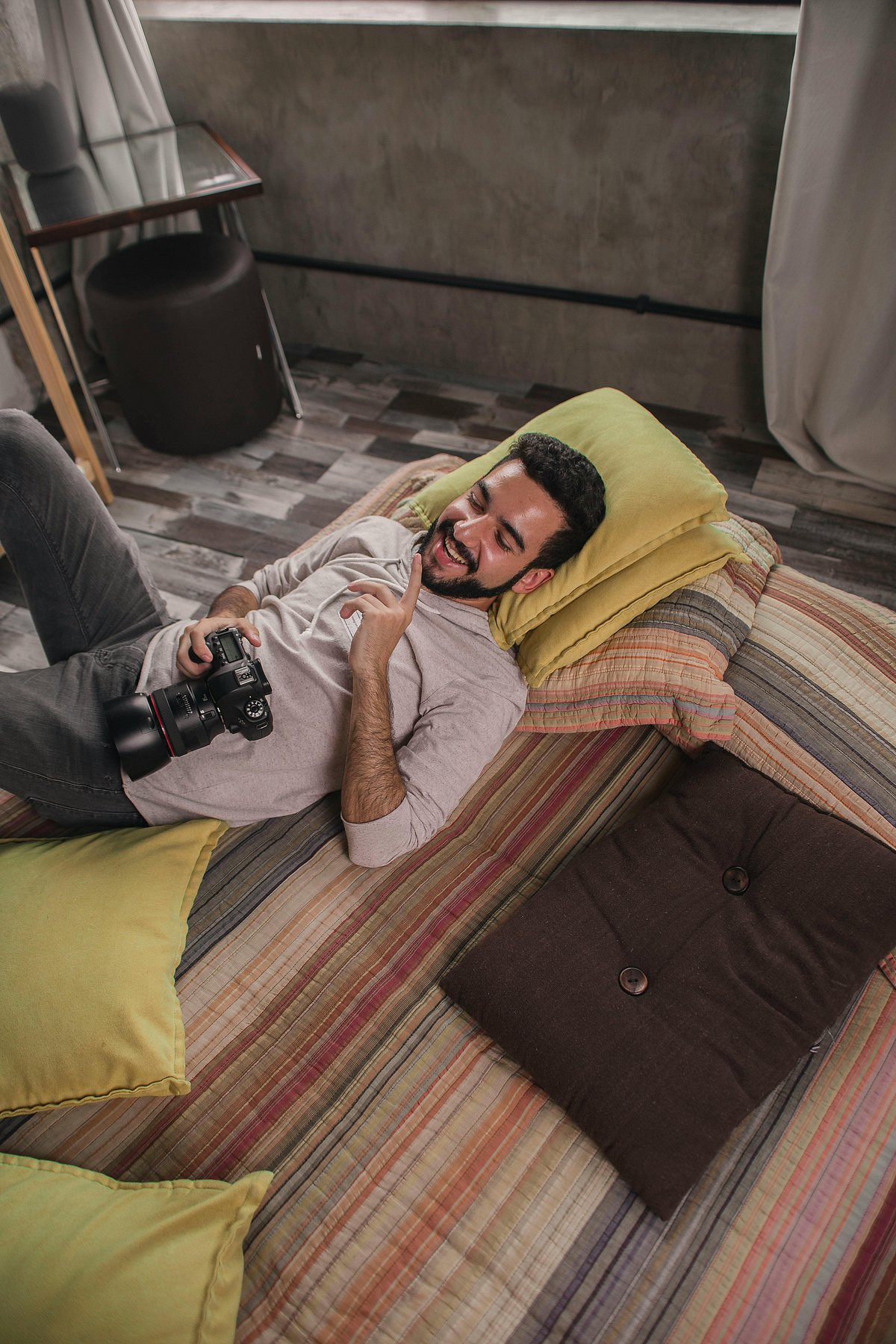
Interestingly, backpackers or those with wanderlust usually rove with rucksacks and sleeping bags to camp in forests, close to foamy waterfalls and rivers, amid dusty arid deserts and sand dunes or at the feet of lofty mountains. “I love biking on dirt tracks, wading through jungles for wildlife photography and trekking up the hills to reach their snowcapped as well as rocky crests. Hence, I make sure to carry tents, cushions and quilts to put up makeshift sleeping arrangements,” informs 30-yearold adventure freak Subho Das.
Incidentally, harnessed climbers and commissioned snappers are seen clinging to their hanging beds to spend the night in virgin, verdant nature and get on with their mission the following day. Plus, swimmers, divers and vacationers hooked to maritime activity check into cabanas set up alongside beaches and pools to sleep in open air under a starlit sky.
“I would someday want to drive a camper’s van or my sunroof car with my girl gang to respond to a getaway call,” gushes young automobile engineer Laboni Sinha.
“It will be fun to find a congenial rustic zone and cook meals over log fire as well as unwind in a snug canvas hammock tied by cords between the two branches of a tree under a blue rainbow-streaked sky,” she divulges her excursion plans.
High-school pupil Rajani Bera fondly remembers her “granddad snoring to his peaceful afternoon siesta in his cushy cane chair with a tiny pillow supporting his head and a floral-printed blanket covering him to the chin.”
“My baby sister Pinky and our kitten too kip in her kid-room swing fashioned by a cotton cloth with spongy bed sheets and a lightweight, inflatable air pillow made of feathery fabrics to gently protect their delicate necks. This looks sweet, safe and absolutely super comfy. I too had a bunk bed to myself as an infant,” she further shares.
College goer Sumit Tandon sounds euphoric about the ‘potato bed’ concept: “This is just awesome for a chilly sleepover night or a pajama party where we can let our hair down with some peppy music, dance, hot chocolate, furry overalls and finally snuggle up to velvety cushions on our divan.”
Idle Brain
An individual always seeks a quiet secluded place to offload his baggage of daily chores from his shoulders before he goes off to sleep.
From a neurological perspective, the brain begins transitioning from a state of alertness to respite as sleep approaches. “This shift makes the brain more sensitive to physical cues such as relief, warmth and contentment. An agreeable resting region reduces sensory inputs like pain, pressure or noise to allow the cerebral centre to lower its cortical activity and initiate sleep-promoting processes, such as melatonin release,” explains Dr. Prashant Makhija, consultant neurologist at Wockhardt Hospitals in Mumbai Central.

Physical and Mental
Humans undergo a series of physiological and psychological changes before hitting the sack. The consciousness when we are wide awake turns dormant as soon as lethargy creeps in. “Physiologically, sluggishness is induced as heart rate slows, blood pressure drops, muscle tone decreases and body temperature starts to decline. Psychologically, cognitive awareness swings from focused thinking to rambling thoughts as the cortex loses control. Together, these changes prepare the brain to enter non-REM (rapid eye movement behind eyelids during dreams) sleep,” notes Dr. Makhija.
Trendsetter
Life and mindset coach Ruchi Dwivedi views potato bed as a short-term lifestyle experience, not a long-term sleep solution. “The cocoon-like setup spurs satisfying pleasure, which naturally numbs our nervous system, thus releasing an analgesic effect. We are wired to loosen and lighten up in such environments. It reminds us of the mother’s womb we were nestled in even before our birth. For someone feeling restless or anxious, it can help with momentary gratification. But it’s more of a quick-fix remedy than a real answer to sleep struggles,” she avers.
People visualise their homes as an emotional sanctuary with an aesthetic appeal. The popularity of this trend highlights the growing need for sensory composure, particularly in fast-paced urban lifestyles.
“This aligns closely with our belief that spaces should respond to human behaviour and well-being. The idea of being insulated by soft textures mirrors concepts like layered interiors, tactile materials and enveloping layouts that we often incorporate in our bedrooms. While the term ‘potato bed’ may be playful on the surface, the psychology behind it is deep and serious. Common folks now look for cool vibes, reassurance and a wellness retreat within their personal spaces unlike before. This reflects a paradigm shift,” opines Rohan Jain, director of the interior designing wing at RJ Projects.
D-I-Y Potato Bed
Simplicity is key when it comes to constructing a potato bed. Since this is a social media buzz and not backed by any scientific research, it’s no rocket science but quite amusing in fact. “One can neither sleep in a noisy ambience nor against any cluttered backdrop. An elastic bedsheet, lots of pillows, cushions, soft toys and blankets arranged around a small central space is enough to cut the unwanted hazards. The idea isn’t about exhibiting perfection but creating a supple, amicable atmosphere with a tender touch of pressure,” volunteers Dwivedi.
Creating a potato bed is less about excess and more about thoughtful layering. Start with a supportive mattress and build around it by employing plush pillows of varying sizes, pliable bolsters and breathable duvets. Natural fabrics like cotton, linen or bamboo blends work best, especially in India’s hot and humid climatic condition. Adding a heavy blanket can help recreate the deep-pressure comfort many associate with this trend.
“Through a designer’s lens, we suggest grounding the bed with an upholstered headboard or padded wall panels to enhance the cocooning effect. Muted, neutral colours and textured patches add a pictorial quality without overwhelming the space. Subtle additions like a dimmable bedside lighting, soft rugs underfoot and even mild notes of fragrances can elevate the milieu, making the bed feel more enclosed, intimate and private,” dispenses Jain.

Outdoor and Indoor
A D-I-Y potato bed works best indoors where comfort items are easily available like a bedroom, a cosy corner of the house or even on the floor with cushions and blankets. Outdoors can be tricky as carrying and assembling so many soft materials isn’t very practical.
A potato bed can be adapted across various settings with a bit of creativity. For indoors, bedrooms are the obvious choice but cosy niches like a window alcove, a reading nook or some space for journaling one’s thoughts in a diary or even a den can be transformed using floor mattresses, cushions and patterned throws.
In compact homes, a low bed setup in a guest room or a studio apartment works beautifully. For outdoors, covered or grilled balconies, terraces or verandahs can host a relaxed version using weather-friendly cushions, floor seating and layered textiles. Even a shaded garden area or a patio can be adapted for short reposes to shield oneself from the natural elements or an inclement weather. These are like temporary caves to wallow in and not a permanent fixture to stay eternally.
Fad or Functional?
People also take power naps in office or grab a fast wink in public transport while travelling or on roadside benches, steps of a building or under a tree canopy. So, will the concept of a ‘potato bed’, which could be interestingly creative, last for long or will it fizzle out gradually?
“Most likely, it will fade away over time. While a potato bed is creative and comforting, setting it up regularly takes time, patience and effort spanning hours. People eventually look for simpler and more sustainable ways to relax and improve their sleep that fit well into their everyday routines and are durable for years,” argues Dwivedi.
Trends driven purely by novelty, hype and hoopla cease to exist but those rooted in genuine human needs often evolve instead of disappearing like the bubbly fizz on soft drinks. “The ‘potato bed’ as a term may lose its charm and buzz but the underlying idea of comfort-led, emotionally responsive spaces is here to stay,” thinks Jain.
“People have always sought restful corners, whether it’s a couch, a window seat or a floor mattress. What’s changed is the awareness, purpose and the intent behind it. We see this trend merging into broader design movements focused on wellness and flexible living. Although people may not always call it a potato bed, the desire for cosy, personalised chillaxing sites with friends and family will but continue to influence how bedrooms and relaxation spaces are designed,” claims Jain.

