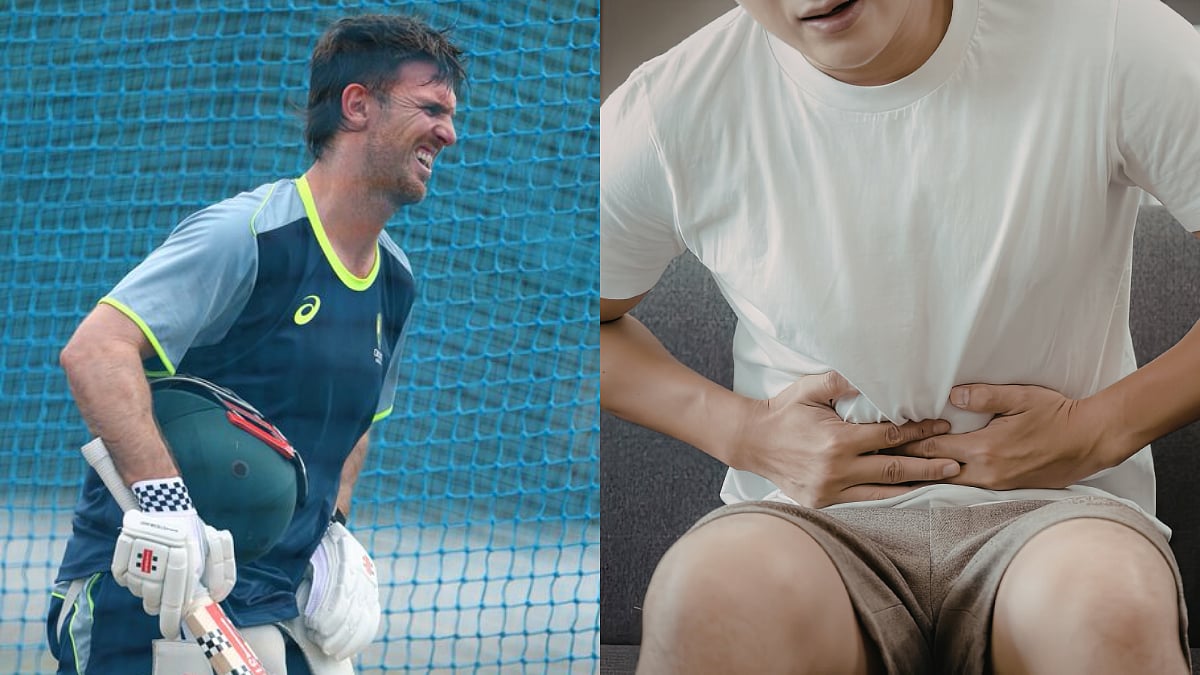
The Australian Cricket Team has suffered a major setback ahead of their opening fixture at the ICC T20 World Cup 2026, with captain Mitchell Marsh ruled out of the opening match after suffering a painful groin injury during training in Colombo. The 34-year-old was struck in the groin while receiving throwdowns on Sunday.
Cricket Australia confirmed that Marsh is “experiencing ongoing pain and discomfort” that is restricting his movement. Scans later revealed internal testicular bleeding, and he has been advised to rest and undergo rehabilitation. His return will depend on symptom resolution and medical clearance.
What Is a Groin Injury?
A groin injury typically refers to damage or strain involving the muscles, tendons or ligaments of the inner thigh and lower abdominal region. In sport, groin injuries are common due to sudden movements such as sprinting, twisting, lunging or changing direction.
Symptoms of a groin injury can include sharp pain in the inner thigh, swelling, tenderness, bruising, difficulty walking and reduced range of motion.
Can a Groin Injury Lead to Testicular Bleeding?
In most cases, a typical groin strain does not cause testicular bleeding. However, Marsh’s case appears to involve direct impact rather than a simple muscle strain.
The testicles are highly sensitive and contain a dense network of blood vessels. A significant impact can lead to internal bleeding (testicular hemorrhage), swelling and severe pain. Internal testicular bleeding is different from a muscular groin strain. Diagnosis is usually confirmed through ultrasound or medical scans.
While many minor impacts resolve with rest, ice, and pain management, confirmed internal bleeding requires careful monitoring to prevent complications.

