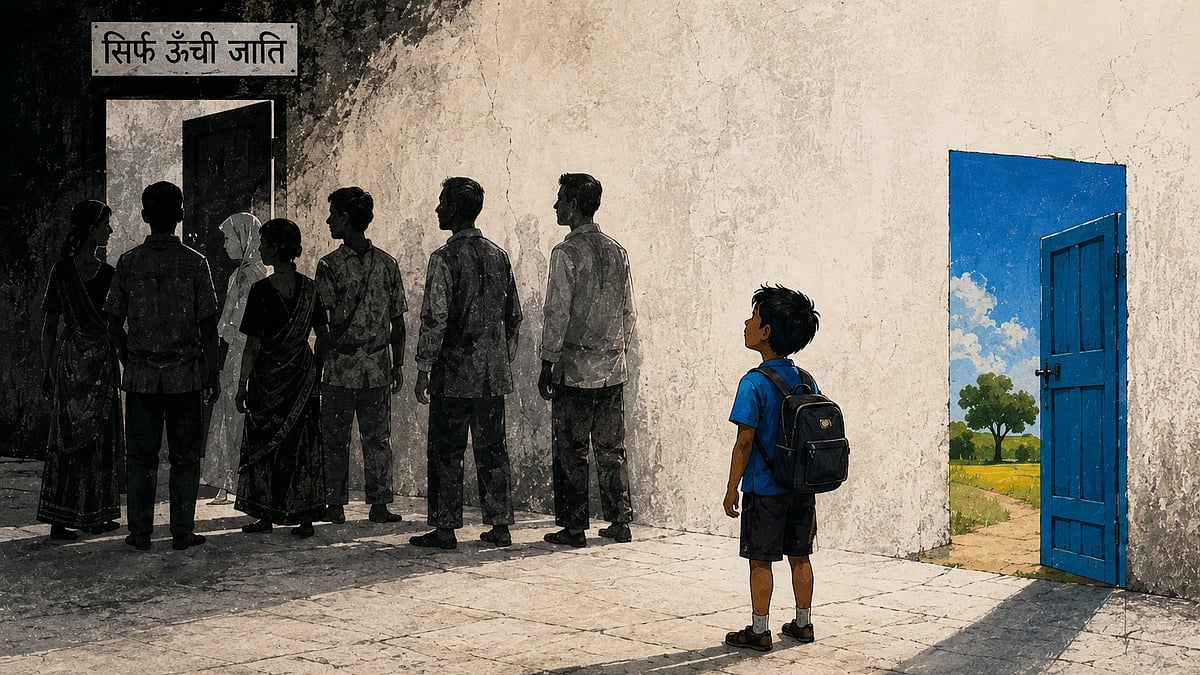
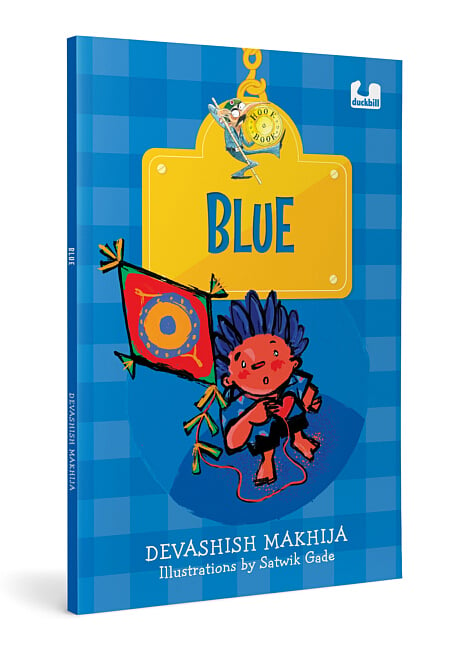
Some say, “Here is caste. Let me explain it.” A few others say, “Here is a person who fought caste.” Far fewer say, “Here is a child living within a caste society.” The recently released Duckbill imprint BLUE, written by Devashish Makhija and illustrated by Satwik Gade, takes the latter route, allowing young readers to encounter caste through story rather than instruction. The picture book, part of the Hook Series, raises a pertinent question without spelling out the answer: Adults are still reluctant to talk to children about caste. But what happens when children’s books do?
When caste refuses to stay invisible
BLUE makes caste visible to a child without turning the book into a civics lesson. For Gade, the answer was not to explain caste, but to inhabit the emotional world around it. “Devashish’s story has a lot of nuance, so half the job was done for me. I just focused on emotions like wonder, curiosity and doubt rather than exposition. I favoured confusion and clamour over clarity.”
That distinction between explaining and expressing is important. Art does not always have to arrive at an answer. “The mode of artistic inquiry is not solution-driven. It’s just expressive,” Gade says. Perhaps this is where the visual form has an unusual advantage in children’s literature: it can allow a child to encounter an idea before being asked to define it.
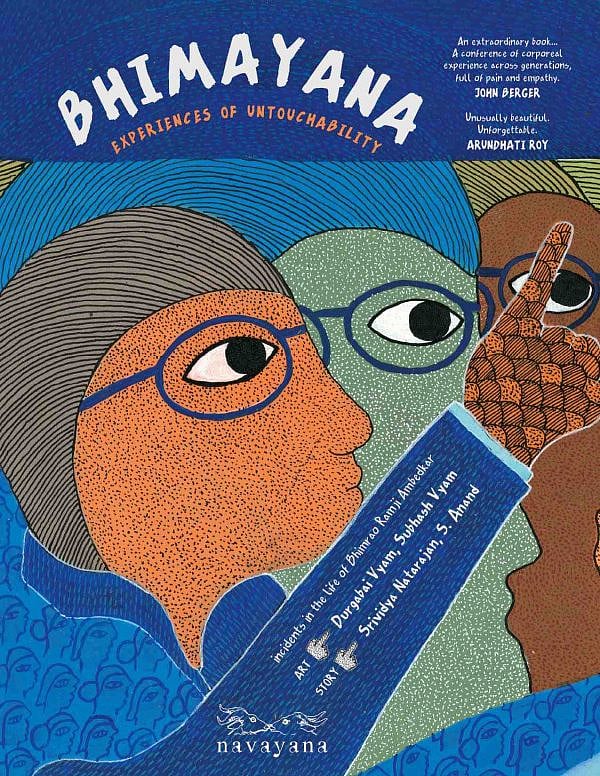
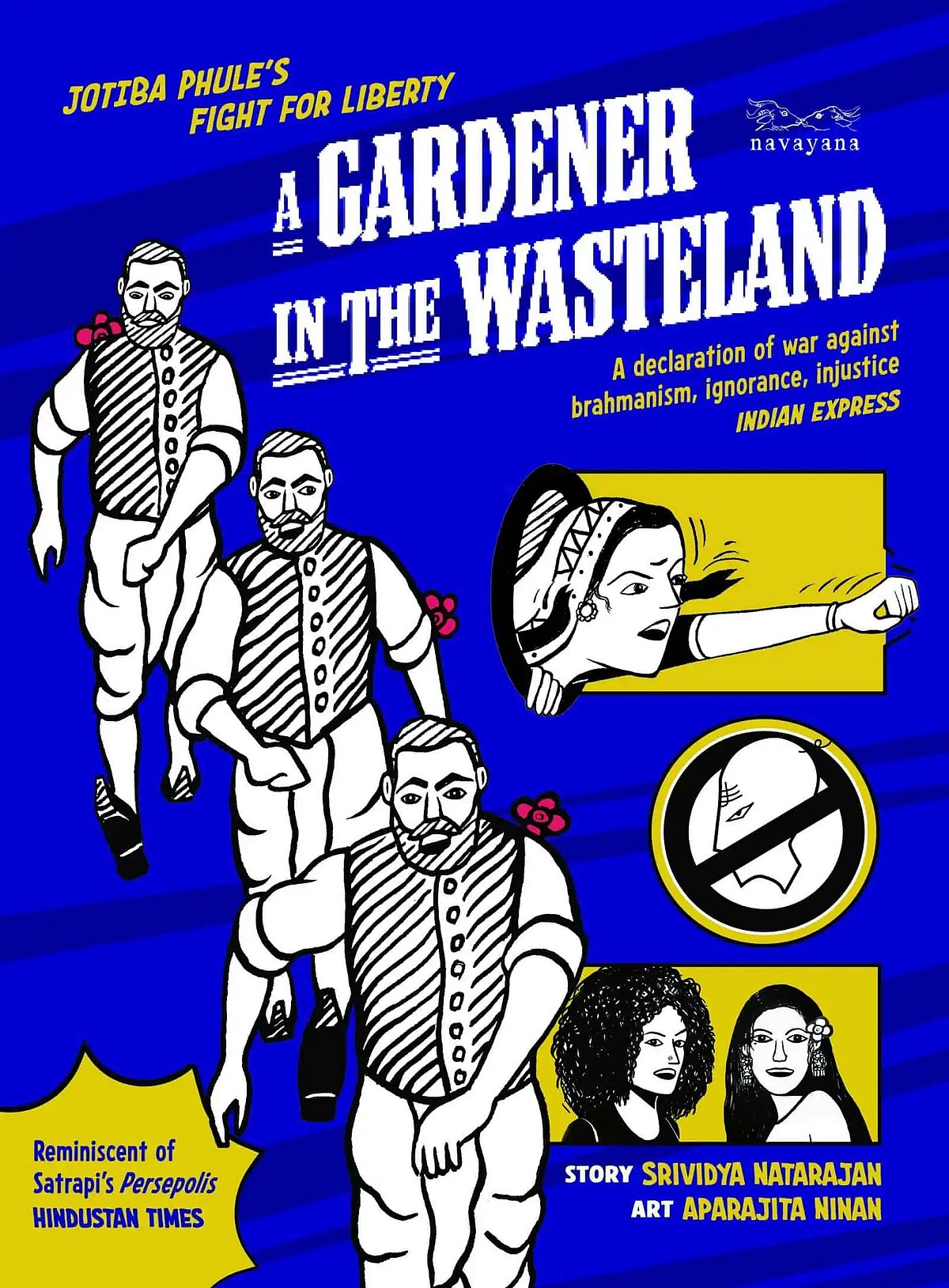
Indian children’s publishing already has powerful examples of this. Navayana, the independent publishing house that has built its list around an anti-caste perspective, has used the graphic form to take caste and anti-caste thought beyond conventional academic audiences. Bhimayana, by Srividya Natarajan, S. Anand and Pardhan-Gond artists Durgabai Vyam and Subhash Vyam, reimagines episodes from B.R. Ambedkar’s life through a striking visual vocabulary. A Gardener in the Wasteland, written by Srividya Natarajan and illustrated by Aparajita Ninan, brings Jyotirao and Savitribai Phule’s radical ideas to younger readers. In both, the visual form does more than illustrate the text. It creates another route into history, discrimination and resistance.
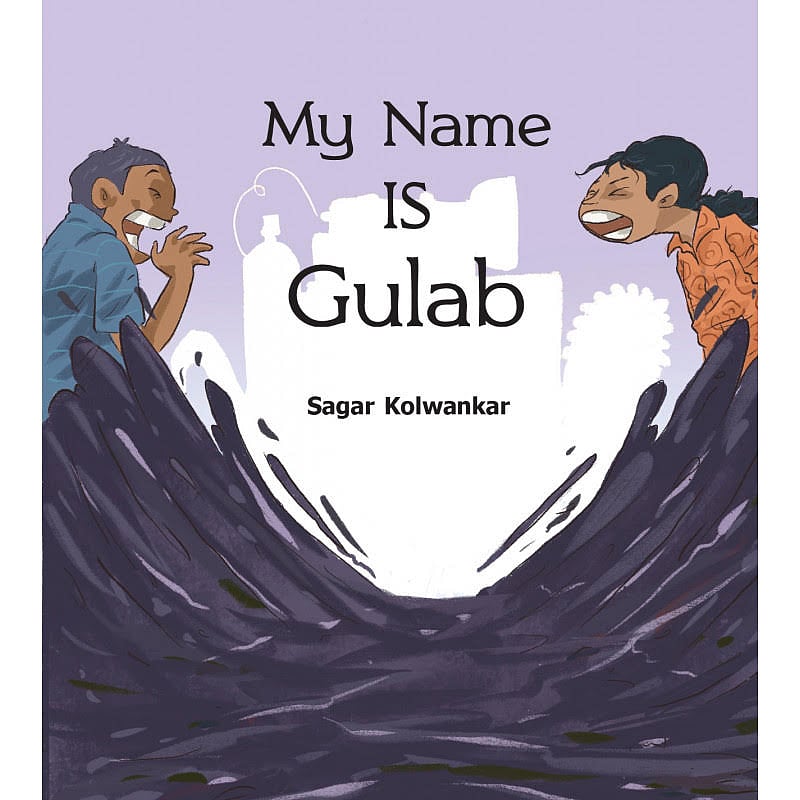
But caste need not always arrive through metaphor or graphic experimentation. In Sagar Kolwankar’s My Name is Gulab, published by Tulika Books, caste is named through the everyday humiliation experienced by its titular character. Gulab’s classmates call her “Stinky Gulab” because her father is a manual scavenger who cleans drains and gutters with his bare hands. The book’s feisty protagonist, coupled with Kolwankar’s animated illustrations, allows children to encounter caste not as an abstract social evil but as something that shapes how a child is seen, treated and made to feel about her own family.
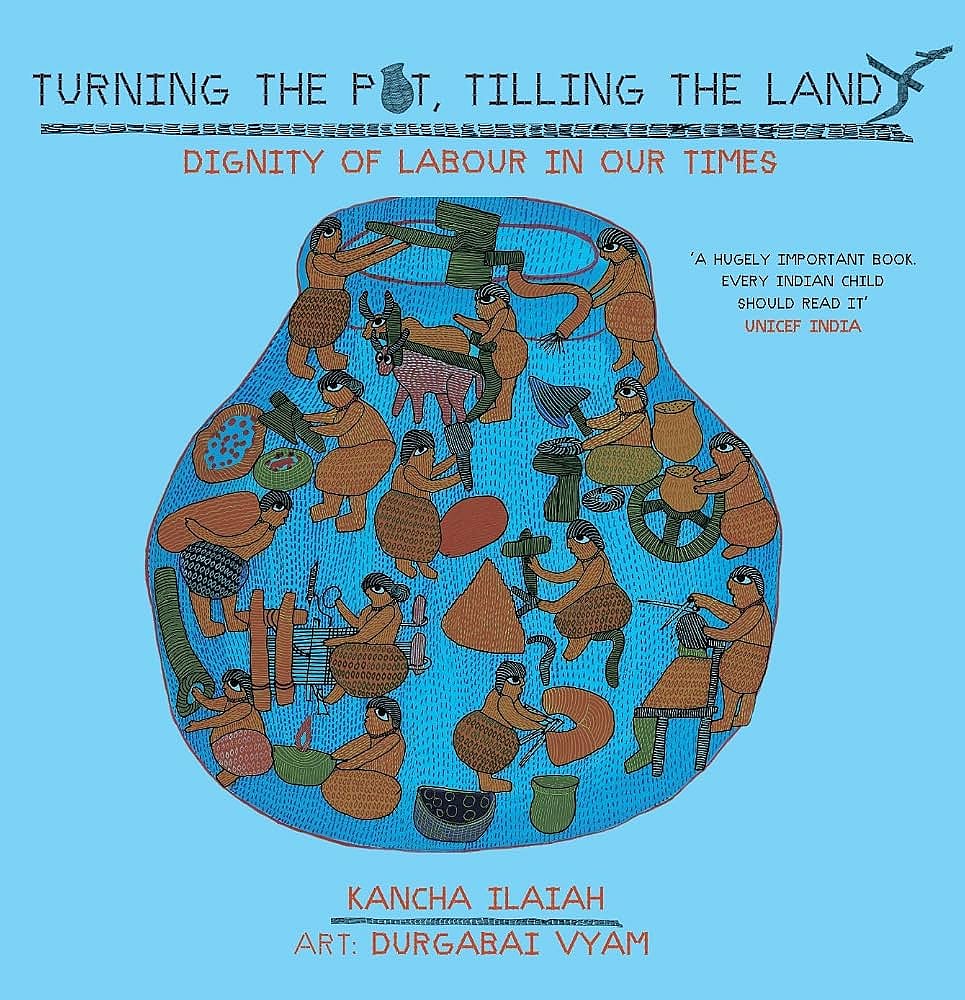
Other books approach the subject through the lens of the dignity of labour. Turning the Pot, Tilling the Land: Dignity of Labour in Our Times, written by Kancha Ilaiah and illustrated by Pardhan-Gond artist Durgabai Vyam, directly challenges the caste hierarchy embedded in the way Indian society views work. By foregrounding occupations and communities that have historically been stigmatised, the book does something quietly radical: it asks children to question not the dignity of the worker, but the prejudice that denies it.
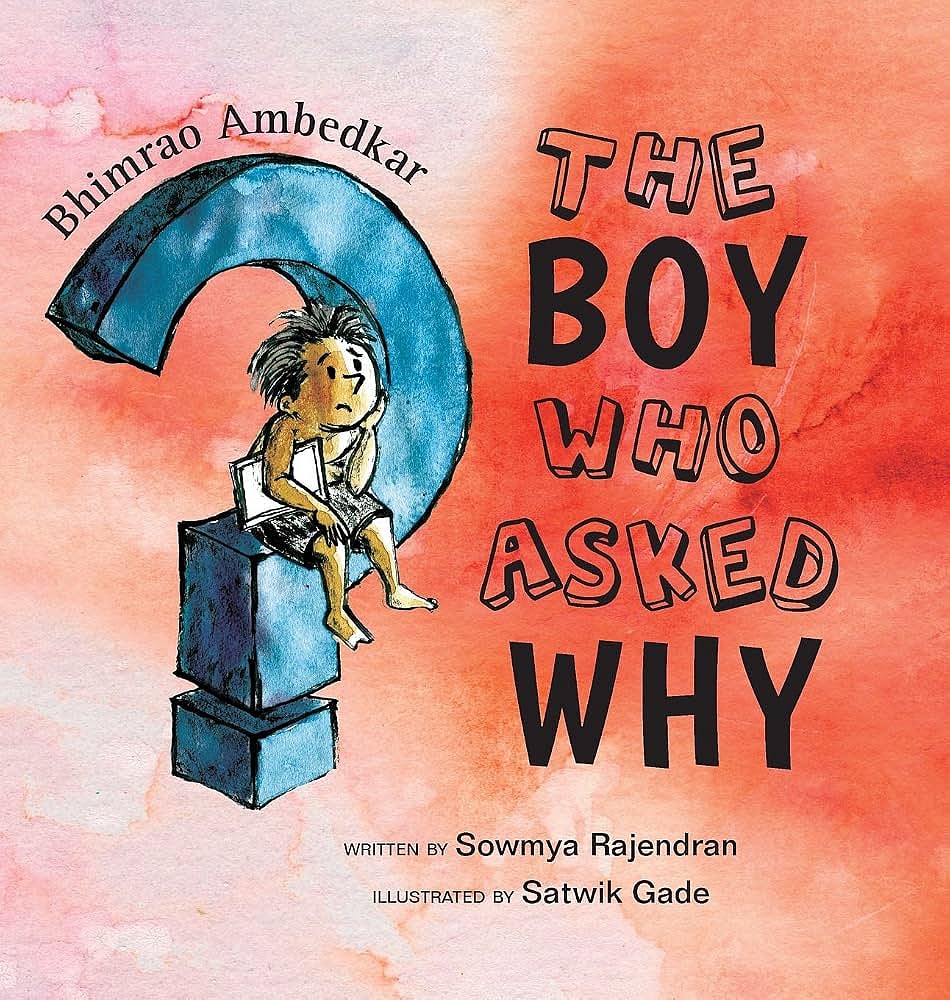
BLUE is not Gade’s first encounter with translating caste into images for children. The Boy Who Asked Why: The Story of Bhimrao Ambedkar, written by Sowmya Rajendran and illustrated by Gade, begins with a child’s questions—Why do I have to sit separately? Why can’t I drink water from the tap? Why do the teachers never touch my books?—and follows those questions into Ambedkar’s lifelong struggle against untouchability and caste discrimination. The “whys” here are not merely a storytelling device. They become the beginning of political consciousness.
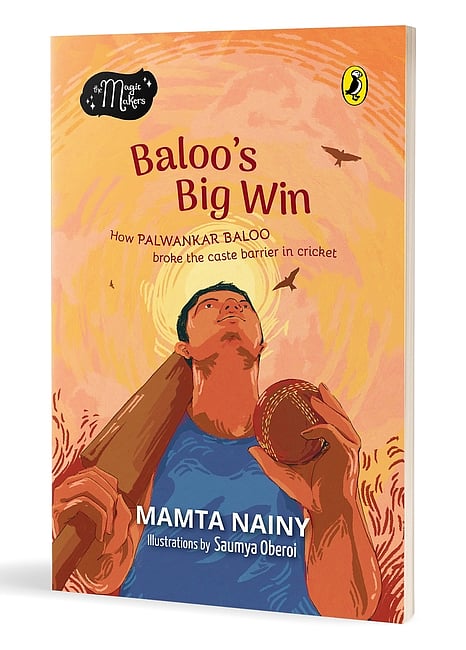
That questioning spirit also animates Baloo’s Big Win, written by Mamta Nainy and illustrated by Saumya Oberoi, which introduces young readers to Palwankar Baloo, the Dalit cricketer who confronted caste discrimination on and off the cricket field. The book asks a deceptively simple question: “Does anyone really win when not everyone gets to play?” Through sport, a world children already understand intuitively, caste becomes visible as a system that decides who gets to participate, who belongs and who is allowed to stand alongside others.
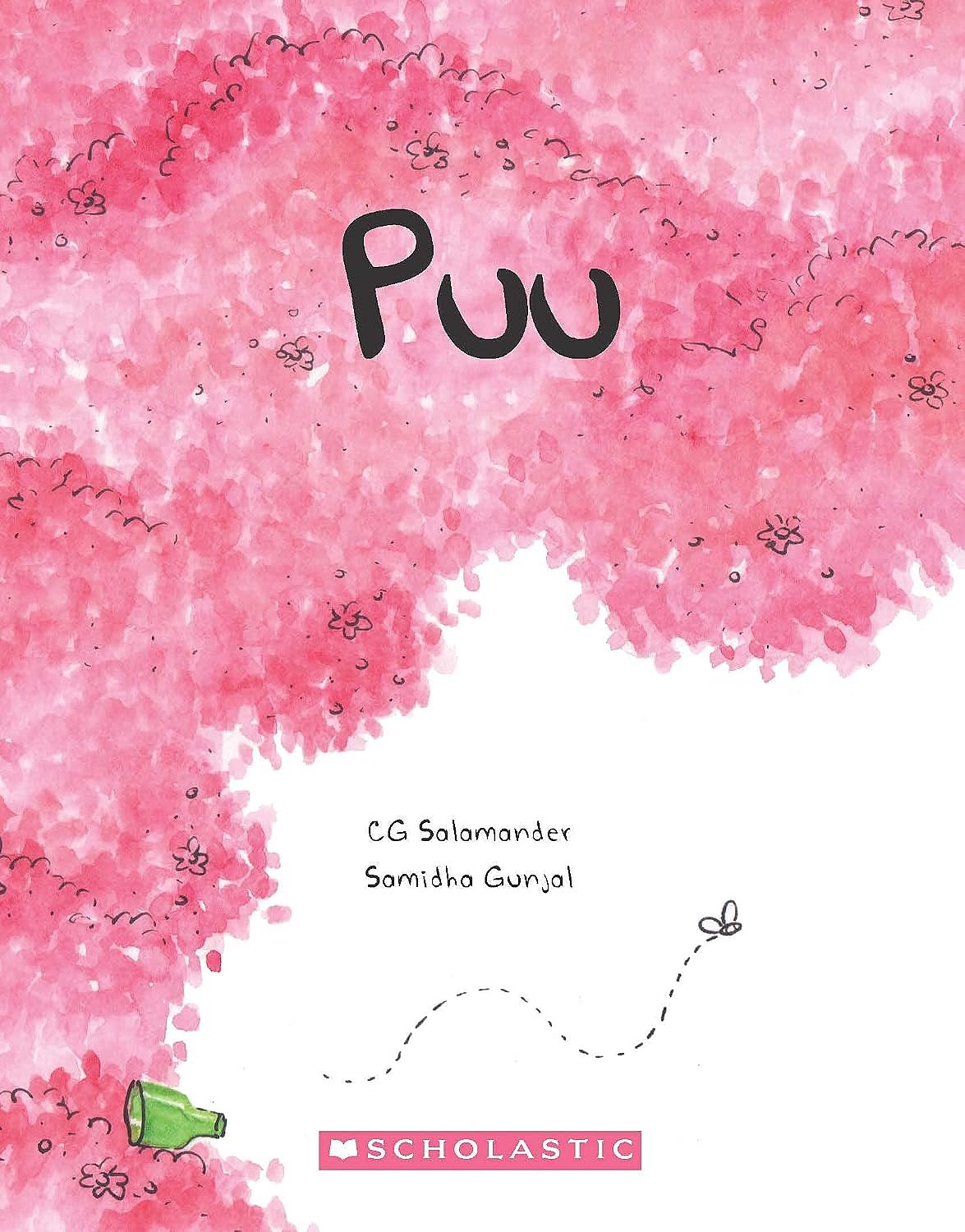
And then there is Puu by C.G. Salamander, illustrated by Samidha Gunjal, which confronts one of India’s most dehumanising realities: manual scavenging. Its minimalist visual language allows the book to approach the subject without turning suffering into spectacle. The story situates Dalit childhood and systemic marginalisation within a form that children can enter, while leaving enough space for them to feel the weight of what they see.
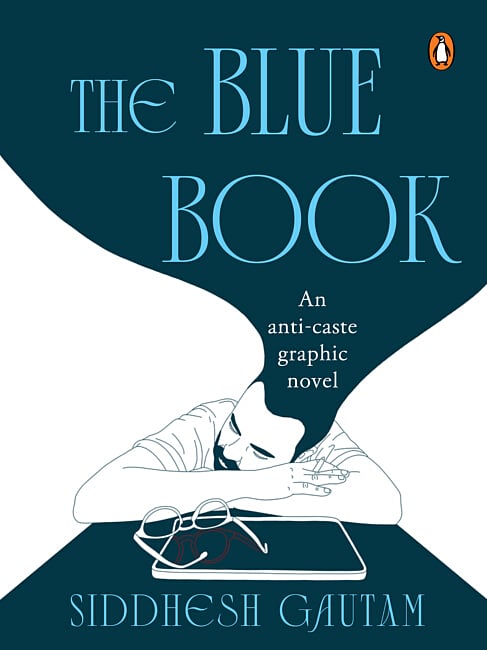
Prominent Ambedkarite visual artist and writer Siddhesh Gautam’s The Blue Book: An Anti-Caste Graphic Novel offers an intimate, visually arresting entry point into the history and continuing struggle of the anti-caste movement. Rooted in questions of caste, memory, dignity and social justice, the book brings together text and image to revisit the lives and ideas of figures who challenged caste oppression, making a complex history accessible without reducing its political force. Through dream sequences and imagined conversations with anti-caste thinkers and reformers, Gautam connects the struggles of the past with questions that remain urgent in the present.
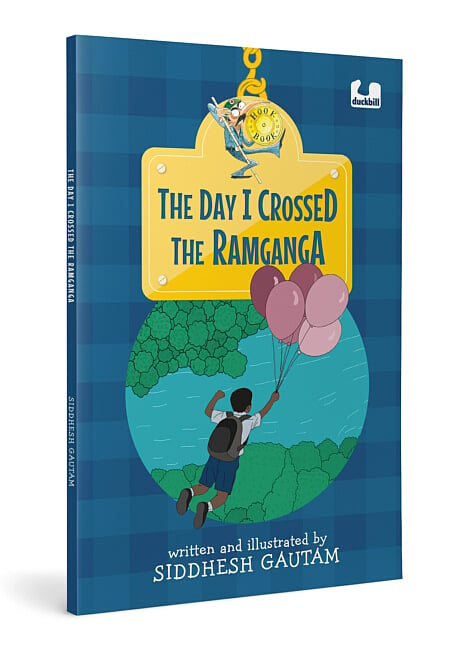
Gautam’s other recent release, The Day I Crossed the Ramganga, marks a very different but equally evocative turn: his first book for early readers. While his distinctive visual language remains central, the narrative is a simple, relatable adventure about a young boy attempting to cross a river to reach his father—bringing his art and storytelling to a younger audience.
Taken together, these books suggest that there is no single vocabulary for talking to children about caste. It can be encountered through Ambedkar’s childhood, a girl’s humiliation at school, the dignity of labour, a cricket field, the experience of manual scavenging, or the radical ideas of Phule. It can be shouted, whispered, drawn, questioned or simply lived.
And that may be the most important shift taking place in children’s literature: caste is no longer presented only as a subject to be taught to children. Increasingly, it is being presented as something they can see, feel, question and recognise in the world around them.
What does caste look like?
Representing caste is not only a question of what stories we choose to tell. It is also a question of what caste looks like when it enters a child’s visual field.
Caste is both visible and invisible. It can announce itself through a surname, an occupation, an address or a ritual; just as often, it resides in gestures, silences, spatial arrangements, clothing and body language. For an illustrator, therefore, representing caste is not simply about choosing the “right” skin colour or putting a particular symbol in the frame. It is about closely observing the social world.

Gade says, “An illustrator should be enthusiastic about learning from life and applying that to illustrations. If we are observant, we would automatically know that skin colour, size, or physical appearance have certain mainstream associations that are rarely reflected in how we observe reality.” Drawing on the lives of well-known people, real-life examples and everyday experiences, he adds, is important.
The irony is that Gade’s approach to caste in BLUE is not particularly subtle. The book’s restraint lies elsewhere. Typography, colour and visual contrasts carry meaning: the brightness of the kite festival sits against the monochrome world of Bhim’s basti; red interrupts the greys with the shock of blood; and eventually, when Bhim becomes the sky, the visual vocabulary of the book shifts again.
As Gade explains, “It’s at once both subtle and in-your-face. My effort was never to make it just subtle. The reference to caste is made especially obvious by the black-and-white backgrounds of Bhim’s basti.”
A book does not have to be subtle about injustice to avoid being didactic.
“Given my background in cartoons and comics, subtlety is not the route I take. But I do try to exercise some restraint when the text is advising me to do so,” he adds.
Who gets to decide what children can know?
There is a peculiar hierarchy in children’s publishing. Dragons and monsters are easy to sell because they offer children an escape from their own world. Caste and discrimination in its many forms are harder propositions, not necessarily because children cannot understand them, but because adults are often unsure whether they should have to.
As Richa Jha, author and independent publisher, points out, “Dragons and monsters are easier to publish, but there are not many books that have these anymore, especially here in India. The Indian publishing industry is brave, diverse and most inclusive in the entire world.” She points to a publishing landscape that is increasingly willing to take on difficult subjects and address discrimination in its many forms. The more interesting question, then, is not whether children’s books about discrimination are harder to publish than fantasy, but what happens when publishers choose to make difficult realities available to young readers and who gets to decide whether children are ready for them?
But the difficulty for a publisher is not merely commercial. Children’s publishing, like many other cultural spaces, is shaped by who occupies its gatekeeping positions. “The publishing industry is skewed towards higher castes,” Jha says, “making it difficult for editors who are unfamiliar with certain realities to handle books on discrimination with honesty and sensitivity.” A book about caste, therefore, has to navigate more than a child’s reading appetite. It has to pass through the perceptions, discomforts and assumptions of the adults who commission, acquire, edit, market, sell and recommend it.
And then there are parents. For younger children, Jha points out, “gatekeeping in picture books often happens at the parental level.” A book about caste can require a parent to have a conversation for which there may be no easy vocabulary, no neat answer, and sometimes no willingness to confront their own location within the social hierarchy. It is simpler to offer a book about a dragon.
But perhaps we have confused protecting childhood with protecting children from knowledge.
Children encounter the world long before they possess the vocabulary adults use to describe it. They know exclusion before they know the word discrimination. They recognise unfairness before they can explain inequality. They notice who is allowed to sit where, who is served first, whose home is considered clean, whose work is considered dirty, who is laughed at and who is listened to.
“Children are capable of absorbing much darker and more complex realities than adults often realise,” Jha says. The task of a children’s book, then, is not necessarily to make those realities palatable. It is to give children a way of approaching them.
This is also where the distinction between an “issue book” and a children’s story becomes crucial. A book can carry a political or social concern without turning its characters into mouthpieces for that concern. “A book becomes an ‘issue book’ rather than a children’s story when an author tries to backfit a narrative into a predetermined agenda,” Jha says. “When the focus shifts from living, breathing characters to simply delivering a specific message, the emotional connection is lost.”
Jha’s observation brings her perspective surprisingly close to Gade’s approach to BLUE. He speaks of resisting exposition, of choosing “wonder, curiosity and doubt” over explanation, of favouring “confusion and clamour over clarity.” Both, in different ways, are arguing for the same thing: don’t make the child consume an issue; let the child experience a story.
The distinction matters particularly when the subject is caste. A child who has never experienced caste discrimination does not need to have lived it to care about a child who has. “A reader should be able to care about and empathise with a character even if they have not lived through similar realities or trauma,” Jha says. The bridge is not identification but empathy.
And perhaps that is where the adult anxiety around difficult children’s books needs to be reconsidered. The question isn’t simply, “Can a child handle this?” It is also, “Why do we assume the child cannot?” And, more uncomfortably, “Who benefits when the child is not allowed to know?”
Publishers who believe these books matter can, Jha says, push them through despite resistance from marketing and sales teams. “These books are published out of conviction.”
They may not be the easiest books to sell. They may not be the books every parent reaches for. They may not even be the books every child picks up.
But perhaps they don’t have to be.
They only have to be there for the child who is looking for them—the child trying to understand something they have already seen, the child who has experienced it, or the child who has begun to ask their own why.

A child is not an empty vessel
Children aren’t passive recipients of adult-approved knowledge. Perhaps that is the larger argument BLUE makes: that children’s literature need not decide what children should know so much as give them the freedom to know more than we imagined they could.
For Gade, the stakes are larger than representation. “I think there is a concerted effort on the part of the corporate-political nexus to keep children ill-informed in the name of protecting their innocence.”
His defence of BLUE is ultimately a defence of the child’s agency. “Children are their own people, at once much smarter and more foolish than we can imagine.”
Children’s literature need not make the world simpler for children. Sometimes its more important task is to help them see the world as it is and give them the imagination to ask why it is so.
“Engaging with politics is not only for adults. It is an essential part of children’s holistic growth,” Gade concludes.

