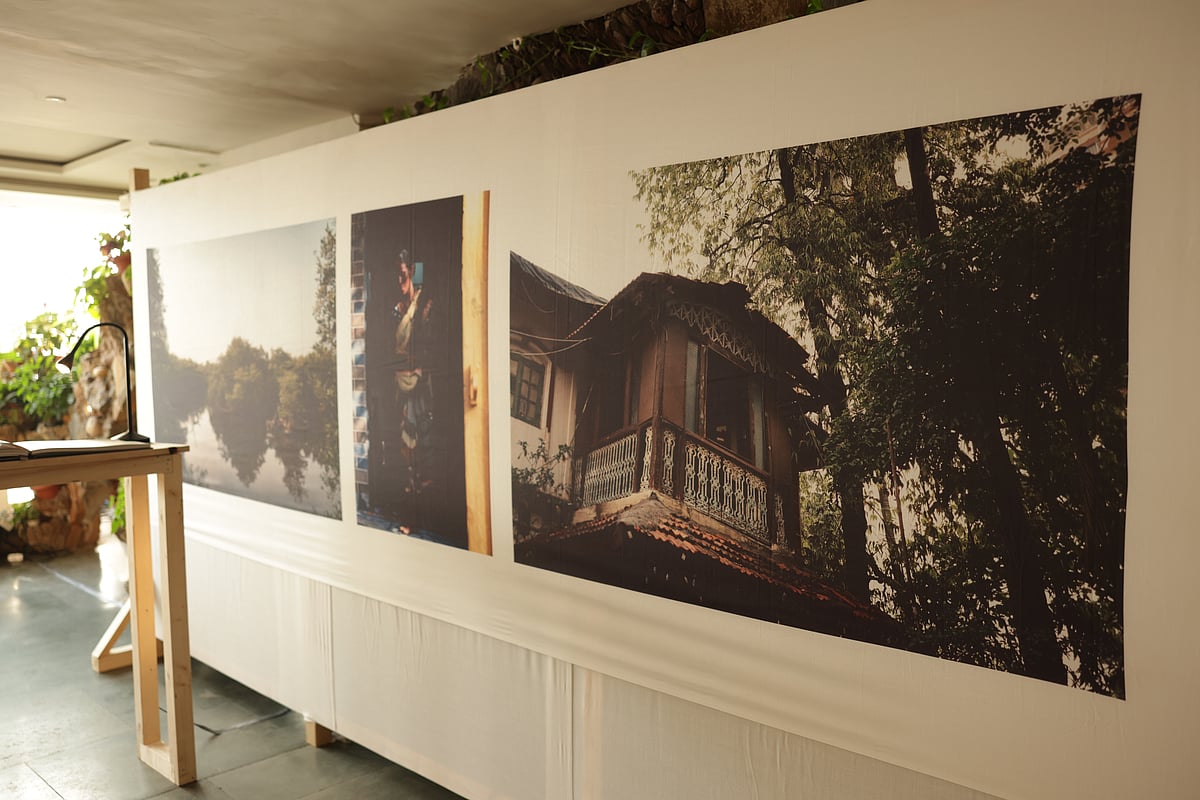
As the sun set in the background, and the tide rushed in, Kino's Cottage, a sea-facing venue, lit up beautifully, as it welcomed the Who's Who from the friendly North Mumbai neighbourhood called Versova for the unveiling of Cyrus Mody's coffee table book Versova: Once Upon A Shoreline.
It's a book about history, memories, people, connections and food. It will gently nudge you to look beyond the commercialisation and discover the sleepy fishing hamlet for what it was. Beneath the modern gloss, the book launch brought to the fore Versova's glorious past of conquest, trade and empire, while also touching upon its glamorous present-day scenario, given that it's home to several actors and theatre artists.
The launch of the book by Viceroy Properties was an evening to remember with Maria Goretti steering a lively conversation with Rajhans Tapke, a 'lifelong member' of the Koliwada community, and the man behind the Versova seafood festival, Noel D'Souza, an East Indian whose family has been living in Versova since 1880, photographer Sunhil Sippy, and actor-director Samrat Mukerji.
"Versova is quaint, filled with green pockets, cozy cafes, and hidden spaces that become part of your daily rhythm," shared Maria Goretti, moderator for the evening. "What I love the most is the sense of coexistence. In the morning, you might hear church bells, the azan from the mosque, or mandir bells, all blending into everyday life."
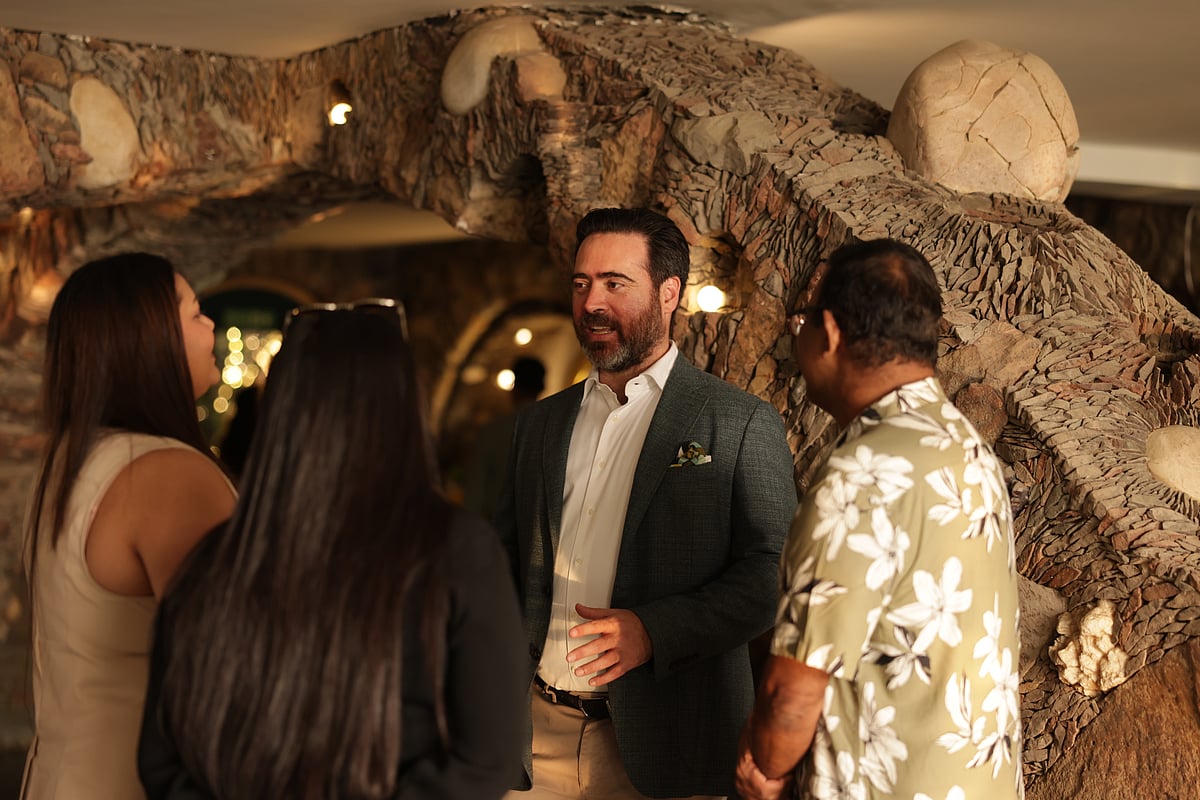
Cyrus Mody, Founder and Chief Executive Officer, Viceroy Properties at the launch |
"For decades, Versova has remained Mumbai's hidden treasure. This once-sleepy fishing village, later an artists' haven, now finds itself on the precipice of transformation," added Cyrus Mody, Founder and Chief Executive Officer, Viceroy Properties.
The book brings together photographers, filmmakers, writers and long-time residents to preserve stories that often remain undocumented, even as the city around them rapidly transforms.
Versova is more than a micro-market. It is a living, breathing cultural ecosystem shaped by generations of artists, filmmakers, fishing communities and families with stories that often go undocumented. The chapters of the book are dedicated to them.
The visual language of the book is anchored by renowned photographer Sunhil Sippy, whose images capture Versova beyond the postcard view. “Versova reveals itself in moments. The early mornings at the Koliwada, the quiet lanes behind the beach, the homes that carry decades of memories. This book allowed us to slow down and observe Versova as it truly exists, intimate, layered and deeply human," he shared.
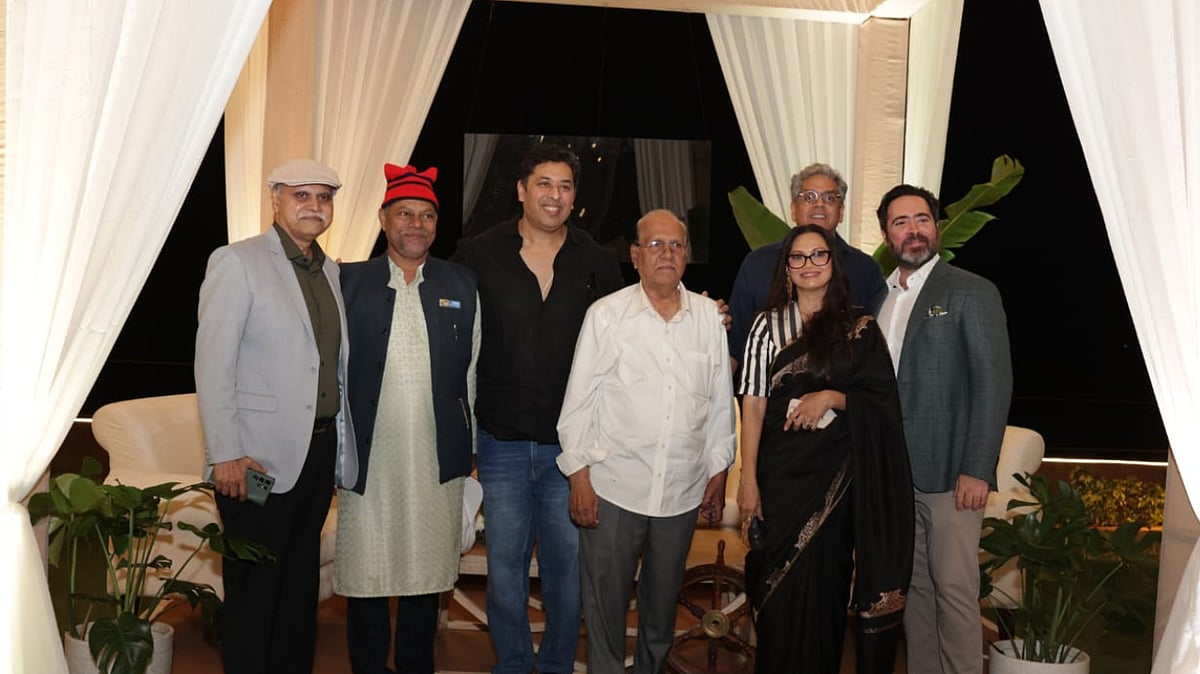
(From left to right) Noel D'Souza, Rajhans Tapke, Samrat Mukerji, Bhagwan Bhanji, Maria Goretti, Sunhil Sippy and Cyrus Mody |
Versova: Once Upon A Shoreline
In Cyrus Mody's words, the pages of the book are "an invitation to look beyond the obvious — past the cafes and casting studios, beyond the fishing nets and high-rises — to the soul of a place that has weathered centuries of change yet managed to retain its essence."
The book, with its stunning photographs, prompts readers to step onto Versova's shores, where the scent of drying fish mingles with history. "The creek that now carries city-weary travellers once bore Portuguese galleons and Maratha war fleets. Madh Fort looms over the coastline, its battered walls whispering tales of battles fought and kingdoms lost — echoes of empires rising and falling with the tide. Long before the Portuguese, the Marathas, or the British, Versova and Madh belonged to an older world, now buried beneath urban sprawl," reads the introduction.
There is also a mention of Pratap Bimb, 'a warlord who transformed Mumbai’s barren islands into a thriving dominion'. It speaks of battles, sacked villages, and waves of Yadava and Islamic rulers claiming this stretch of coast. Whether fact or legend, it reveals a time when Versova and Madh were not sleepy fishing hamlets but coveted strongholds in a grander struggle.
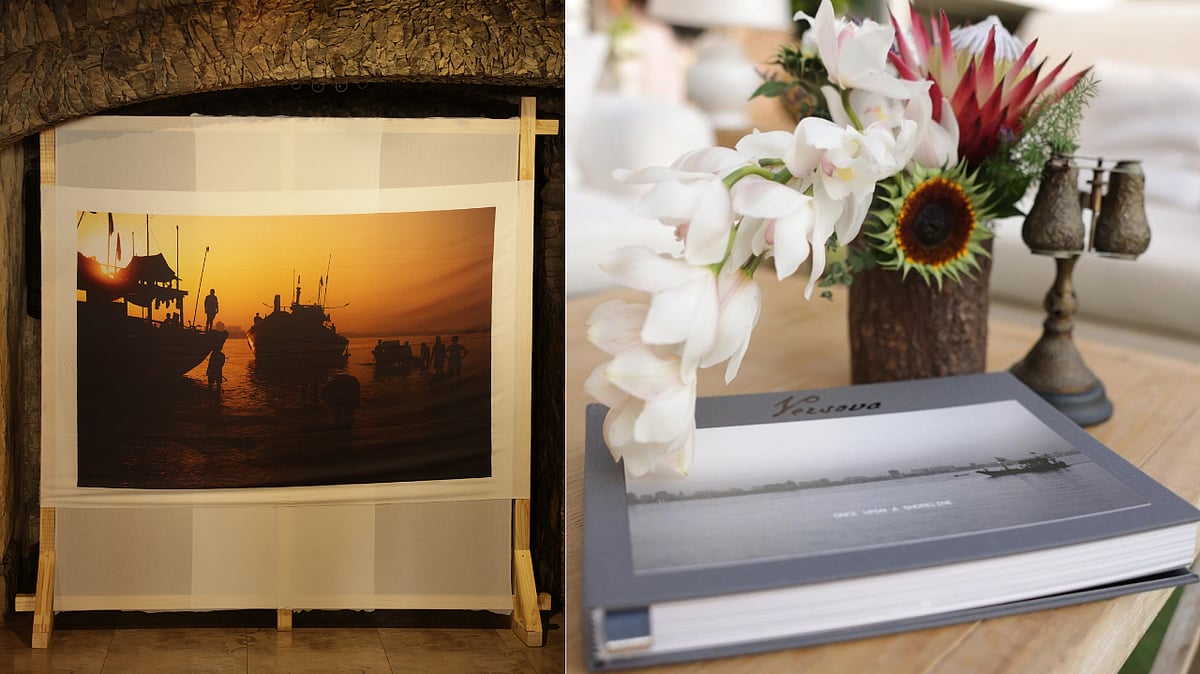
Glimpses from the coffee table launch |
Versova: 'Sonachi Gav' or 'Village of Gold'
Kolis are one of the earliest inhabitants of Versova, and Versova gets its name from 'Vesave', which stands for 'rest' in Marathi. It was at this seaside location that ships along the west coast halted for breaks before heading back to sea again. For Britishers, it was 'vis-a-vis', but for locals it was Visava, Vesava or Vesave.
Rajhans Tapke joked about the fisherwomen and their love for gold. It is a known fact that the Koli women invest their earnings into buying ornaments as a means of savings and having assets of their own.
"But if their loved ones were to face any difficulty, these women wouldn't hesitate to sell that gold for their family," shared Tapke. Moreover, he also revealed that in their community, dowry is not taken from a girl.
Resident Noel D'Souza mentioned how, back in the day, there was a constant mention of Versova being a landing spot for smugglers and how ships coming here were filled with gold. According to him, that's possibly how Versova got the moniker 'Sonachi Gav'.
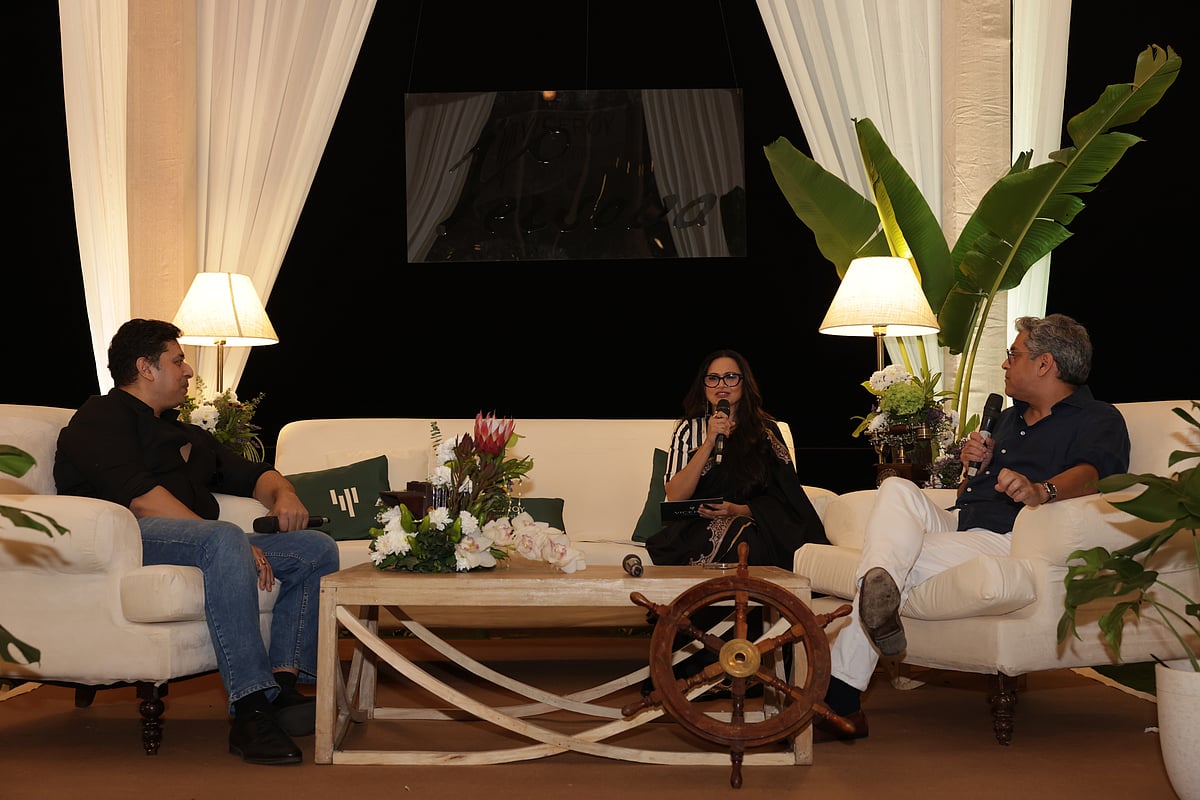
Samrat Mukerji, Maria and Sunhil Sippy |
Going down memory lane
During Samrat Mukerji's childhood, Versova was an extension of 'mini-Goa'. "It was a sleepy town, with no high-rises. When I bunked school, Versova Beach was the place I never got caught. All my naughtiness started from here," he laughed.
For Sunhil Sippy, the man behind the marvellous photographs in the coffee day table, it was hard to miss the sense of serenity that came everywhere he photographed at Versova. "My first moment shooting here was walking down a lane in Versova at four in the morning. There were two fishermen with their catch coming towards me and I started chasing them with a camera," he revealed. "I have seen these communities and photographed them in different parts of the city."
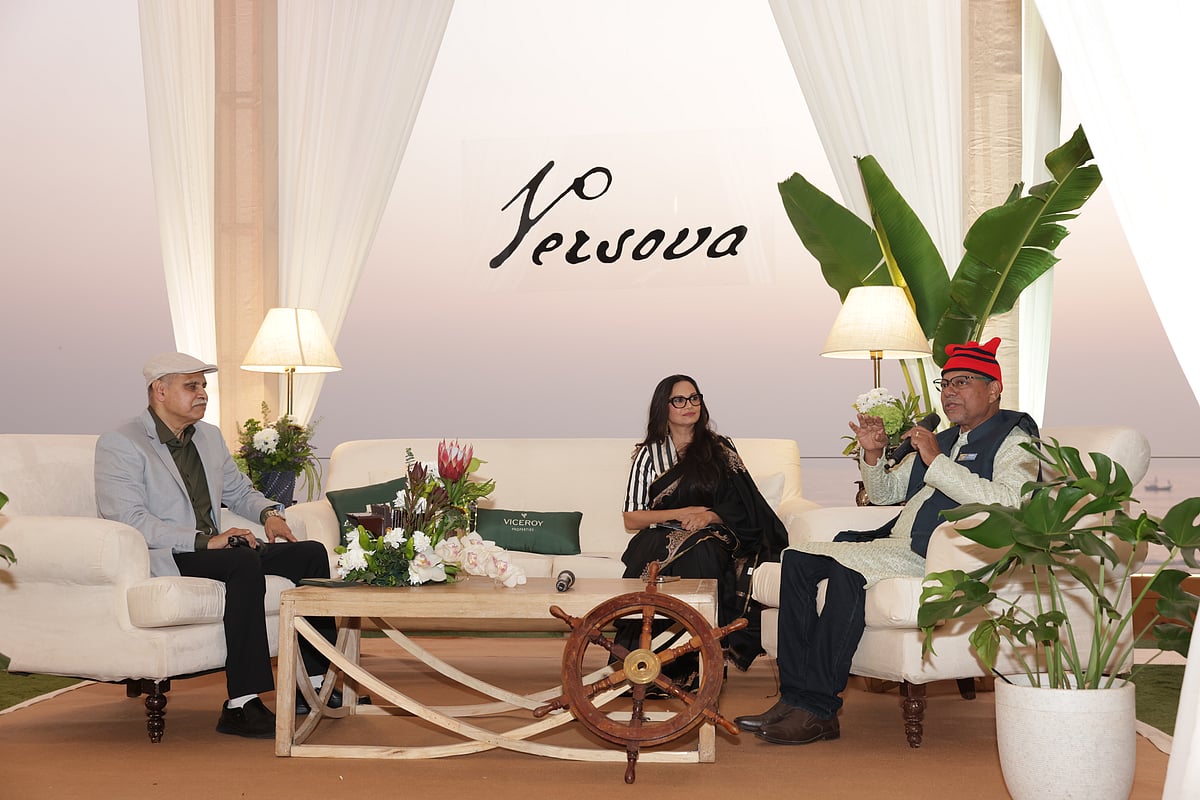
Maria Goretti in conversation with Noel D'Souza and Rajhans Tapke |
The shifting tide
For Noel, the "rapid urbanisation of Versova" was a bit concerning. "Though we welcomed people coming in, newer communities, newer diaspora, and shared this beautiful place with everyone, the sad part is that no kind of planned development has taken place in Versova.
"Versova will always welcome everyone with open arms. We have been a hub of communal harmony even in the worst days... the Kolis, the Muslims, the Catholics; all kinds of people have shared this platform. Everyone is accepting. But today it is in a civic mess," he added.
Tapke strongly felt that "if Versova has to save its soul, it needs to save its Kolis. If the sea is safe, our future will be safe as well."
Sunhil's advice is simple. "By all means, develop, but do it mindfully."
