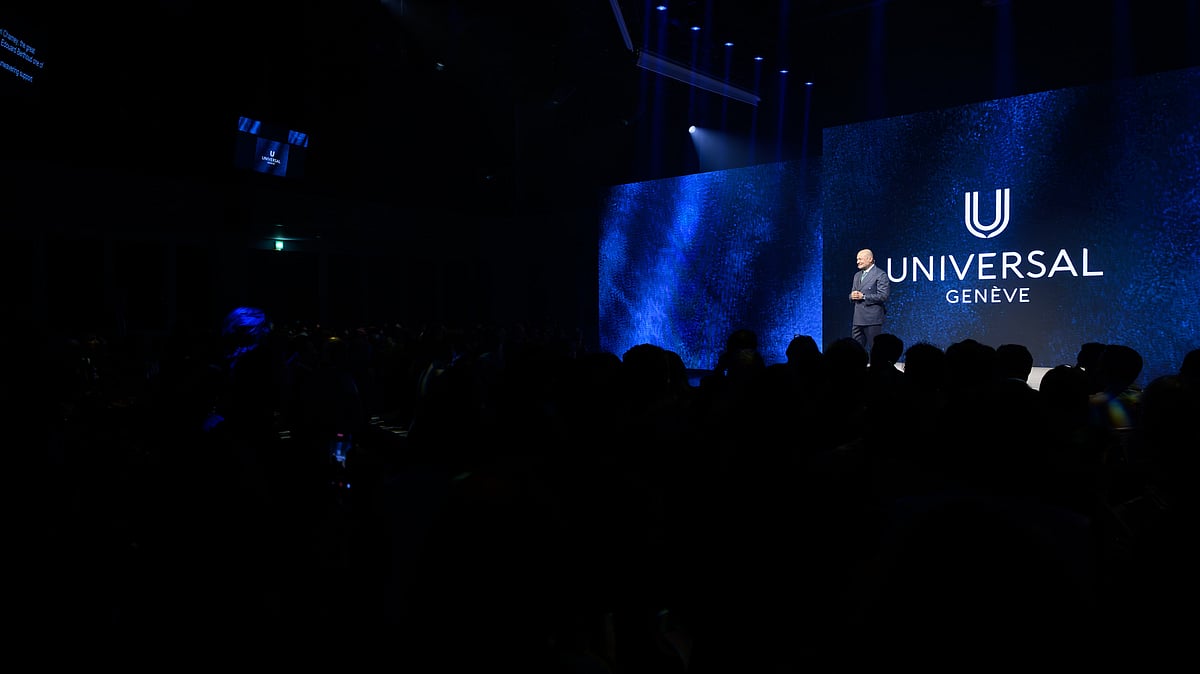
On April 13, 2026, collectors, historians, and industry insiders gathered in Geneva to witness the long-awaited revival of Universal Genève. Known for decades as the ‘Watch Couturier,’ the Maison returns not merely as a heritage name, but as a renewed force in contemporary horology. Now positioned at the top tier of the ‘House of Brands’ which includes Breitling and the forthcoming revival of Gallet, Universal Genève is set to recapture its place among watchmaking’s most influential names. Founded in 1894 in Le Locle, Switzerland, by Numa-Emile Descombes and Ulysse-Georges Perret, the company quickly earned recognition for combining refined aesthetics with mechanical innovation. Its relocation to Geneva—specifically Rue du Rhône—anchored its reputation within the heart of Swiss watchmaking. The brand made a mark with its rare ability to balance elegance with engineering precision, a philosophy that defines its identity for generations.
In 1932, under the leadership of Raoul Perret, the brand underwent a decisive change as Perret was convinced that design and technical development must coexist from the outset, and established one of the industry’s first dedicated design departments. This approach laid the groundwork for Universal Genève’s enduring identity as ‘Le Couturier de la Montre.’ By 1946, the brand had distilled its philosophy into a single expression: “Uniting French taste with Genevan precision.” This vision elevated the wristwatch beyond mere function into the realm of art.
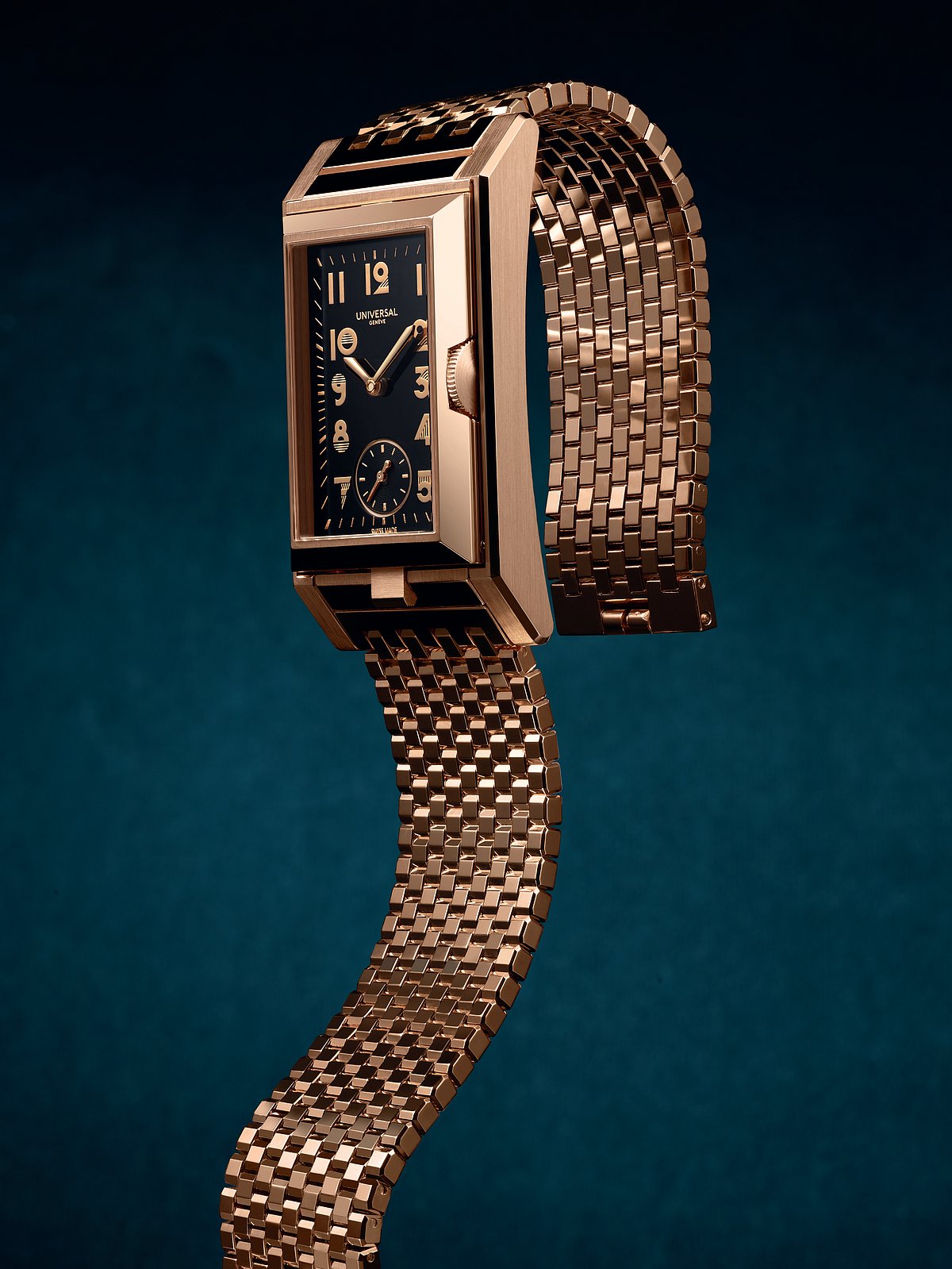
Universal Genève Cabriolet |
Over the decades, Universal Genève produced a series of iconic timepieces that continue to captivate collectors. Among them are the Polerouter, Compax, and Cabriolet. Each embodies the Maison’s principle of ‘functional beauty,’ where technical excellence serves as aesthetic harmony. Soon, these watches became cultural symbols, surpassing their mechanical achievements, and were worn by influential figures such as Nina Rindt, Eric Clapton, and Alain Delon.
Central to Universal Genève’s technical legacy is its pioneering work with microrotor movements. The introduction of the Microtor Calibre 215 in 1958 marked a breakthrough in automatic watchmaking, offering exceptional thinness without sacrificing performance. This innovation was followed by even slimmer calibres in the 1960s, reinforcing the brand’s reputation for engineering ingenuity. Its chronograph movements—particularly those powering the Compax family—further demonstrated a mastery of complexity, precision, and reliability.
The icon: Polerouter
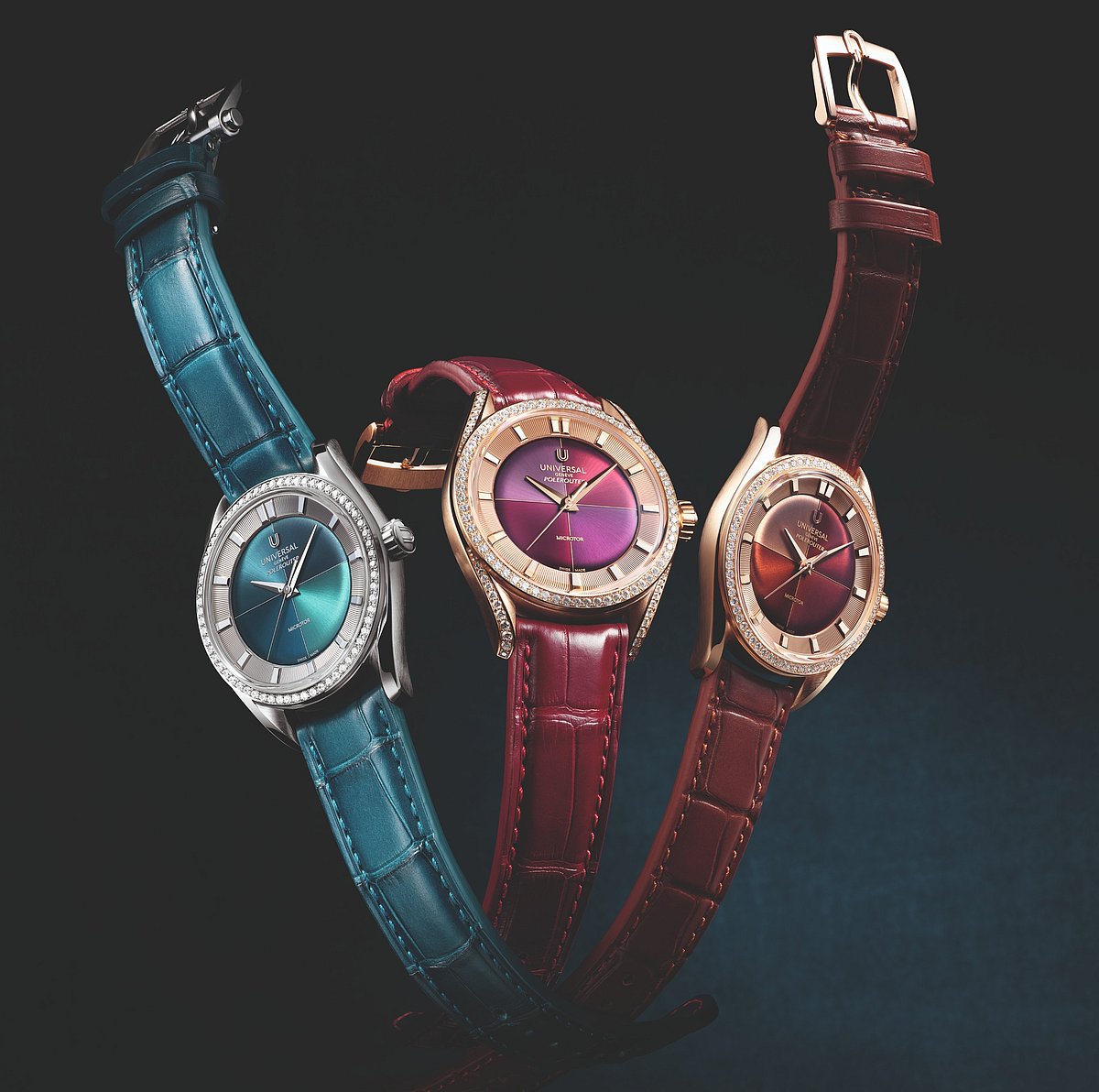
Universal Genève Polerouter Camaieu models in turquoise, berry, and toffee tones |
The rebirth of Universal Genève is anchored in the revival of its most celebrated models, beginning with the Polerouter. Originally designed in 1954 by the young Gérald Genta, who has also created the Audemars Piguet Royal Oak and Patek Philippe Nautilus, the watch was commissioned for Scandinavian Airlines’ pioneering transpolar flights, connecting Copenhagen to Los Angeles via North Pole. The Polerouter was engineered to withstand extreme conditions, featuring anti-magnetic protection, shock resistance, and a distinctive design that balanced durability with elegance. The modern Polerouter remains rooted in its origins while embracing contemporary enhancements. Its signature elements—twisted lugs, crosshair dial, and outer tension ring—are preserved, now enhanced by a microrotor movement delivering a 72-hour power reserve. The result is a watch that seamlessly bridges heritage and innovation, embodying the Maison’s enduring philosophy.
The art deco classic: Cabriolet
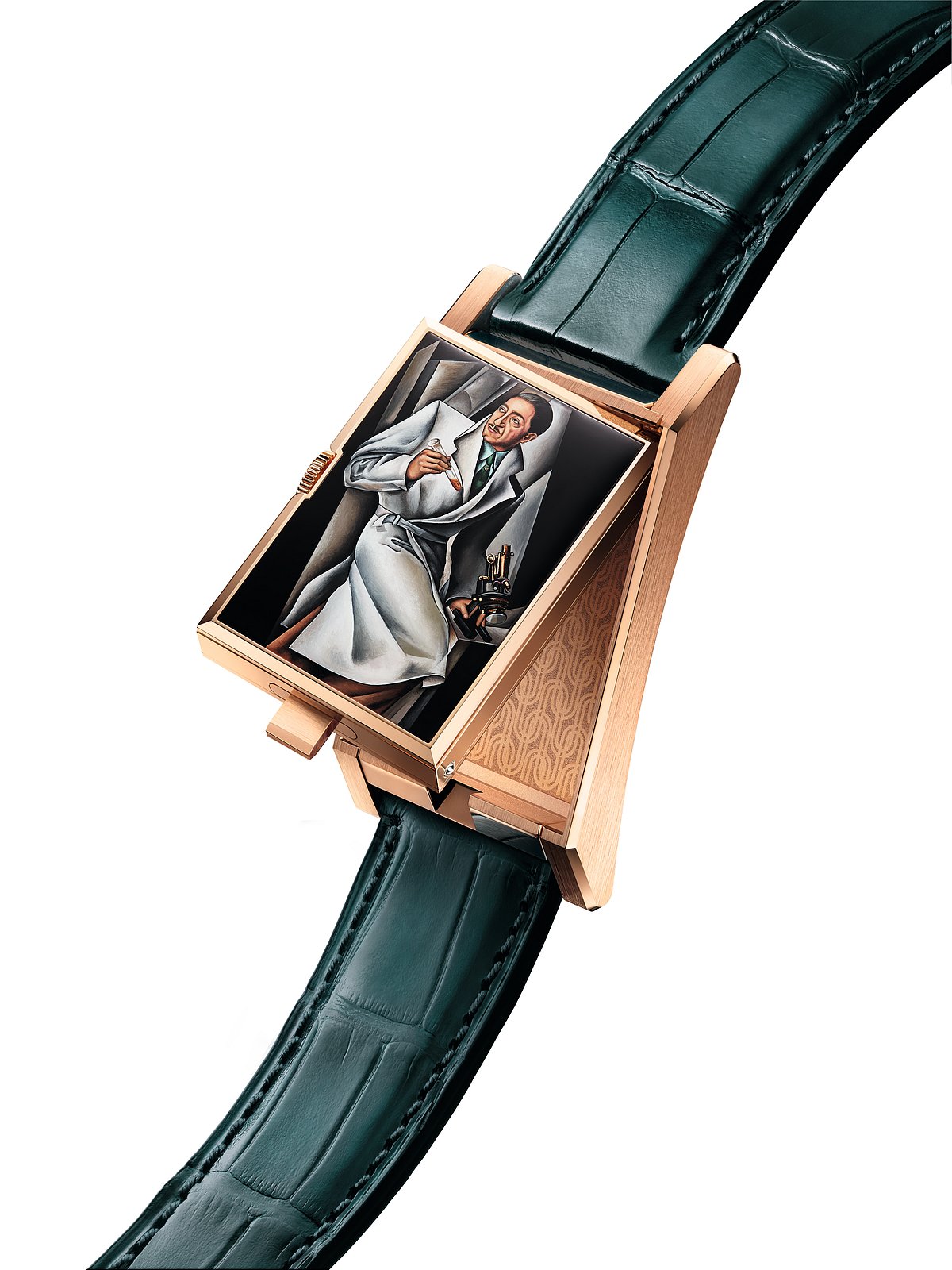
Universal Genève Cabriolet De Lempicka Capsule |
Originally introduced in 1933 as the Ideo, the return of Cabriolet is significant. One of the earliest reversible wristwatches, it featured a flipping case designed to protect the dial. Today, the Cabriolet is reimagined as both a technical innovation and an artistic statement. Clean lines, geometric precision, and refined detailing define its aesthetic. Drawing inspiration from the Art Deco movement, it reflects the visual language of figures such as A. M. Cassandre, one of the greatest French graphic designers of the 20th century, and Tamara de Lempicka, a leading Art Deco and Modern artist, and a culturally iconic figure.
The lifestyle chronograph: Compax
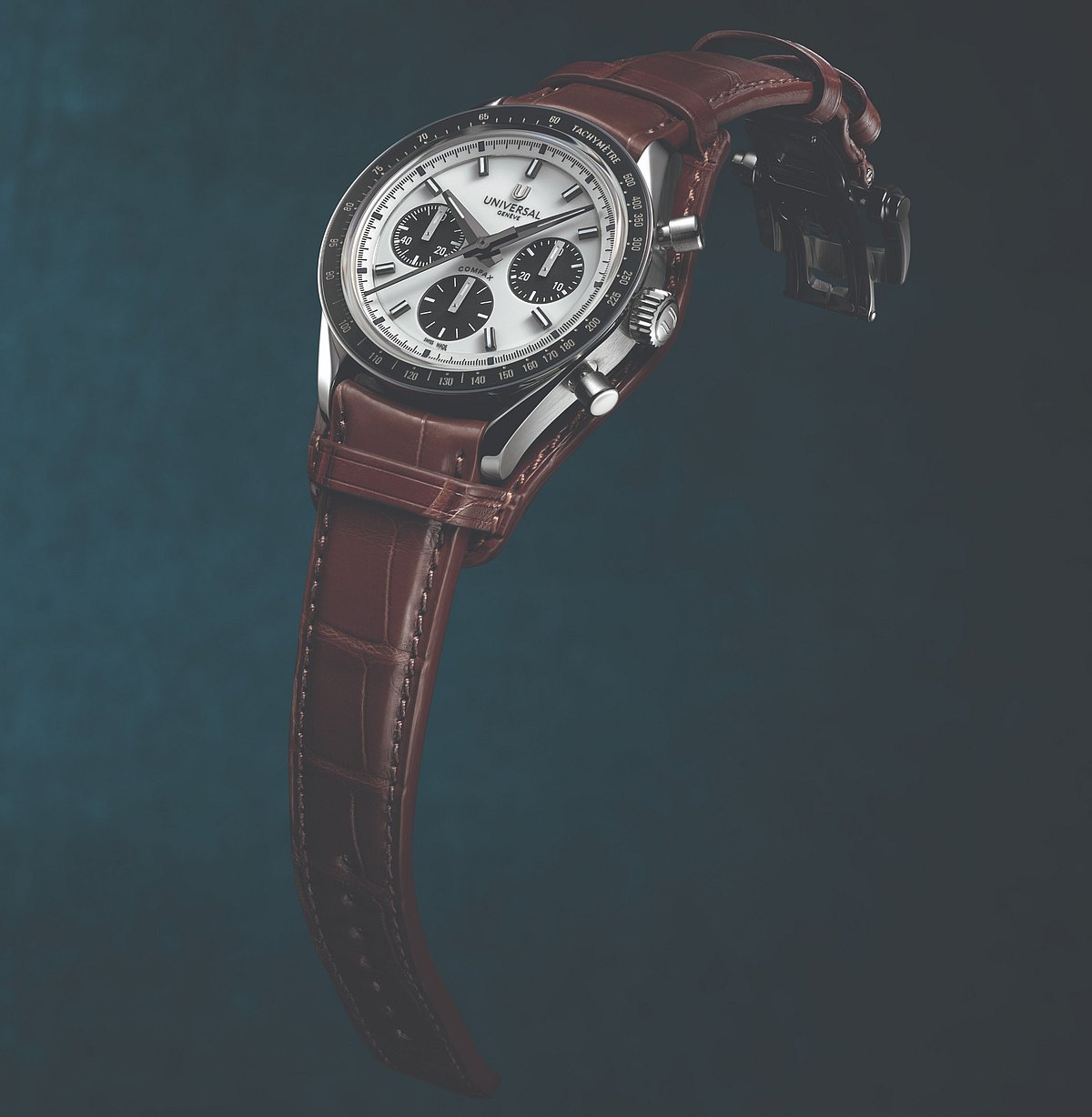
Universal Genève Compax in stainless steel with a brown bund strap |
The Compax chronograph, first introduced in 1936, also makes a significant comeback. It gained widespread recognition in the 1960s through its association with Nina Rindt, who famously wore the watch trackside at Formula One races. Rindt was Scandinavia’s most in-demand model and was married to Jochen Rindt, Formula One’s future world champion. The distinctive ‘panda dial’ Compax, paired with a bold leather Bund strap, transformed the chronograph into a symbol of both precision and style. Today’s reinterpretation honours that legacy while incorporating modern advancements, including a new microrotor chronograph movement that underscores the brand’s commitment to innovation.
At the heart of this revival lies a clear and contemporary vision. As CEO Georges Kern notes, the return of Universal Genève is not simply about resurrecting a historic name, but about reawakening a philosophy. It is a reaffirmation that watchmaking can unite artistry and engineering, tradition and modernity. In doing so, Universal Genève reminds us that a watch is more than an instrument for measuring time. It is an object of beauty, a reflection of culture, and a testament to the enduring relationship between precision and design.

