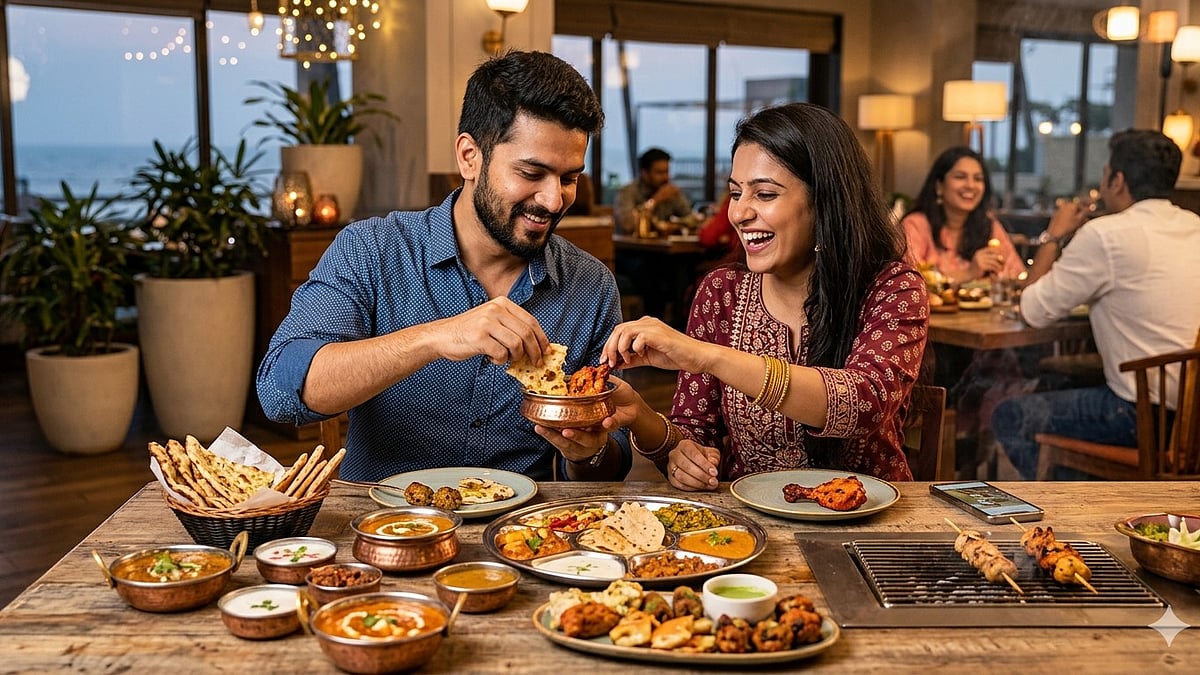
With the growing relevance of social media, exposure to global food cultures, and limited time available, there is a noticeable change in how couples approach their meals. Interactive plates, tasting portions, DIY touches, and dishes explicitly designed for sharing, rather than the more conventional individual-plated courses that once defined fine dining, are becoming the norm. Given the significance of this shift, it is important to analyse why people, and in particular couples, prefer shared plates over traditional formal courses.
Why the shift to fluid dining?
Plated courses long dominated upscale dining, with each dish presented as a distinct entity and savored in isolation, a format ideal for formal occasions such as anniversaries or birthdays. Couples today are breaking out of this rigidity. Fast-paced modern life demands dining that integrates effortlessly rather than defined structure.
The shift stems directly from a desire for connection. Traditional sequences interrupted conversation with lengthy waits between courses. Shared plates eliminate those pauses. Diners pass dishes freely, extending evenings into relaxed exchanges punctuated by the clink of communal cutlery. As work and leisure blend, meals favor spontaneity over protocol. A single shared bite naturally invites the next, fostering more laughter and eye contact than solitary plates.
Enhances emotional connection
Sharing plates directly strengthens emotional bonds between couples. When partners pass a platter and taste from the same dish, intimacy arises naturally. Individual plates create distance. Communal serving breaks it down.
Diners find a deeper connection in these moments. One partner might notice a citrus note first. The other picks up smoke beneath. Their exchange turns food into dialogue. Restaurants respond by designing platters for two. A tagine arrives warm with lamb and cumin. Partners scoop rice together. The rhythm syncs them.
These acts build lasting ties. Couples leave with shared stories, along with sated stomachs. Busy dining rooms prove the draw. Patrons return for evenings that linger in memory.
Interactive & DIY elements
Interactive and DIY elements invite couples to participate actively in their dining experience. Venues provide table-side stations stocked with components such as naan strips, spiced chickpeas, yogurt, and chutneys, allowing partners to assemble bites suited to their preferences. Simple tools ensure the process remains accessible and efficient.
This approach dispels lingering formality, endowing date nights with renewed energy and enjoyment. A minor imperfection in assembly prompts shared laughter, converting small mishaps into enduring anecdotes. Unlike formal courses, which relinquish all control to the kitchen and render diners mere observers, these features position servers as unobtrusive guides offering precise suggestions to heighten involvement. Such integration enhances overall satisfaction.
Modern lifestyle preferences
Today’s diners favor variety and exploration over heavy single servings, a preference that tasting portions address directly. Smaller plates enable couples to sample multiple flavors in a single sitting, aligning with mindful indulgence and balanced dining habits.
This format moves away from fixed consumption toward curated experiences through social menus. Partners progress through a diverse set of bites at a measured pace, free from the burden of oversized entrees. The structure suits contemporary lifestyles, where restraint and breadth enhance enjoyment without excess.
Social culture & visual appeal
A table laden with shared plates conveys abundance and celebration, its vibrant array instantly engaging to the eye. Social media has heightened this allure, elevating interactive spreads that solitary plates seldom match. Couples naturally gravitate toward menus fostering memorable moments destined for lasting recall.
Restaurants attuned to these dynamics design intentionally for interaction, personalization, and storytelling. Photogenic communal displays drive bookings through viral dissemination, while the inherent narratives of shared discovery shape couples' dining preferences.
Contemporary dining
Indian culinary traditions influence this modern shift toward shared dining. The thali depicts this heritage, presenting an array of compartments filled with dal, sabzi, rice, and accompaniments for diners to blend at will, embodying a communal ethos ingrained in daily life. Couples today intuitively revive this practice, adapting it for contemporary palates.
Bottomline
Couples leave these meals changed. They carry laughter from a DIY slip and excitement from surprise tastes. Formal dinners fade quickly as shared experiences last and draw them back. Restaurants that grasp this trend create lasting connections. Others follow suit as dining becomes more personal and meaningful.
(Chef Avinash Kumar, Director of Culinary, Novotel Mumbai Juhu Beach)

