Wheat, rice and millets are in; barley is out! Raspberry and peach may be great additions abroad, but back home, the bounds are being pushed by local flavours like aam, cucumber, paan and jamun. All this is just a reflection of the adventurous spirit of brewers in India.
Hylo Taproom by Igloo has a Cherry Sour that features Indian spices like cumin, coriander, black pepper, rock and black salt, clove, etc. "Spices greatly influence the taste of beer. There is a bible of beer styles and the first beers were brewed with coriander seeds and orange peels. In the Belgian Wheat Beer, you take coriander seeds are roasted, powdered and then added during the last five minutes when the beer is boiling," says Chaitanya Khanapure, founder of Igloo Craft Beers.

Chaitanya Khanapure's Konkan Rice Lager is a beer brewed with locally grown, aromatic rice |
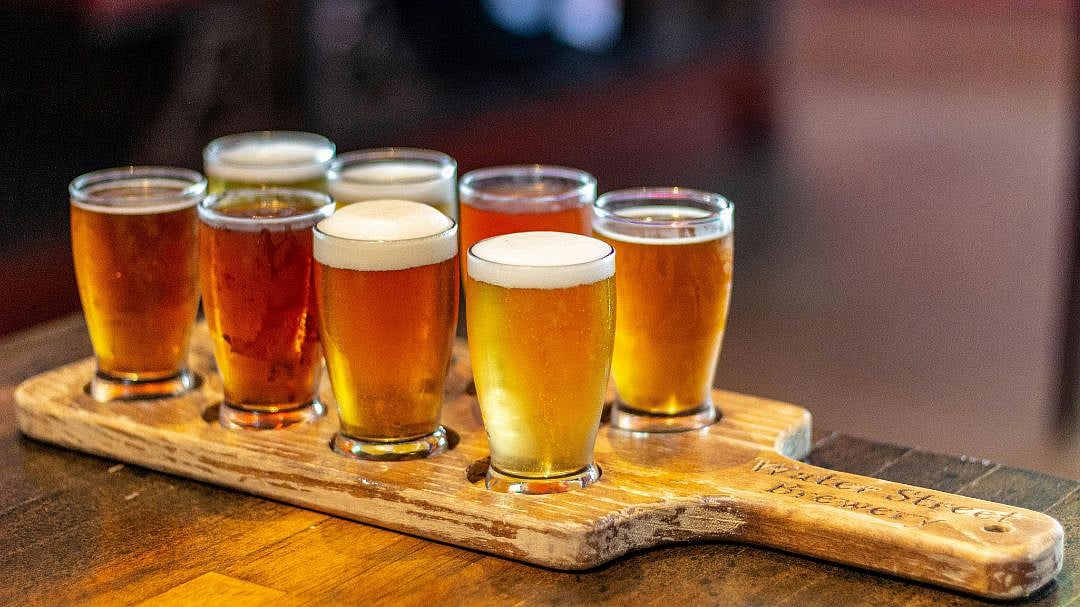
At Hylo Taproom by Igloo, you'll be spoilt for choice with their extensive beer line-up. There is lager, which is easy-going and light, wheat beer that is found in two styles — German or Belgian, Indian and American Pale Ale (IPA), stout, etc. They also have rotational beers throughout the year. For example, during Oktoberfest, they did a limited-edition Cucumber Sour.
Asia Beer Championship Awards Winner Chaitanya Khanapure, explains what goes into some of his bestsellers. "We try using different grains. Some pair well with local spices, others with Indian malts, and the rest with seasonal fruit additions."
For their Rice Lager, they use rice from a specific taluka in Maharashtra called Wada. "The Kollam rice over there has a GI tag on it. Only the rice grown there can be called Wada Kollam, and that's used in our beer."
"For wine, it's the grape; for beer, it is your grain" |
Bhavishya Pratap, the founder of Sthamba Brewery, loves experimenting with desi flavours. Some of the ingredients he has used in his craft beers include jowar, bajra, kokum, paan and imli. According to him, "using Indian ingredients gives the beer a distinct character and celebrates homegrown flavours in a new way".
Indian spices are his favourite ingredients, and he personally enjoys working with cinnamon. Sthamba has experimented with jowar, bajra, and black rice in addition to traditional grains. "Each grain adds its own unique body and texture, and it's exciting to see how they transform the beer's flavour profile," he shares.
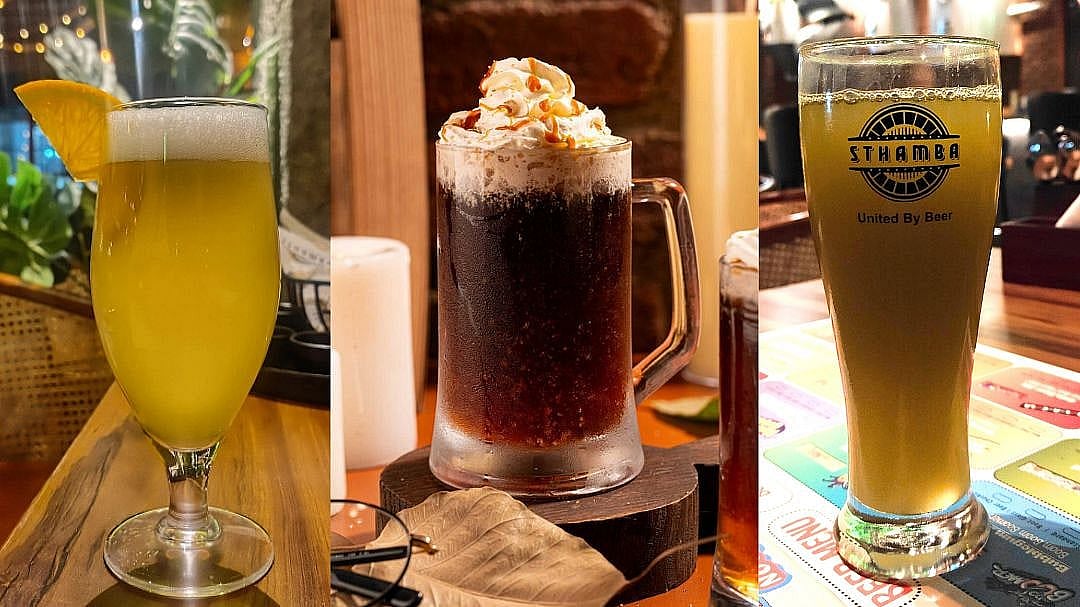
Wit Beer, Butterbeer and Mango Matcha Beer at Sthamba Global Brewery |
The base for beer is usually rice or wheat, but one can also use millets like jowar, bajra and foxtail. "Beer base is actually barley malt," adds Chaitanya. "Millets are not the best ingredients when it comes to brewing, as they are lower in sugar content. All alcohol needs sugar to ferment. For wine, it's the grape; for beer, it is your grain. You can either use a lot of millets or substitute the millet addition with sugar."
According to him, the plus points about using millets are, "Beers that are made with 100 per cent millets are very low in gluten content. They are also much cheaper than malt beers. Millets are a great superfood, and breweries can walk the talk by supporting Indian farmers."

Geist's Smart Little Wit, the low-alcohol version of the classic Belgian Witbier is lightly spiced with coriander and citrus peel |
Bengaluru-based brewery Geist Brewing Co's bestseller is the Geist Witty Wit, a Belgian Witbier. The brewery is also incorporating several Indian ingredients in their craft beers. "We have used Indian wheat, rice, oats, coriander, black salt, spices, cucumber and local fruits such as jamun," says Vidya Kubher, head brewer.
While they primarily brew with barley and wheat, Geist has also used rice and popped rice in their beers. "We haven't yet brewed with millets at this brewery, but it’s something we plan to explore in the future," mentions Narayan. Taking their beer experiments a step further, they have also married malt with coffee beans, and it turned out really well.

Sthamba's butter beer, (right) Bhavishya Pratap loves experimenting with desi flavours in craft beer |
Explaining the process of including Indian flavours to beer, Bhavishya says, "Kokum didn't quite work with a regular lager, but it really came alive when we paired it with a sour beer base. We've also tried it in meads, though the sour beer version was definitely more successful. Paan works better in meads than in beers, the flavours are subtle and aromatic, and meads bring those notes out more naturally without being overpowered by hops."
During the monsoon, it was raining spices at Sthamba. They played around with cinnamon, cardamom, star anise, and Kashmiri chillies. Their spice-forward beers, especially the stouts and porters, generated quite a buzz.
Among mangoes, while Alphonso is the most premium, Bhavishya has found Totapuri and Kaveri to perform better for Sthamba's brews. "We usually blend two varieties to get the perfect balance," he mentions.
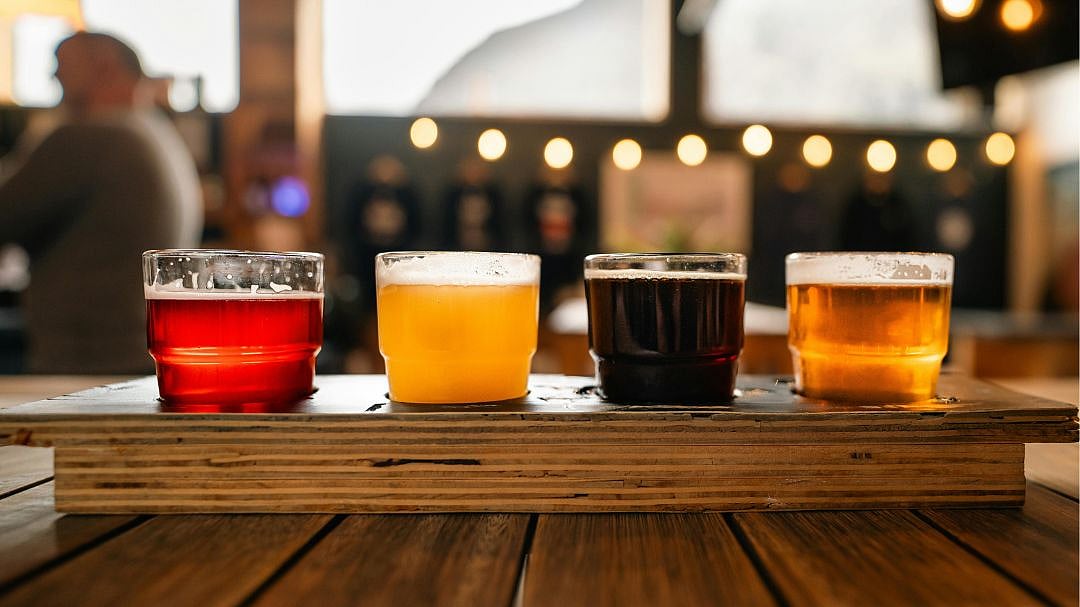
Fruity, flavourful beers are a huge hit among the younger generation |
As for Indian fruits, Chaitanya prefers to use seasonal, fresh ones, easily available in the market; the only exception being Kokum that is available year-round.
"Kokum can be steeped and added as an concoction to beer. It lends itself well for sour beers and even a cider. Mango, guavas and pineapples are the easiest to work with. We use Alphonso and Kesar. It's made into a pulp and added to the beer at the end of the fermentation process. Mango beer is slightly thicker than the regular beers."
Berries too lend themselves well, along with citrus fruits like oranges, sweet limes, Gondhoraj limes and yuzu. However, for these fruits just the peel is used. "We use oranges from Turkey as the peel of Indian oranges is more bitter than the Turkish ones."

