
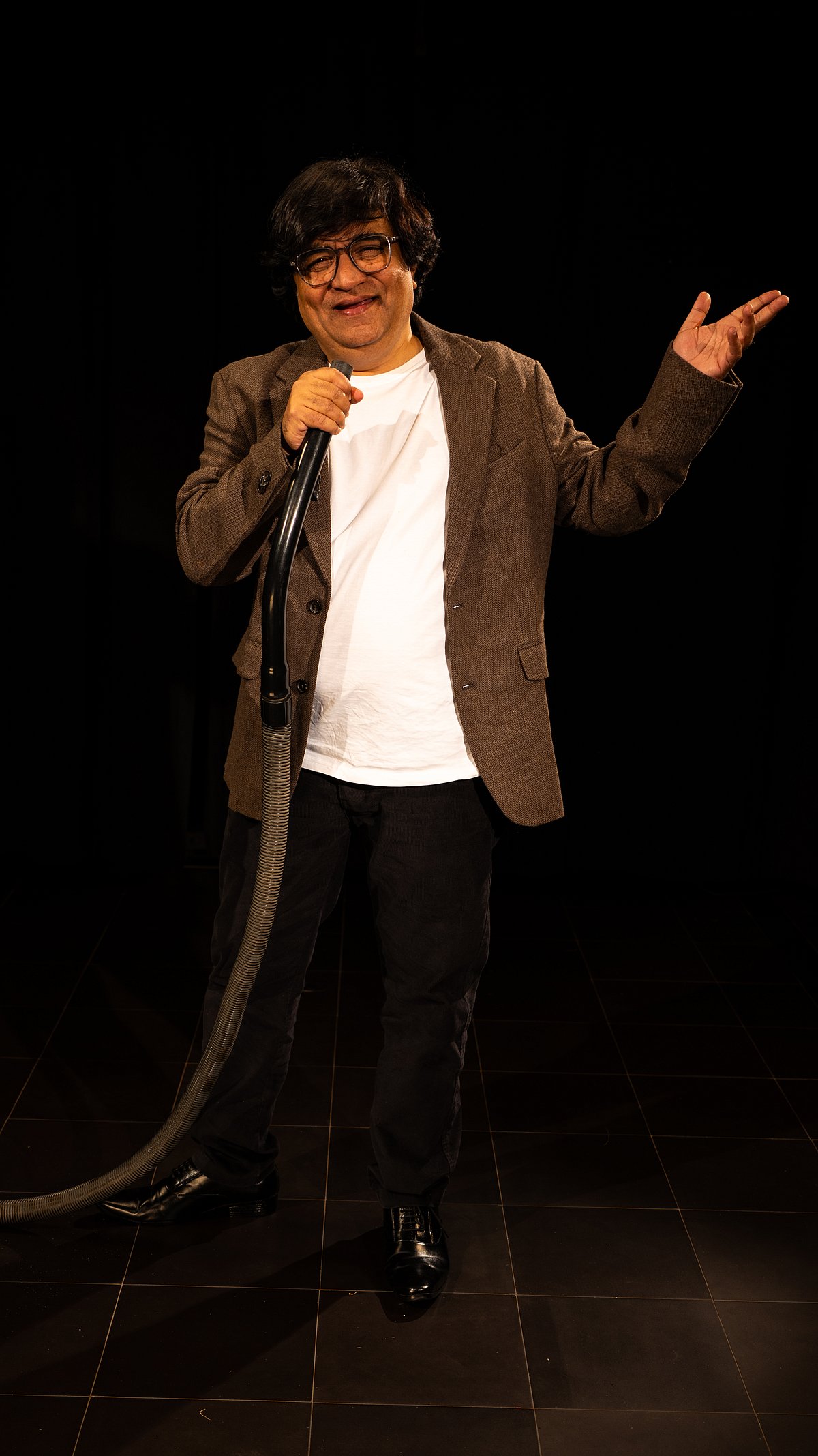
With consumerism consuming us so overwhelmingly today, a play that takes you back to the era, when it all started, is, paradoxically, timely. Writer-director-actor-lyricist Swanand Kirkire’s musical, Yo Brother, This is 95-A Musical, staged at the recent Prithvi Theatre Festival, is an entertaining take on what happened in a non-metro town, after the economy opened up in 1991.
“My play, basically, looks at changing morality, post-liberalisation, through the experiences of four vacuum-cleaner salesmen in a small town,” explains Kirkire. Having, himself, been a door-to door salesman in Indore before he changed tracks to theatre and films, Kirkire’s Yo Brother…gives you an insider’s view to the highly competitive world of a global economy and the aspirations of both, a growing middle class and the less privileged.
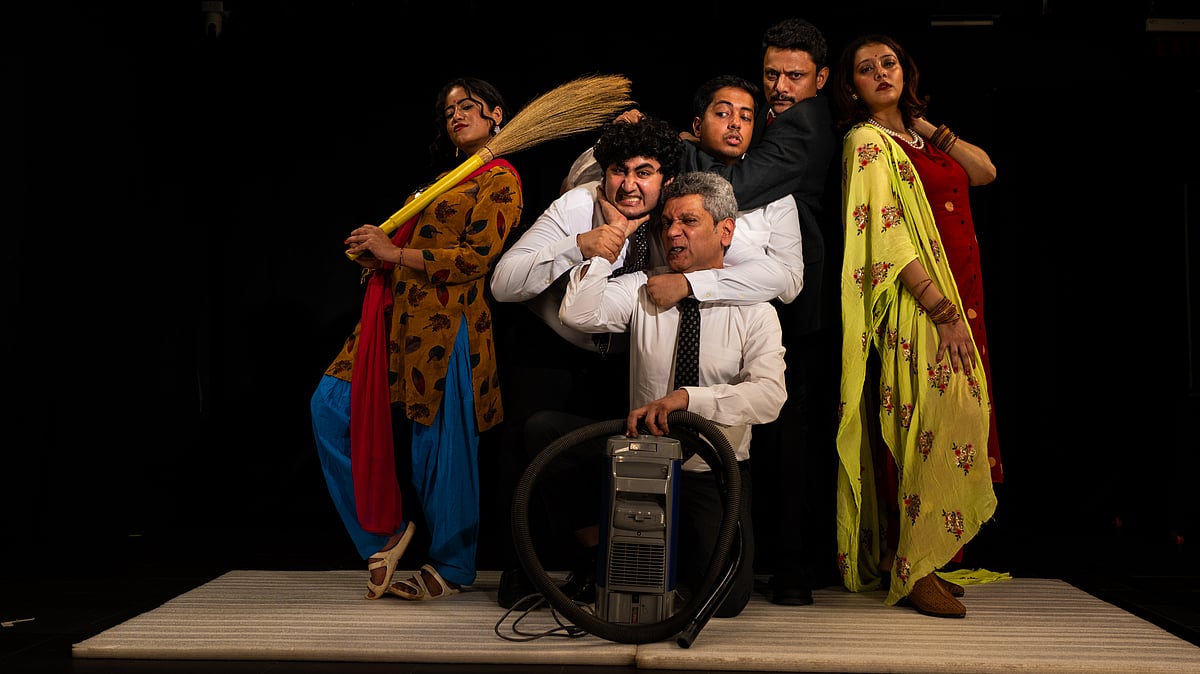
Chaudhary, Bajpayee, Rehana and Nitin, from diverse backgrounds, join Uniyclean vacuum cleaners’ company as salesmen to fulfil their disparate needs. The salt-haired Chaudhary, a retired government employee, joins the organisation to pass time. Rehana, who sheds her burqa for a trouser and shirt, needs the job to bring up her child. Nitin hopes to collect enough money for music classes so he can enter the Pa dha ni sa competition on television—that omnipresent gadget in every household encouraging extravagant spending and lofty dreams. Bajpayee is the most ambitious of the lot. Rebellious son of a Marxist union leader rotting in jail, he believes in inaamdari, not the imaandari his father preached. Unscrupulous to the core, Bajpayee achieves his sales target at any cost, selling vacuum cleaners to even a dead man or dairy owner, convincing the latter that the machine can beat up a frothy lassi in seconds. Driving them all to a fevered pitch is the branch manager, UD, who peps them up with typical cliches from the numerous marketing handbooks that came in from the west.
In this scenario, a small item of clothing plays, both, an important physical and figurative role: the neck tie that elevates a lacklustre salesman to a convincing marketing expert. None of the sales aspirants know how to knot that piece of cloth around their necks. But Laxmi, the cleaning woman of the office, does it in a jiffy. Though she is at the bottom of the social ladder, she is a sharp observer and quick learner.
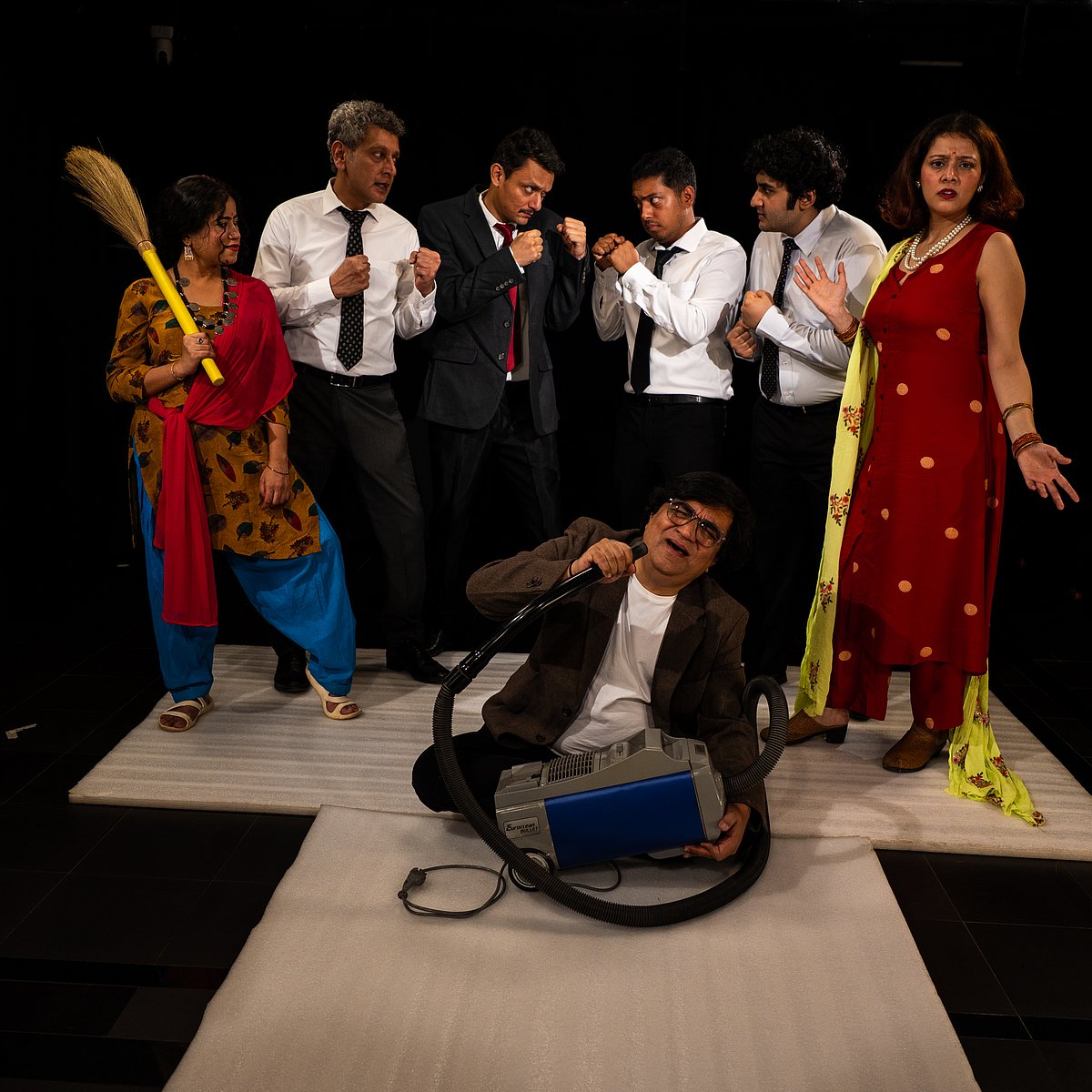
In one poignant scene, Laxmi, looking at the machine, is not worried that it might make her jhadu redundant. Seeing its greater potential, she asks Rehana, “Does your company have a machine to clean gutters? Such a machine would make my gutter-cleaning husband’s job easier. He wouldn’t have to go down in that muck if he had a machine to suck it all out.”
Like the others, Laxmi, too, aspires for a better life. She wants to open a beauty parlour. Tagging on, shrewdly, to the bored wife of the branch manager, she makes a pitch for financial backing for Ghungat Beauty Parlour. Laxmi doesn’t need handbooks to hit the bull’s eye. She knows her customer profile well.
The customers whom the four salesmen encounter are a varied lot. From the dowry-seeking husband whose demands reflect the liberalised economy to the nouveau-riche households, you get a glimpse of what Kirkire describes as “the changing morality” of the times. “Liberalisation changed the lifestyle of a generation,” he observes. “Being a vacuum-cleaner salesman myself, I saw these changes in the households I visited. I am from that generation that has seen India before globalisation and after. With the advent of colour television and the onslaught of advertising, the aspirations of the people sky-rocketed. My play projects all this in a light-hearted manner.”

Music contributes to the non-serious mood in a major way, with profundities being expressed through boisterous songs and dances. Kaise baandhte hain yeh tie ki knot? Jaise sapnon ki patang mein maanjhe ki gaanth go the lines of one song. Another one expressing the confidence of the confident, young generation pronounces, Aage hum hain, peeche duniya. Both songs are written by Kirkire and the music is composed by Siddharth Shennoy. The energetic footwork matching the songs are choreographed by Kabir Verma, to create a loud, lively, mood on stage.
But, as the play progresses, the light-hearted mood gives way to a vicious, competitive one; inevitably so, as a borrowed, corporate culture becomes all-pervasive.
However, one life that remains unaffected by globalisation is that of Laxmi’s husband. “We have invented machines to reach the moon but none to reach the gutter,” says one of the characters wryly. A harsh irony that! The grime beneath the glamour of globalisation remains firmly intact even today, more than three decades later.

