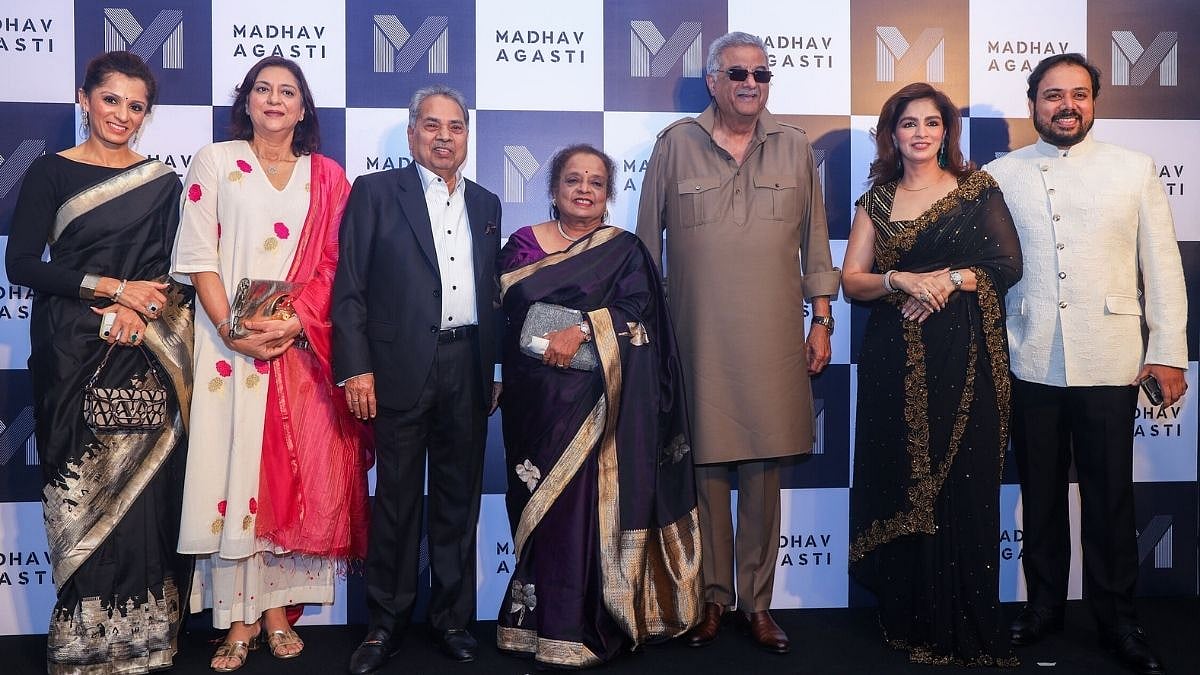
For over five decades, Madhav Agasti, Founder and Director of Agasti Mode Ltd, has dressed men who shape public life. Politicians, bureaucrats, film personalities, and individuals who live under constant scrutiny. Yet, for the 76-year-old tailor, clothing has never been about spectacle. It has always been about structure, of fabric, of personality, of presence.
He is perhaps most widely remembered in film circles for designing the imposing military costume of Mogambo, immortalised by Amrish Puri in Mr India. That towering silhouette, sharp shoulders, dramatic structure, and theatrical authority became one of Bollywood’s most recognisable villain looks. Yet, Agasti’s journey has moved fluidly between spectacle and subtlety: from cinematic exaggeration to the restrained whites of political life.
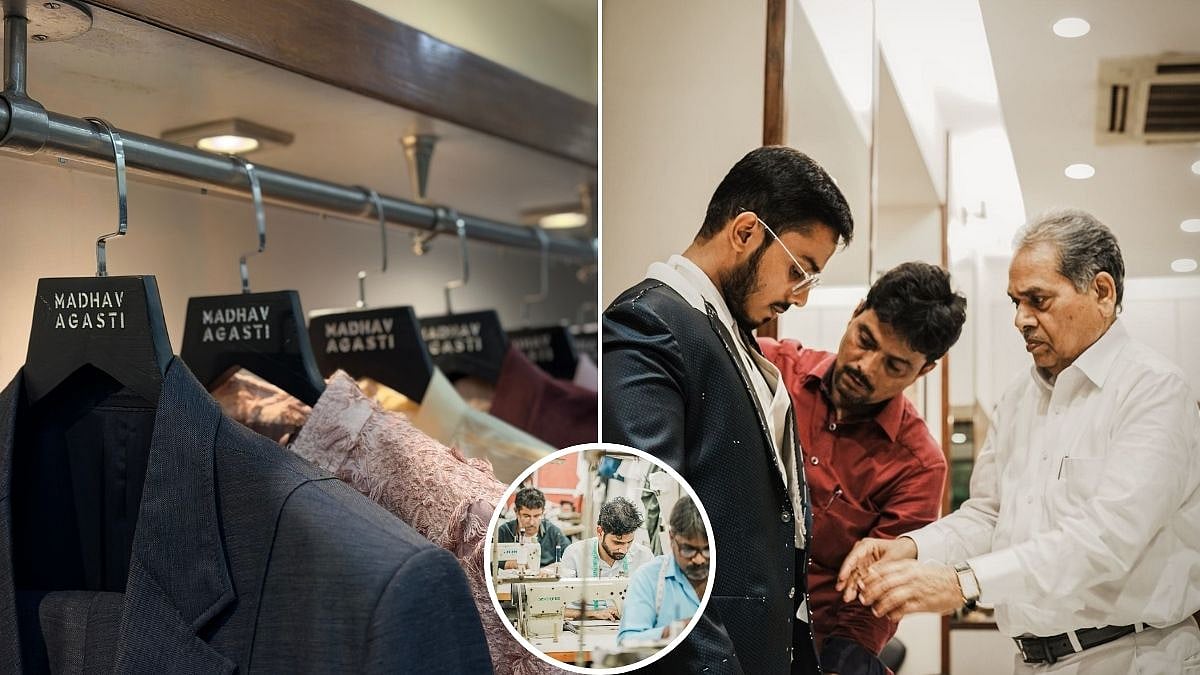
In his workshop, fittings are rarely rushed. Conversations stretch. Silhouettes are discussed not as trends but as a matter of temperament. Agasti does not treat clothing as a seasonal display; he treats it as a long-term statement. Over the years, he has worked on films such as Andaz Apna Apna, Dilwale Dulhania Le Jayenge, and Hera Pheri, collaborating with actors including Aamir Khan, Salman Khan, and Anupam Kher. But whether crafting for the camera or for a cabinet meeting, his philosophy remains consistent: the garment must support the man, never swallow him.
Dressing power: simplicity as authority
Among the many public figures he worked closely with were Sharad Pawar and Ajit Pawar, two leaders with distinct demeanours but a shared understanding of simplicity.
“Sharad Pawar carries himself with quiet authority. His clothing choices were understated, crisp, composed, consistent. His garments reflected stability,” Agasti says. “Ajit Pawar had a slightly different energy, more immediate, more dynamic. His body language was firmer, and that reflected in sharper structuring and posture-focused tailoring. Both understood the power of simplicity. Neither relied on flamboyance. Their clothing supported their persona rather than overshadowing it.”
What emerges here is not just a contrast in personalities but a deeper insight into how clothing adapts to leadership styles. Agasti subtly points to the idea that tailoring is not about imposing a look, but about responding to the energy of the individual. Where Sharad Pawar’s presence demanded continuity and calm, Ajit Pawar’s required sharper definition and immediacy.
In political spaces, where optics are constantly under scrutiny, this distinction becomes crucial. Clothing, in such cases, is less about fashion and more about alignment — between persona, body language, and public perception.
“Oh yes. Like so many leaders of the past, like Pandit Nehru and more recently PM Modi, who are remembered with the attire they adorned, Ajit Dada will always be remembered for his crisp, well-fitted white kurta pyjama. When a public figure is remembered, we often visualise them in a particular silhouette, a specific cut of jacket, a familiar drape, a recurring colour palette. Clothing becomes memory. It becomes visual shorthand for their presence. In that sense, tailoring contributes quietly to history. We do not write speeches, but we frame the image that remains long after the voice fades.”
Here, Agasti moves from observation to philosophy. He positions clothing not as a momentary choice, but as something that enters collective memory. The idea that a silhouette can outlive speech is particularly striking, suggesting that visual identity often becomes the most enduring part of public life.
This perspective also elevates the tailor's role. While invisible in public narratives, their work becomes part of how history is remembered and visualised.
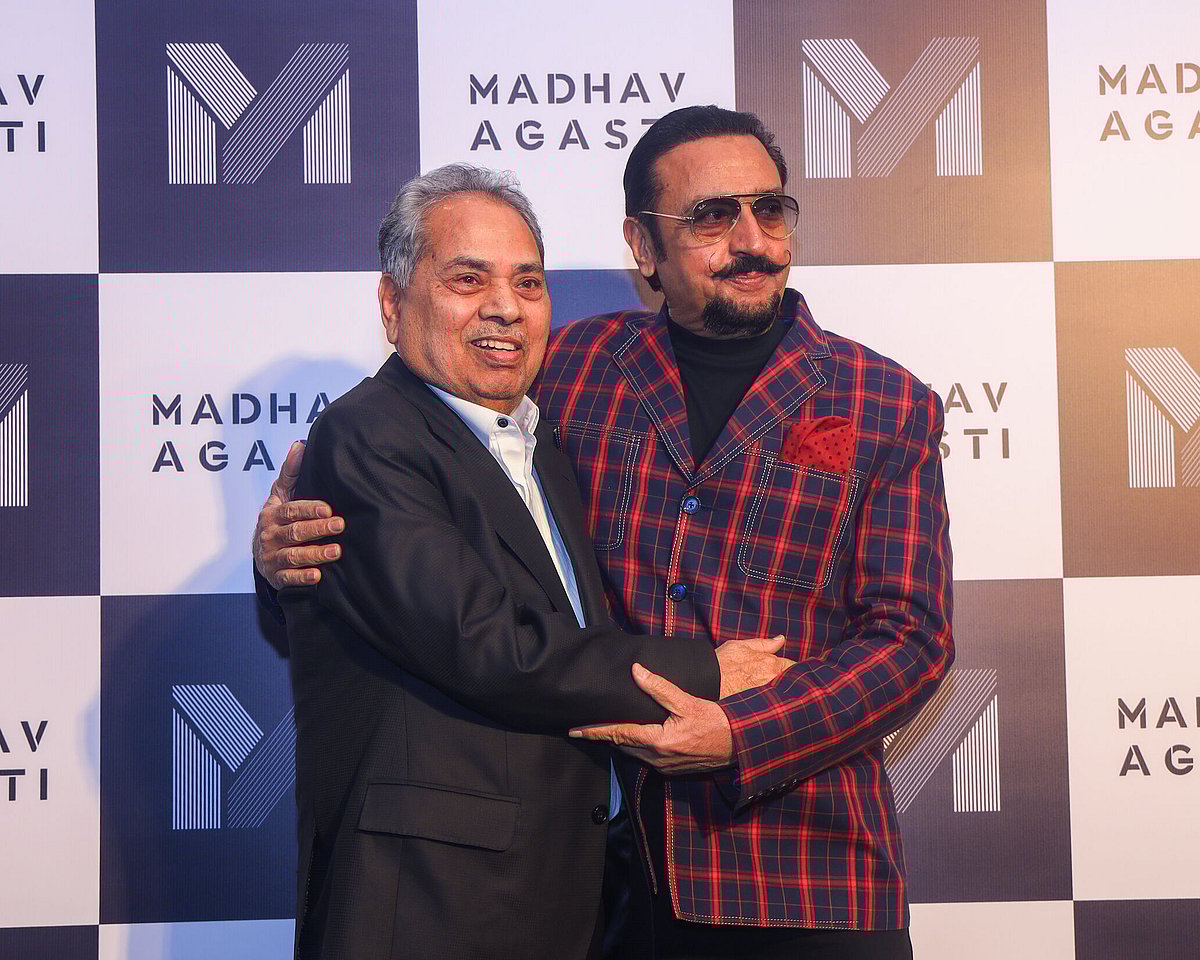
Gulshan Grover and Madhav Agasti |
From villains to statesmen
“Absolutely! When you dress someone for the camera, you design for light, lens, and frame. For real life, you design for movement, emotion, and longevity. Cinema allows exaggeration. Real life demands authenticity.”
The distinction Agasti draws is both technical and philosophical. Costumes are built for impact within a confined frame, often exaggerating traits to communicate quickly with an audience. Real-life clothing, however, must sustain presence over time — across meetings, public appearances, and personal interactions.
This shift from exaggeration to authenticity reflects a deeper understanding of permanence. While cinema thrives on momentary impact, real-life dressing is about continuity and credibility.
“Very early in my journey, I understood that a garment is never just fabric stitched together. The first time I saw a client stand taller after wearing a perfectly fitted jacket, I realised I wasn’t altering cloth, I was shaping presence. Clothing becomes a second skin. It absorbs insecurities, amplifies strengths, and sometimes even gives courage. That is when I knew tailoring was about identity, not attire.”
This moment marks a turning point in Agasti’s philosophy. The act of tailoring transforms from a technical craft into an emotional and psychological process. The idea that clothing can “give courage” reframes it as an active participant in how individuals carry themselves.
It also reinforces the central theme of the piece, that clothing is not decorative, but deeply functional in shaping perception, both internal and external.
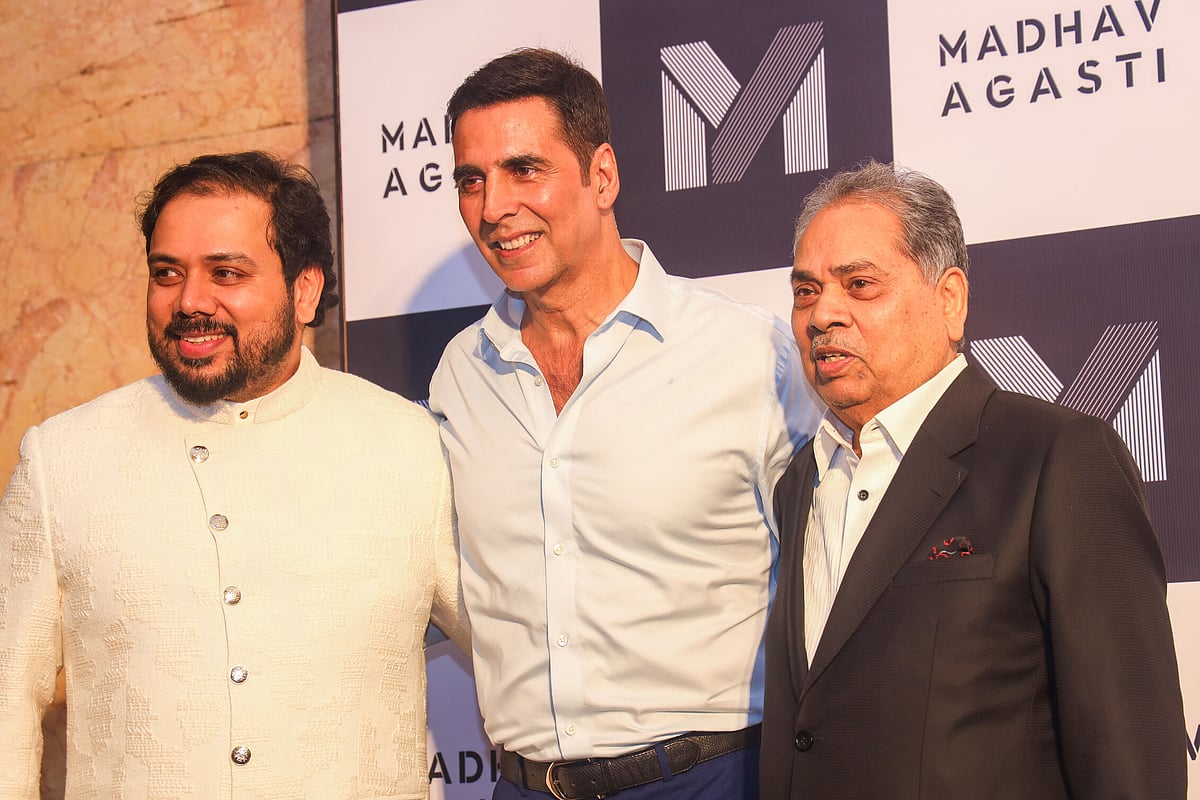
Akshay Kumar, Shantanu Agasti and Madhav Agasti |
The universal vulnerability of the mirror
“Whether it is an actor, a bureaucrat, or a public figure, what remains constant is vulnerability. Every man, no matter how powerful, stands in front of the mirror asking the same silent question: ‘Is this truly me?’ My role has always been to ensure that what they wear does not perform for others, but resonates with themselves.”
Agasti brings the conversation inward here, shifting focus from public image to private doubt. The universality of this vulnerability cuts across professions and power structures, suggesting that clothing is as much about self-recognition as it is about external perception.
This also explains his process, one rooted in conversation and observation rather than mere measurement.
“Some arrive very certain. Many do not. Clothing can either be armour or expression. The most evolved individuals use it as an expression. The anxious ones use it as armour. A good tailor gently guides the armour into expression.”
The distinction between armour and expression becomes a powerful metaphor. It highlights how clothing can either conceal or reveal, depending on the individual’s relationship with themselves.
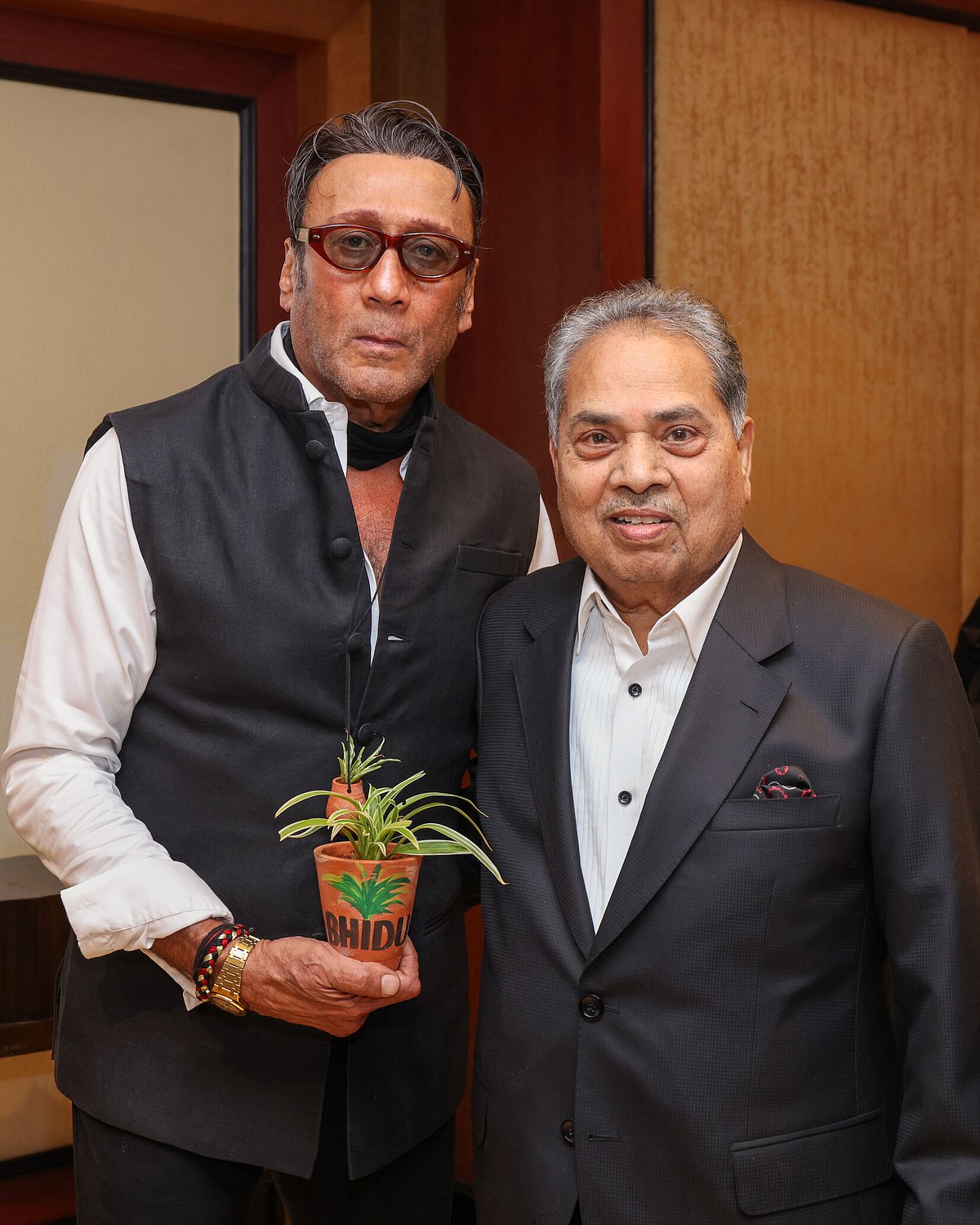
Jackie Shroff and Madhav Agasti |
Agasti’s role, then, is not to dictate style but to guide clients toward authenticity — a process that requires both sensitivity and patience.
“Listening is 70%. Stitching is 30%. Measurements are easy. Understanding posture, temperament, hesitation, that takes observation. A man’s shoulders reveal more truth than his words. The best garments are stitched after long conversations — sometimes spoken, sometimes silent.”
This reinforces the craft behind the craft. Tailoring, in Agasti’s world, is less about technique and more about interpretation. The emphasis on listening underscores the human element of the profession, one that cannot be replaced by speed or automation.
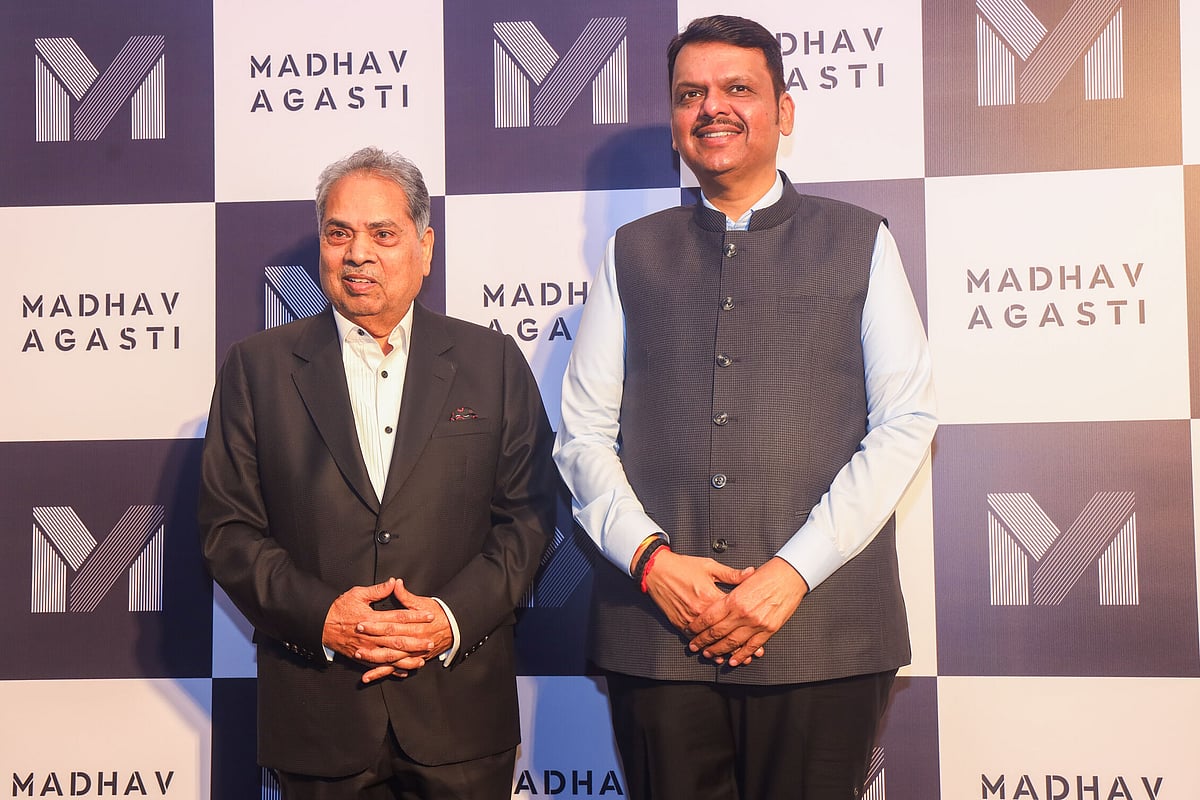
Devendra Fadnavis and Madhav Agasti |
The illusion of looking “important”
“They try too hard. Importance does not come from excess detail, flashy fabric, or visible branding. True stature is quiet. When someone tries to look important, they usually end up looking uncomfortable. Elegance is restraint.”
Agasti critiques a common modern tendency — the need to signal importance through visible markers. His emphasis on restraint challenges the idea that more detail equals more authority.
Instead, he suggests that true presence lies in ease and comfort, not performance.
“True elegance today is patience. In a world of speed, choosing craftsmanship over convenience is an act of elegance. To invest in fit over fashion is elegance. To repeat a well-made garment for years without insecurity, that is supreme elegance.”
Here, elegance is redefined as a mindset rather than an aesthetic. It is tied to time, consistency, and confidence, values that stand in contrast to fast fashion and constant reinvention.
The changing Indian man
“Yes, significantly. Earlier, clothing was functional, something chosen by the family tailor or even by the family elders. Today, Indian men are more self-aware. They think about silhouette, fabric, and narrative. But along with awareness has come anxiety; comparison culture has made many unsure of their own natural style.”
Agasti acknowledges the evolution of the Indian male consumer, from passive participant to active decision-maker. However, this awareness comes with its own challenges.
The rise of comparison culture has complicated personal style, often replacing instinct with imitation.
“More exposure brings more anxiety. Younger clients are informed, but they are also overwhelmed. Social media creates unrealistic benchmarks. Older generations trusted the process more. They allowed the garment to evolve slowly. That trust is rarer today.”
This generational contrast highlights a loss of patience. Where earlier clients relied on process and time, today’s consumers seek immediacy, often at the cost of authenticity.
A keeper of quiet histories
“Very much so. We see promotions, setbacks, weddings, funerals, political victories, and personal losses, all through fittings. A tailor holds stories in his measuring tape. We are silent archivists of people’s lives.”
This final reflection brings the narrative full circle. Agasti positions the tailor not just as a craftsman, but as a quiet witness to life’s milestones.
It’s a poetic reminder that behind every well-fitted garment lies not just skill, but memory, observation, and human connection.

