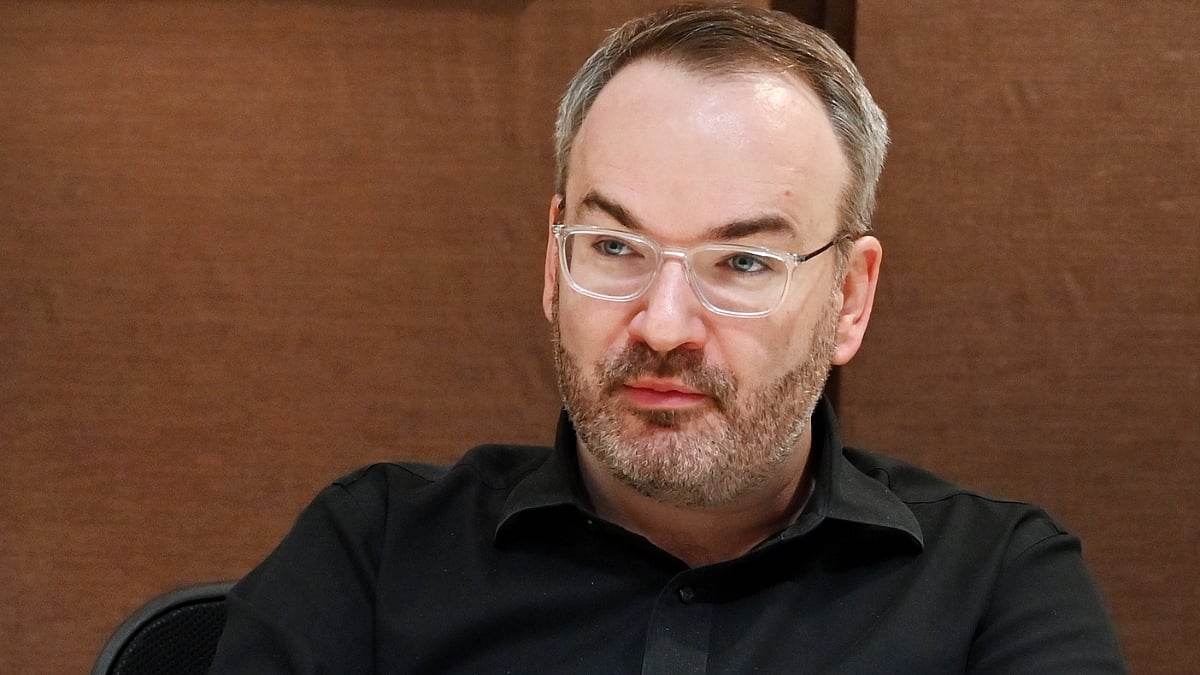
In September 2019, Bruce Guthrie arrived in India to head the famous National Centre for Performing Arts (NCPA) in Mumbai. And soon he was jumping headlong into Indian theatre. But then, came the pandemic. He learned and unlearned the performing art form and as the world opened up, Guthrie marked a renewed debut in Indian theatre with plays like Sea Wall by Simson Stephens starring Jim Sarabh, and Every Good Boy Deserves Favour by Tom Stoppard featuring Zafar Karachiwala among others. Before making India his home, Guthrie directed plays like Constellations, The Merchant of Venice, Othello, and Twelfth Night for the Singapore Repertory Theatre. Some of the leading performing arts outfits where Guthrie has directed plays and taught theatre include the Royal Welsh College of Music & Drama, UK; La Salle, Singapore, and The Royal Academy of Music, UK to name a few. This time, the award-winning director is back with another play St. Nicholas written by Conor Mcpherson at NCPA on October 14 and 15. Starring Zafar Karachiwala the play promises a glimpse of the preternatural through a story of a jaded theatre critic who falls under the clutches of bloodthirsty vampires in his desperate search for true love. We caught up with Bruce Guthrie ahead of the performance of the play to discuss his long-term plans with theatre in India. Excerpts:
What brought you to India and the job as the head of Theatre and film at NCPA?
I had always wanted to come to India to visit. I have worked in many parts of the world, but the culture, the people and the food have always intrigued me. I was working on a show in New York and the producer was also a consultant for the NCPA. He asked if I'd be interested in directing a play in Mumbai and I jumped at the chance. The show was successful and I really enjoyed working with the team at the NCPA. 9 months later, I was called to join as the Head of Theatre & Films.
What are the aspects of theatre that you would like to introduce to Indian theatre?
We can offer support and structure as an organisation. We want to give artists opportunities to practice their crafts and thrive on our stages here in Mumbai and around the world. We have artistic goals to fulfil also. We want to produce new work in a variety of languages that play on our stages and across the country. We are making progress with this in Marathi theatre and will be starting with Gujarati Theatre in March 2024.
What are your long-term plans with India and Indian theatre?
For the moment, we must keep improving. We are only 18 months out of a two-year global pandemic. We are still recovering and growing again following that. We are focusing on producing, and developing new work, providing opportunities for existing groups and companies, and education and professional development of practitioners. We want our audiences to have access to a wide variety of performing and visual art. We want to continue to improve and build on the experience.
Do you find any differences in terms of reception of theatre and plays in India as compared to other countries?
Yes. Audiences here are more passionate. They let their feelings be known. If they like something, they love it! If they don't like something, you'll know all about it! There are vivid reactions to theatre in different styles and languages too. The experimental scene is so different from the commercial scene. I've been lucky with audiences so far. I hope my luck continues!
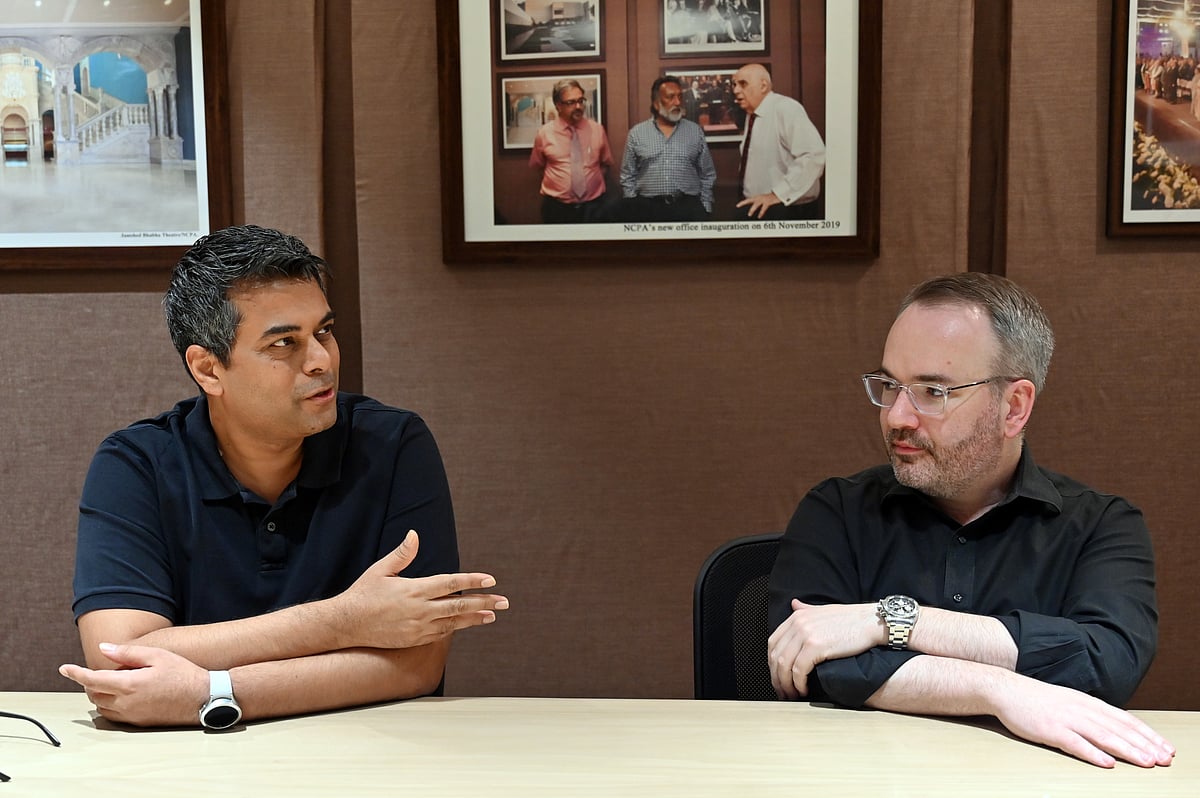
Bruce Guthrie with Zafar Karachiwala (left) |
What is your process of directing a play?
I started by reading the script and all the notes on the script three times. If I can imagine parts of the play and the ending, I know I want to do it. I then start to underline all the phrases, words and subjects I need to understand more fully and this forms the backbone of my research. Then I section the play and title those sections. Then, I do lists for each character, 1. What does my character say about themselves? 2. What does my character say about other characters? 3. What do other characters say about my character? 4. Absolute facts. Breaking the play down in this way is a way of examining the structure and relationships in the play. We then have to ask ourselves why we are telling this story. Who are these people? What are the relationships? What do they want? How are they going to get it? What tactics do they employ? It's not about judging the characters, it's about truthfully portraying them and telling the story.
Which theatre style do you enjoy working with?
It depends. I have just directed two huge productions — A play with an orchestra and a large-scale classic musical — so I am really enjoying working on such an intimate piece. It's also a spooky story, which appeals to me. I love horror movies and ghost stories. I'm a huge Hitchcock fan, so suspense and playing with the mind of the viewer is appealing as well as having a wicked sense of humour!
When working with experienced artistes, disagreements about how a certain scene should be performed are bound to happen. How do you handle it?
The room is very open. Ideas can come from anywhere. Discussion takes place and you work to create a space where trying out ideas is always the goal. Getting people focused and forgetting about the trials and tribulations of their own lives to focus on the portrayal of someone else's. If the actors want to try something, they are allowed to. I call it 'making an offer'. A director is there to guide the actors and tell the story for the audience. If you have cast someone, you need to tap into their talent and play to their strengths.
How do you see modern innovations in theatre?
No amount of technology can substitute for a good story well told! However, the more things advance, the greater the tool kit is for telling stories. The core of theatre has been consistent for thousands of years. It is a place for engagement, entertainment and enlightenment. Technology can help but innovation can come through simplicity also. Just because we have the potential to use something, doesn't mean it serves the story. What does the story need?
What are your views of theatre-going online?
Accessibility is a good thing. Theatre online will never replace the experience of live performances. However, not everyone has access to high-quality productions. Training and education resources online also add to the experience for audiences. If anything, it means people are more likely to come to theatres and events to have in-person experiences.