
Every day the human mind experiences an incredible number of thoughts. It is such a natural force that it is impossible to keep track of every thought and interpret everything that we think or feel. Then how do we cogitate and arrive at opinions and conclusions? Given the incredible force of thoughts that crisscross the mind everyday, it must seem incredible for human beings to lead life the way we do, seemingly seamlessly and routinely.
The greatest challenge for human beings has been to come to terms with who we truly are. The ingenuity with which human beings have lived and evolved mark us out in the vast creation canvas. We have been inventive and not afraid to experiment.

One of the great inventions has been our ability to Think In Models. Thought modeling is a fabulous way to work around the weight of our thoughts, filter them, and provide clarity and meaning through chunking. I wonder how we would have survived the content bombardment through social media if we had not already mastered the skill to think in models. We humans are able to communicate, express, form opinions as well as strategies due to our ability to think in models and create frameworks. Models and frameworks act as references for understanding human behaviour and actions. They also act as a fantastic way to remember and retain information.
Psychologists and management thinkers over a long period of time have leveraged this great art of Thinking In Models and Frameworks. One of the finest and oldest models to enable structured human thinking is Maslow’s Hierarchy Of Needs, developed by Mr Abraham Maslow in 1943.
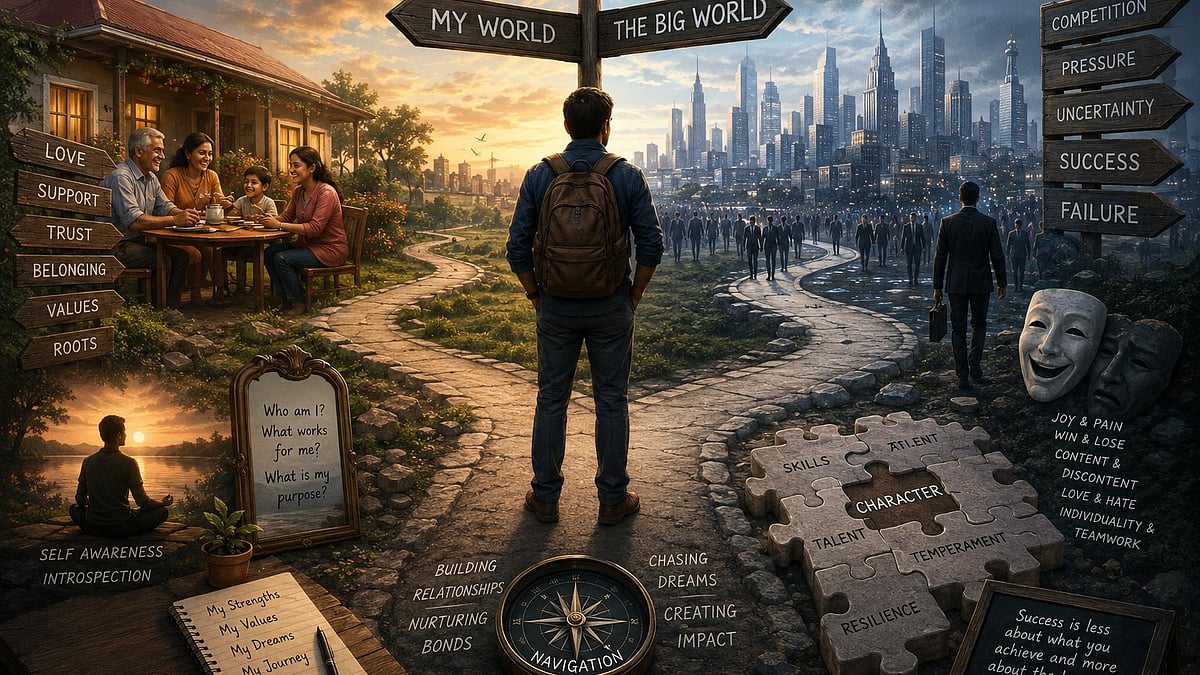
Models help us become aware of our own thinking, as also in communicating to others and convincing them to our point of view. Self awareness is at the core of making sense of us and the world around us. A breakthrough concept in this regard was provided by Joseph Luft and Harry Ingham in 1955 in the form of The Johari Window. Decades later, it retains its popularity and relevance to understanding human behavioural dynamics.
In my learning & Development profession, we use models extensively. In getting people to understand, models work like magic, as they break down complex thinking into easy-to-understand-and-apply concepts. Thinking in models is a requisite skill for both personal as well as professional development. It is a great way to communicate and have meaningful conversations.

The best thing about this skill is that you can play around with it by coming up with your own models. It is fun, and also provides you with a space to understand your own thought intricacies, simplify them through model architectures and put forth your ideas in an easy-to-understand manner. It has the power to win over people and create real impact.
(Hariharan Iyer is a seasoned Motivational Speaker, Corporate Trainer and Author of multiple management books. His latest release is Off Stump – Life And Management Lessons From Cricket. He is the Founder-Creator of WisdomKeys Learning & Consulting - www.wisdomkeyslearning.com. He is popularly referred to as The Enter-Trainer®. He can be reached on hariharan@wisdomkeyslearning.com).

