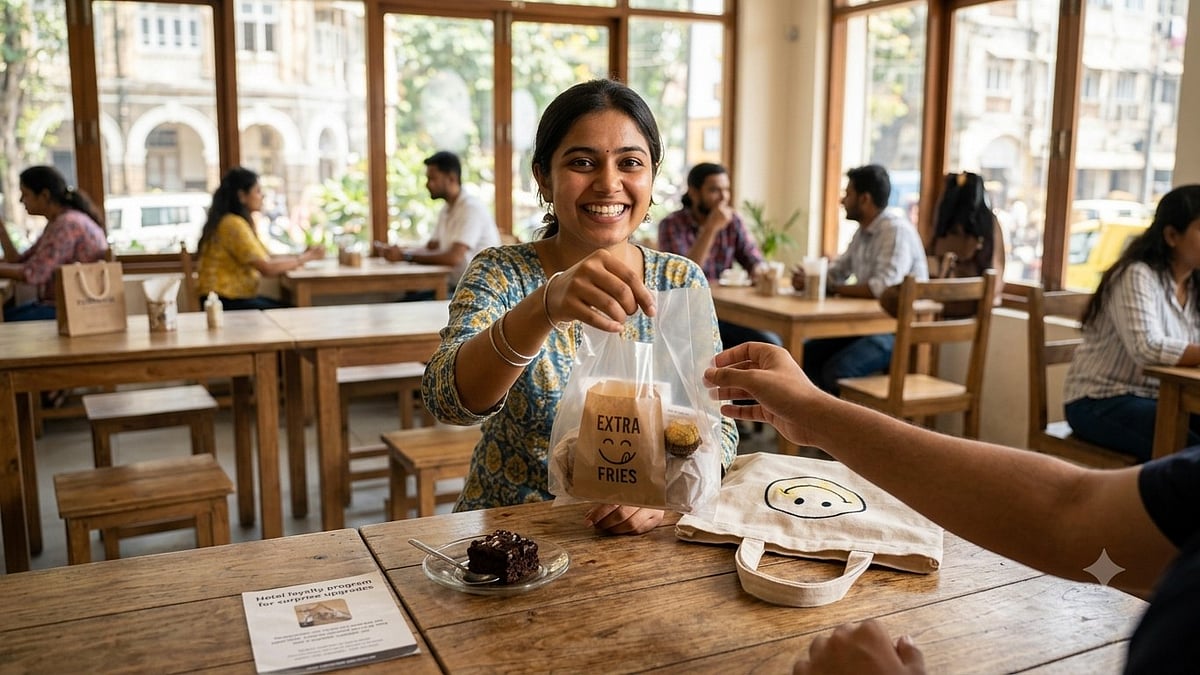
From complimentary desserts and free shipping to surprise upgrades and extra fries tucked into a takeaway bag, getting something for nothing has an undeniable appeal. But what is it about the word free that makes people so happy?
The person who insisted they were ‘just browsing’ suddenly walks away with samples and a tote bag. The online shopper who was ready to check out notices they are only ₹199 short of free delivery and somehow finds another item to add to the cart. The diner who claimed they had no room for dessert suddenly discovers otherwise when told it comes complimentary.
Then there is the enduring magic of the Buy One, Get One Free offer, a deal that has convinced generations of shoppers that buying two things they never intended to purchase is actually saving money.
For something that costs absolutely nothing, free carries a remarkable influence.
What makes it even more fascinating is that people are usually aware of what is happening. Consumers know that complimentary samples are designed to encourage future purchases and that free delivery thresholds are carefully calculated to increase spending. Yet a freebie rarely feels like marketing. Instead, it feels personal, more like a gift than a sales strategy.
Why we love freebies
The attraction goes well beyond saving money.
A complimentary dessert, an extra scoop of ice cream or a surprise room upgrade creates the feeling of receiving something extra, an unexpected bonus that was never part of the original transaction.
Freebies create excitement and reduce the fear of making a bad purchasing decision. They can also create a sense of appreciation, making customers feel valued by the person or business offering them.
Radhika Mehendale Bhosale, Counseling Psychologist and Arts-Based Therapy Practitioner (over 10+ years of experience), explains, "The word "free" triggers a powerful emotional response because it taps into something deeply human the desire to gain without risk. From a behavioral perspective, people are naturally drawn to opportunities that appear to offer high reward at little or no cost. Even when individuals intellectually understand there may be conditions attached, the emotional appeal often overrides rational caution.
What makes “free” especially persuasive is that it creates an immediate sense of pleasure and urgency. The brain tends to perceive a free offer not just as a financial benefit, but as a psychological win. It reduces the fear of loss, which is one of the strongest motivators in decision-making. People may hesitate to spend 100rs on something uncertain, but if the same product is labelled "free trial" or "buy one, get one free," resistance drops significantly.
In addition, whenever we read something is free as a service, we also get into impulsive behavior without giving a thought whether we really need it or not. Free also helps us identity and associate this as to feeling free, free from suffering, free from barriers ,internal as well external
There is also a social and cultural layer to this fascination. Free offers create excitement because they feel exclusive, temporary, and rewarding. In today’s digital environment, where attention spans are short and choices are endless, the word acts almost like a shortcut for instant gratification.
Interestingly, marketers understand this very well. "Free" is rarely only about saving money, it is about creating emotional engagement. Even when consumers suspect a catch, many still engage because the possibility of gaining something feels more emotionally compelling than the potential downside."
At a time when consumers are dealing with rising prices and growing subscription costs, getting something for free can feel like a rare victory.
Our brain responds differently
People react differently to freebies than they do to discounts. Discounts encourage comparison and calculation. Consumers weigh whether the reduced price justifies the purchase.
Free, however, often bypasses that process entirely.
A discounted coffee may feel practical and sensible. A free cookie alongside that coffee feels exciting.
A reduced price on a second item may require consideration. A Buy One, Get One Free offer often feels instantly attractive.
The difference is not always financial. It is emotional.
Reasons we struggle to resist
Joy of unexpected extras: Unexpected freebies create delight because they feel spontaneous. An extra pastry in a takeaway order or an unplanned upgrade can turn an ordinary experience into a memorable one.
Kindness creates customer loyalty: Customers are more likely to return to businesses that offer small complimentary gestures. A free sample or a thoughtful add-on can create goodwill that lasts longer than a discount.
We value what we own: Once something becomes ours, even if it was free, we begin to value it more highly. This is one reason free trials are so effective.
No risk, more curiosity: People are more willing to experiment with unfamiliar products, flavours or services when there is no financial risk involved.
FOMO: Seeing others benefit from a free offer creates a sense of urgency. If everyone else is enjoying the free coffee or complimentary upgrade, people do not want to be left behind.
Businesses use it strategically
For businesses, the appeal of ‘free’ is not just a marketing tactic, it is a powerful behavioural tool. When used thoughtfully, it can shape customer decisions and build long-term relationships.
Free offerings work best when they feel genuine rather than transactional.
However, the effectiveness of free lies in balance. When overused or made too conditional, it can lose its charm and begin to feel manipulative.
Understanding the psychology behind ‘free’ allows businesses to move beyond simply attracting attention.
In the end, the most successful use of ‘free’ is not about giving something away, it is about making people feel like they have gained something meaningful.

