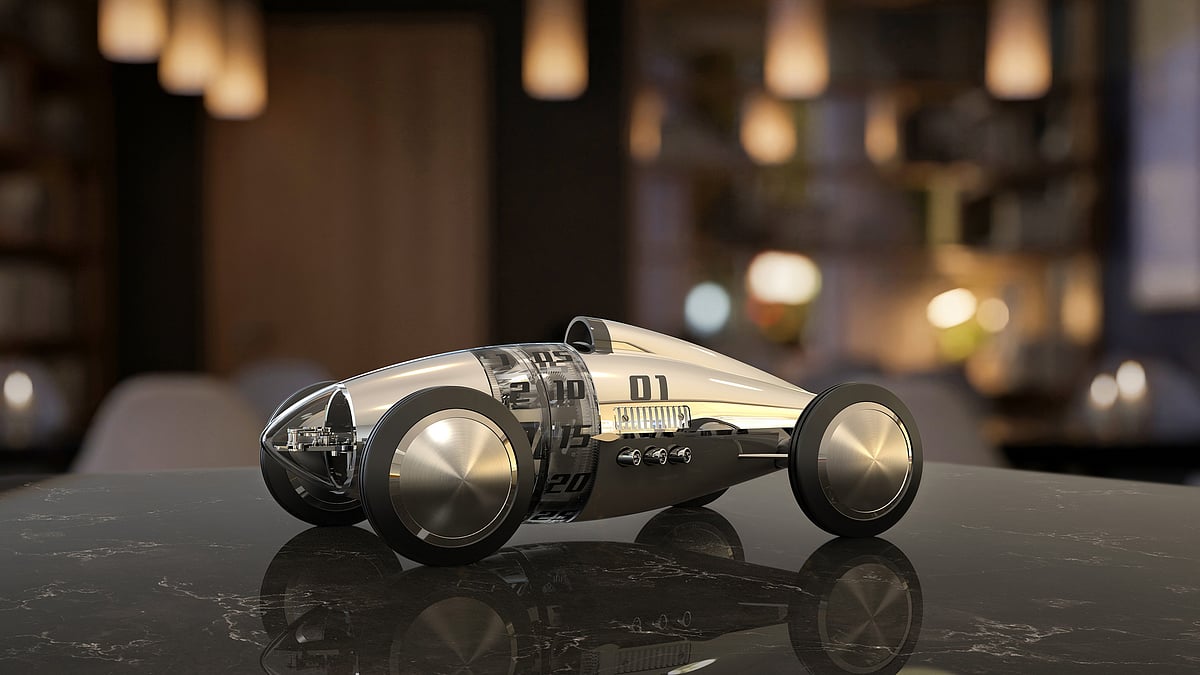
How does a 187-year-old watch brand stay relevant through two centuries? For L’Epée 1839, it is very simple. The maison continues to challenge perceptions of traditional clockmaking, turning unexpected objects into intricate timepieces. Founded in 1839 by Auguste L’Epée, L’Epée began its journey by making watch components, escapements, music-box mechanisms, and carriage clocks. Today, it creates futuristic clocks that don’t resemble traditional clocks, but are immersive timekeeping machines. Inspired by architecture, objects, and even popular culture, they peek through vintage cars, animated reptiles, and even robots. The Swiss-based manufacture, which has won several patents and significant awards at international exhibitions, is also known as the only clockmaker used in the supersonic aircraft, Concorde. In 1994, they even entered the Guinness Book of Records for creating the largest clock in the world, known as the ‘Giant Regulator’, which was unveiled at the Louvre in Paris, before touring Europe, the Middle East and the US.
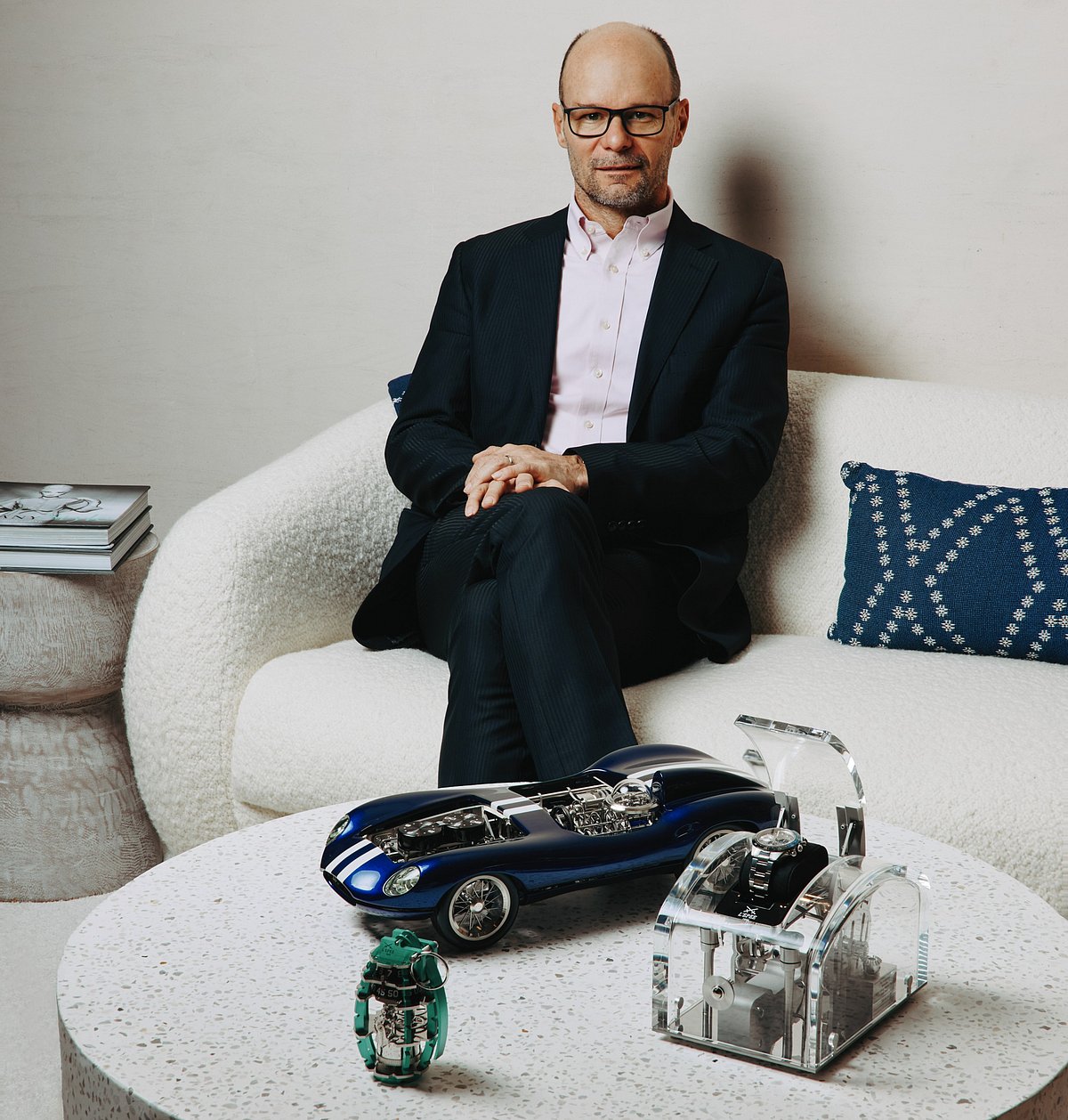
Arnaud Nicolas, CEO and Creative Director of L’Epée 1839 |
Embodying the innovative spirit and attention to detail, the brand collaborates with renowned designers and luxury brands to produce pieces that captivate collectors and horology enthusiasts alike. To peek into their creative world, we spoke to Arnaud Nicolas, CEO and Creative Director of L’Epée 1839, at Watches & Wonders 2026 to learn about their creative philosophy and their latest creations.
Tell us about the philosophy behind L’Epée 1839 creations.
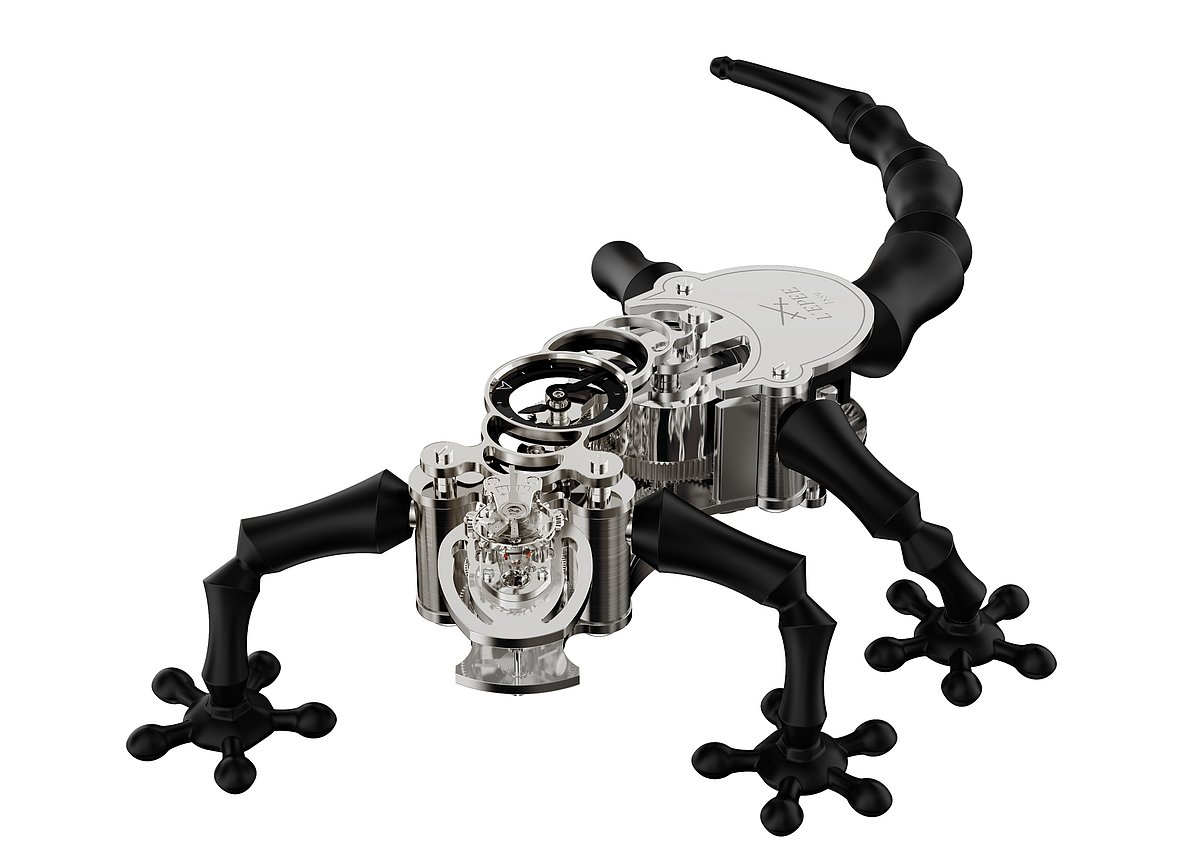
AN: L’Epée 1839 has always been a clock manufacturer focused on mechanical clocks and clockmaking components. For the past 15 years, however, we’ve taken a different creative direction. We transform familiar objects into mechanical clocks by drawing parallels between the object’s function and the mechanics of timekeeping. That object can be a racing car, a skull, a robot, an animal, or even a spacecraft. One of our latest creations, for example, is inspired by a gekko. Our goal is to capture an object's essence and reinterpret it as a mechanical timekeeper.
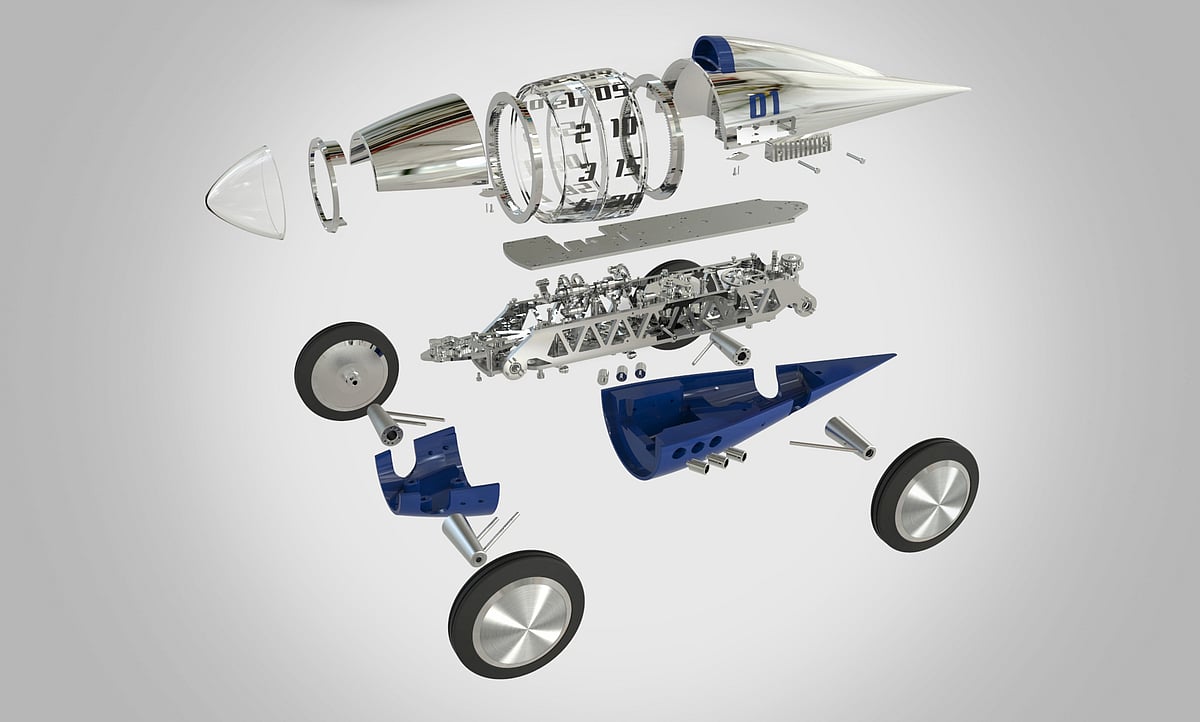
Tell us about your latest Belly Tank Racer clock.
AN: The new Belly Tank Racer clock is inspired by the racing cars of the 1950s. What determines the precision of a car? First and foremost, the driver. What determines the precision of a mechanical clock? The escapement. So, we place the escapement where the driver’s head would be, making it the ‘brain’ of the machine. On our clock, the steering wheel serves as the equivalent of a crown—you turn it to set the time. The steering wheel is a period-correct three-spoke design, constructed much like vintage racing wheels with layers riveted together. We use 12 rivets to symbolise the hours of the day, and the wire wheels, featuring 24 spokes, represent the 24 hours in the day. Even the tyres are engineered with internal foam so they deform realistically where they meet the ground, just like a real racing car.
Tell us how L’Epée 1839 creations don’t just tell time.
AN: Our clocks are not just toys. They are kinetic sculptures that happen to tell time. You wind them, handle them, and engage with them. For the Belly Tank Racer, you wind the mechanism by rolling the car along a surface, much like the pull-back toy cars that many of us have played with as children. A full winding powers the clock for approximately eight days!
Q: Are these clocks fully mechanical?
AN: They are completely mechanical. Like traditional watchmaking, our clocks use mainspring barrels to store energy.
Can you share the brand’s role in clockmaking and some of the most iconic milestones?
AN: From creating watch components to becoming one of the most respected names in carriage and high-end mechanical clocks, the brand has earned multiple international awards for its technical innovations. Synonymous with precision engineering, the clocks were often presented as diplomatic gifts to heads of state and royal courts. A particularly iconic chapter in its history dates back to 1976, when L’Epée clocks were installed aboard the Concorde—a distinction we still uniquely hold. Most recently, in 2024, L’Epée was acquired by LVMH, joining its Watches Division.
How would you define the brand today?
AN: We are not simply a clockmaker. What makes L’Epée unique is the fusion of horology, design, engineering, and imagination into a functional work of art.

