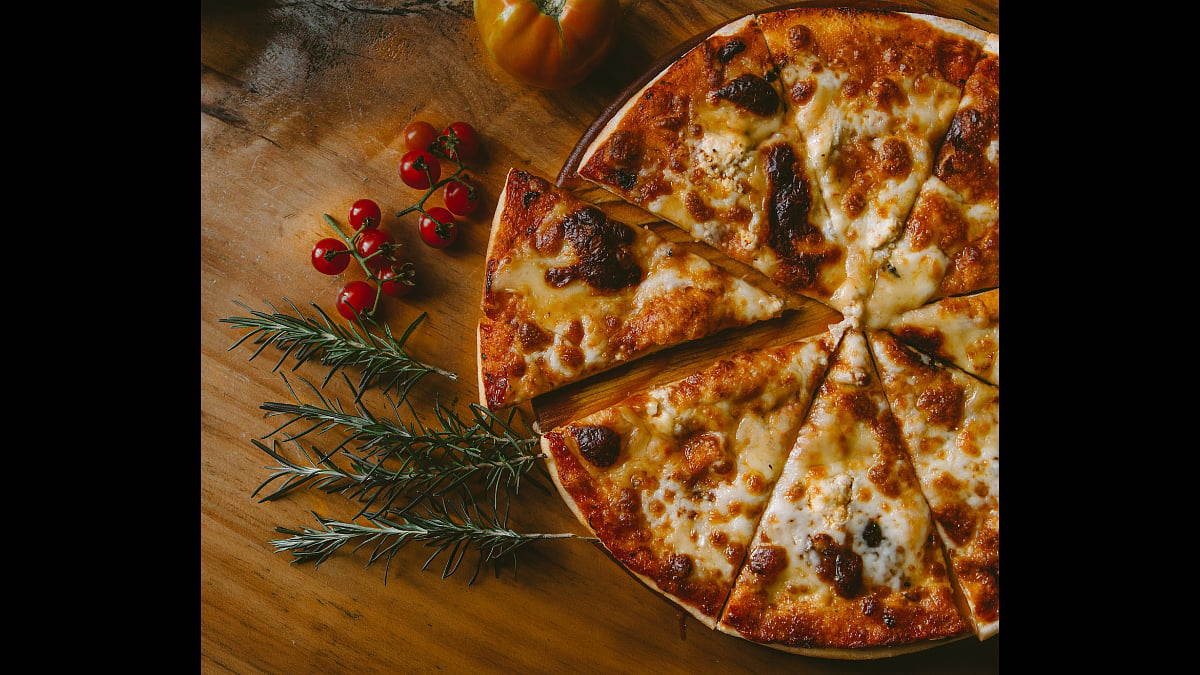
Pizza or “pizza pie” as it’s know there as, truly reveals America’s appetite for reinvention. Travel across the country and “pizza” can summon a floppy Manhattan slice, a deep Chicago wedge, a blistered Connecticut pie or a rectangular Detroit square. Each is recognisably pizza, yet each speaks in a local accent.
To say America has taken over Italy in the pizza stakes would be to commit culinary heresy, so perhaps it is safer to say that America has taken the Italian idea and run exuberantly with it. Italy, of course, has an extraordinary pizza culture, from Neapolitan to Roman and beyond. But American pizza has been unusually willing to extrapolate: to enlarge, shrink, square off, deepen, customise and reinterpret the pie until cities and even small communities have claimed versions as their own. Pizza arrived with Italian immigrants; America turned it into a regional language.
New York is the essential starting point. The classic New York slice is large, thin and pliable, with a crisp underside and chewy rim, designed to be folded and eaten on the go. Tomato sauce, mozzarella and toppings provide enough structure to survive a fold, with enough grease to make the experience gloriously messy.
Just a short journey from New York lies one of America’s most fiercely defended traditions: New Haven apizza. Pronounced “ah-beetz”, it is distinguished by a thin, chewy base, irregular shape and pronounced char from a hot coal-fired oven. Mozzarella is not necessarily a given; the classic tomato pie can be topped simply, while the celebrated white clam pie brings clams, garlic, oregano and grated cheese. The result is less floppy than New York pizza, with the char and chew taking centre stage.
Deep-Dish and Detroit
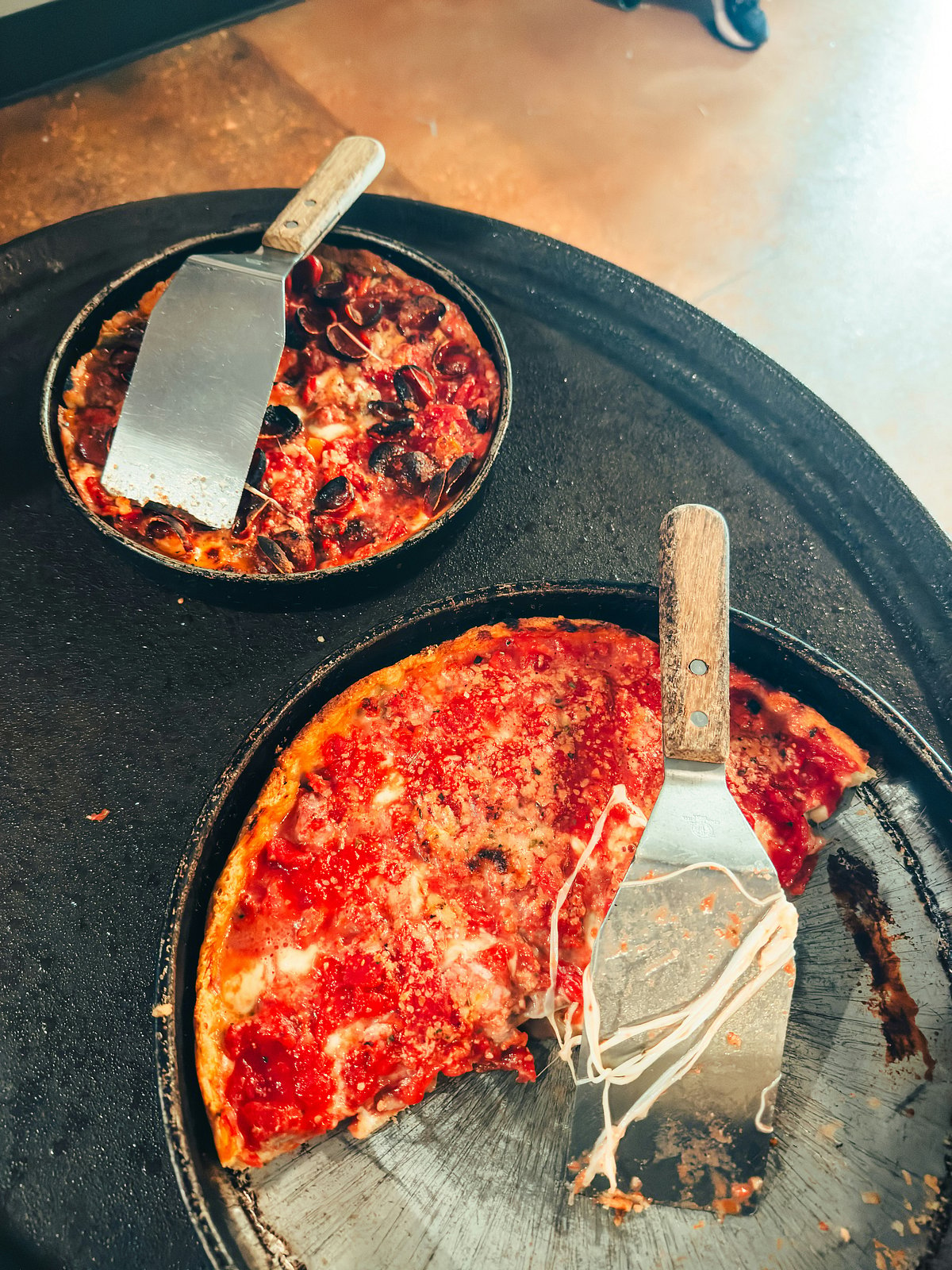
Chicago-style pizza | Pic: Unsplash
Then comes Chicago, where pizza takes a dramatic turn. Chicago deep-dish, associated with Pizzeria Uno from 1943, is built in a deep pan with a substantial crust, cheese and fillings beneath a generous layer of tomato sauce. It eats almost like a savoury pie, with sauce protecting the cheese and toppings during the long bake. It is pizza transformed into architecture.
Yet Chicago has another favourite: tavern-style pizza. Thin, crisp and often almost cracker-like, it is traditionally cut into small squares rather than wedges. Built for sharing, it holds its toppings without collapsing. The same city thus claims one of America’s thickest pizzas and one of its thinnest!
Detroit offers another lesson in how a pan can change pizza. Detroit-style is rectangular, with a thick, airy crust baked in an oiled pan. Cheese is pushed to the edges, where it caramelises against the metal into a crisp border. Traditionally associated with Wisconsin brick cheese and sauce applied on top, it has become one of America’s most popular regional exports.
Thin, Crisp and Inventive
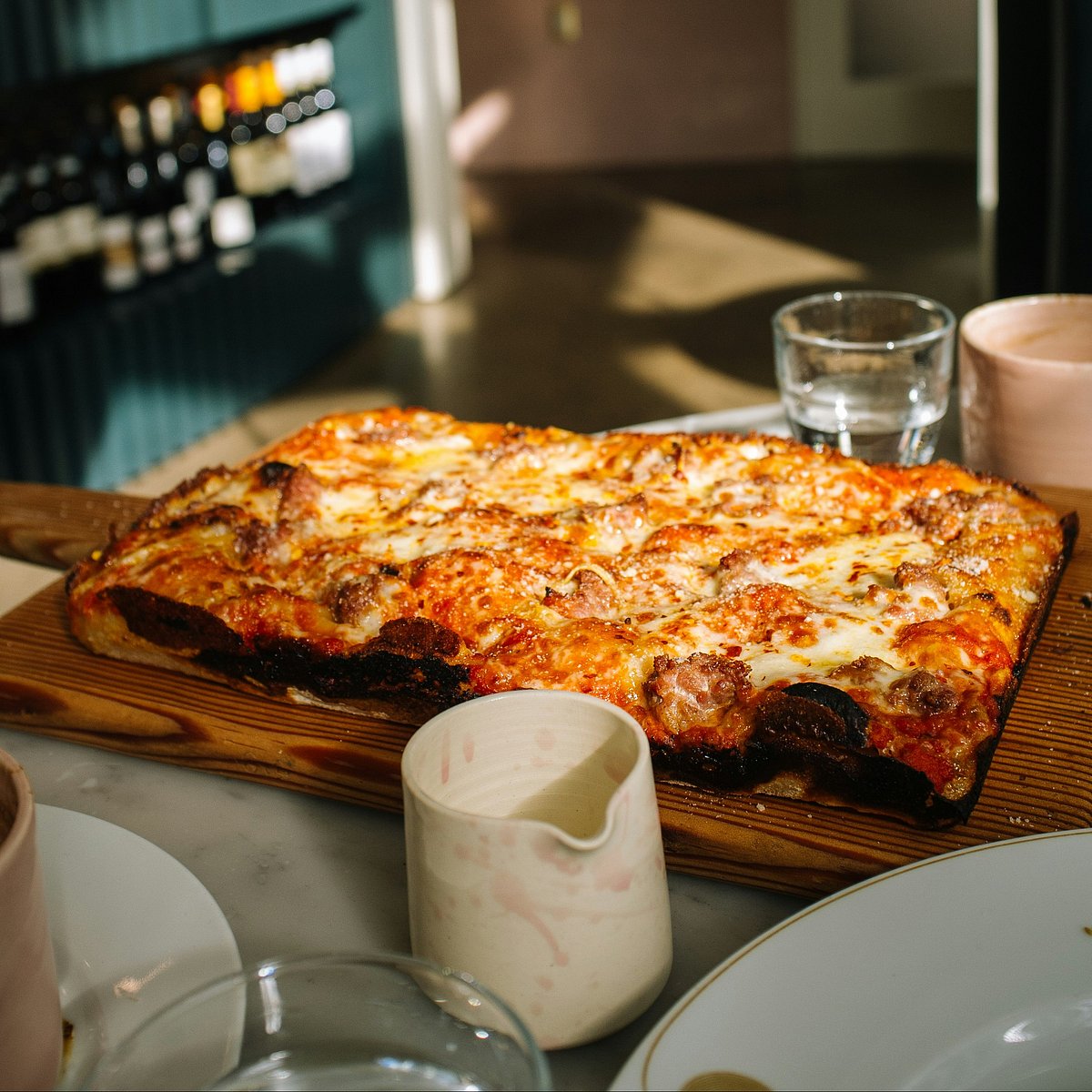
Detroit-style pizza | Pic: Unsplash
St Louis goes in the opposite direction. Its pizza is famously thin, crisp and unleavened, often cut into squares and traditionally topped with Provel, a local processed cheese blend of provolone, Swiss and cheddar. Here, crust and cheese define the experience.
California helped push American pizza towards culinary experimentation. From the 1980s onwards, chefs including Wolfgang Puck and the team behind California Pizza Kitchen treated pizza as a canvas for ingredients that might once have seemed unlikely: smoked salmon, goat cheese and, famously, barbecue chicken. California pizza is less a strict physical format than an attitude — seasonal produce, chef-driven toppings and a willingness to ignore the rulebook.
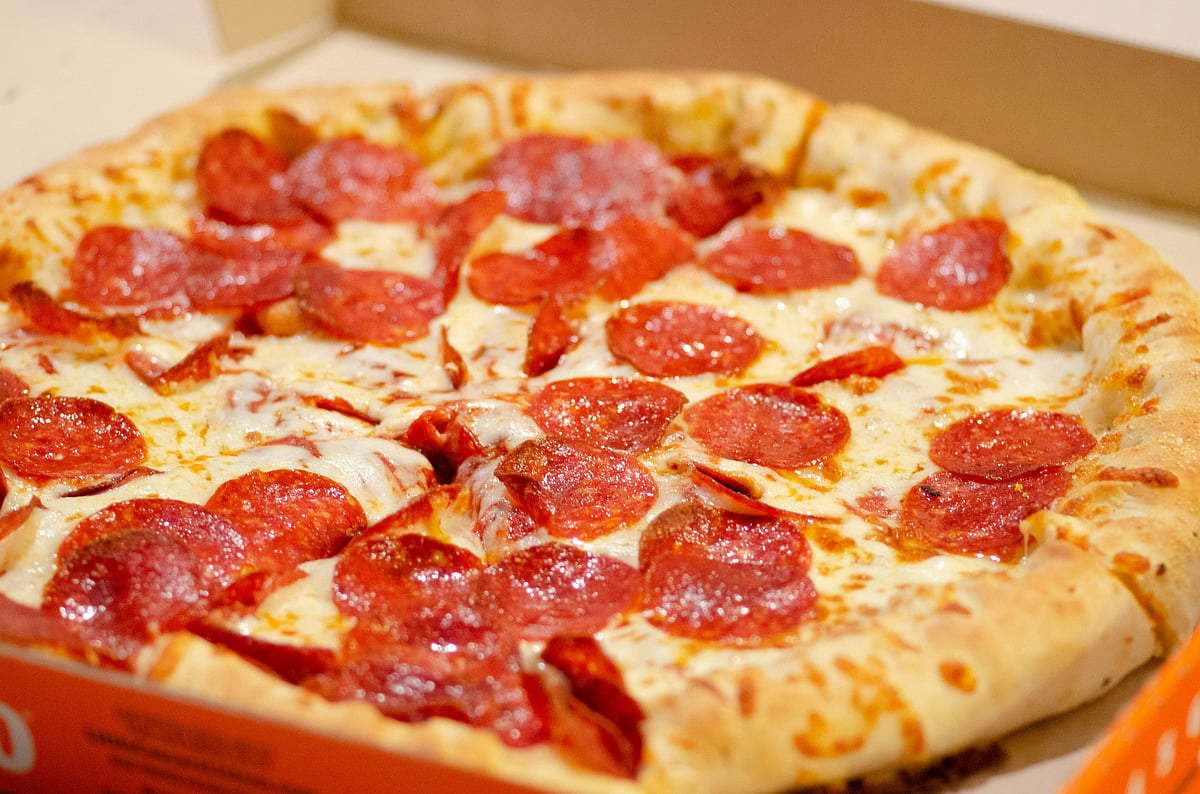
New York-style pizza- | Pic: Unsplash
Then there are regional treasures that rarely make the international conversation. Trenton tomato pie puts tomato sauce over the cheese; Philadelphia tomato pie is generally a thicker, rectangular, cheese-light or cheese-free creation topped with tomato sauce. Old Forge pizza from Pennsylvania is a thick, tray-baked speciality, commonly served by the “cut”. Quad Cities pizza, from the Iowa-Illinois border, has a malted, slightly sweet crust, generous sausage and long strip cuts. Ohio Valley pizza has perhaps the most unusual trick: cheese is added after baking, allowing the heat of the finished pie to melt it gently. Rhode Island’s pizza strips can dispense with cheese altogether, concentrating on tomato sauce over a rectangular crust.

That is the joy of an American pizza road trip. The further one travels, the less useful the question “What is authentic pizza?” becomes. Instead, the better question is: “What does pizza mean here?” In America, the answer changes from pavement to tavern, coal oven to deep pan, square to slice. Italy gave the world pizza; America turned it into a passport, stamped differently in every region. For travellers, that makes pizza more than a meal: it becomes a way to read a city, its immigrants, industries, habits and tastes, one wonderfully local slice at a time. That makes the journey especially delicious.
(The writer is a food and travel columnist and editor)

