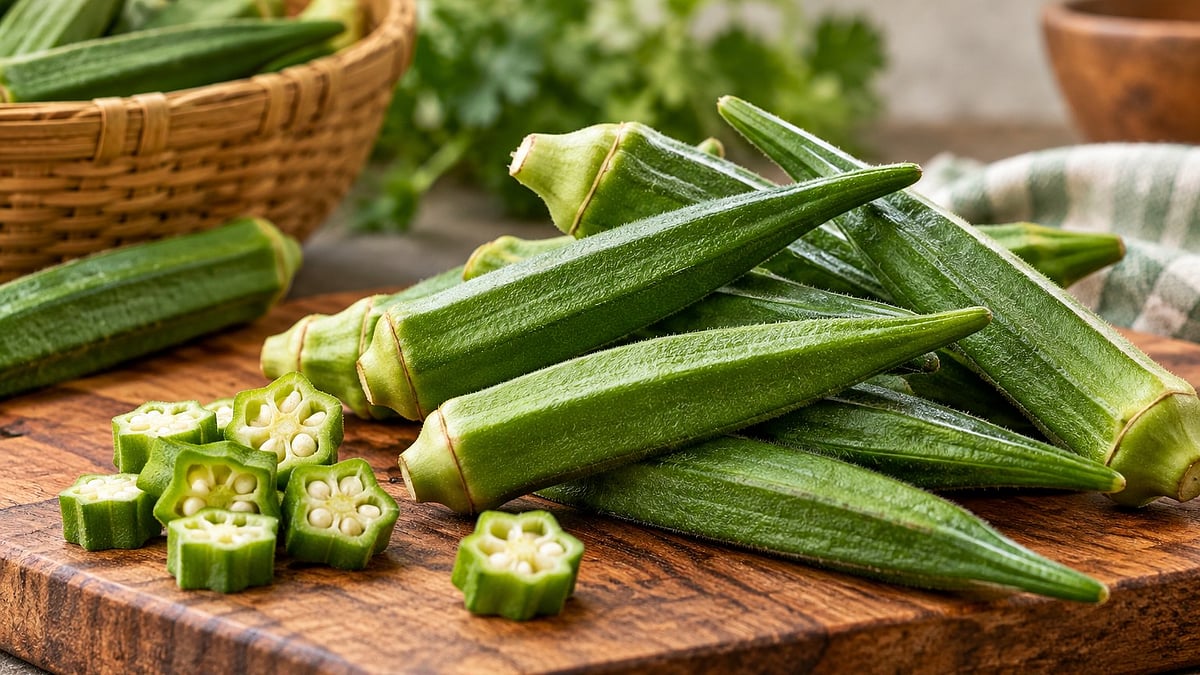
Okra is a nutrient-rich vegetable entrenched with copious doses of fibre, antioxidants and essential vitamins that keep blood sugar within limits, boost heart health and smoothen digestion.
Botanically named Abelmoschus esculentus, okra is known as a lady’s finger in a few English-speaking nations (parts of the UK) apart from southern Asia and the Southeast Asian belt. It is a tall flowering plant of the mallow family originating in West Africa.
Farmed in tropical, subtropical and warm temperate zones across the globe for its edible dark green — red in some cultivars — seed pods, okra is integral to many countries’ cuisines. Providing multiple health benefits, it is also composed of other vital elements like magnesium, folate and vitamins like C, K1 and A.
Owing to its gracefully long, slender and tapering structure like a woman’s delicate finger, okra is literally compared to a shapely lady’s finger and thus gets its widely pronounced moniker. The veggie is commonly called bhindi in India. Incidentally, a ladyfinger also denotes a light, finger-shaped sponge biscuit.
One of its salient features is that the okra has a fuzzy, ridged skin consisting of pint-sized eatable seeds inside. When dissected or chopped into pieces, it discharges a natural mucilage (slimy substance) used as a thickening agent for stews, gumbos (a thick, flavourful stew or soup from Louisiana that combines meat or seafood with vegetables and a savoury stock) and curries.
“Okra is a low-calorie vegetable with the opulence of dietary fibre, vitamins, minerals and plant compounds, such as polyphenols and flavonoids. Its characteristic mucilage contains soluble fibre and polysaccharides,” highlights Pratiksha Kadam, chief dietitian at Kokilaben Dhirubhai Ambani Hospital in Navi Mumbai.
Health perks
Okra can be advantageous to digestive health riding on its fibre content and may even contribute to better blood sugar and cholesterol management as part of a balanced diet. “Recent clinical testimony suggests potential metabolic benefits, although more large-scale human studies are required to strongly validate this finding,” reminds Kadam.
Per 100 gm of okra provides 3.2 gm fibre, 2 gm protein and 7 gm of carbohydrates. It also contains calcium, magnesium, potassium, phosphorus, iron, manganese and zinc alongside vitamins featuring C, K, A and several B editions.
Collagen builder?
One wonders how okra helps strengthen collagen in the human body. “Okra does not directly provide collagen. However, its vitamin C content can aid in normal collagen synthesis, while its antioxidant compounds may help protect cells from oxidative stress. Therefore, okra can be one supportive food within an overall diet that delivers adequate protein and vitamin C,” Kadam clears the air.
Immunity
Dieticians vouch for the fact that “okra provides vitamin C and antioxidant compounds that lift normal immune function. Its calcium, magnesium, phosphorus and vitamin K content can help maintain normal bone health and fortify it further.” “However, it should be viewed as part of a well-balanced diet rather than a standalone immunity or bone-strengthening food,” insists Kadam.
Raw versus cooked okra
“Well, both versions can be healthy. Raw or lightly cooked okra can help retain the heat-sensitive nutrients, such as vitamin C, while the cooked variety can make it easier to digest and improve the bioavailability of some nutrients so that living organisms like humans and plants can conveniently absorb and use the nutrition well. The bottomline is, steaming, sautéing or lightly cooking is preferable to prolonged boiling or deep-frying,” explains Kadam.
Role in pregnancy
Okra can play a vital part during those nine months contributing fibre, folate and other micronutrients to the mother-to-be’s diet. “Folate is particularly important for normal fetal development and for reducing the risk of neural-tube defects (NTDs: serious birth defects of the brain, spine or the spinal cord occurring in prenatal stage when the embryonic neural tube fails to close completely during the first month or initial 28 days of pregnancy). However, okra should complement and never replace the prenatal supplements prescribed during the crucial trimesters,” advises Kadam.
Allergy alarm
There is a general speculation about okra whether it is allergic in nature. Should people with certain conditions dodge okra consumption?
Experts proclaim that okra allergy is possible but appears to be a rare phenomenon. “Anyone with an allergy history pertaining to okra should avoid it,” they counsel.
“People on certain medications, particularly those affected by dietary vitamin K or blood-glucose fluctuations, should discuss about regular or high intake of okra with their physician rather than arbitrarily refusing okra when served. There is no general prohibition for healthy individuals to abstain from it,” reveals Kadam.

Health food
Okra is considered a component of healthy fare. It is embedded with teeming nutrients for relatively handful calories.
Deepika Lalwani, clinical nutritionist and wellness coach at Redcliffe Labs, dispenses that “its characteristic mucilage — a slightly sticky substance noticed when it is cut — comprises a viscous, gel-like soluble fibre, which can help slow down digestion as well as delay carbohydrate absorption. It may also lead to better blood-sugar control and satiety. The overall fibre content can stabilise bowel regularity or movement and drive the gut health too.”
However, this doesn’t mean that “more is always better,” she warns, as “larger quantities of fibre could cause discomfort and may need a little adjustment according to individual degree of tolerance,” she concludes. For this reason, she asks “people with a very sensitive gut, IBS, bloating or certain intestinal issues to watch out for their frequency of okra intake.”

Kids’ special or adult-friendly?
Clinical nutritionist Dr. Chetna Bhardwaj confirms that “eating okra is healthy for both children and adults.”
Good news is that okra may also assist healthy blood-sugar management. “Research on adults with prediabetes or type 2 diabetes suggests that okra-based interventions may improve measures, such as fasting blood glucose and HbA1c (glycated hemoglobin, a blood test measuring average blood sugar levels over the past two to three months), although the evidence is still in early stages,” she reminds.
“Okra should therefore be reckoned as a key constituent of a balanced diet and not as a substitute for the prescribed diabetes treatment,” she alerts.
“People with kidney disease, particularly those who have been advised to rein in potassium levels, should consult their doctor or dietitian before increasing their okra intake as okra contains potassium. Potassium restrictions vary from person to person, depending on kidney function and blood-potassium readings,” she advocates.
Seasonal or all-weather food?
Is okra a season-specific food or can it be enjoyed throughout the year?
Okra is traditionally classified as a warm-season or Kharif crop and grows best in hot weather conditions. However, depending on the region and cultivation practices, fresh okra is now available in markets for much of the year and not summer alone.
“When buying fresh okra, look for small to medium-sized firm, bright-green pods that are free from bruising (the tender skin darkens or turns black/brown within hours of physical pressure) and feel crisp. Smaller, tender pods are generally more pleasant to eat because larger, mature pods can become fibrous and tough,” advises Lalwani.

