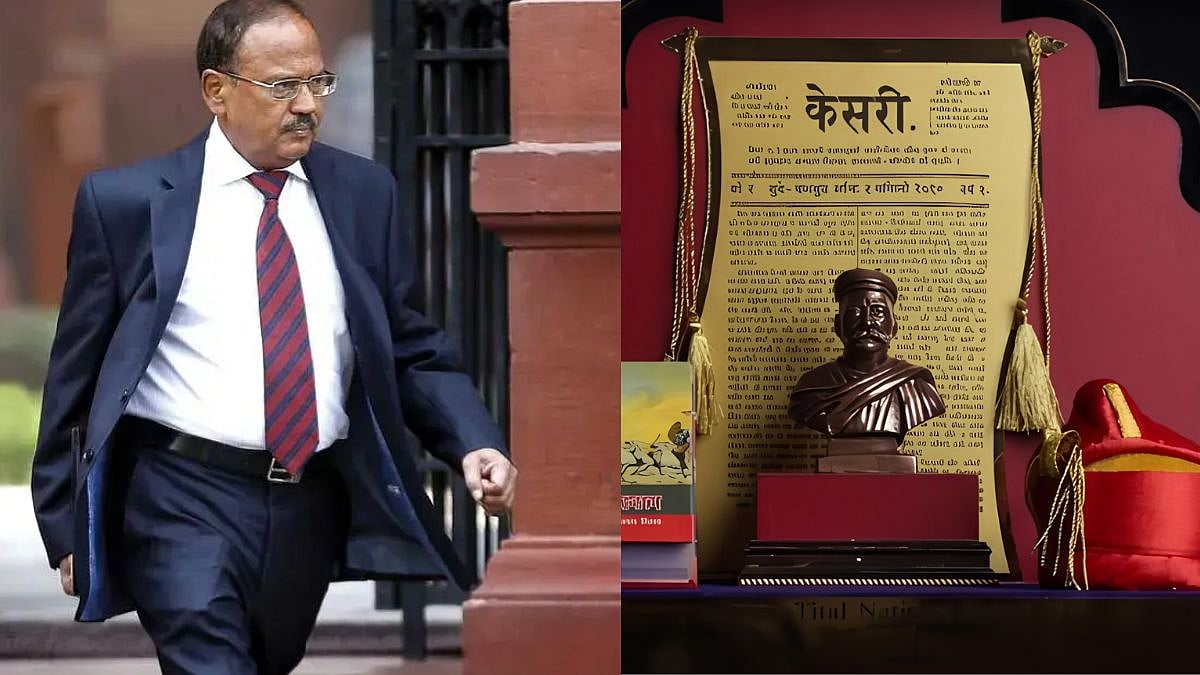
National Security Advisor (NSA) Ajit Doval received the prestigious Lokmanya Tilak National Award, an honour presented annually by the Lokmanya Tilak Smarak Trust to individuals who have made exceptional contributions to the nation. The award, named after freedom fighter Bal Gangadhar Tilak, recognises excellence in public service, leadership and national development. The award will be presented on August 1 in Pune on the occasion of the 106th death anniversary of Lokmanya Tilak.
Award presentation details
NSA Ajit Doval, who is known for dedication, discipline and the way of conducting national security operations, received the Lokmanya Tilak Award on Saturday, August 1, 2026. The award was presented in Pune, where Union Home Minister Amit Shah, Maharashtra Chief Minister Devendra Fadnavis, Deputy Chief Minister Eknath Shinde and Deputy Chief Minister Sunetra Pawar was present at the award ceremony. The award, which was given on Lokmanya Gangadhar Tilak's punyatithi (death anniversary), comprises a memento, a citation and a cash prize of one lakh rupees.
First police officer to receive Kirti Chakra
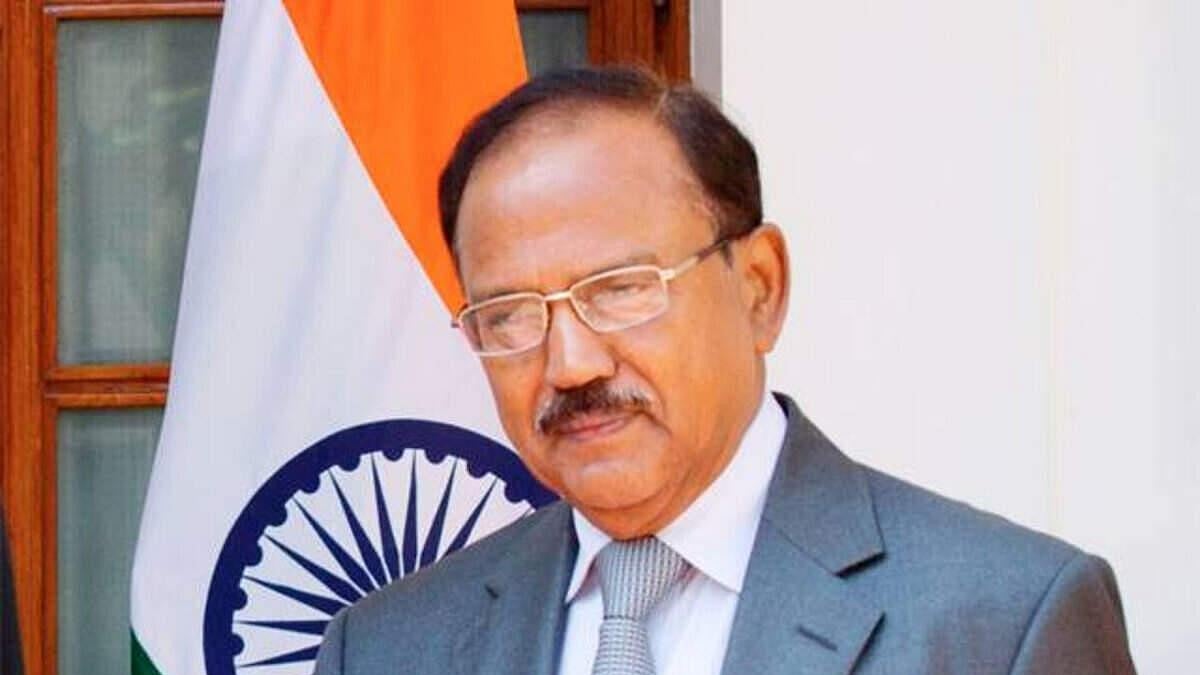
Ajit Doval, a former Indian Police Service (IPS) officer of the Kerala cadre, is widely regarded as one of India's most experienced security strategists. He served in the Intelligence Bureau (IB) for several decades, where he handled numerous sensitive operations related to national security, counter-terrorism and intelligence gathering. Doval became the first police officer to receive India's second-highest peacetime gallantry medal for exceptional operational fieldwork in high-conflict zones.

Ajit Doval | Twitter/@RusEmbIndia
Since becoming India's National Security Advisor in 2014, Doval has played a key role in shaping the country's security policies. He has been associated with several major strategic decisions, including strengthening India's counter-terrorism framework, improving border security and enhancing intelligence coordination among various agencies.
Role in national security
Doval is also known for his involvement in high-profile security operations. He played an important role during the rescue of Indian nationals from conflict zones abroad and has been linked to India's response to cross-border terrorism. His strategic approach has contributed to India's evolving national security doctrine in recent years.
Key contributions of Ajit Doval
NSA Ajit Doval played a crucial role in Operation Black Thunder in 1988. Doval disguised himself as a local insider or rickshaw puller to blend seamlessly into the surroundings and gather vital intelligence on the armed militants inside the Golden Temple. He moved through the temple complex to locate the exact sniper nests, weapons caches and militants' numbers. Doval provided precise ground feedback to security forces and commandos, enabling a swift and accurate assault that minimised damage to the holy site.
Doklam resolution
Doklam is one of the most sensitive geographical locations, located between Tibet's Chumbi Valley to the north, Bhutan's Ha Valley to the east and India's Sikkim state to the west. The significant location acts as a tri-junction between India, China and Bhutan. India has signed a Friendship Treaty with Bhutan (renewed in 2007), which drove India to intervene for the goodwill of Bhutan, among many other provisions.
The conflict took place when China started constructing a road in the disputed area of Doklam. Bhutan then asked for help from India in 2017, and it sent the army to stop the construction. The military standoff in the area lasted more than two months. However, after diplomatic conversations between the two sides, both countries agreed to withdraw troops from the region.
Role in Doklam standoff
During the conflict, Doval served as India's key interlocutor. The NSA met with Chinese State Councillor Yang Jiechi in Beijing during a meeting to talk about easing the border tension. He made it clear that India would not move its troops away while China built a disputed road. He clearly explained that the area belonged to Bhutan and India was only helping its neighbouring country to prevent China from building a road. His strategy paved the way for both nations to pull back their soldiers and end the standoff after 73 days.
Role in Balakot air strike
The Balakot air strike was a cross-border military operation conducted by the Indian Air Force in 2019 with the aim of targeting a Jaish-e-Mohammed terrorist camp. Doval was the mastermind behind the strategic planning of the operation. He also handled backchannel and international communication, including discussions with US National Security Advisor John Bolton to justify the action as pre-emptive self-defence.

