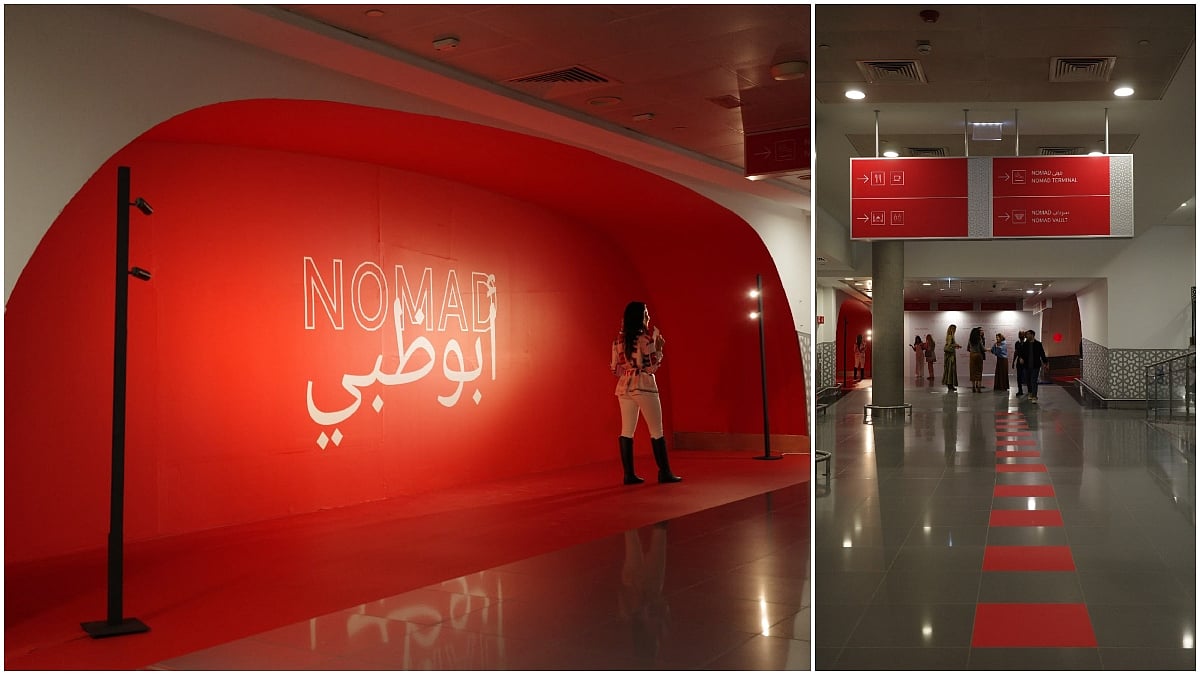
I was at the preview on November 18, and somewhere past the entrance, I stopped checking the time.
NOMAD, the travelling fair of collectible design, art and jewellery founded by Nicolas Bellavance-Lecompte, has previously visited St Moritz, Venice, Cannes and Capri. For its second Abu Dhabi edition, which concludes on November 22, more than 50 exhibitors took over the former Terminal 1 of the city's airport.
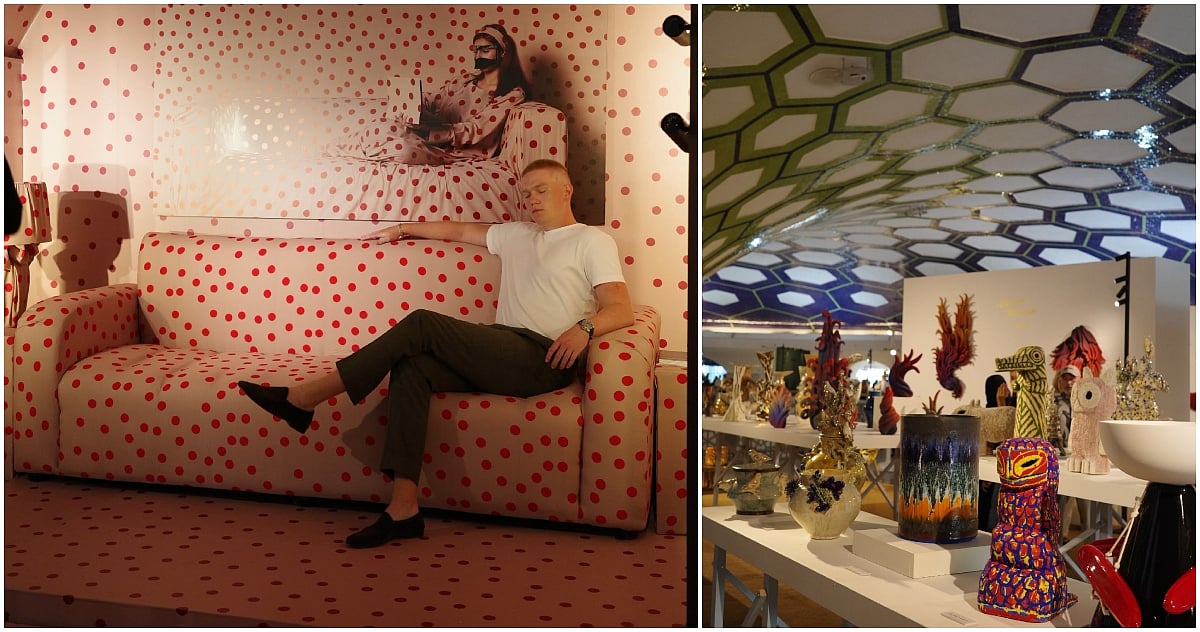
Nomad, the travelling fair of collectible designs | Deviina Dalmia
Designed by Paul Andreu and opened in 1982, the terminal no longer sends anyone anywhere. But for a few days, it has become a destination in itself. A red carpet stretches beneath the illuminated lattice ceiling, red banners mark the arches like gate numbers, and beyond the windows lies the eerie stillness of what was once a bustling airport.
One corridor belonged to Milan's Nilufar. Another was lined with Irene Cattaneo's lamps from Galerie Gastou, their stems bending like flowers, each carrying a small illuminated bulb. They led visitors towards a departure gate.
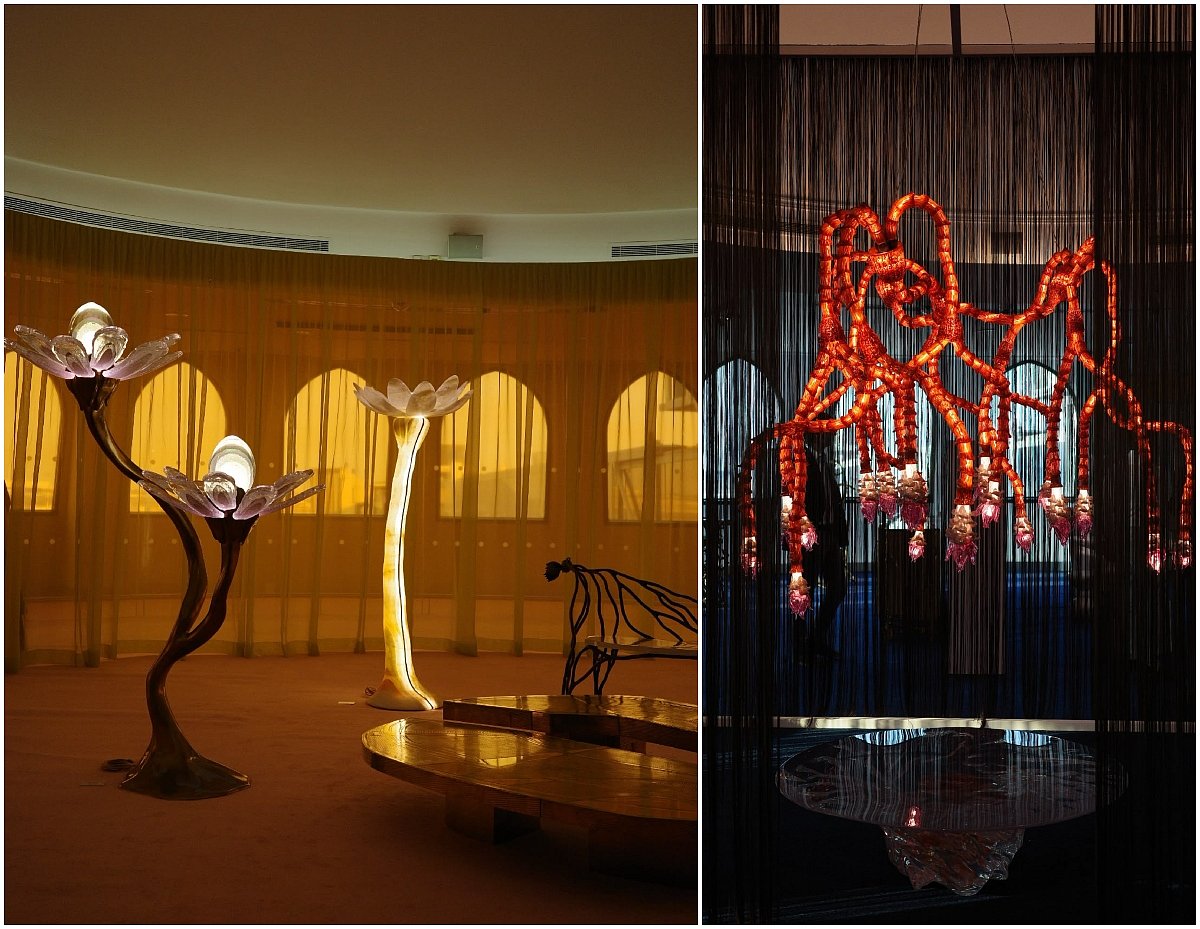
Illuminatinv art | Deviina Dalmia
I kept thinking of Tom Hanks in The Terminal, stranded in an airport and slowly turning it into a home. Imagine if he could have furnished it from NOMAD, a throne to sit on, a lamp to read by and a wall of embroidered gold behind his bed.
Bellavance-Lecompte understands how to let a building become part of the experience. Rather than disguise the terminal as a conventional gallery, he has worked with its architecture. The original ceiling, arches and views of the empty tarmac remain, while the exhibits unfold along the former concourses.
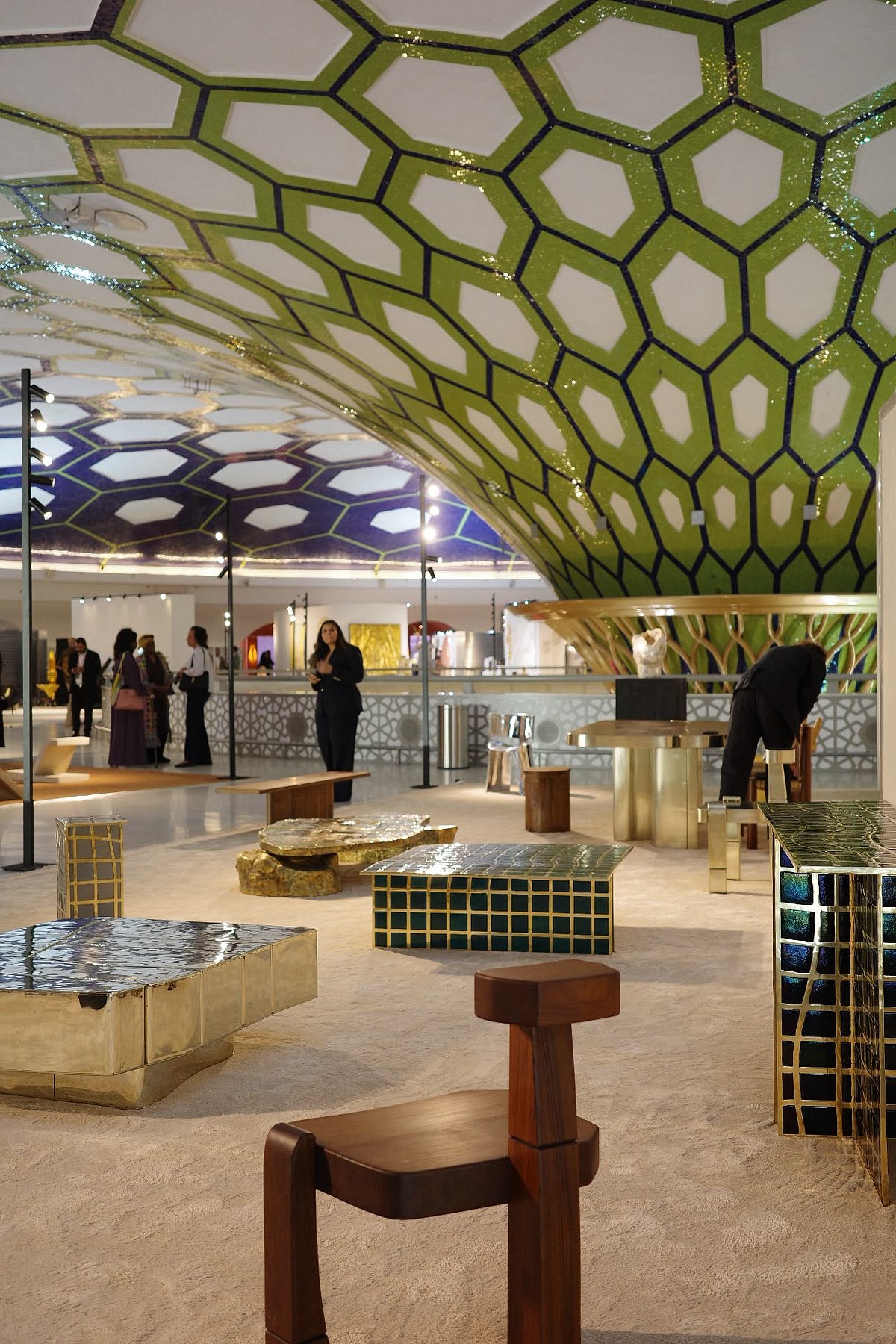
Everything becomes the part of the art exhbition | Deviina Dalmia
Indian Craftsmanship Takes Centre Stage
Among the first pieces that caught my attention was Indian designer Gunjan Gupta's Muda Walla Bicycle Throne, presented by Gallery FUMI.
Bamboo mudas, the familiar woven stools of Indian courtyards, rise around a central chair, their seats wrapped in silver thread. The structure rests on steel and bicycle parts, drawing inspiration from the cycle vendors who navigate Indian streets carrying extraordinary loads. Gupta takes that everyday image and transforms it into something unexpectedly regal. It made me smile first and think later.
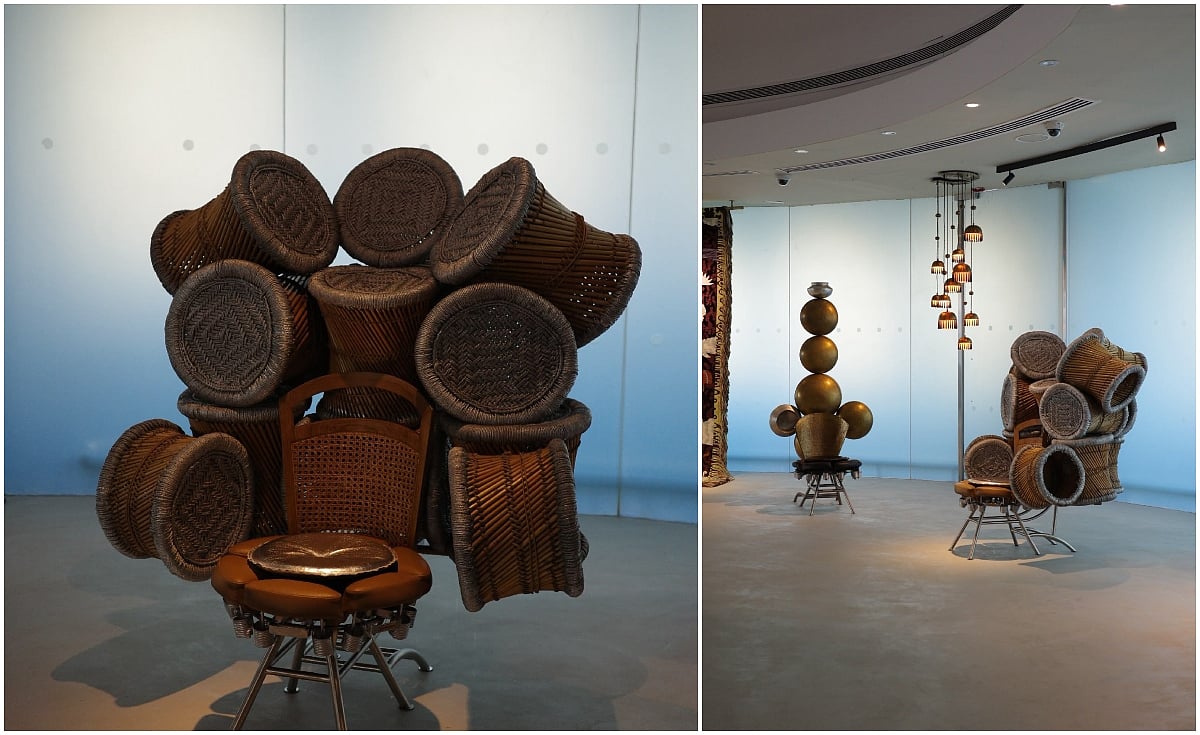
Installations | Deviina Dalmia
Another Indian connection emerged at Æquo, the Mumbai-based gallery presenting monumental sculptures by Frédéric Imbert.
Developed in India using the lost wax casting process associated with Dhokra, the works bring an ancient metalworking tradition into the world of contemporary collectible design. The process begins with a form shaped in wax and encased in earth. Once heated, the wax melts away, leaving a cavity into which molten metal is poured. The mould is then broken to reveal the finished sculpture.
Imbert collaborated with master craftsman Suresh Waghmare and his team in Chhattisgarh. What fascinated me was how the scale changed my understanding of the technique. The marks and textures usually associated with smaller handcrafted objects became almost geological when enlarged into monumental forms.
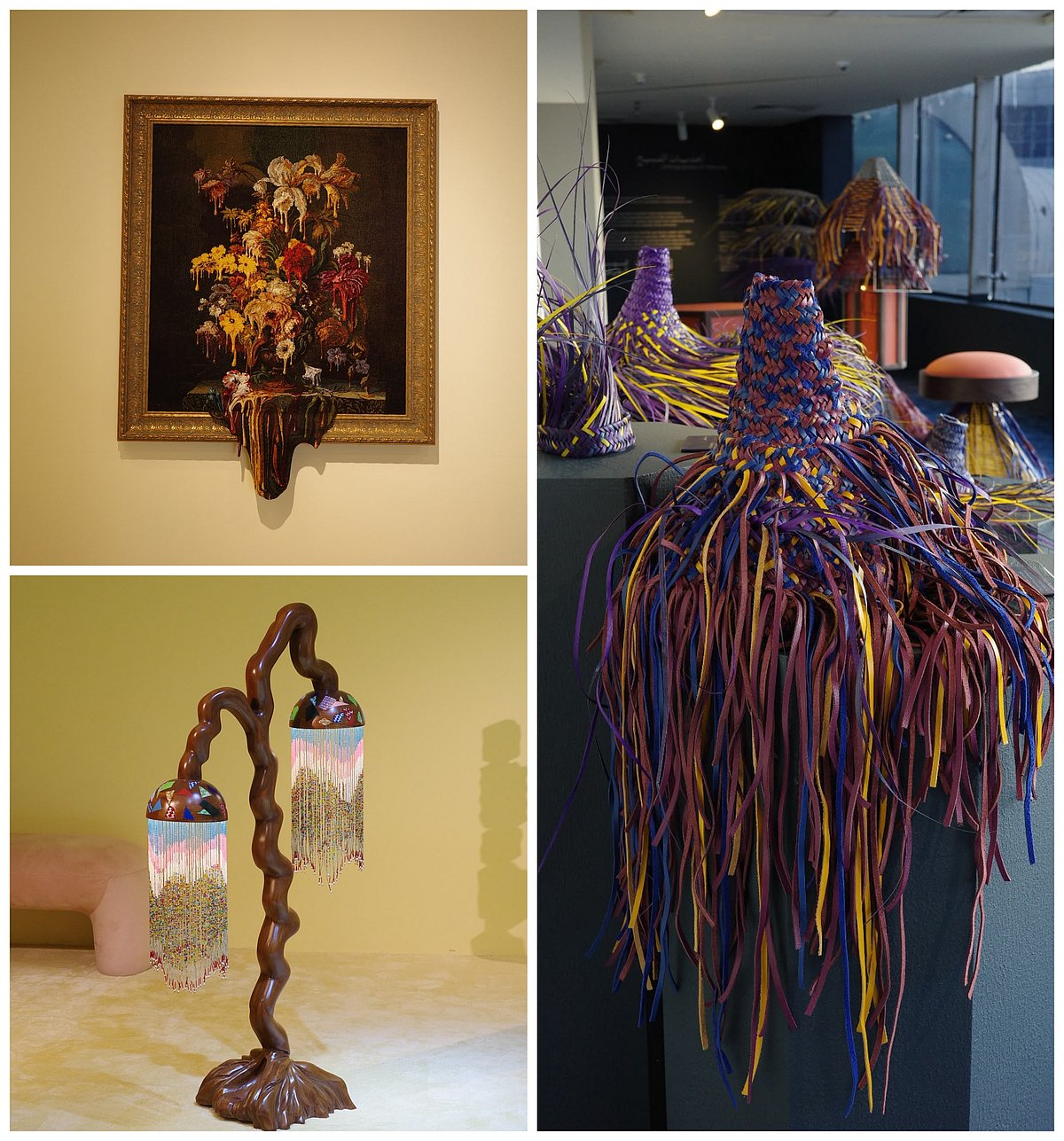
Different mediums and techniques | Deviina Dalmia
Where Heritage Finds A Contemporary Expression
From India, I wandered towards the Gulf.
In a softly lit blue space stood Orthographies of Weaving, presented by House of Artisans and Abu Dhabi Culture. Inspired by Khoos, the traditional craft of weaving date palm leaves, the installation featured colourful, tiered forms in violet, yellow and pink.
The design drew from the machabbah, a traditional woven cover used to protect food, but introduced metal as the weaving material. Developed by Collectus, the work involved Pakistani artist Sheherbano Salaheddin and six Emirati artisans: Alia Al Mansoori, Mariam Al Dhaheri, Mouza Al Muhairbi, Fatima Rashid, Maryam Al Shehhi and Zainab Al Raeesi.
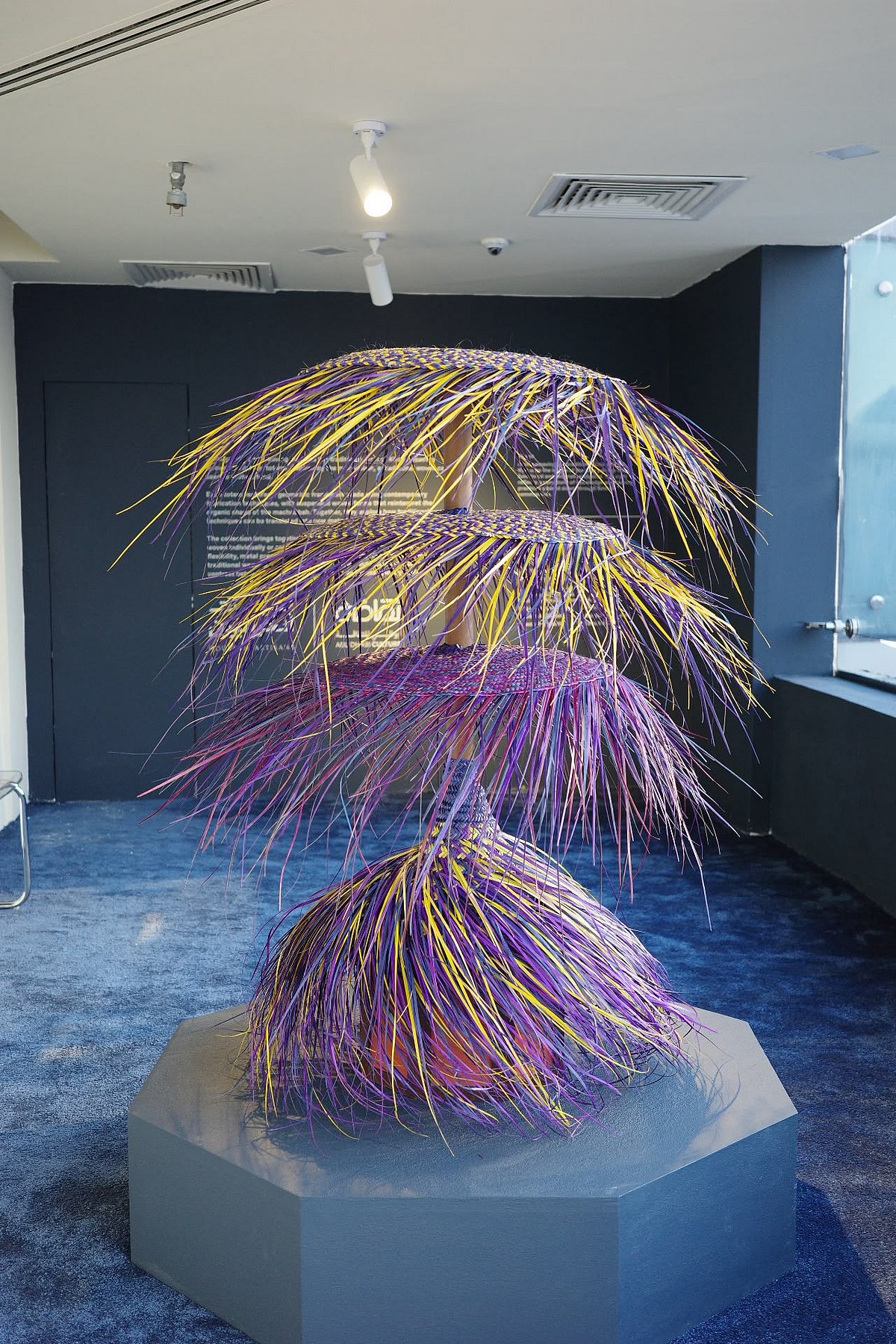
Enchanting Art | Deviina Dalmia
Nearby, Wafa Bouharoun Al Shamsi's Nawartuna brought another interpretation of Emirati traditions. Four ivory-coloured lamps, made from stoneware clay and pierced with woven copper diamonds, cast a warm glow. Their forms drew inspiration from the majlis and the traditional coffee dallah.
What made these works interesting was not simply their reference to heritage, but the way familiar materials and techniques had been reimagined without losing their cultural identity.
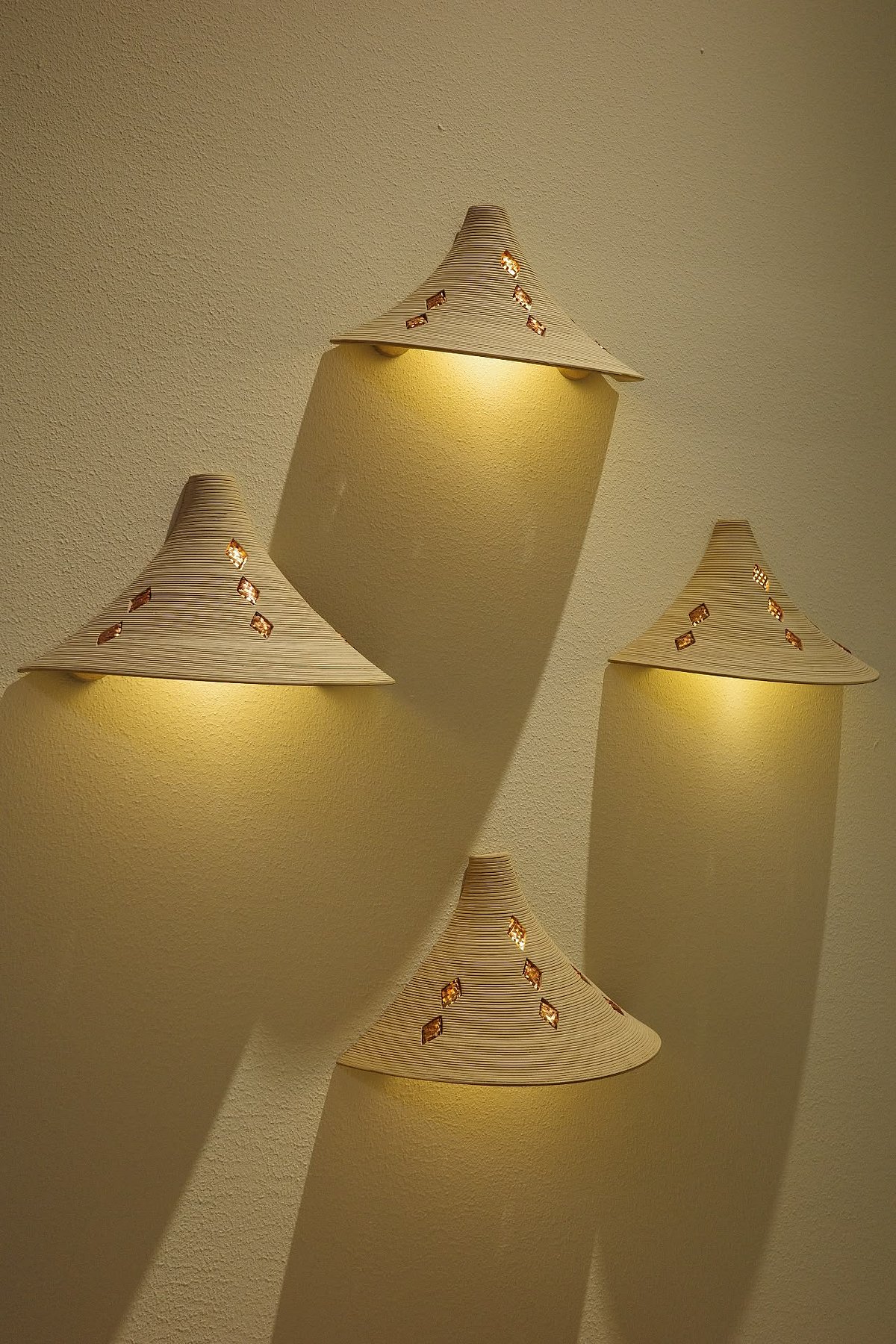
Familiar Materil with a new twist | Deviina Dalmia
A little further along, Naqsh Collective from Amman offered one of my favourite encounters of the afternoon.
The collective translates motifs from Palestinian embroidery into wood, marble and brass. Birds, wheat, cypress trees and flowering branches, traditionally stitched onto fabric, appear across furniture and sculptural surfaces.
A pale marble cabinet decorated with golden cypress trees and tiny birds was particularly beautiful. It felt almost like a remembered landscape, a village preserved through patterns passed down generations.
It was the one piece I wanted to take home.
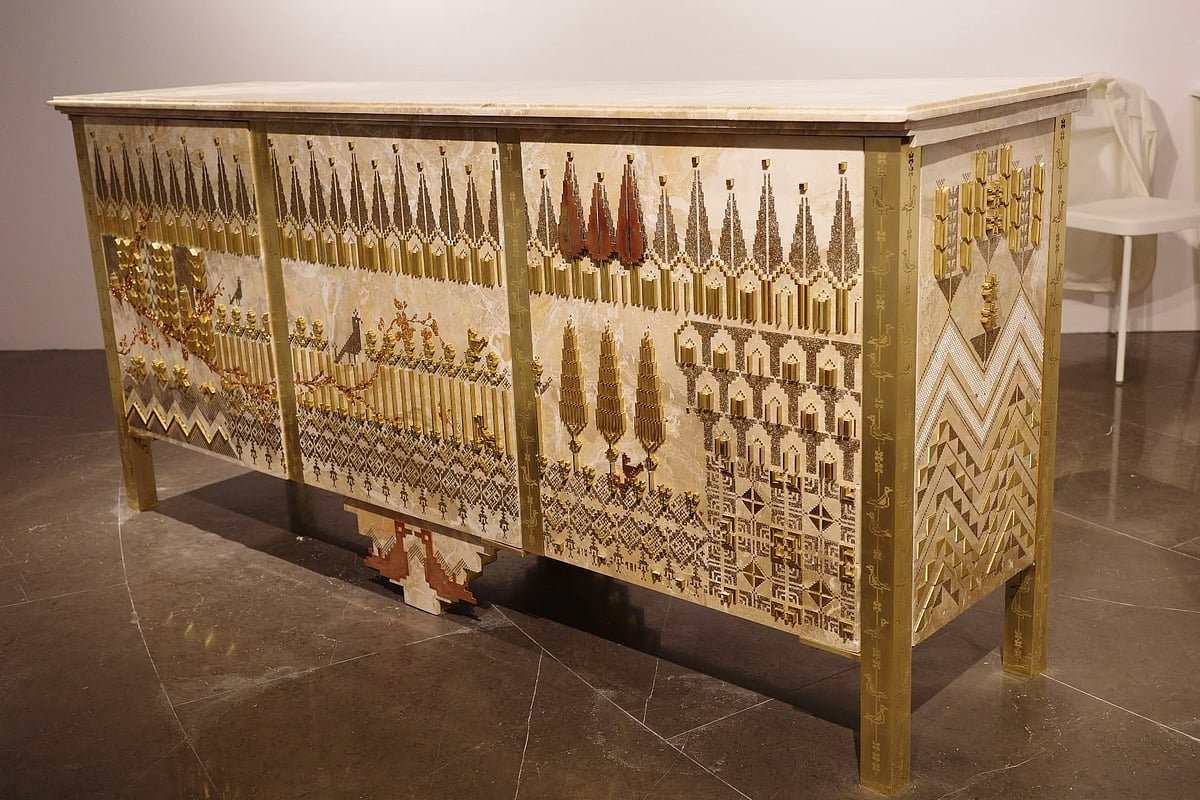
Marble Cabinet | Deviina Dalmia
From Indian Textiles To Dazzling Diamonds
Indian craftsmanship surfaced again through Helena Bajaj Larsen's rugs with Jaipur Rugs, presented by Shakti Design Residency. Their intricate surfaces resembled maps of veins and roots, combining hand-painted silk, knotting and touches of gold. Nearby, Kickie Chudikova's Mughal arch-inspired glass lights with Klove Studio brought another interpretation of India's architectural vocabulary.
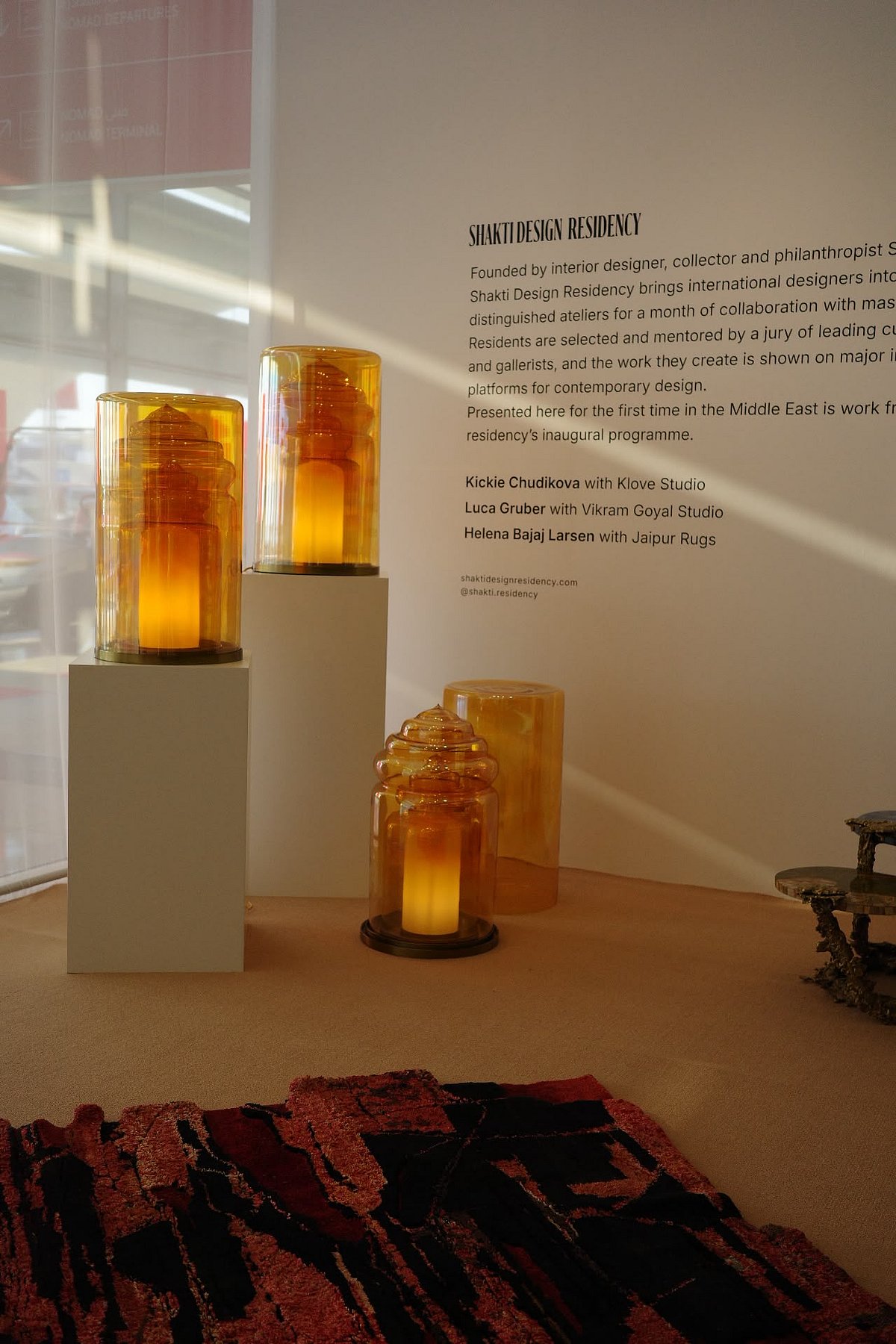
Rugs exhibiting Indian Craftsmanship | Deviina Dalmia
And then came the jewellery.
Fernando Jorge has long been one of my favourite designers, so meeting him at NOMAD turned me into a complete fangirl.
Brazilian-born and trained at Central Saint Martins, Jorge presented dark, curved forms crafted from Brazilian wood, scattered with diamonds that resembled the first stars appearing in an evening sky.
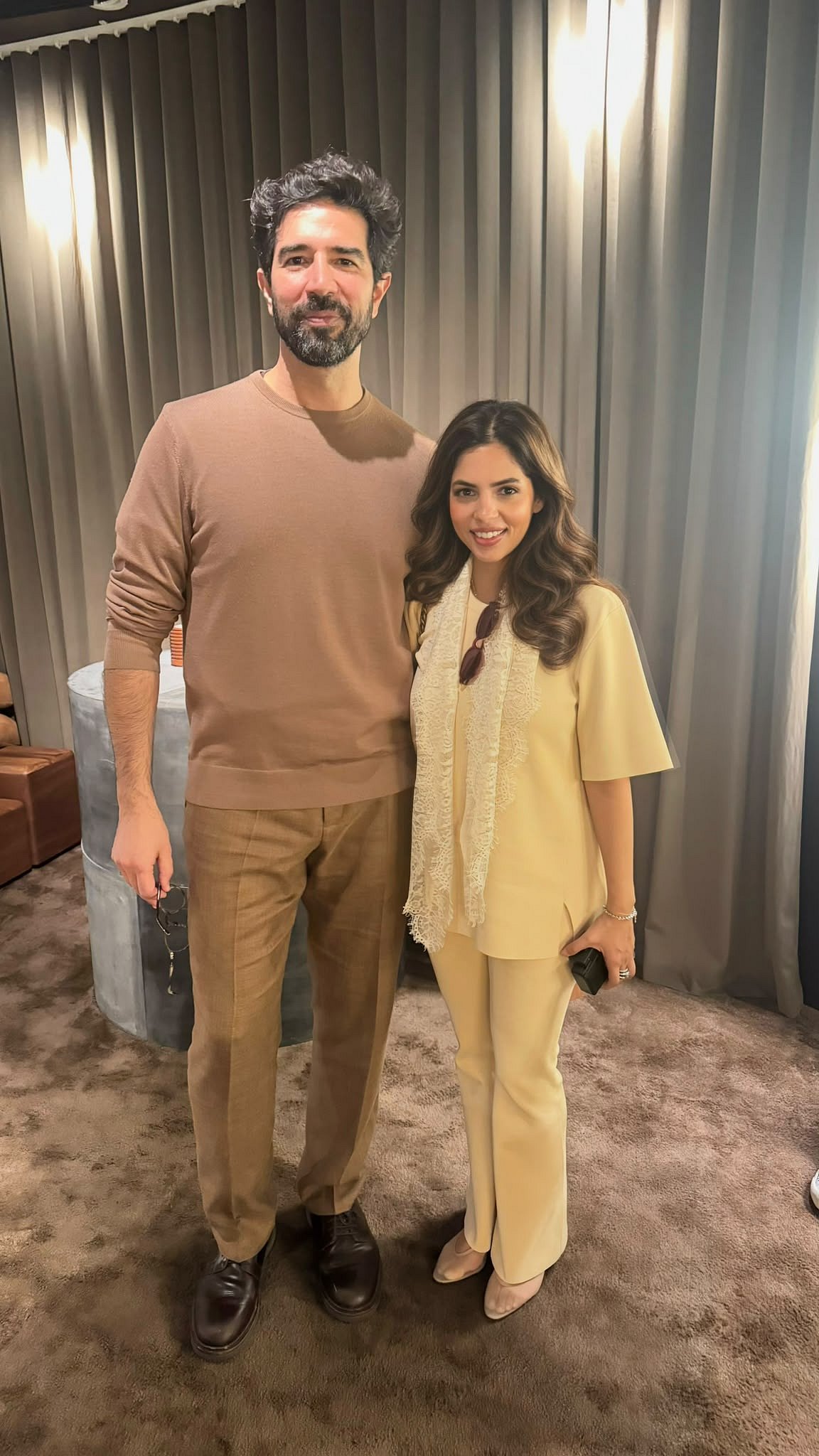
Fernando Jorge with the writer |
Mumbai's Studio Renn was another highlight. Founded by Rahul and Roshni Jhaveri, the studio approaches jewellery with a distinctly contemporary sensibility, often favouring antique, rough and freeform diamonds over conventionally polished stones.
Among its striking creations is the diamond ear crawler, where differently shaped stones, including pear and kite cuts, follow the curve of the ear. The effect is less about conventional ornamentation and more about the relationship between form, light and the natural character of each diamond.
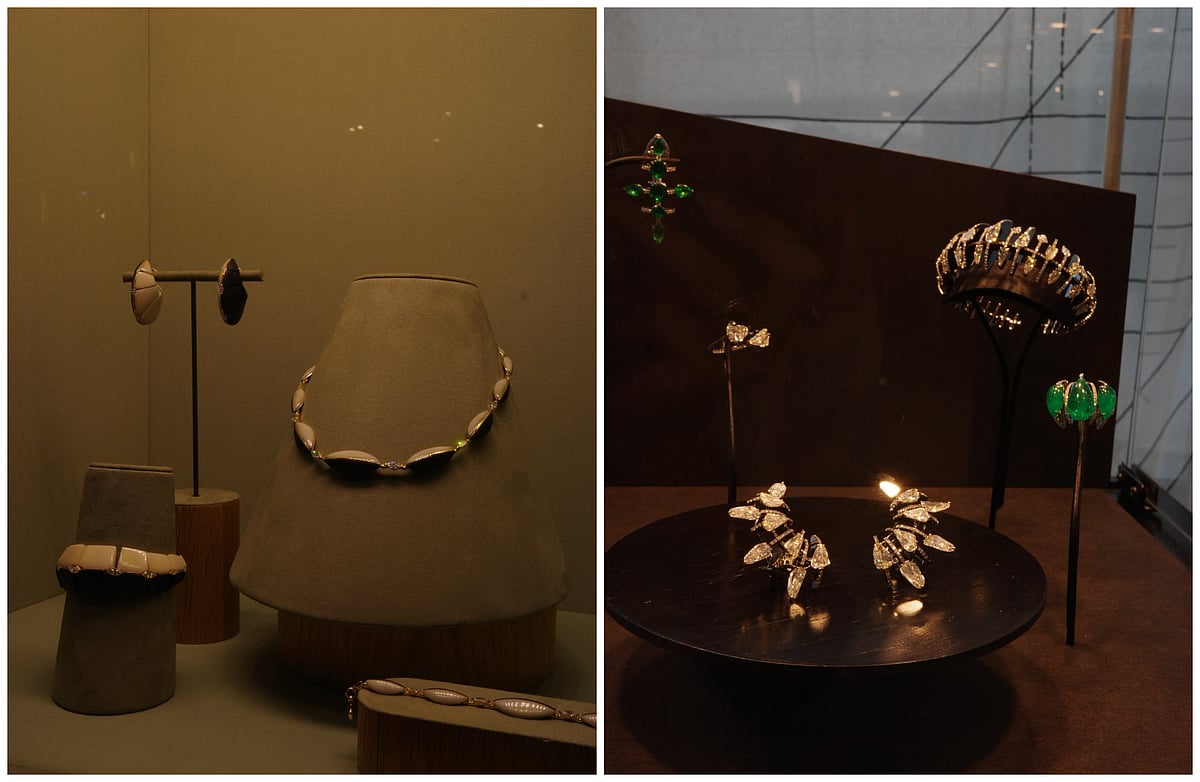
Gorgeous Jewellery on display | Deviina Dalmia
When Fine Art Meets High Jewellery
One of the most compelling presentations came from Boghossian and Ars Belga, who brought together fine art and high jewellery in Light into Colour.
Paintings by Piero Dorazio, Charles Pollock, Amadeo Luciano Lorenzato and Salvo were displayed alongside jewellery selected to echo their colours. The presentation moved through the changing qualities of light, from morning to evening, allowing the relationship between painted colour and gemstones to unfold gradually.
At times, it was difficult to decide whether the stronger impression came from the artwork or the jewels beside it.
Behind one pair of earrings, through the window, a jet bridge stood motionless on the empty tarmac, waiting for a plane that would never arrive.
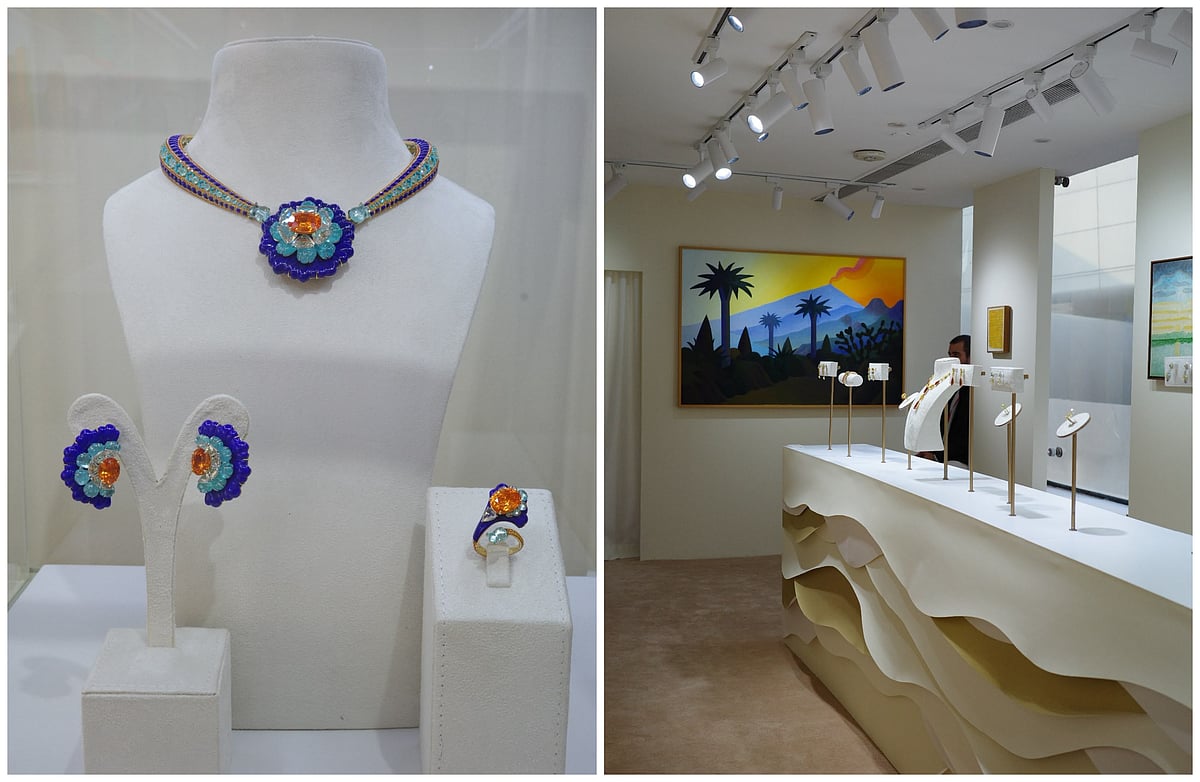
Intriguing Display | Deviina Dalmia
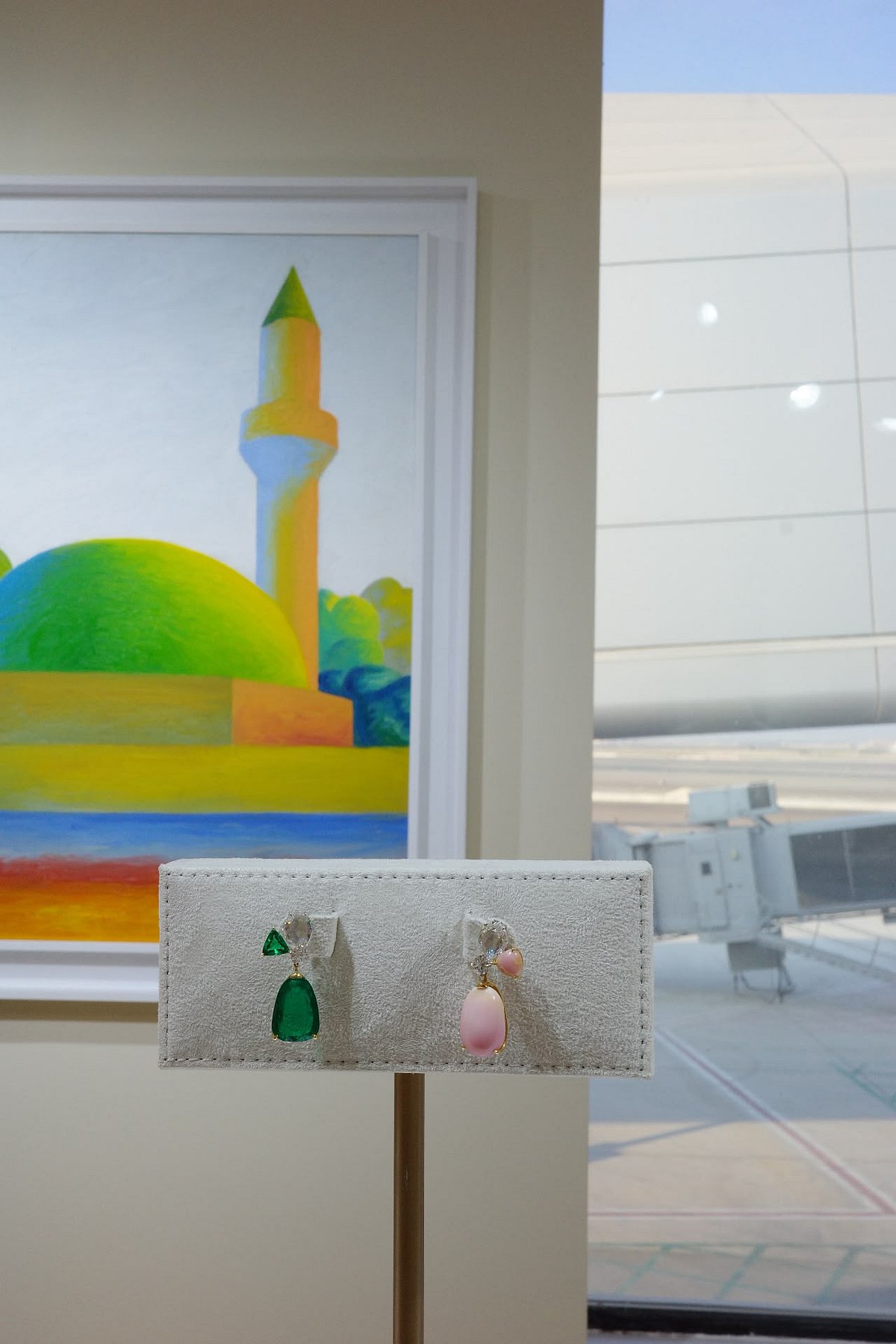
Art and the Ornaments | Deviina Dalmia
Perhaps that was what made NOMAD's Abu Dhabi edition so memorable. It brought together objects shaped by different geographies, histories and craft traditions inside a building once designed to connect people with the world.
Indian metalworkers, Emirati weavers, Palestinian embroidery traditions, contemporary furniture makers and jewellery designers occupied the same space, each offering a different understanding of what it means to make something by hand.
At the end of the avenue, the departure gate stood open.
Nobody walked through.
Why would they?
Level up your brain the fun way. Play daily games and quizzes on FPJ Smart!

