When Recognition Has Gravitas
There are awards — and then there are awards. The distinction matters.
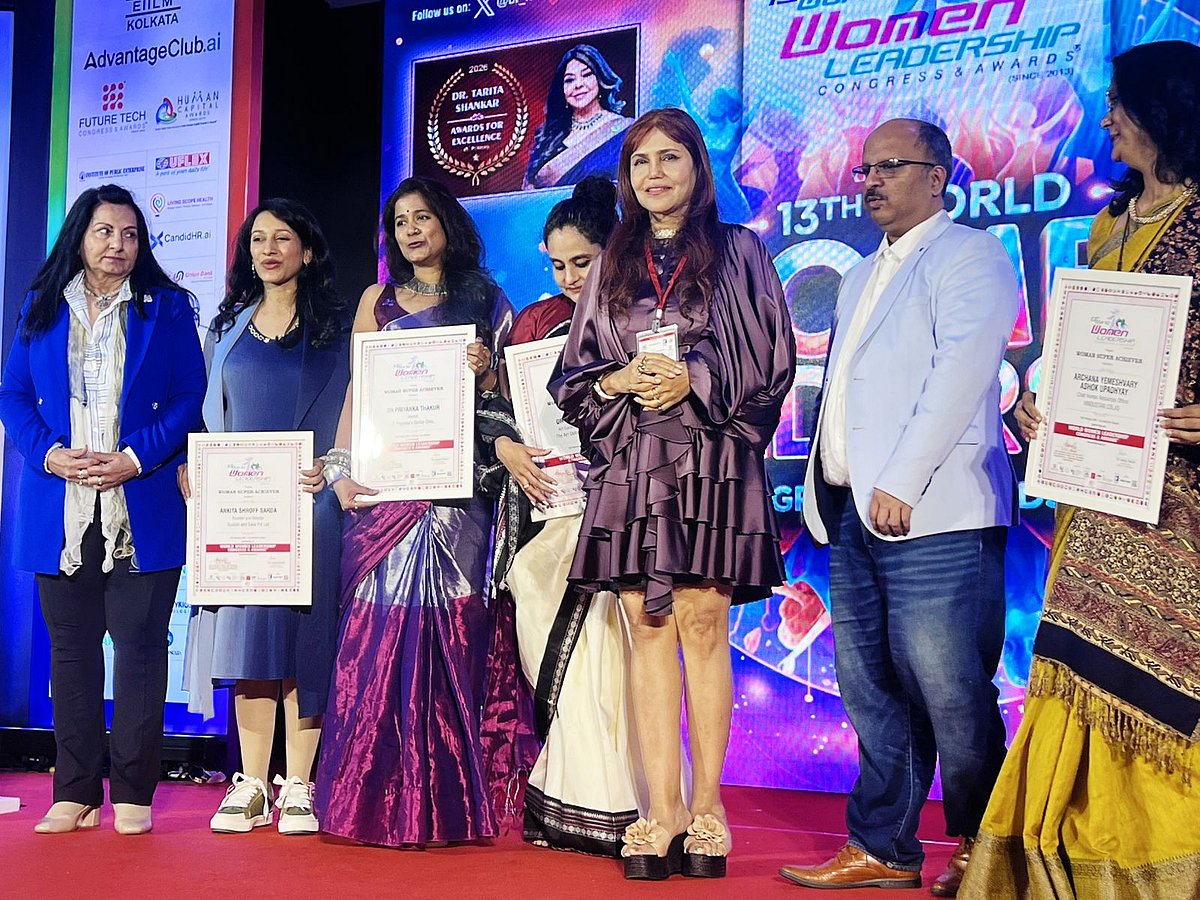
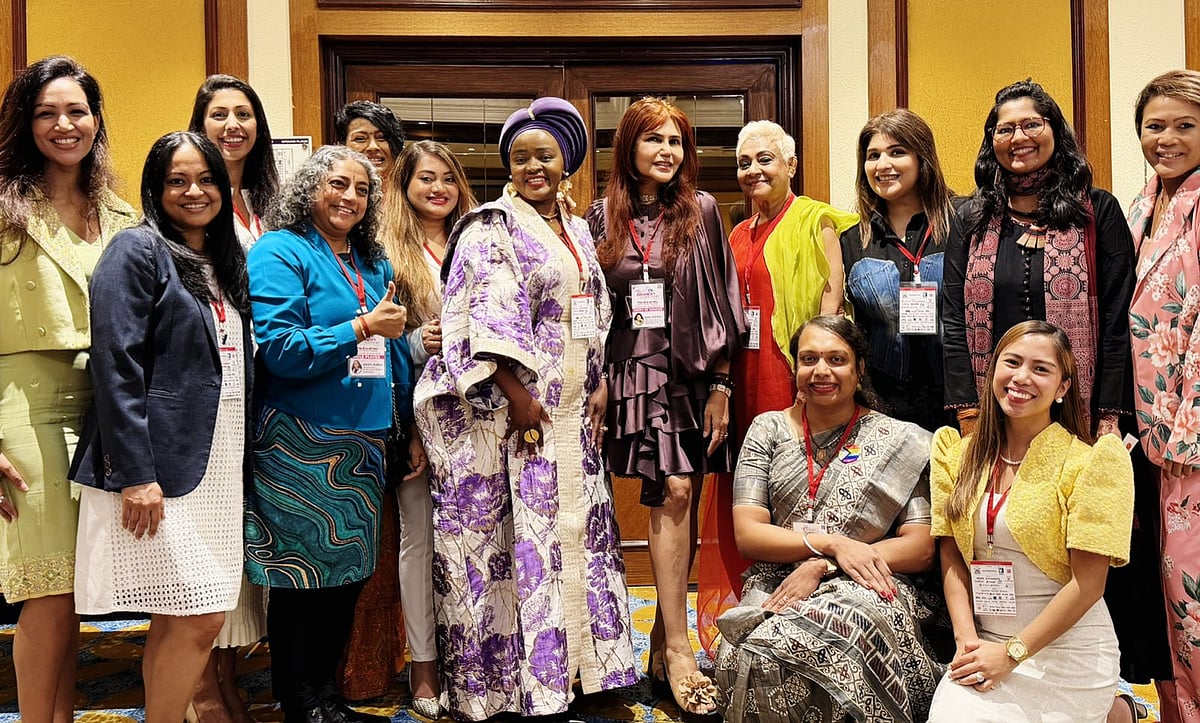
But few platforms I have encountered manage to convene women achievers from across continents — from Iceland to Zimbabwe, from Tokyo to New Zealand — quite like the World Women Leadership Congress founded by Dr Raju Bhatia and Alok Pandit. The diversity alone is telling: entrepreneurs, educationists, diplomats, academics, activists, corporate leaders — each representing a different geography and yet bound by shared ambition.



The World Womens Leadership Award, now over a decade old, has steadily built a reputation as an international leadership forum focused on women in governance, business, sustainability, and social impact. Unlike many new-age awards that proliferate without scrutiny, this one has retained a certain credibility because of the calibre of its honourees and non aligned approach!
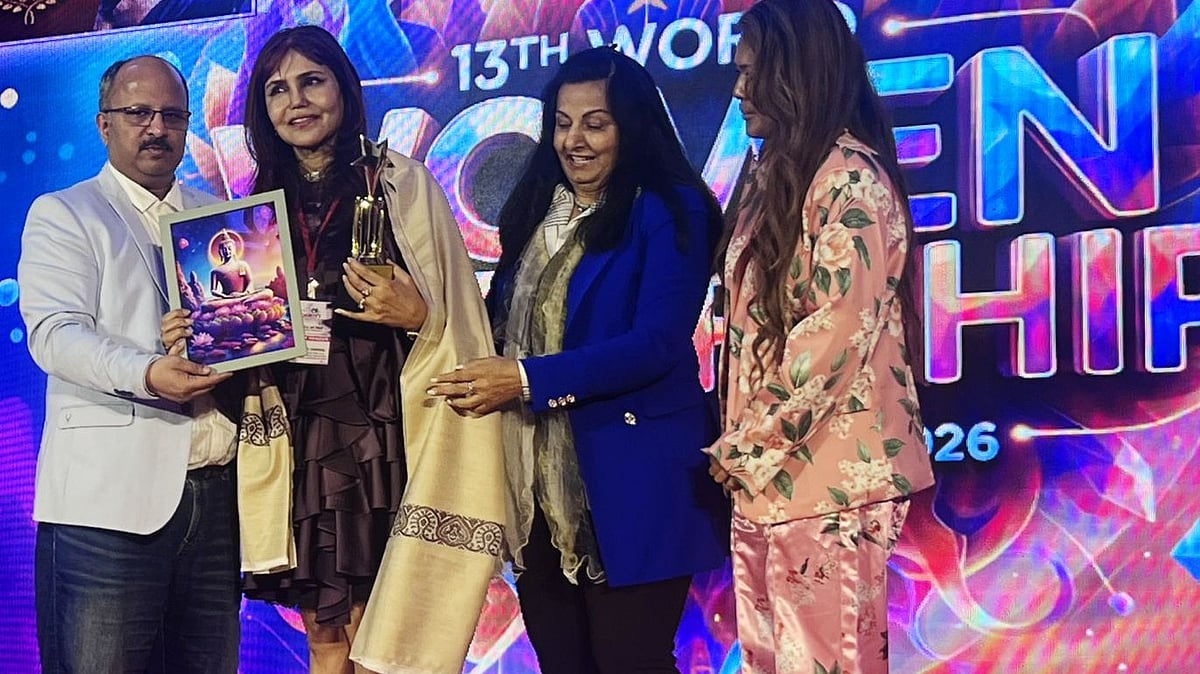
I was invited to present close to fifty awards and deliver the keynote address — an honour in itself — but found myself delighted when called back to the stage to receive the Super Achiever Award. Life does serve up delightful surprises.
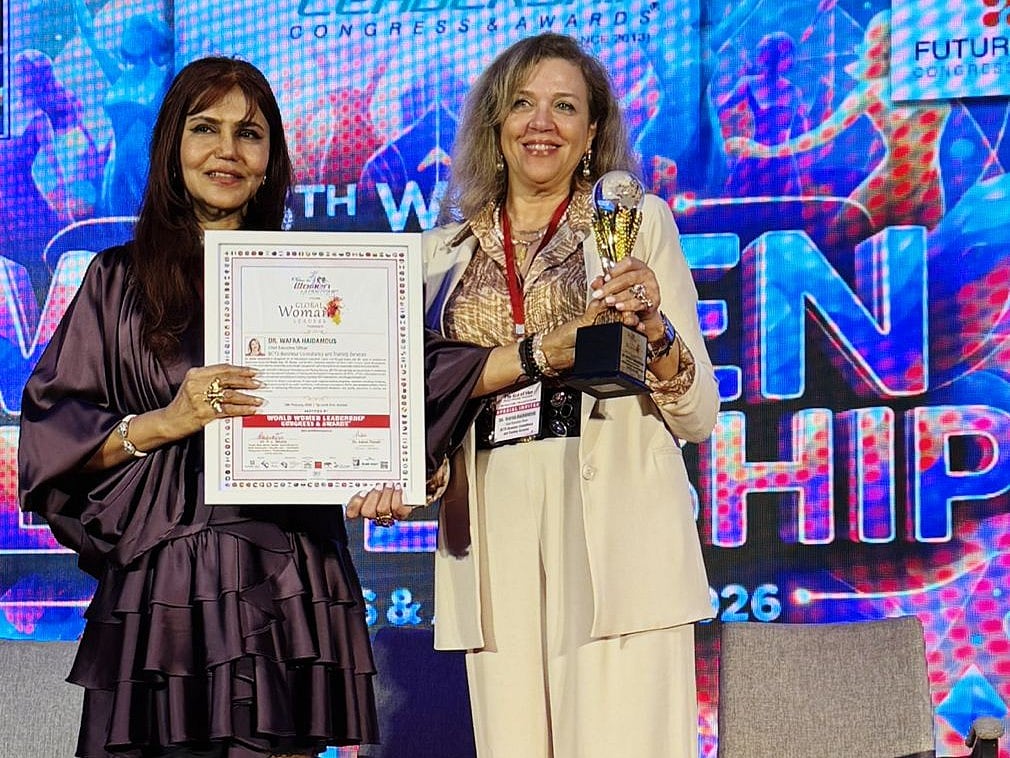
Over the past decade, awards have multiplied exponentially. Some are authentic and meaningful; others, regrettably, are transactional. When one must purchase recognition, it loses its sheen. Validation that arrives prepaid rarely carries moral weight. True honour must be earned — not underwritten.
What moved me most that evening was not the trophies, but the stories behind them: women who had negotiated political systems, scaled enterprises in hostile markets, built institutions in fragile economies. Recognition, in such contexts, becomes more than ceremony — it becomes testimony.
Politics, Perception, and “Mere Pradhan Mantri”
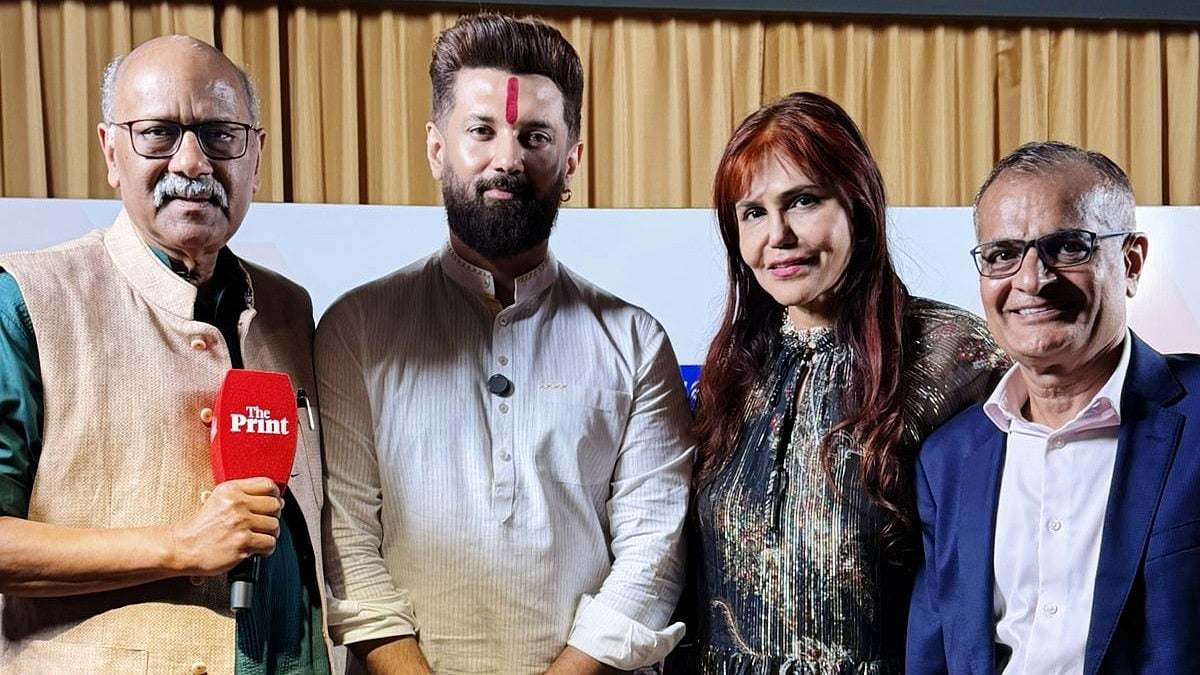
Chirag Paswan, Cabinet Minister for Food Processing Industries, commanded a notably attentive audience at Shekhar Gupta’s The Print Off The Cuff. He is often described as a rising figure in the Hindi heartland — a young leader navigating the inheritance of a formidable political legacy while attempting to carve his own trajectory within the NDA constellation. And his personality and height doesn’t hurt either!
The conversation steered brilliantly by chief editor and founder of The Print - Shekhar Gupta- ranged widely: Bihar’s evolving political equations, the recalibration of caste alignments, the economic potential of food processing as a growth engine, and his working relationship with Prime Minister Narendra Modi — whom he endearingly referred to, with almost filial warmth, as “my Prime Minister” or “mere Pradhan Mantri.” Language, in politics, is never accidental.
Chirag stressed on how value addition through processing, storage, and supply-chain modernisation is essential to rural income expansion. He spoke with conviction about cold chains, agro-parks, and small enterprise integration — policy matters that rarely trend but quietly determine livelihoods.
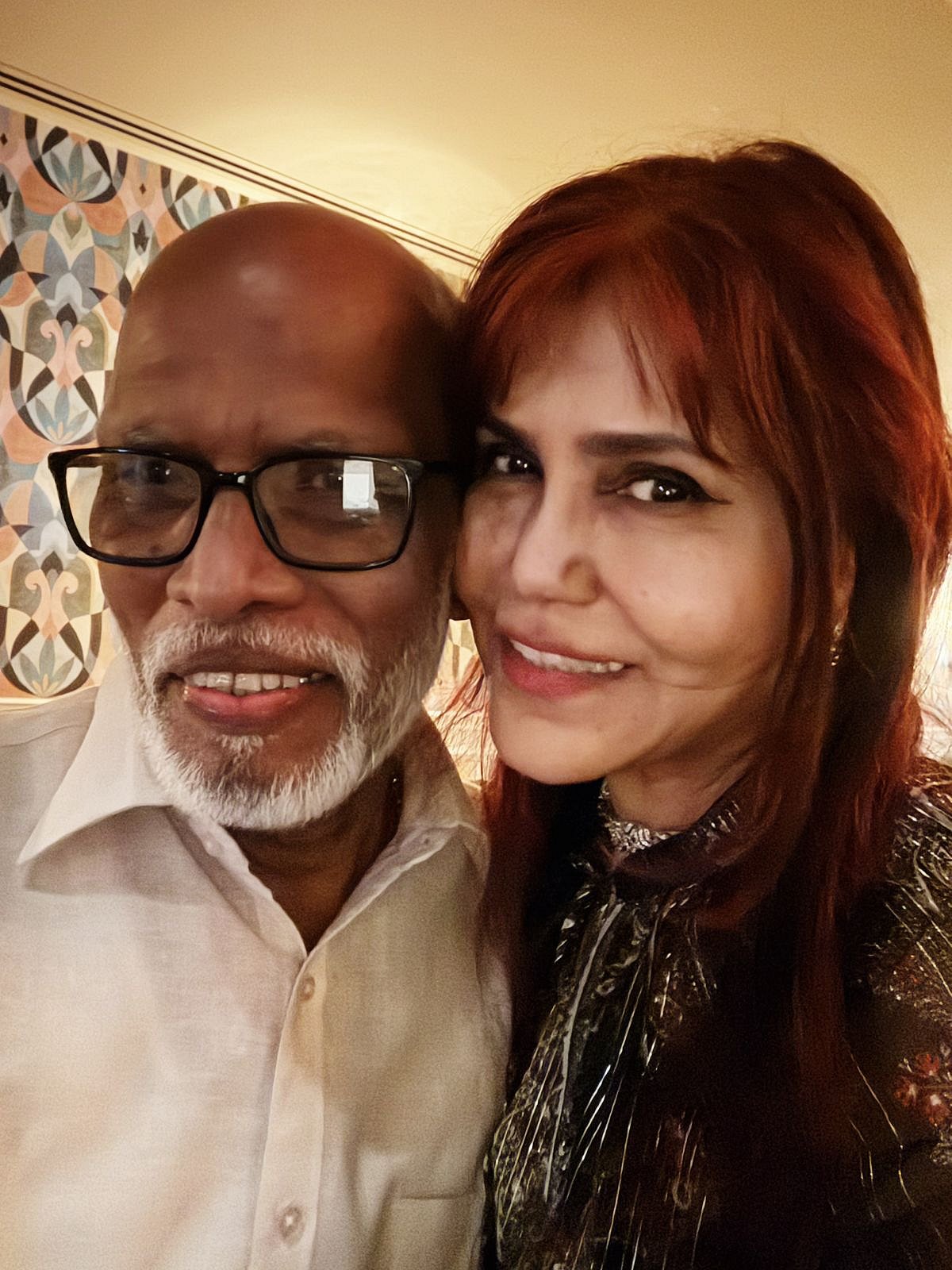
Shekhar Gupta I find has refined the art of the probing yet untheatrical interview. He is a brilliantly unaligned as a writer and edited and at his fireside property ‘OTC’ he is less combative more analytical, less performative than persistent. He draws his guest into nuance without resorting to spectacle. And the pièce de résistance is the way he makes his audience feel included in a serious conversation rather than entertained by one.
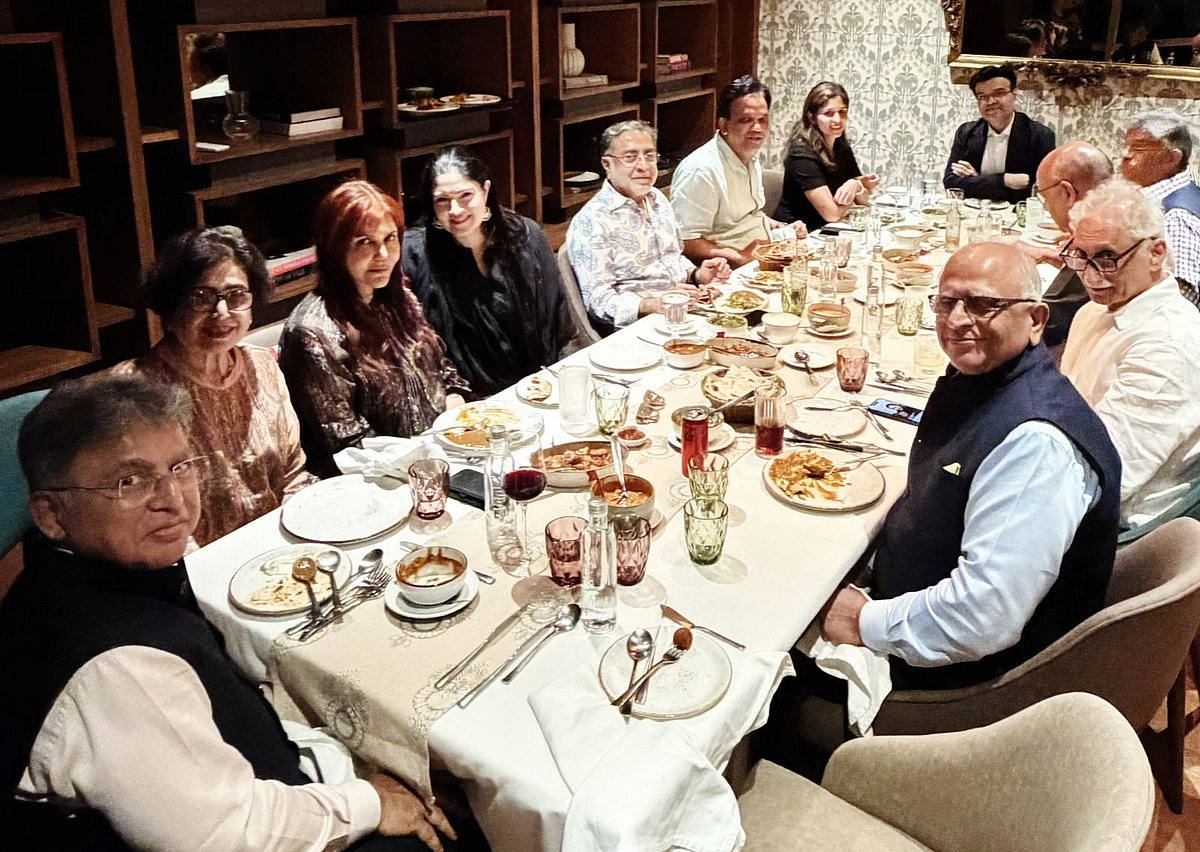
And the dinner that follows — what I privately call Shekhar’s round table is a favorite with those included not least because once the microphones are switched off, conversations acquire candour. Journalists exchange newsroom anecdotes accumulated over decades, corporate honchos share private moments in a public life, political war stories surface — some printable, most not. It is here, in that informal coda, that one often glimpses the subtext behind headlines.
South Bombay’s Culinary Autopilot — Interrupted
There is something quietly subversive about breaking habit. In South Bombay, dining patterns tend to ossify. We gravitate instinctively toward the Taj’s Shamiana or Trattoria, or the Oberoi’s veranda — comfortable, reliable, familiar.
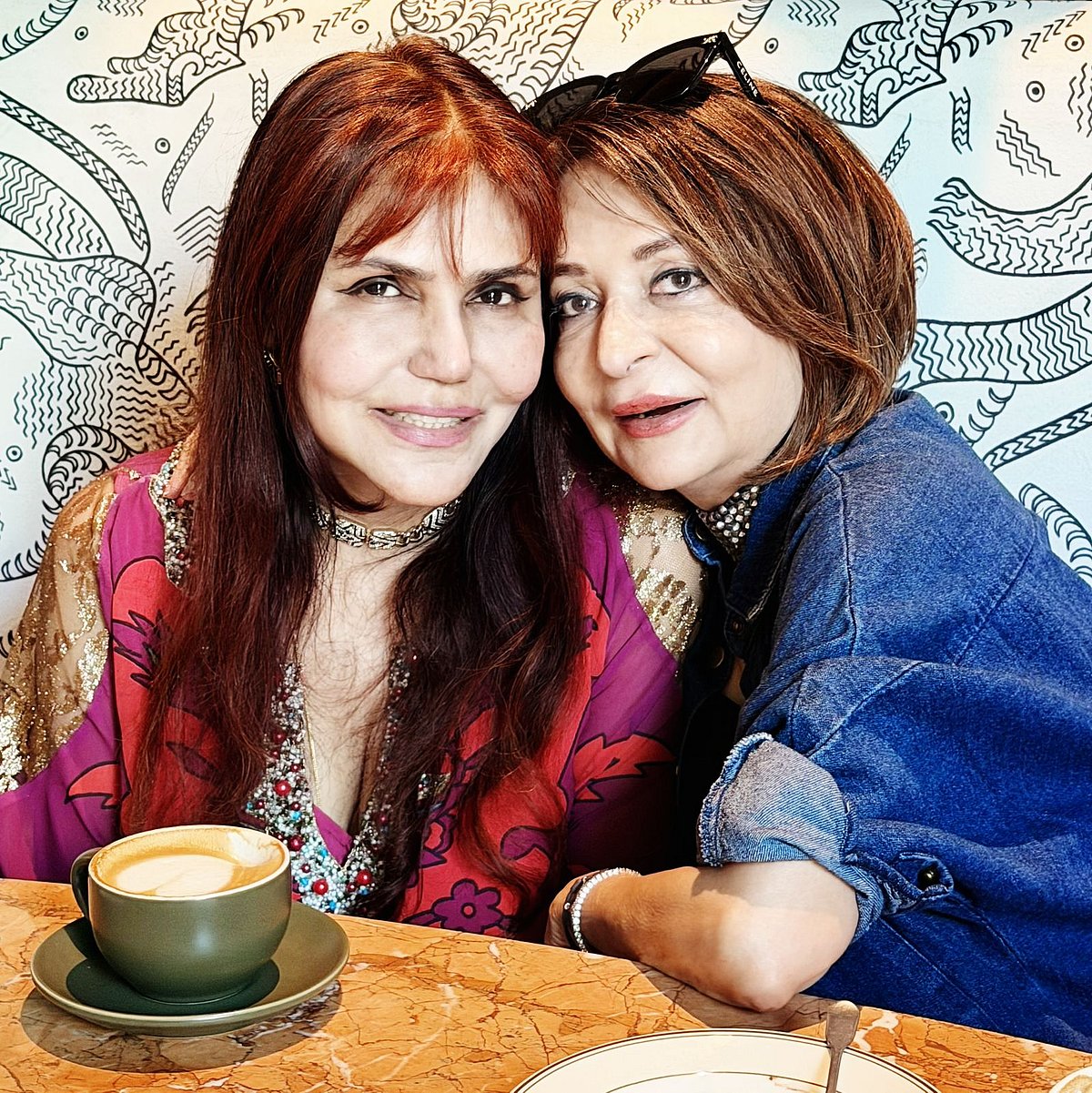
So when I discovered Sobo 20, at the InterContinental Marine Drive - a contemporary Franco American -leaning coffee shop style restaurant tucked away without fanfare, I felt that thrill of discovery. I chose it for lunch with Abha Virmani — former corporate leader turned reflective interlocutor — and her brother Ashish Virmani, a Buddhist monk and journalist whose temperament combines inquiry with eloquence.
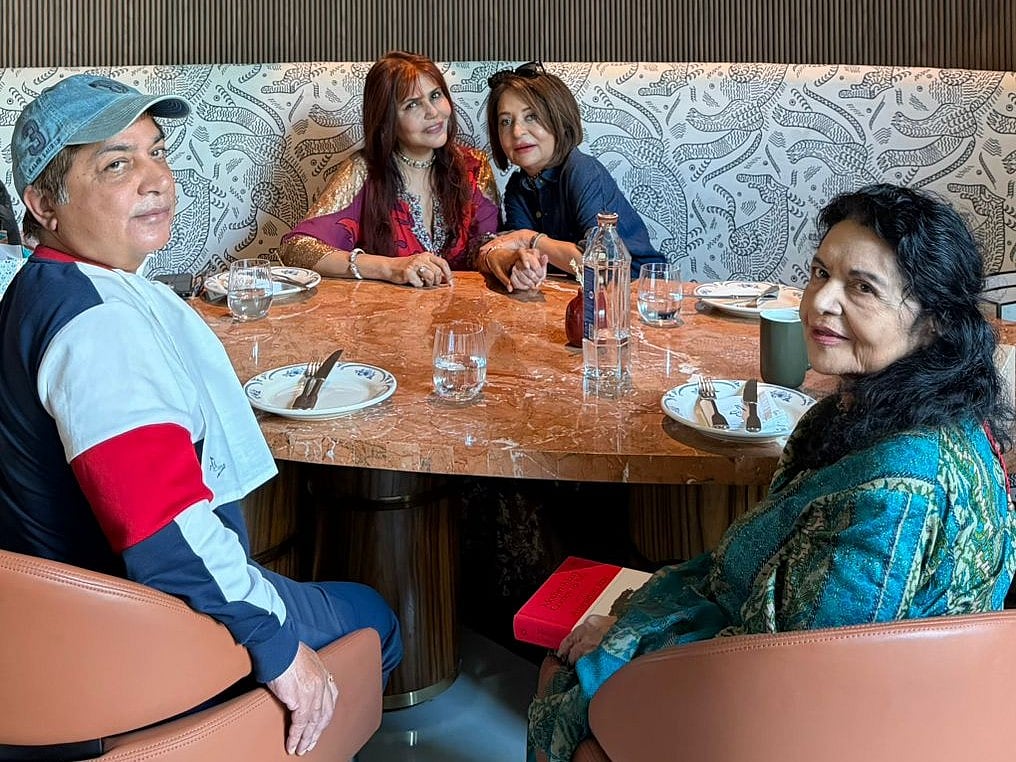
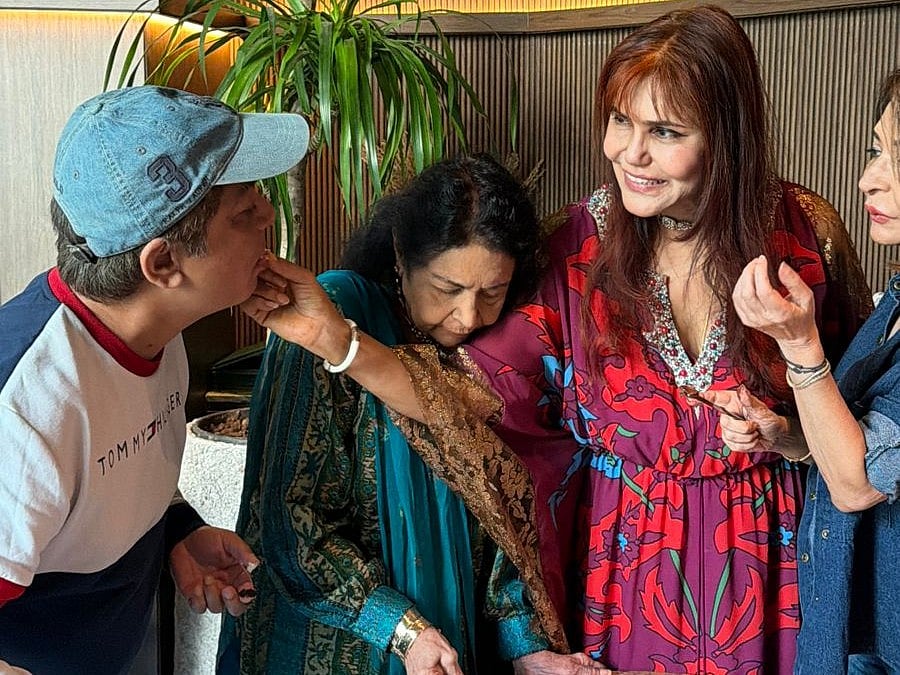
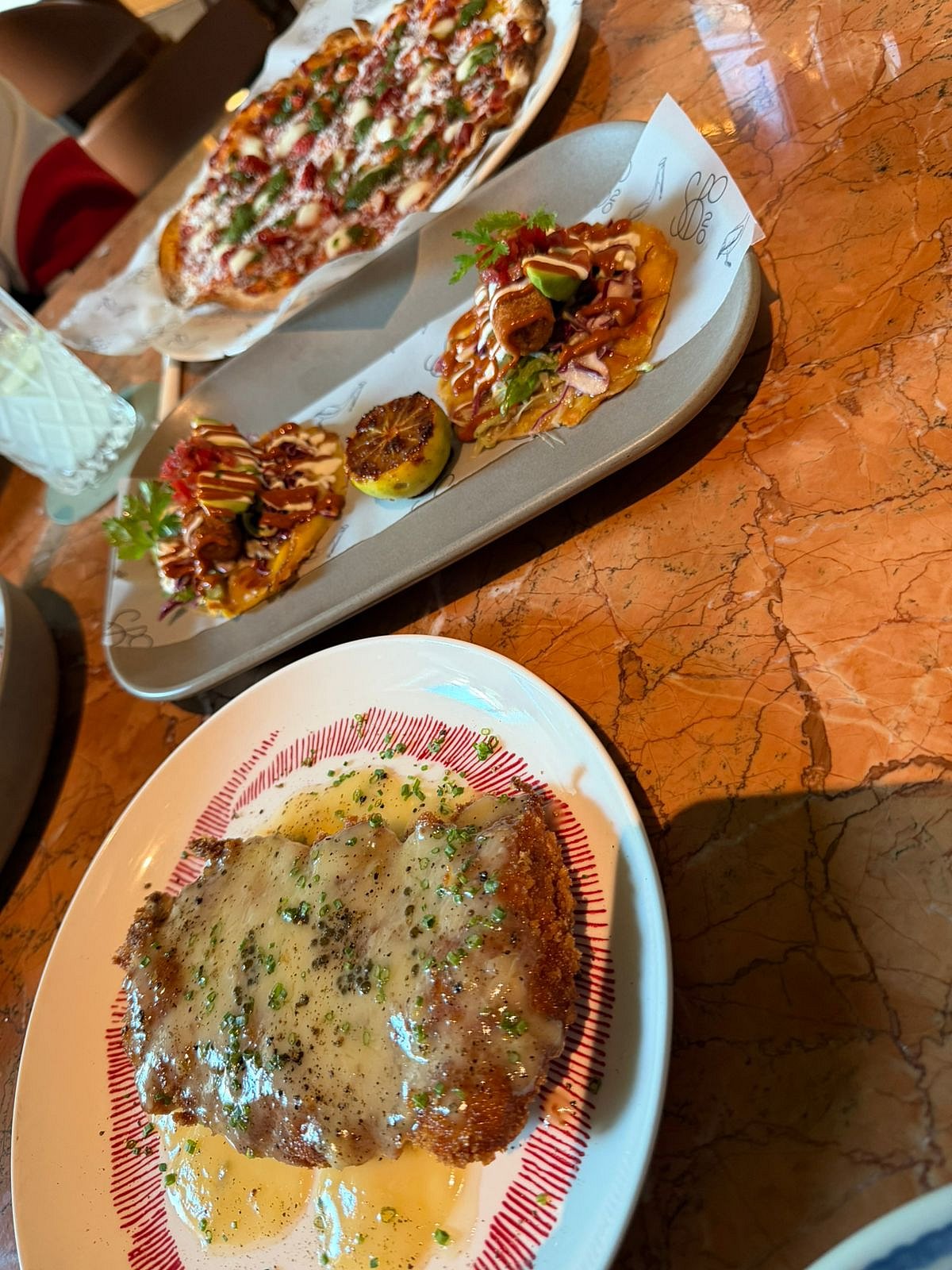
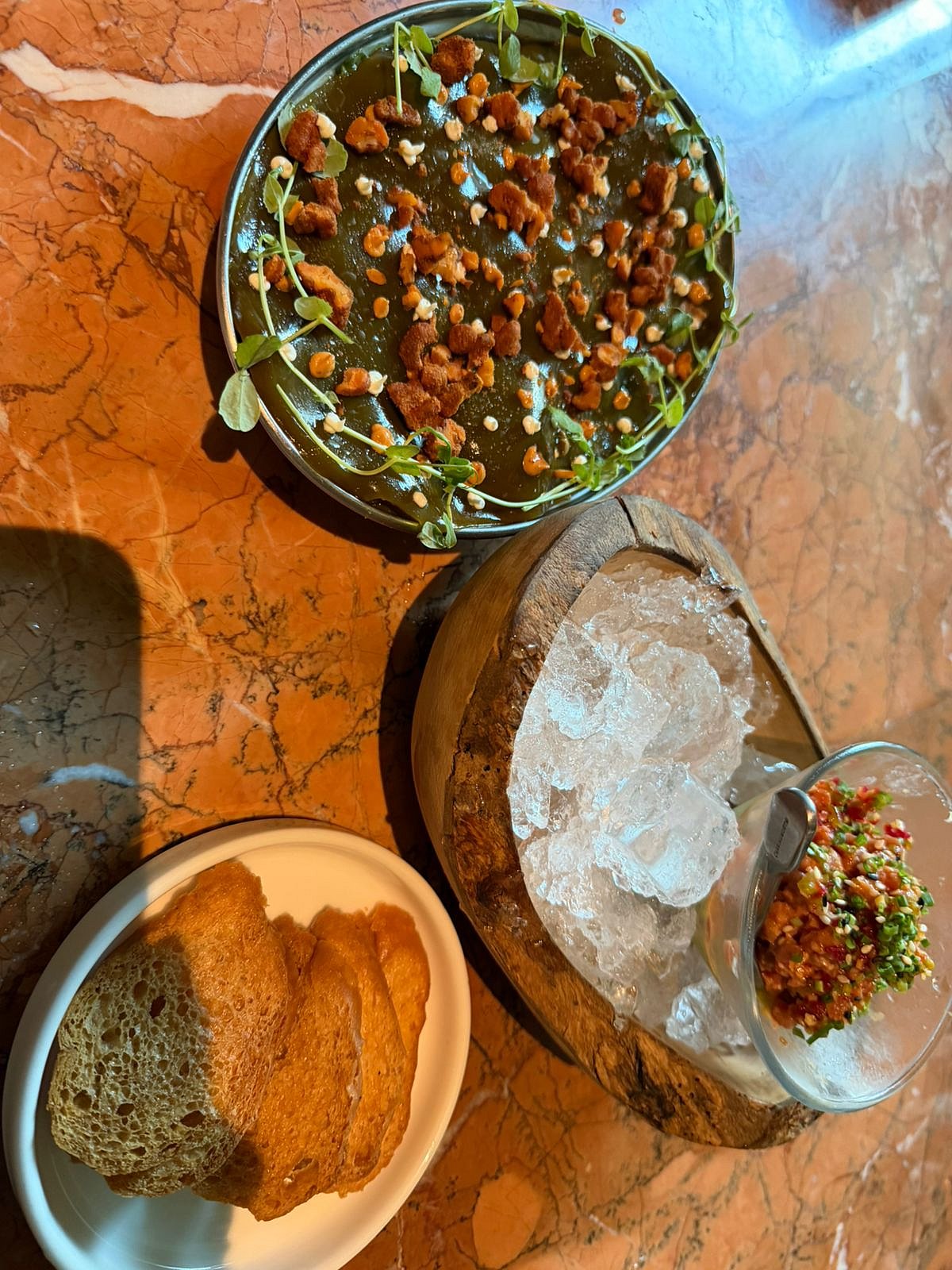
The restaurant and edgy menu—led by Executive Chef Sudeep Kashikar—presents classic French structure intertwined with the spice and comfort of Southern American cooking. Chef Kashikar churned out some bold dishes blending French techniques with American Southern flavors, such as Beignets with Caviar and Cajun-seasoned burgers. As an architect I enjoyed the Art Deco elegance with vintage American touches.
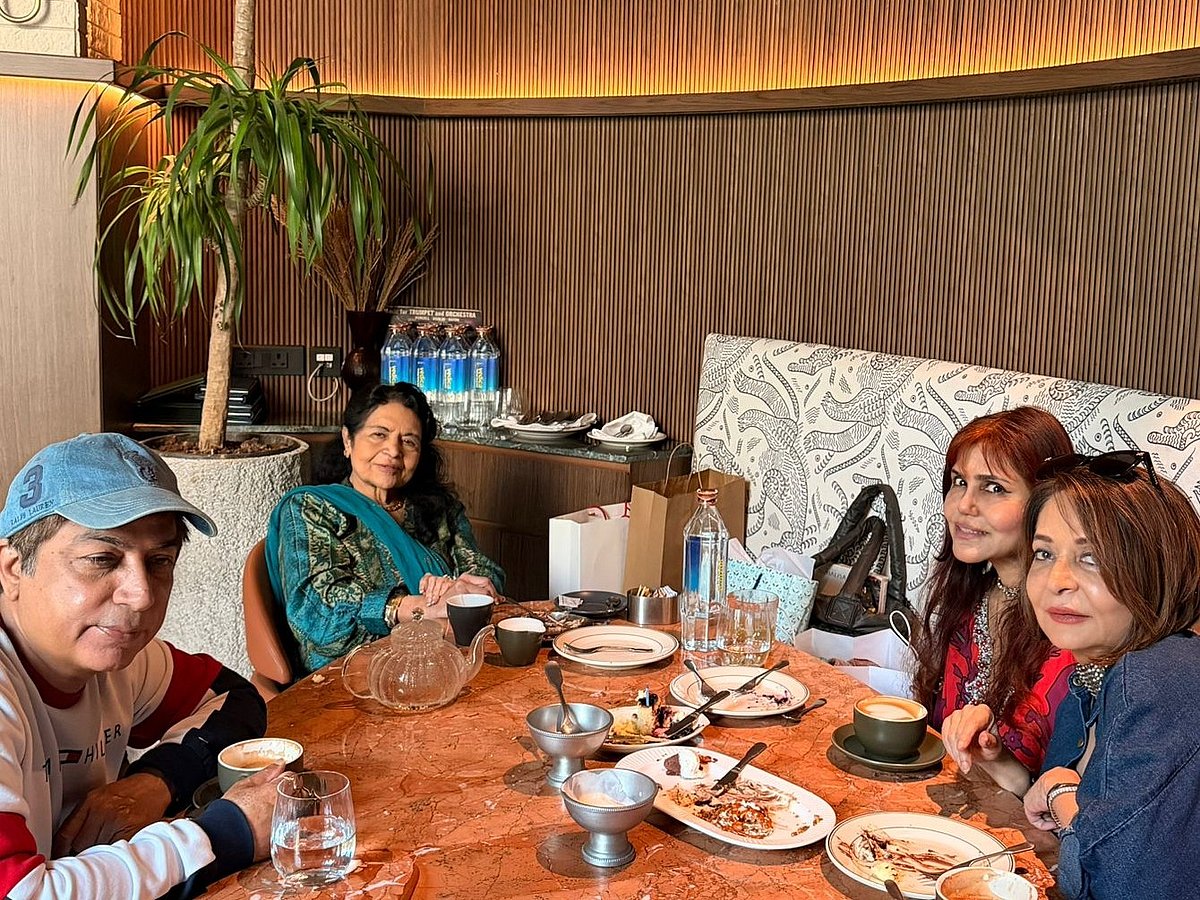
I brought along my permanent plus-one — my mother, Bluebelle — who approaches new culinary terrain with commendable curiosity and joie de vivre as she does most things in life. What unfolded was precisely the kind of lunch I cherish: unhurried conversation, ideas, laughter and the overall experience including a birthday cake for Bluebelle, Ashish and Abha made it all white magical. The spicy piccantes didn’t hurt either, making it a memorable celebration we won’t forget in a hurry!
In an era of performative dining, intimacy that the four of us share at these off repeated celebrations feels almost radical.
Gopika’s Salon: Art as Participation
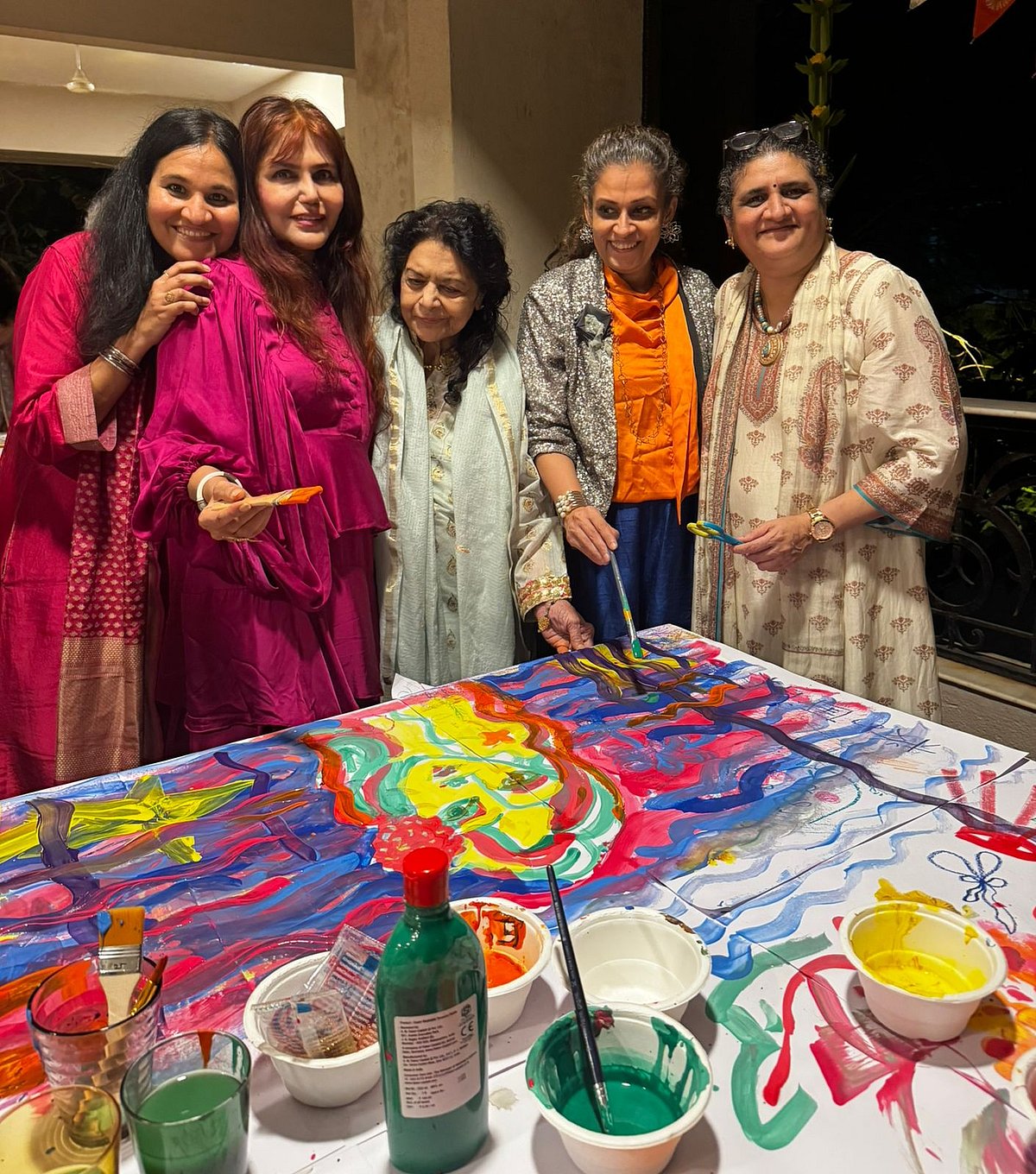
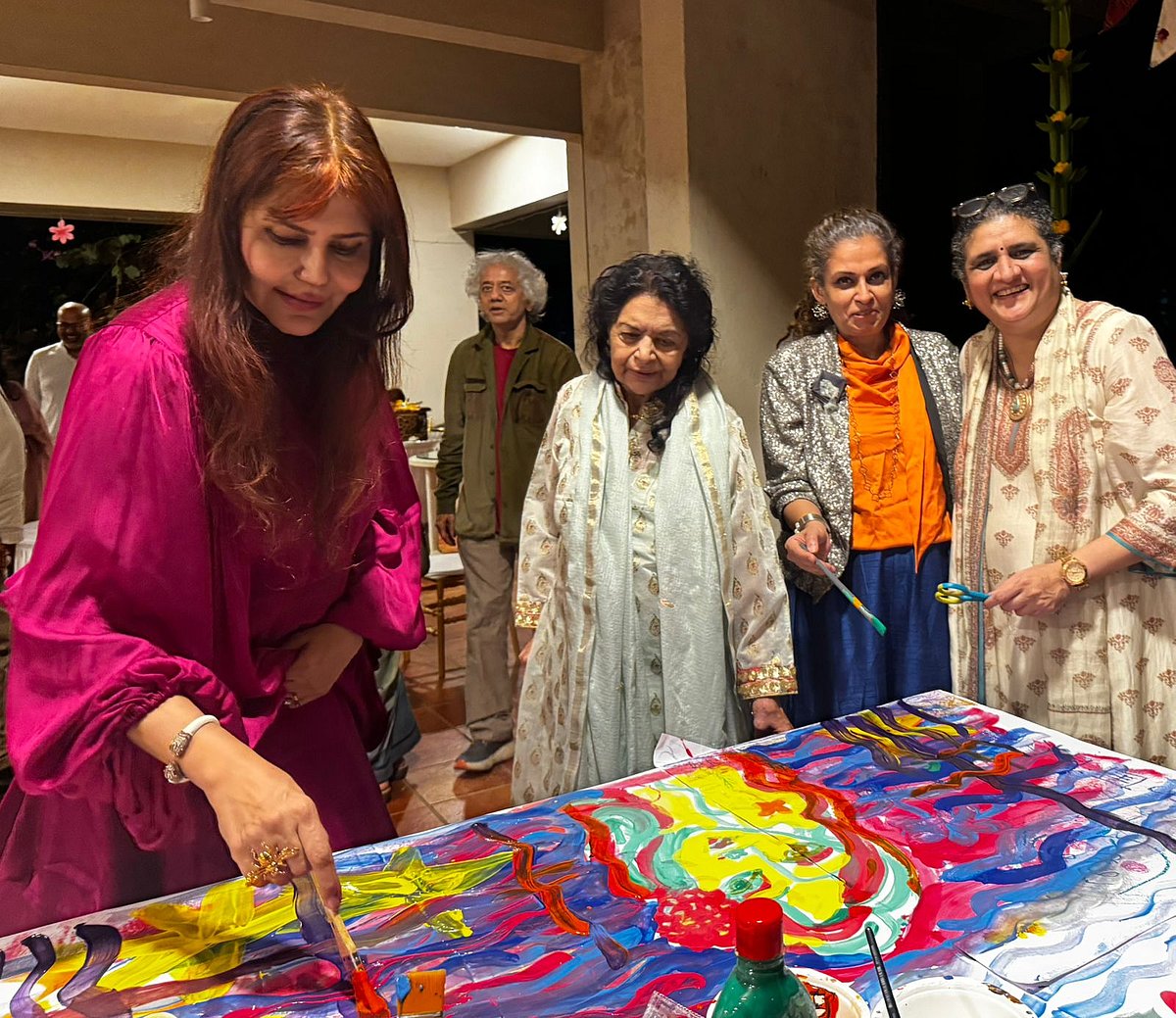
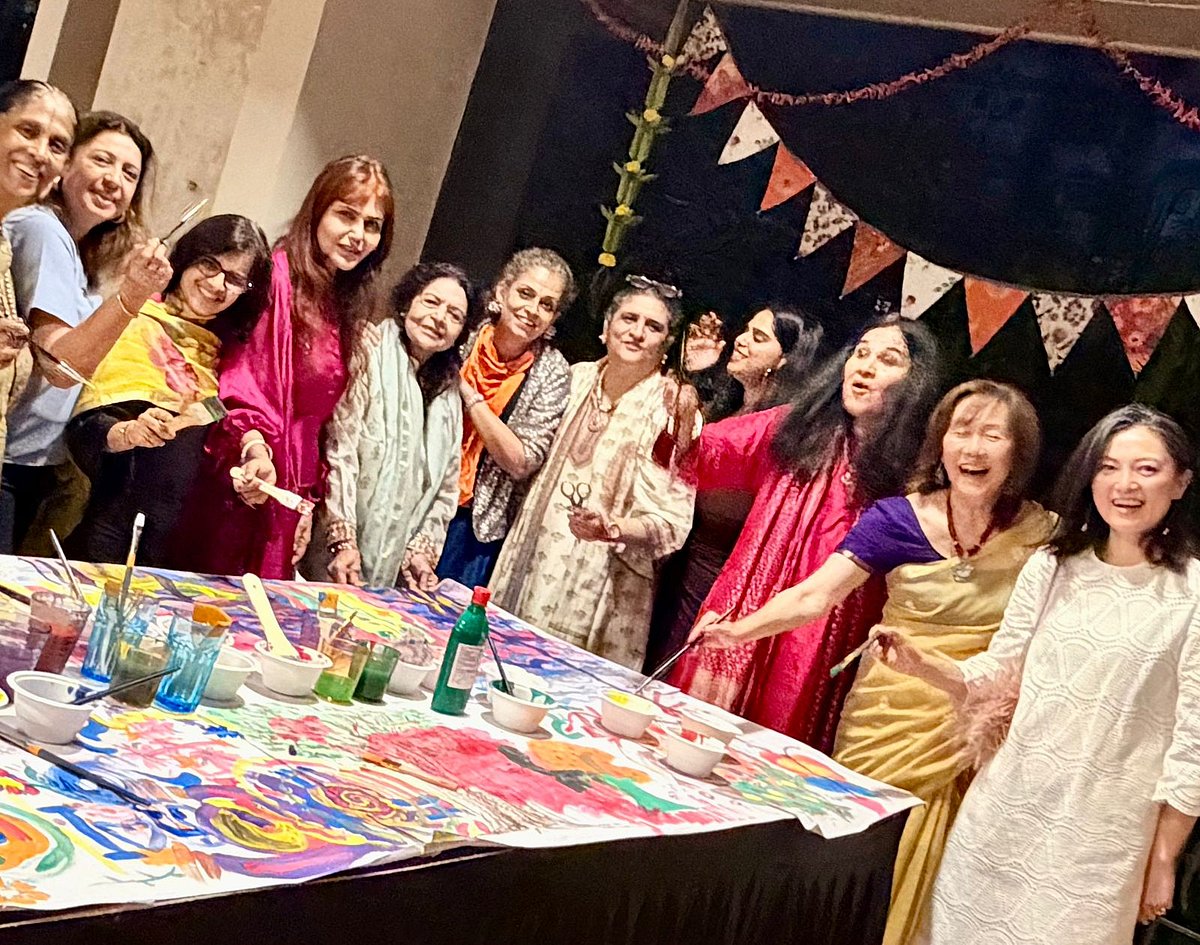
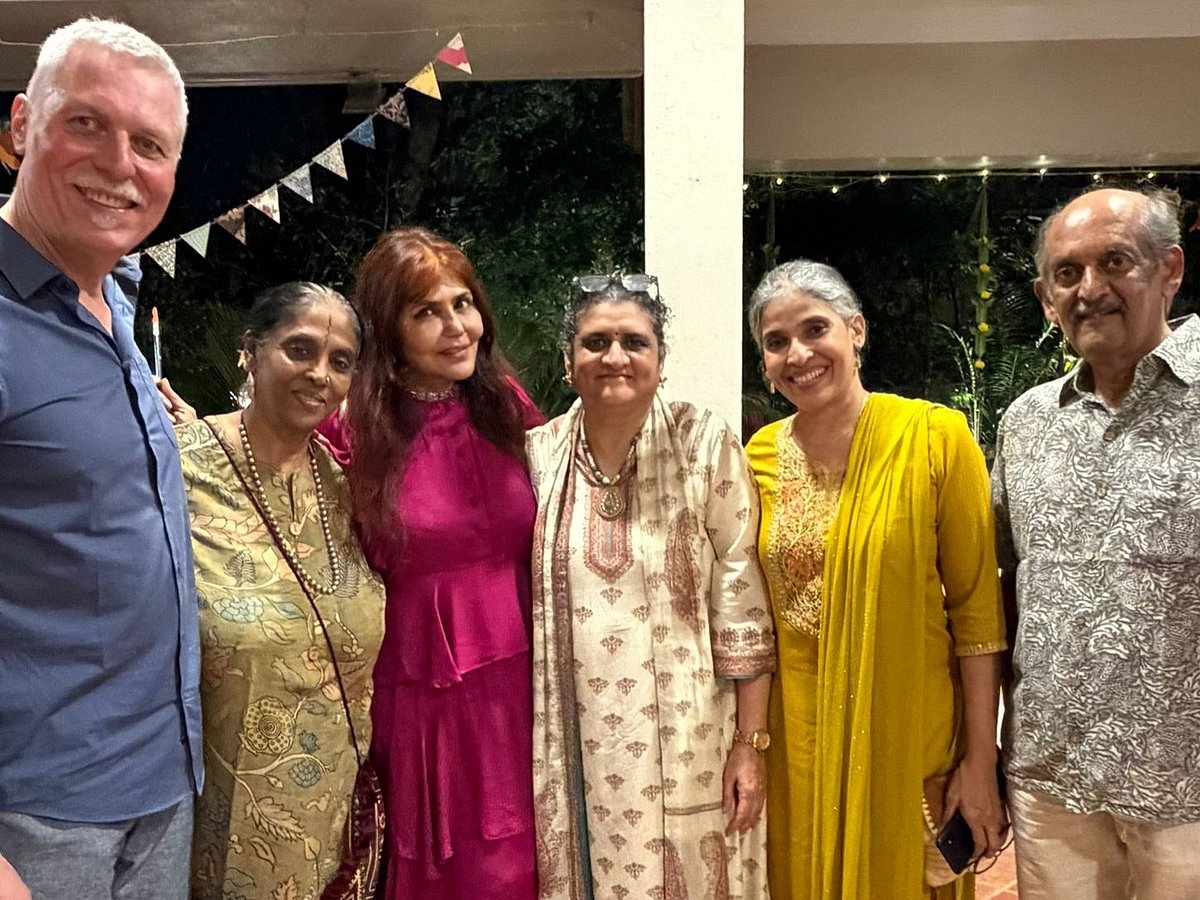
If one attends a gathering hosted by Gopika Dahanukar with her sister Gauri Dahanukar expecting convention, one misunderstands these dynamic daughters of celebrated artist Prafulla Dahanukar entirely.
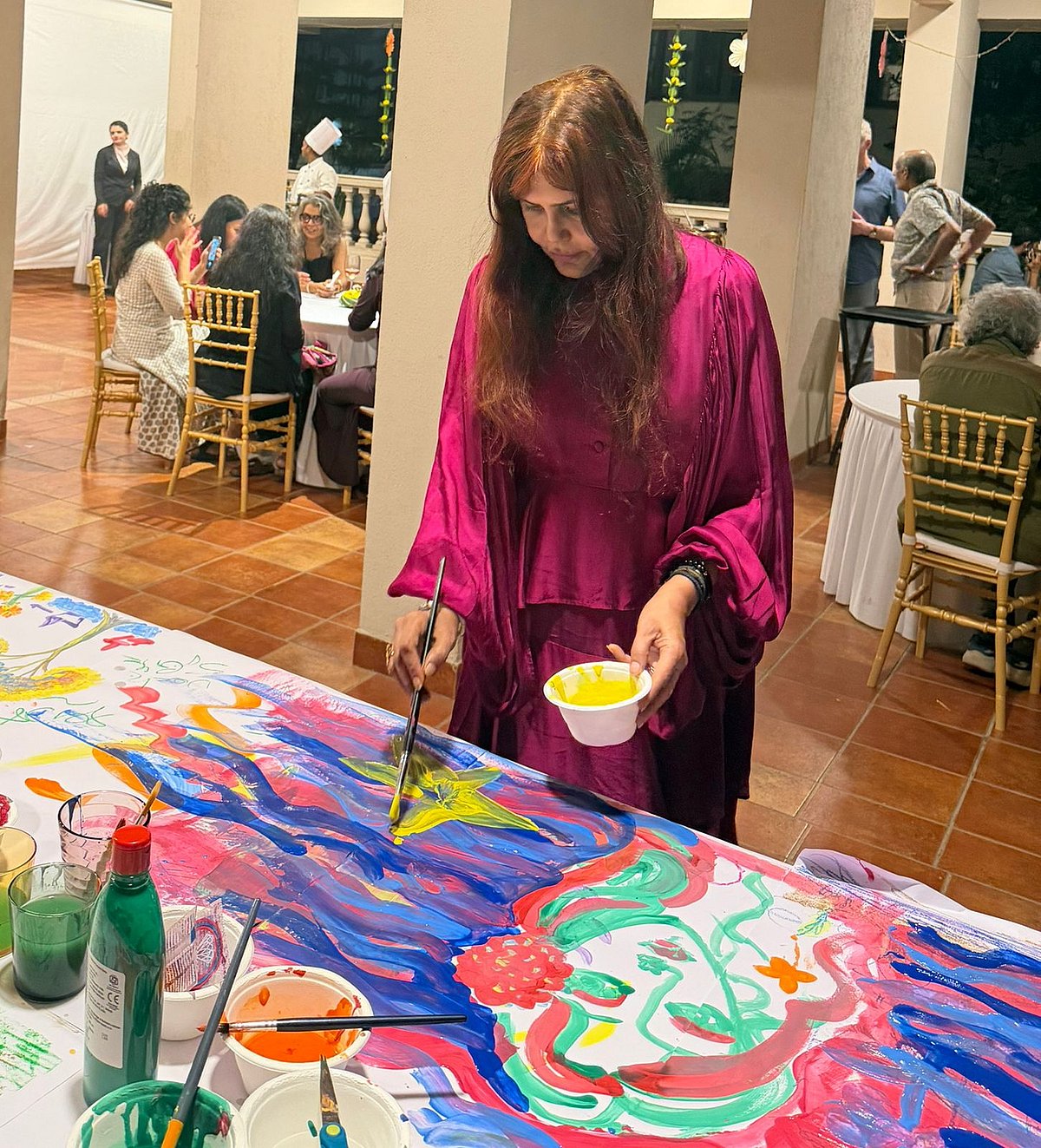
The evening featured wine, conversation, music — yes — but its centrepiece was a communal painting table. Brushes, canvases, brilliant paints sparkled as they were laid out for us to splash onto a canvas set out on a long table which may of us surrounded as we splashed paints onto! Each of us were also gifted a seedling — Gopika's metaphor for cultivation and continuity.
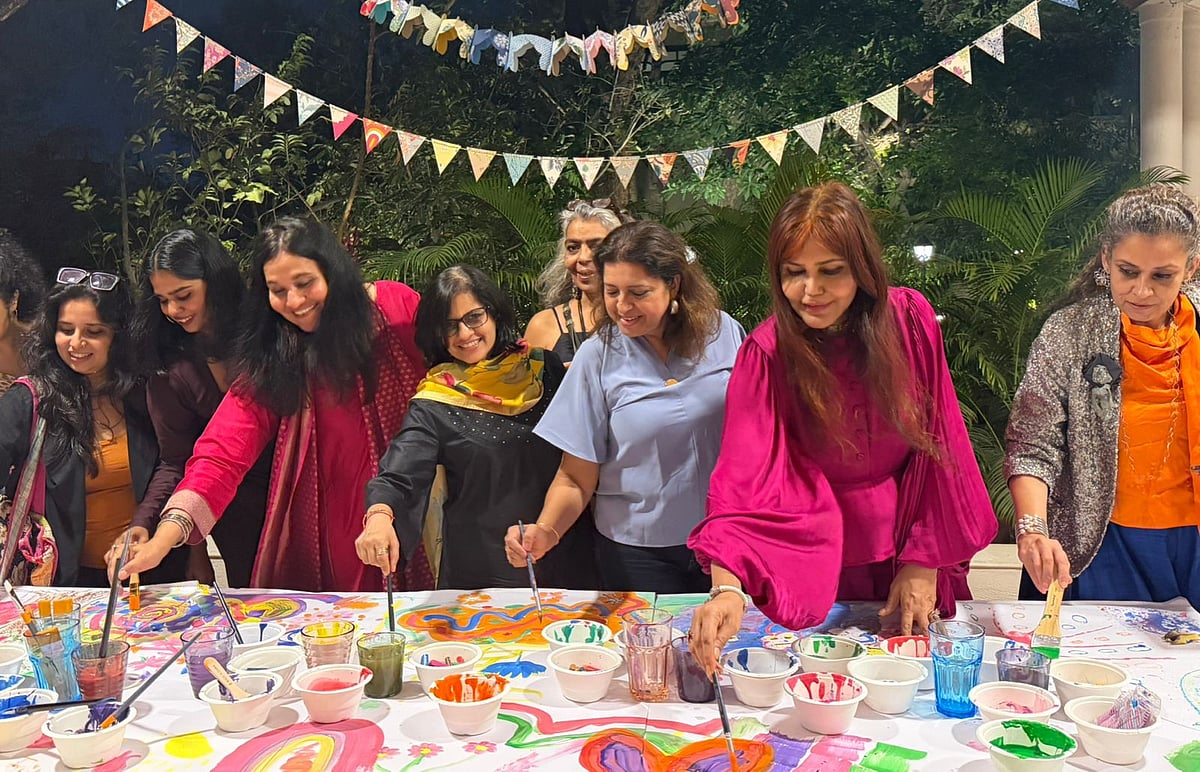
Gopika, classical singer and founder-director of Swahansa in Auroville — an institution dedicated to holistic education and creative practice — sang so soulfully and wowed us all especially with her “shivoham” and “vithal la”. She has recently returned to Mumbai after the art and music camp she conducted in Paris. Wish m i could’ve attended. Gopa has also been associated with an emerging arts campus initiative in Paris that brings together global universities into a shared creative consortium.
Her return has for me altered the city’s cultural timbre. I’ve always reveled in the added note of experimentation whenever I join her — art is about more than proscenium stages or gallery walls, when it’s interactive and impromptu it touches the heart in a different more intimate way!
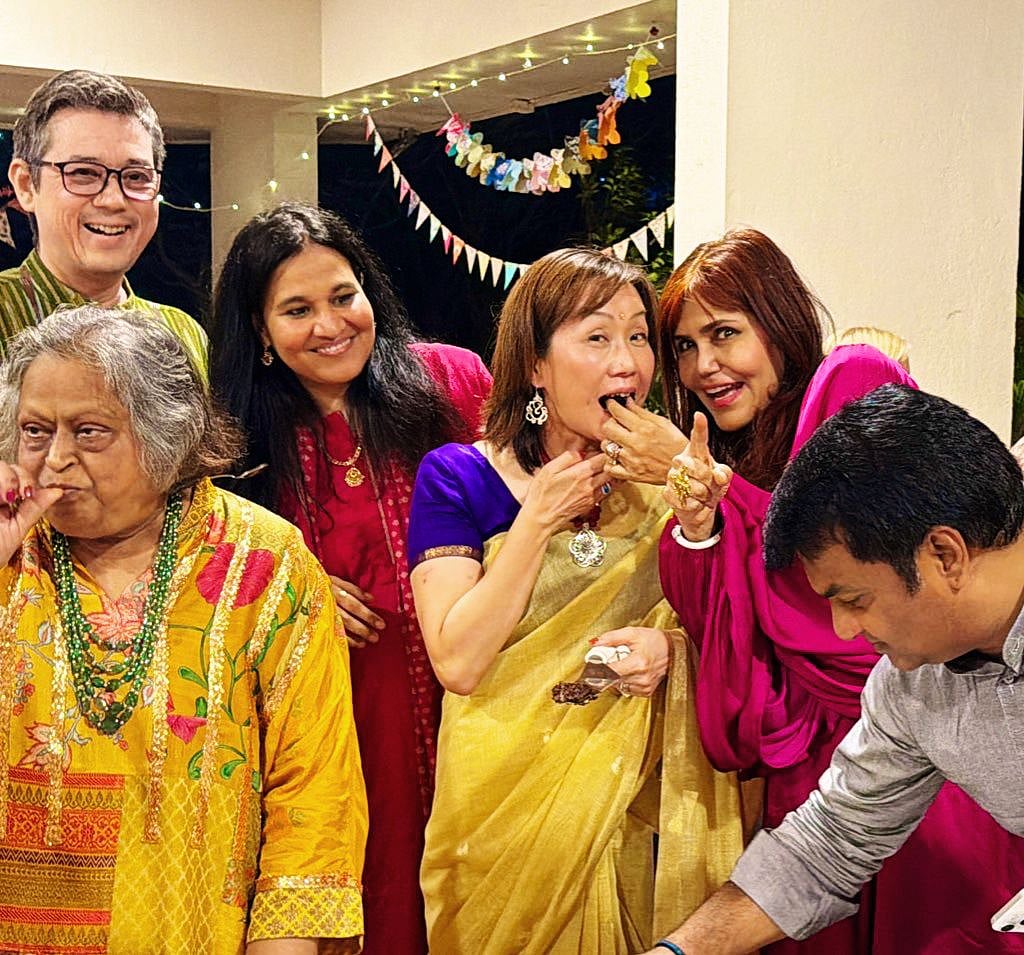
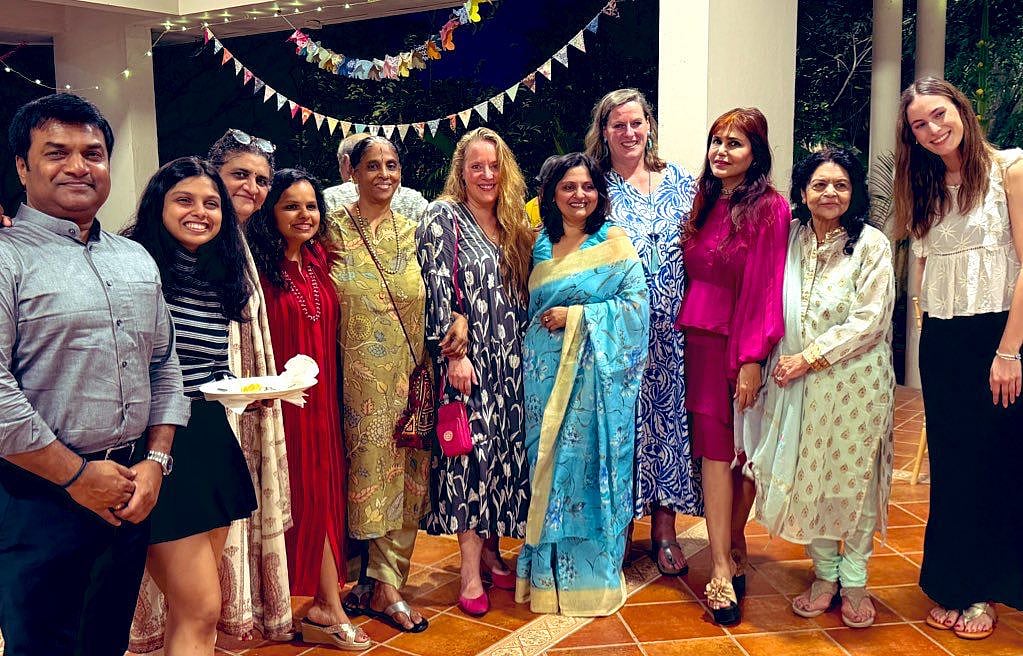
The evening had many from the consular corps and Mumbai’s literati too! I arrived just in time to find percussionist Taufiq Qureshi — brother of tabla maestro Zakir Hussain — informally exploring rhythm with Nadaka. The music was exploratory rather than performative, an exchange rather than a recital.
I spent much of my time at the painting table, sleeves metaphorically rolled up. It is disarming painting together with friends — conversation loosens, laughter surfaces when holding a brush in camaraderie? A Saturday night spent creating was for me restorative because underneath the many hats I don, painting and writing is closest to my heart!
One A.M. at the Queen’s Necklace
As I drove home at one in the morning from that private dinner, I encountered an unexpected traffic jam along the Queen’s Necklace — Marine Drive in its illuminated crescent glory. Even at that hour, cars inched forward, headlights glinting off the Arabian Sea.
Marine Drive has always symbolised Mumbai’s refusal to sleep. Conceived in the early 20th century as part of the Back Bay Reclamation project, it remains one of the city’s most recognisable urban silhouettes. At night, its arc of lights resembles a strand of pearls — hence the nickname that has endured across generations.
There was something reassuring about that congestion. Proof that the city’s pulse does not diminish at any hour. Couples lingered along the promenade seeking privacy in such a public space. Youngsters laughed at after party walks on this same promenade. Taxi drivers waited with practiced patience. Mumbai exhausts you — yes. But it also instills vitality.
And as I turned toward my home, I thought that this week’s theme was recognition, politics, conversation, art, habit interrupted, and a city that thrives on — relentlessly? In Mumbai, stillness is temporary. Motion is default.
Write to Nisha JamVwal at Indiaphenix@gmail.com

