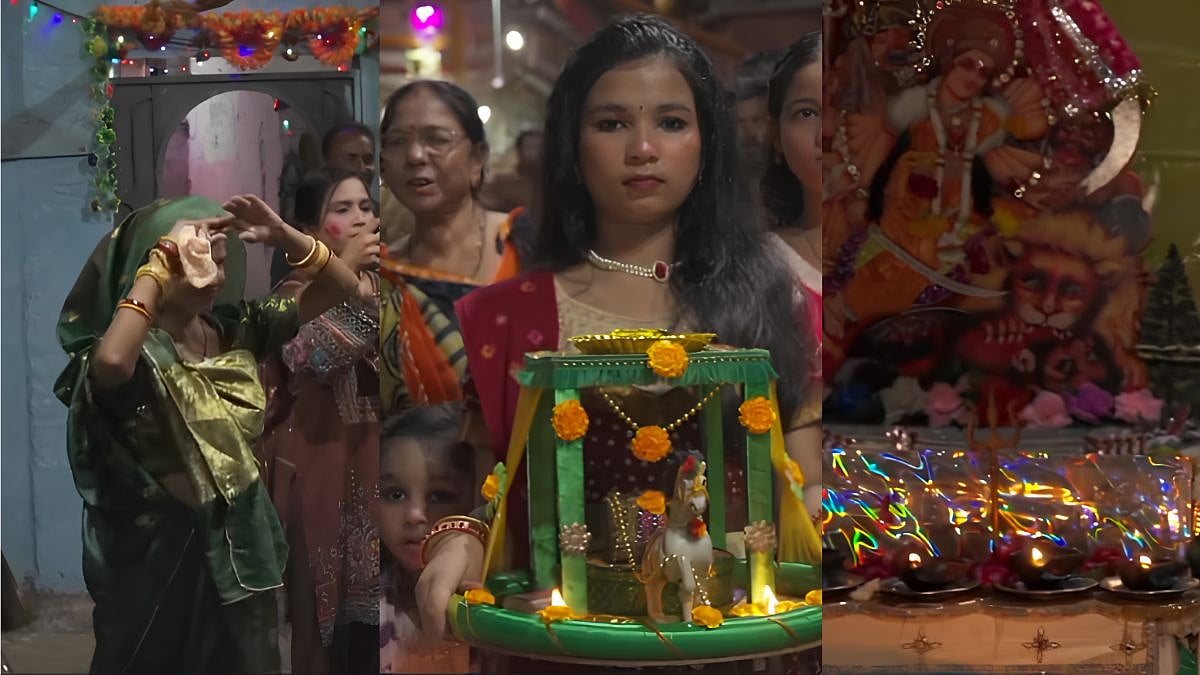
Navratri is the Hindu festival dedicated to Goddess Durga and is celebrated with devotion, music and traditional dance across India. However, the festivities also extend beyond the country's borders, with members of the Hindu community in Karachi, Pakistan, observing the nine-night festival through prayers, goddess worship and cultural traditions.
Karachi, home to a Hindu minority with diverse cultural roots, witnesses Navratri celebrations that reflect the community's religious beliefs and heritage. The festival brings devotees together at temples and community gatherings, where prayers, rituals and traditional festivities mark the occasion.
Karachi celebrates Navratri with regional fervour
Navratri is one of the most auspicious festivals, which is dedicated to nine forms of Goddess Durga. While the festival is predominantly celebrated in India, this year Pakistan's Karachi also celebrated the festival with regional fervour. In the Narayanpura neighbourhood in Pakistan’s Karachi, the Hindu community marked Navratri with nine nights of prayer, Garba and Dandiya. Families prepared bhog offerings for the Mother Goddess, decorated their homes and worshipped the deity. Men and women wore traditional attire and took part in rituals, devotional singing and dance.
Goddess worship and traditional rituals
Navratri is dedicated to the nine forms of Goddess Durga, with each day associated with a different manifestation of the divine feminine. Devotees observe the festival through prayers, offerings and rituals, seeking blessings for prosperity, happiness and protection.
For Hindu families in Karachi, the festival offers an opportunity to preserve religious customs and pass traditions on to younger generations. Temple visits and community prayers form an important part of the celebrations, allowing devotees to come together in faith.
Garba and Gujarati cultural traditions
Garba is a word that comes from the Sanskrit term garbha, which means womb. It honours the divine feminine energy of Goddess Durga. Dancers traditionally move in a circle around a central earthen lantern called a garbha deep, which represents life and the body holding the divine. The traditional Gujarati folk dance performed during Navratri is an integral part of the festival's celebrations. In Narayanpura, Garba is celebrated every year, where Hindu families organise celebrations throughout Navratri, while Muslim communities take part in the festival and perform Garba.

