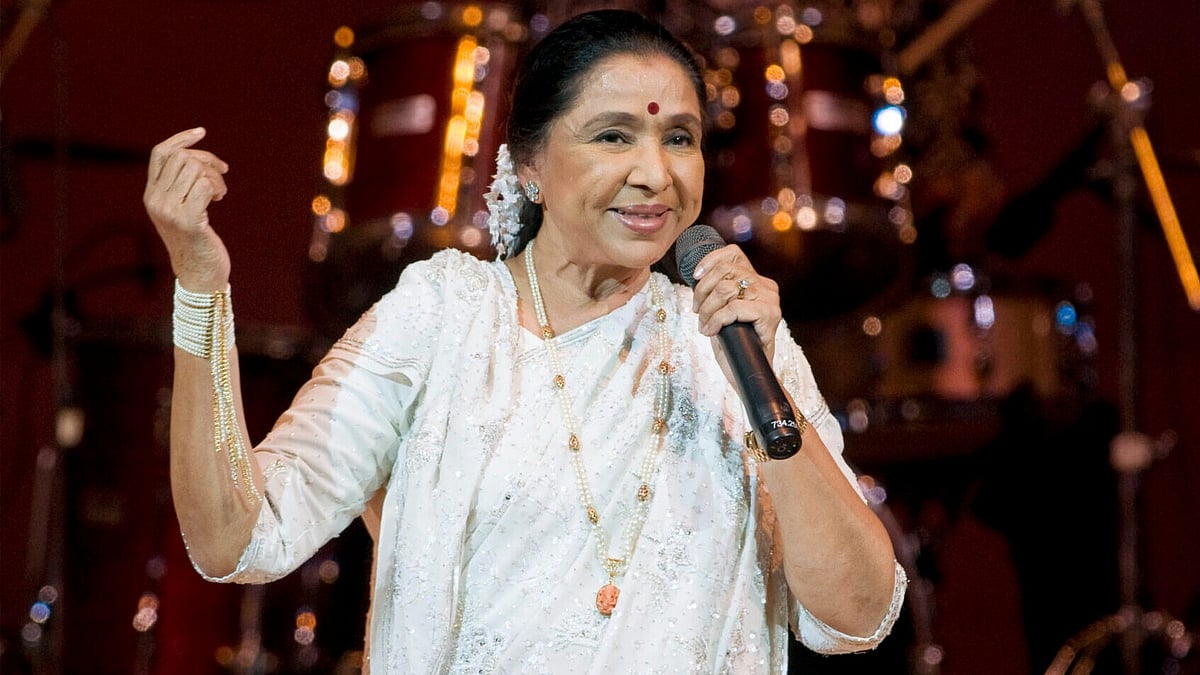
She’s a petite woman with a larger-than-life persona. At 92, Asha Bhosle - that distinctive voice that brought to life the pantheon of human emotion - is still going strong. It’s been over eight decades since she recorded her first song, pre-Independence, and she still hasn’t stopped - completing her most recent recording in September 2025.
Bhosle’s life in the public eye began as a timid 10-year-old, whose sole purpose was supplementing the family income after the untimely death of her father, Goa’s maestro Pandit Deenanath Mangeshkar.
It’s doubtful that anything quite prepared her for the recognition she would receive or the milestones she would accomplish over the course of her career. Asha Bhosle is the most recorded artist in music history, world over, with more than 11,000 songs to her name in over 18 languages, domestic and foreign. She’s one of the few Indian artists to be nominated at the Grammy Awards and has collaborated with musicians from around the world, including Boy George, R.E.M’s Michael Stipe, Nelly Furtado, and The Black Eyed Peas.
Closer home, she touched hearts with numerous songs in filmmaker Rajendra Talak’s Konkani album Dharyachya Deger, including Channeachi Rati. Goa continues to remain a big part in her life - not just as home of the family deity at Mangeshi temple that she regularly visits, but also as a place she returns to frequently on vacation.
Singing is not the only thing she is famous for. Her successful restaurant chain Asha’s in the Middle East is all the rage, with presence in Dubai, Kuwait, Abu Dhabi, Qatar and Bahrain. From the first in 2002 in Dubai, where it was reported that the chefs were personally trained by her for six months, they presence in UK now as well.
Asha Bhosle continues to stay connected to her first love - music - despite her age. She has even pushed back against digital violations of her personality rights, recently winning a ruling against AI-based platforms that allowed users to generate songs in her vocal style without consent.
Asha Bhosle’s determined personality and passion for music is as inspiring as is her vocal stamina, versatility and accomplishments. VIVA GOA shares our brief exclusive with the 92-year-old soprano who carved her own legacy alongside that of her illustrious Mangeshkar family.
Excerpts from an exclusive interview:
What are your memories of your childhood spent in Mangeshi, Goa?
I have not spent much time in Mangeshi, Goa, but when I was around four years old, I remember telling my mother that I had dreamt of a beautiful temple. When I finally visited Mangeshi, I remembered my dream and told my mother that this was the same temple I had seen in my dreams. My mother responded by telling me that Mangeshi and I had a special bond and that it would prove beneficial and lucky for me in the years to come.
In 2011, you were acknowledged in the Guinness Book of World Records as the most recorded artist in music history for singing an estimated over 11,000 songs in more than 18 languages.
I began my career in music in 1943, in the then British India. I don’t think the Guinness Book Of World Records existed then. I never counted the number of songs I sang. It was my job and when years later I was honoured by the Guinness Book Of World Records, I was a bit surprised because I did not know the body of work that I had created over the years. It was a nice feeling to be recognised though.
You've sung everything from classical Ghazals to Pop/ Rock and Cabaret numbers. Which genre challenged you the most, and which allowed you the greatest creative freedom?
It’s not the genre that challenged me, it was a particular song in a genre that was either a bit difficult or easy to render. The greatest creative freedom for me was when I recorded for RD Burman and later on for AR Rahman.
Having sung in over a thousand films and for generations of actresses, what is the core secret to your voice's adaptability and longevity in the industry?
My personal belief and mantra for longevity in any field is ‘Practice makes perfect’! I’m 92 years old now but I regularly do my vocal training (riyaz) and this is what keeps me going. As an example, when I was 62 years old, I sang for an actress who was probably in her early 20s, in the film Rangeela.
You've collaborated with international artists like Boy George and Michael Stipe. What did these global experiences teach you about the universal language of music?
Music is divine and it transcends all barriers including language. Of course it sounds better when you follow the language a song is sung in, but, even if you don’t know the language, you can still enjoy the musical notes.
Recently, you collaborated with the pop group A Band of Boys for their song ‘Dil Sarfira’. Share your experience in reuniting with the band and singing alongside your grandson Chintoo Bhosle.
Besides my grandson being a part of the pop group A Band Of Boys, the music that they made was quite infectious. I liked their style and I was very happy to sing with them. I remember shooting the music video in Mauritius, which was fun to do.
In the past, singers would sing live. Now the track system has gained prominence. Do you think this has led to the mechanisation of music?
You are right. Technology has improved in leaps and bounds and the sound created now through computers and machines is extraordinary but all this improvement comes with a cost. Earlier the songs were made from your heart. The lyrics, the tune and the vocals touched your heart because a lot of effort went into making these songs. There was deep emotion. Today, music is made by the brain. It’s technically perfect but the heart has gone out.
Reel culture is gaining attention with its short clips; do you see any concerns about how this might impact the future singers?
There’s a flip side to everything. Social media has improved the reach and visibility of all artists, making them household names in the blink of an eye, but the flip side is that these overnight wonders also tend to disappear in the blink of an eye.
What are your thoughts on the modern trend of remixes and auto-tuning in Bollywood music today, and what advice would you give to young playback singers?
Auto tuning, auto correct, pitch correction, etc are a common thing these days and it’s fine till you remain only a recording artiste because once you walk onto a stage to perform a song live, then the real you is laid bare and that sometimes may not be praiseworthy.
What does Goa mean to you?
Family roots, tradition, Mangeshi, seafood, beaches, swimming, relaxed holidays, home.
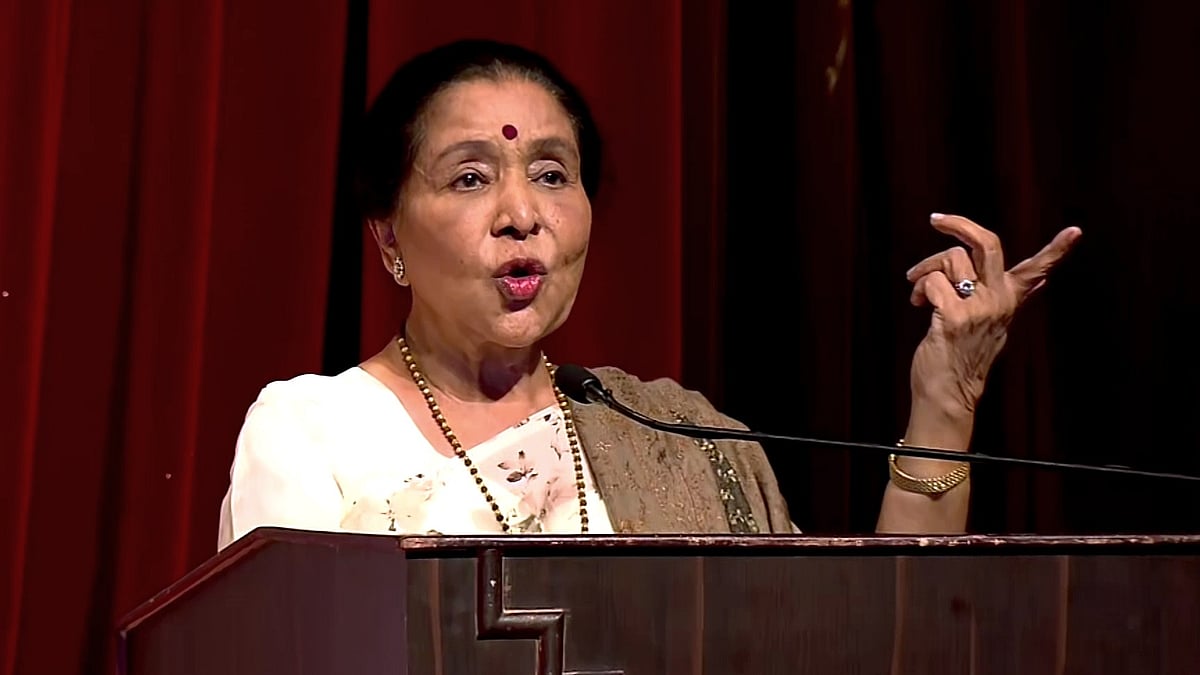
Rapid Fire
Your closest friend…My Voice
Goa means…Seafood and lazy afternoons spent snoozing
Music means…My breath / my life
Who would you love to sing with but never got the chance to…I have sung with everyone I liked and I’m grateful for that
Favourite actress to sing for… Madhubala
Favourite music director…Rahul Dev Burman
Bollywood music today is…Technical
Your success mantra…Hard Work
Strategy in crisis…Trust In God
Special moment… Birth of my youngest son Anand
I can't live without… My listeners (fans) & my family
My stressbuster… Singing
One person I would love to meet who is no more… Mozart
Two things I must do when in Goa… Pay my respects at Mangeshi Temple and enjoy the seafood
Most prized possession… My son Anand
Last thing I bought for Rs 10… Peanuts sold by the roadside
Your biggest strength…My Willpower
Your weakness…Sugar
Role model…My father Master Dinanath Mangeshkar
Most touching moment… Birth of my twin grandchildren Zanai and Ranjai Bhosle
(Read full interview on https://vivagoaonline.in)

