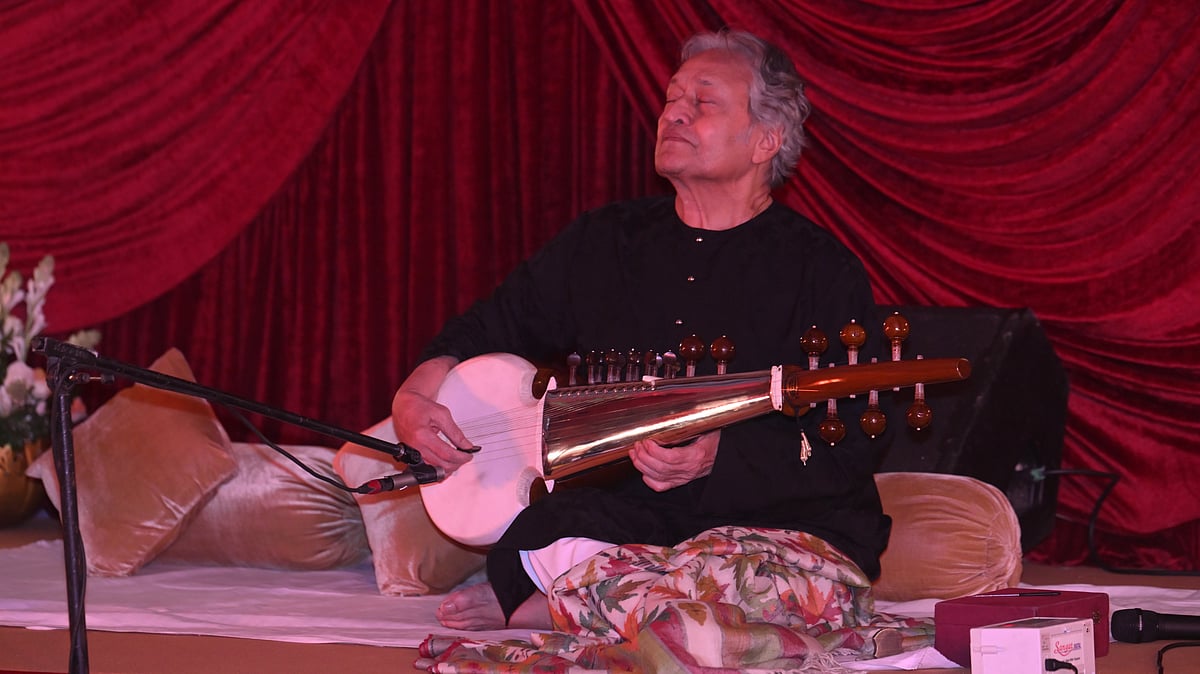
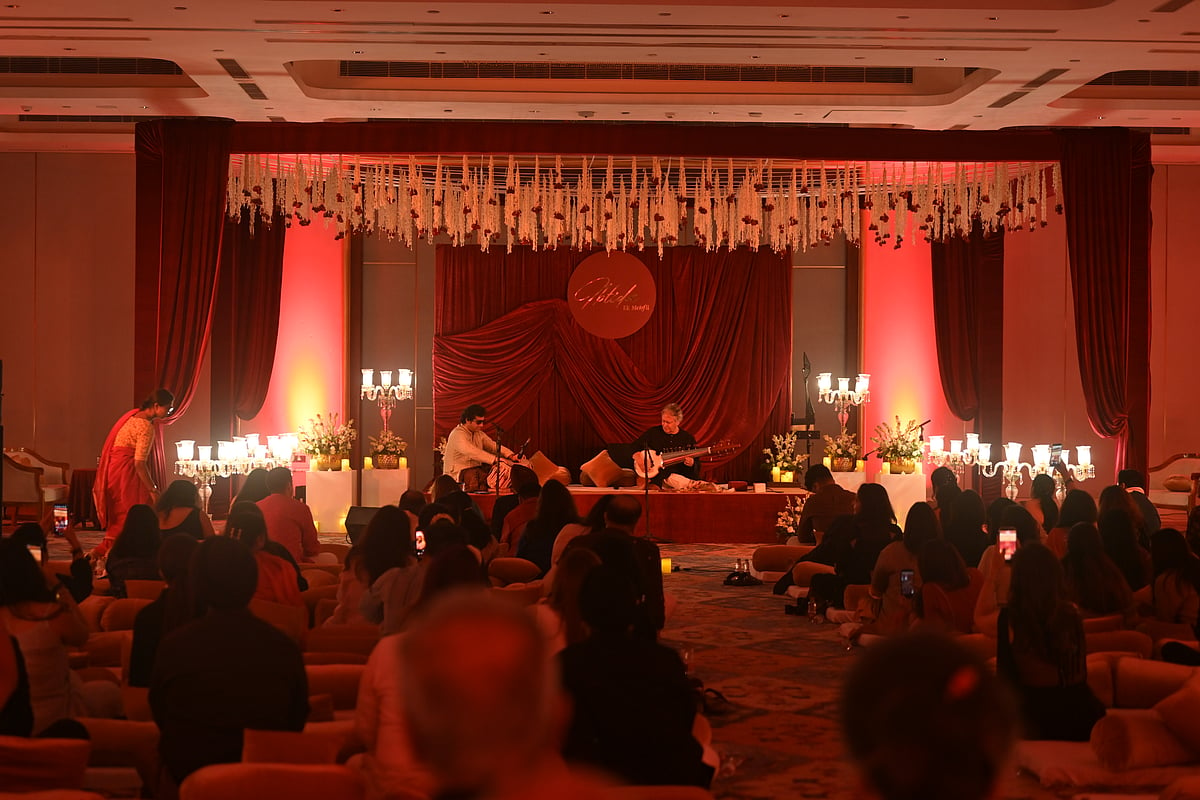
“Let me perform now, let me please go on stage,” Ustad Amjad Ali Khan urged, with an almost childlike impatience as he spoke about his decades-long musical journey. It was a disarming glimpse of the sarod maestro at an intimate mehfil in Lucknow, where we sat on the floor, rapt in attention, in a candlelit darbar framed by a fragrant canopy of flowers. Seated close to the artiste, with no screens or distractions to break the spell, the audience was transported to an older tradition of experiencing music—unhurried, immersive and deeply personal. The sarod spoke, and we listened. On and off stage, Ustad Amjad Ali Khan was gentle and unassuming, his stories unfolding with the ease of someone whose life has been devoted entirely to music, and complete with rich experiences, having performed at some of the biggest cultural platforms around the world, having made his concert debut at six. But conversation could only hold him for so long. At a gathering curated by IBTIDA- Ek Mehfil, he was eager to return to the stage—a reminder that for a musician of his stature, the relationship with music is not simply a lifelong pursuit, but an enduring need.

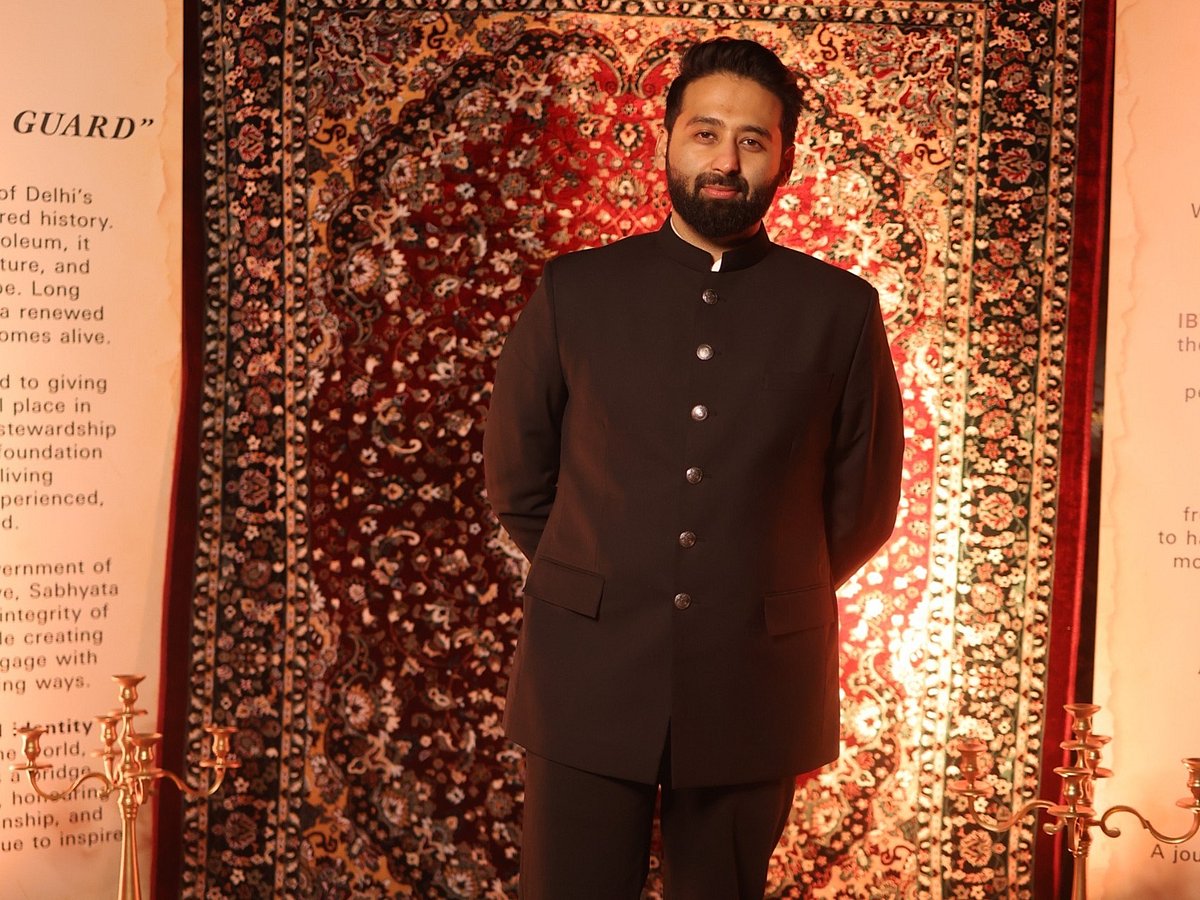
Tanvi Singh Bhatia and Anubhav Jain, founders of IBTIDA - Ek Mehfil |
This was the second time Ustad Amjad Ali Khan had performed for Tanvi Singh Bhatia and Anubhav Jain, founders of IBTIDA - Ek Mehfil. Recognising a gap in the cultural landscape, they conceived IBTIDA, which translates to ‘a beginning’, as an attempt to revive the spirit of an older musical tradition and reconnect audiences with the art form in a more personal way. Here, the artiste does not merely perform for an audience; the intimacy of the setting draws listeners into the music, transporting them to another world. What can be a greater luxury than listening to the undisputed master of sarod blending technical brilliance and emotional depth as he transitioned from one raga to another, regaling the audience with anecdotes from his life?
Speaking warmly of IBTIDA - Ek Mehfil and its efforts to introduce different artistic traditions to new audiences, he recalls an era when music was experienced in the homes of kings and poets, without the distance imposed by conventional auditoriums. After decades of performing across India, what continues to inspire him? “Every age has a different way of thinking and a different message,” he says. His life began at 12, and the love he received from audiences across Bengal, Maharashtra, the South, Uttar Pradesh and Bihar nurtured his journey. Today, he believes, the key is to accept age gracefully rather than chase youth. “Even today, it feels good to serve people. When people love to listen to you, it is an honour.”
Music, for Khan, is also a powerful reminder of human interdependence. “Music is a precious gift of God. Music does not belong to any one religion, just as flowers, air, water, fragrance and colours do not belong to any one religion,” he says. India, with its many religions, customs and traditions, embodies this idea. “Every region is like a different country, but we all depend on one another.” He illustrates this with a simple observation, “I play the sarod, but who made my instrument? People rarely think about this. It was Hemendra Chandra Sen from Kolkata, who recently passed away. This interdependence is what defines India.” Audiences, he adds, come to concerts to experience the art. “They do not think about the musician’s religion; they come for the music.”
In his view, respect for all faiths must begin at home and be reinforced in schools. Education, he feels, has not succeeded in instilling compassion and kindness. These values were instilled in him by his father and guru, Ustad Haafiz Ali Khan. His observations on the changing musical landscape are candid. “In our field, classical music has been left behind partly because of this lack of proportion, while light music, ghazals and bhajans have become more popular. Film music is popular because of its lyrics. There are songs about a beautiful face or two people being locked in a room. Behind every lyric, there is a voice, and that voice cannot be manipulated indefinitely. The purpose of the film industry is to sell. In classical music, our lyrics are different from those in films. There are devotional compositions such as Kripa Karo Prabhu, as well as romantic forms such as thumri and dadra, with compositions like Kab Aaoge Shyam in Awadhi. Classical music is for those who respect and love it.”
Yet Khan remains optimistic about its future. Young classical musicians are doing remarkably well, he says, and their achievements make him happy. In a world transformed by artificial intelligence and technological innovation, Khan returns to music's enduring foundations: the twelve musical notes. “Today, the world has developed AI and Meta, yet no one has created a 13th musical note. There are only 12 notes.” It is a reminder that while the world around us evolves, some truths endure.
As the conversation in Lucknow eventually gave way to performance, the maestro returned to where he seemed most at home. For the maestro, music is not simply a profession sustained over decades; it is a lifelong devotion, one that continues to call him to the stage.

