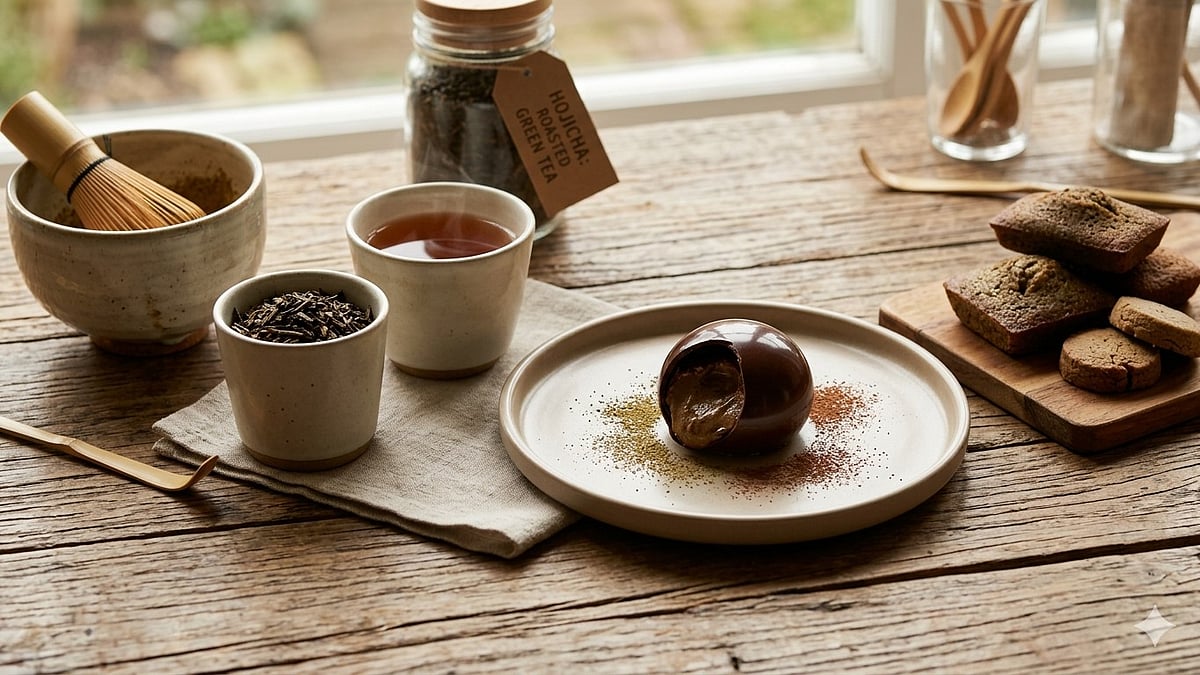
Move over matcha. The Japanese hojicha is the new blue-eyed green tea-on-the block with its sensory notes and artisanal indulgence. Green tea with its radiant aura, has creeped into many beverages like lattes, straight brews, and baked goodies. In today’s times people continuously seek novel dishes and beverages with a twist. While matcha’s bitterness caters to an acquired taste, hojicha gets the nod for its intense smoky aroma and full-bodied flavour.
Green tea varieties
Largely grouped by origin (Chinese or Japanese), they are categorised based on their flavour, colour, and notes. Gunpowder, Mao Feng, Bilouchun and Long Jing are Chinese tea leaves. They are pan fried and lend a nutty taste. The popular Japanese ones are Matcha, Sencha, Genmaicha, Kukicha, Gyokoru and Hojicha. Other flavoured teas include Morroccan Mint, Jasmine green tea, and Tulsi green tea. Hojicha is roasted from sun-grown bancha leaves in Japan, enhancing its delicate flavours. Low in caffeine and high on health, hojicha can be used in latte, desserts or had as hot/cold straight brews
Origin of Hojicha
While in the world of green tea, all teas are steamed to retain their fresh flavor, why is hojicha an exception to this rule?
In Japan, demand for green tea exports compelled harvesting them mechanically. This led to the dispersal of leaf fragments from machines. Japanese culture is known to promote zero wastage. In 1920s a tea merchant hit upon the idea to utilise the remnant leaves, stems, stalks, and twigs by roasting them over charcoal. The efforts were fruitful and hojicha, which means roasted green tea, was the outcome. Over and above curtailing wastefulness, the subtle whiff of roasting green tea enticed tea enthusiasts with its novelty.
Dr. Eileen Canday, Head of the Department, Nutrition & Dietetics, Sir H. N. Reliance Foundation Hospital reinstates, “The leaves are roasted to produce a tea that has a strong aroma, mild taste, and unique nutrients. This Japanese tea is made from roasted sencha or bancha leaves over charcoal at 160-180°C to increase its active nutrients such as pyrazines, which are responsible for its aroma and flavour.”
Health benefits
The most distinguished benefit of hojicha tea lies in its low caffeine content. Hojicha contains much less caffeine than matcha. “This is advantageous to those who wish to take tea on an empty stomach or those who are caffeine-sensitive, are elderly or young children, without any effects on sleep. It is rich in antioxidants after roasting. These include polyphenols and catechins which helps in the prevention of oxidative stress. It is beneficial for the heart and provides anti-inflammatory properties,” reveals Dr. Eileen Canday. For those struggling with a sensitive gut, hojicha with its low degree of tannins would be a better choice.
Dr. Eileen Canday advises, “Potential side effects are minimal at moderate intake up to 1–3 cups daily. Excessive consumption could lead to mild issues like diarrhoea due to its mild diuretic nature. As with all teas, it may slightly inhibit iron absorption from plant-based meals if consumed simultaneously. Those with iron deficiency should space it out.” It is also used in skin care products like soaps, moisturisers, and body wash.
Drink or eat hojicha
Unlike its cousin matcha which is available only in fine powder form, hojicha can be found in loose-leaf as well as in finely ground texture. Chefs are integrating hojicha in various dishes to get rave reviews. Besides pannacotta, mousse, cheesecake, ice cream, even Indian sweets like rasmalai, barfi, kheer get incorporated with a dash of potent hojicha magic. The charcoal roasted tea jells well with milk and water. Chef Arjun Katoch from Novotel Goa Panjim ideates, “Like wasabi-glazed savoury nuts hojicha can be used to season roasted foxnuts, hojicha powder can be whipped into cream cheese to make a flavoursome spread, or you can even try a hojicha masala tea which is invigorating and satiating on the palate.”
Hojicha integrates tradition with contemporary elements, providing the much-needed plug to the existing tea market. In a world full of strong brews and high caffeine drinks, hojicha’s nutty notes offer warmth, calm, and simplicity in every sip.
Bitter-Sweet Dark Chocolate Hojicha Tea Shell
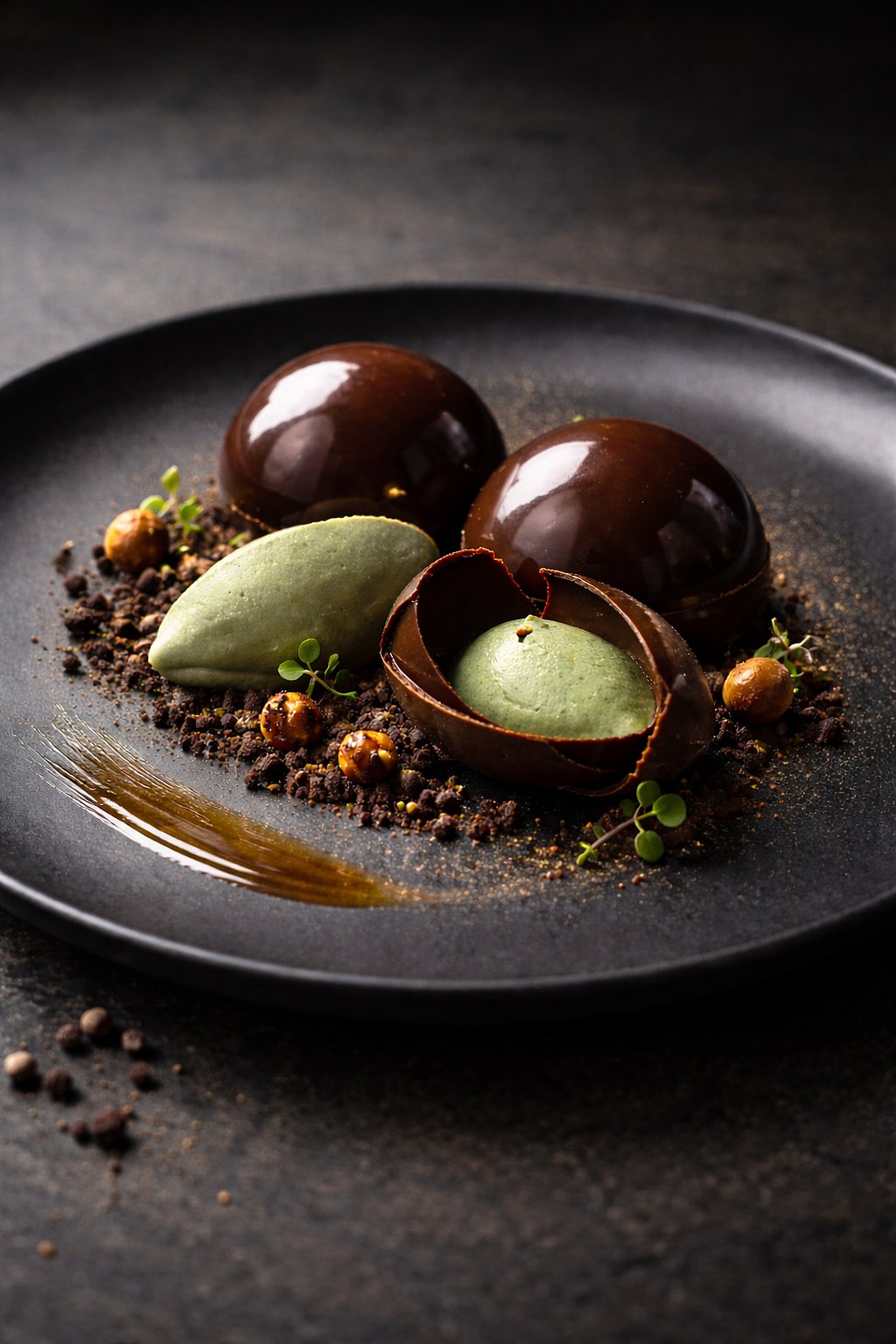
Hojicha dessert |
Ingredients: 300 g dark chocolate couverture (70%), 2 tbsp hojicha powder (fine grade), 10 g cocoa butter
Method
Melt cocoa butter gently and add hojicha powder. Allow it to infuse for 10–15 minutes, then strain through a fine sieve or muslin cloth to obtain a smooth flavored fat.
Melt the dark chocolate to 45–50°C. Cool it down to 27–28°C and then reheat to 31–32°C to achieve proper tempering.
Incorporate the hojicha-infused cocoa butter into the tempered chocolate and mix gently to ensure even flavor distribution.
Fill moulds completely with the chocolate, tap to remove air bubbles, then invert to create a thin shell. Scrape off excess chocolate.
Allow the shells to set at 18–20°C. Repeat coating if a thicker shell is required.
(Recipe by Hanmant Pawar, Pastry Chef, Double Tree by Hilton Pune-Chinchwad)

