Each year, Milan Design Week (Salone del Mobile.Milano) goes beyond the launches and spectacles; it is often the smaller details that resonate the most: the tactility of materials, the way spaces invite interaction, the conversations they encourage, and the cultural narratives they carry forward. This year, what stood out most to me was a subtle yet noticeable shift toward material honesty and slower processes, as well as an evolving, adaptive, human-centric approach to design. Across the city, installations moved beyond object-making to become reflections on craft, lifestyle, and cultural continuity. What also became evident during my time in Milan was the growing importance of satellite showrooms across the city. More than extensions of the fair, they were immersive environments where brands could articulate complete spatial narratives. I found myself spending more time in these spaces, where furniture and products were experienced as part of lived environments.
GS Mahaboob Basha |
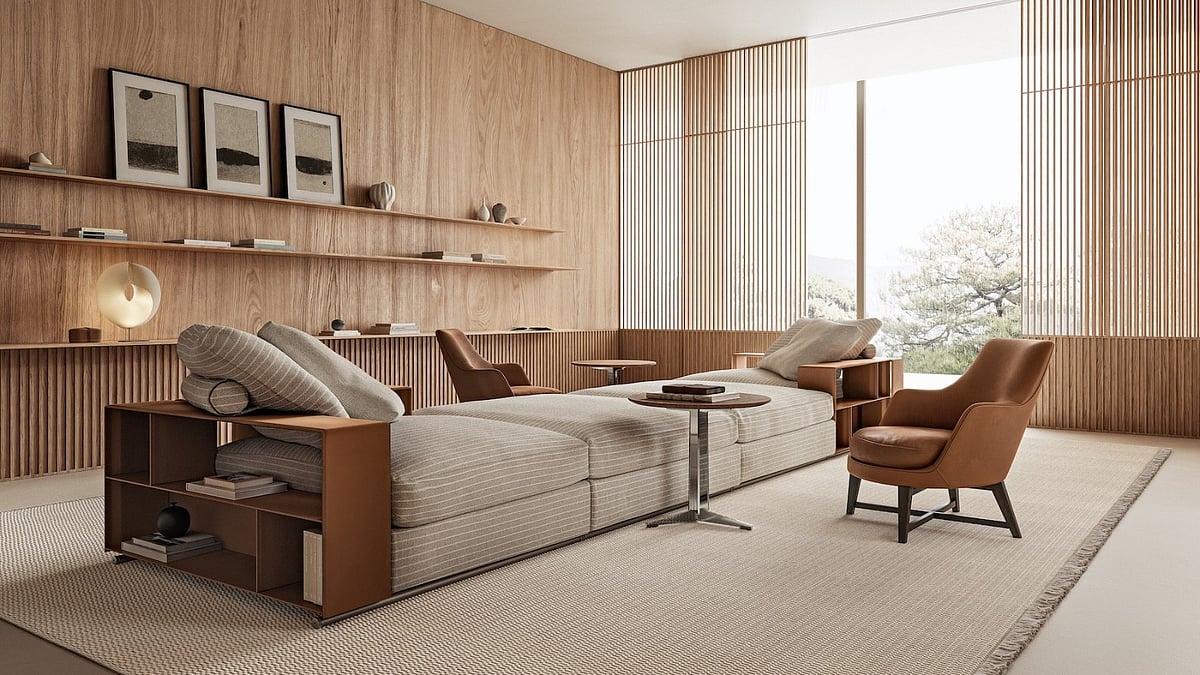
One such experience was the presentation of Groundpiece from the Flexform collection by designer Antonio Citterio. The sofa functioned as a spatial transformer, redefining how the living room operates today. The relaxed, low-height modular seating system reflected the increasingly fluid nature of domestic life, in which the sofa is no longer just a place to sit but also to work, gather, pause, or even dine. What I found particularly compelling was its integrated armrest system, where upholstered volumes transitioned into consoles and bookshelves. This simple intervention transformed the sofa into a social anchor around which the entire room revolved.
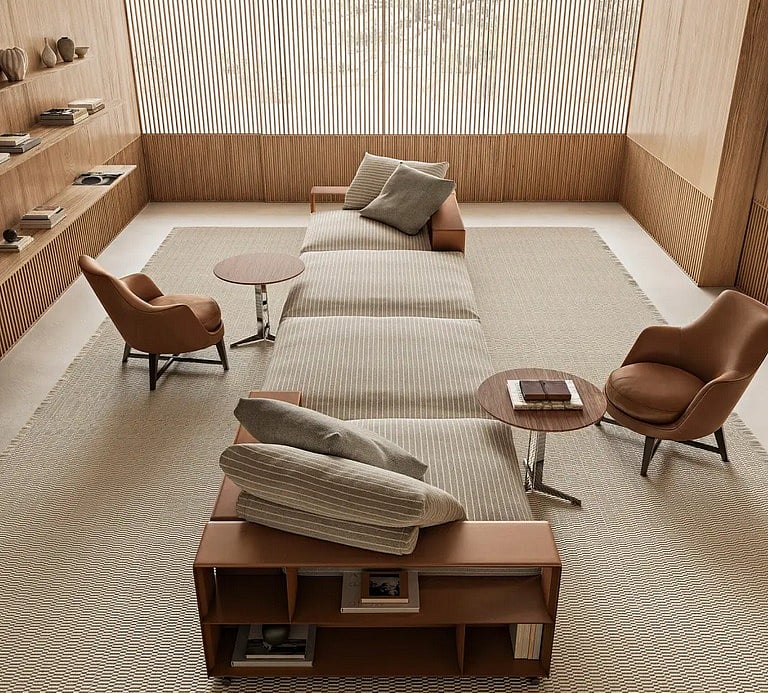
Groundpiece by Antonio Citterio |
The idea of dissolving rigid boundaries continued in the kitchen display by SieMatic. The space moved away from the conventional idea of the kitchen as a heavy storage-driven utility zone. Clean linear surfaces and warm woodwork with brass detailing added elegance, while the extended island counter introduced a casual mode of inhabitation. The layout encouraged gathering and interaction around the cooking area, immediately reminding me of the traditional kitchens in Indian homes, which serve as central social spaces.
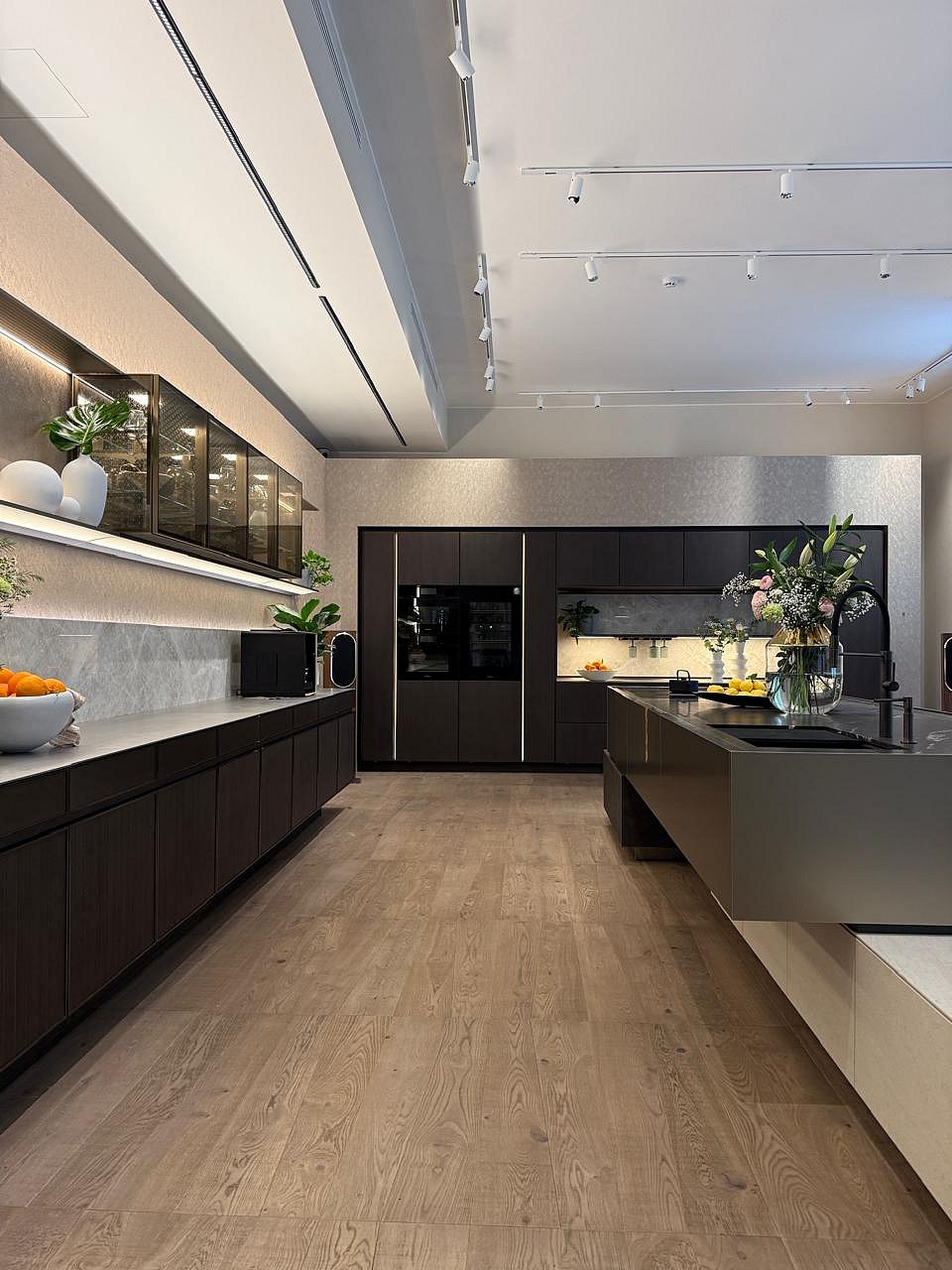
Kitchen Display by SieMatic |
A similar fluidity could be seen in Minotti’s bedroom setup, where the arrangement challenged the conventional static nature of a bedroom. Instead of positioning furniture as isolated functional pieces, the layout created a continuous spatial flow between resting and lounging. The side placement of a futon-like seating connected the sleeping area to an adjoining sofa arrangement, making the room more experiential. I believe it reflected a holistic approach where furniture was clearly conceived in relation to movement and emotional comfort.
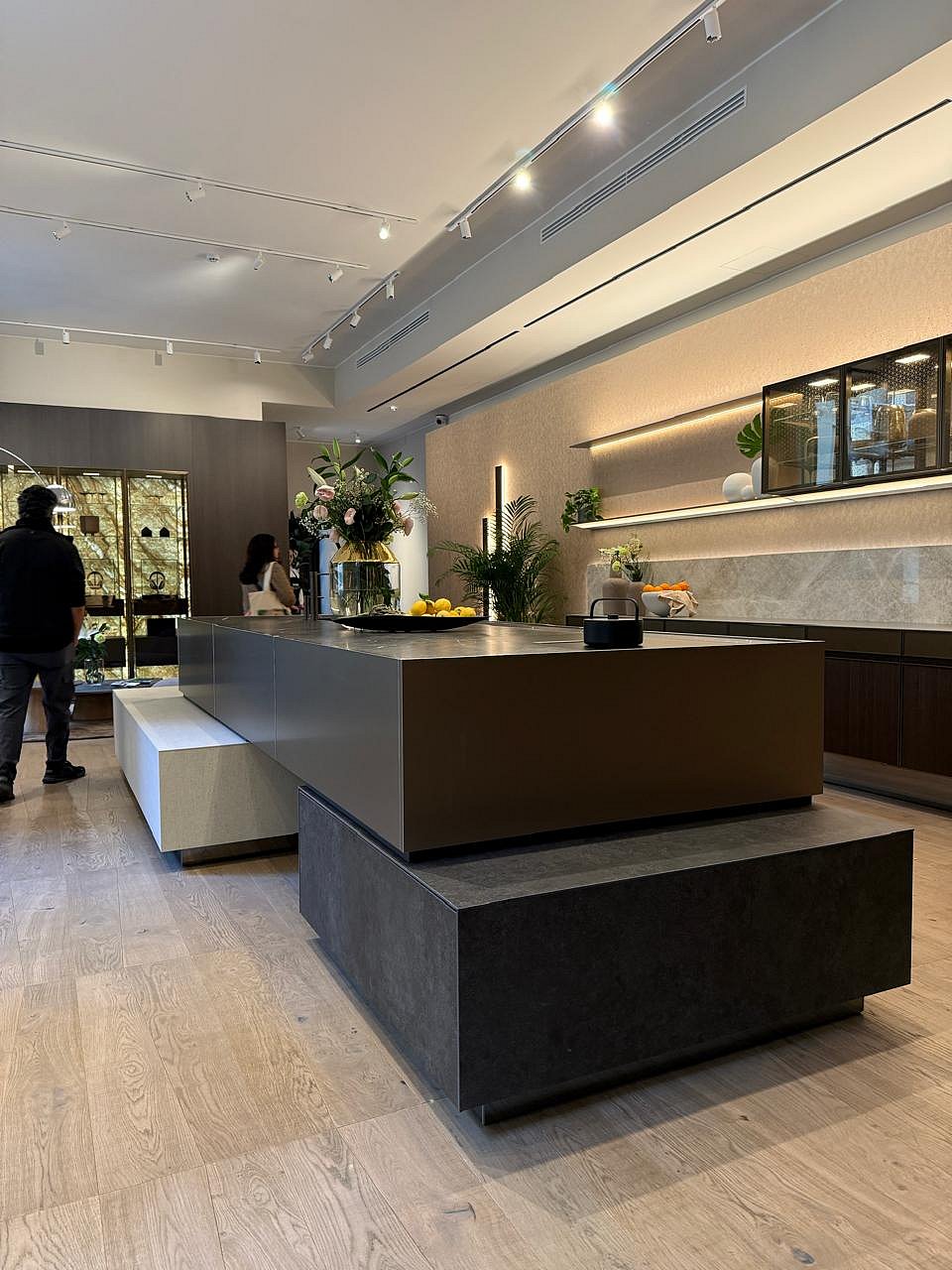
Kitchen Display by SieMatic |
This organic language extended further into Minotti’s modular living system, which reimagined how larger living rooms can function. The composition used curved and modular seating to create softer transitions between zones, resulting in a connected yet open-ended living environment. I also found the space’s adaptability intriguing, particularly how elements like a fireplace could easily evolve into a television unit, a library, or a display system, depending on lifestyle. It was an intelligent reminder that flexibility today is no longer a feature, but an essential requirement.
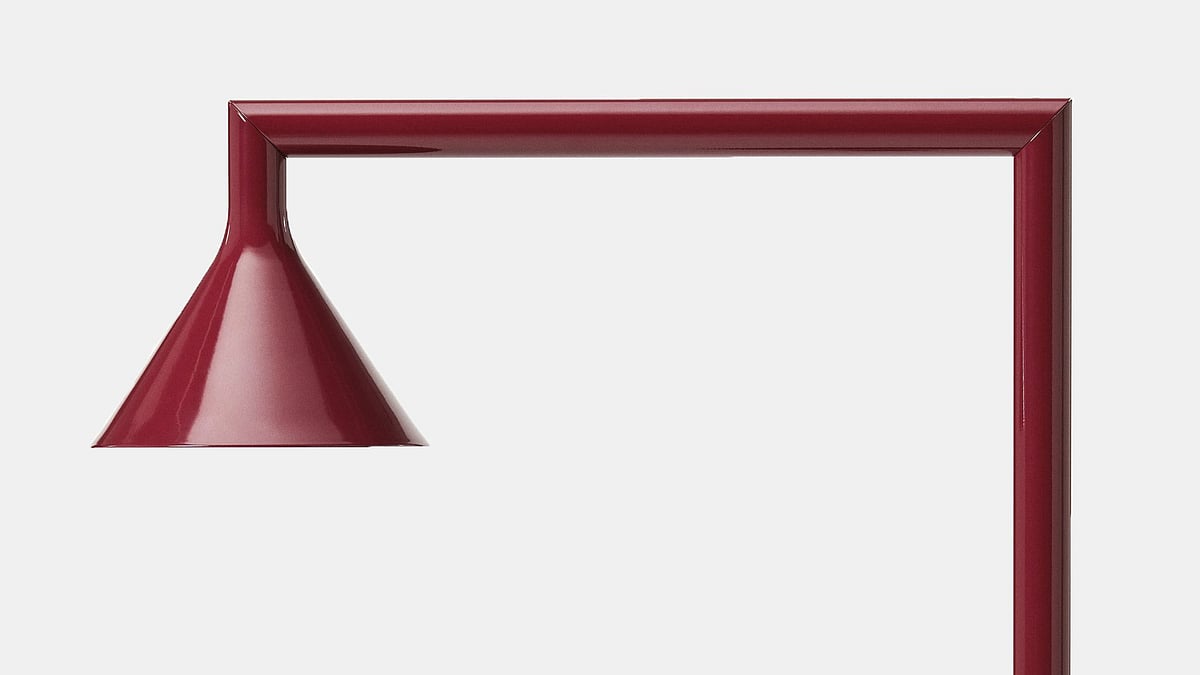
Lamp by IKEA |
Even within these larger spatial narratives, smaller objects carried a distinct sense of intent. One such example was a bold light fixture by IKEA, which embodied the idea of expressive simplicity. While minimal in form, the piece demonstrated how Scandinavian design continues to evolve by balancing accessibility with experimentation, proving that thoughtful design need not be overly complex or exclusive to feel progressive.
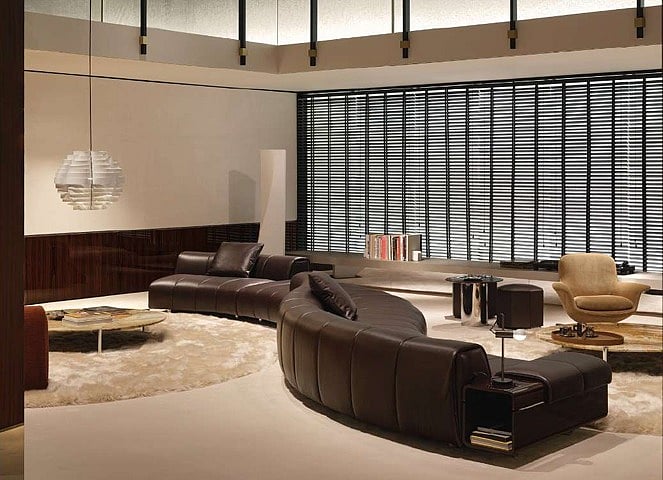
Minotti’s Modular Living System |
In many ways, this year’s Milan Design Week felt less about designing objects and more about designing relationships between people and spaces. It reaffirmed something I continually return to in practice that the most meaningful spaces are often the ones that listen closely, evolve gently, and allow life to unfold naturally within them.

