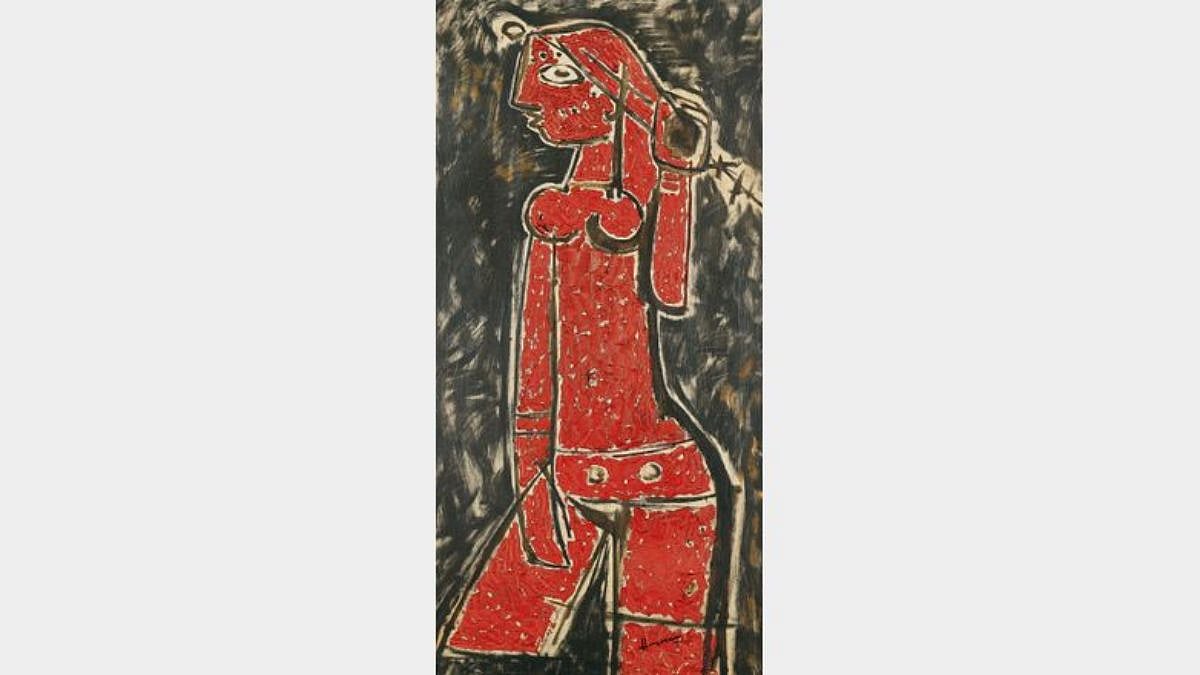
A painting estimated in the ₹3 crore to ₹5 crore range has now made headlines after fetching a staggering ₹65 crore at Pundole’s Fine Art Sale. M.F. Husain’s The Red Girl, a 1952 oil on canvas, emerged as one of the most talked-about works at the Mumbai auction, selling for around 13 times its upper estimate. The painting alone accounted for nearly a third of the sale’s overall value.
M.F. Husain fetches big in auction
The Red Girl was sold at Pundole’s September 24 Fine Art Sale in Mumbai. The 1952 work measures approximately 48 x 24 inches and had carried an estimate of ₹3 crore to ₹5 crore before going under the hammer.
Its final price of ₹65 crore marked a dramatic jump from the pre-sale estimate, putting the Husain work firmly in the spotlight. Pundole’s Fine Art Sale brought together 81 lots spanning modern and contemporary Indian art at Hamilton House in Mumbai.
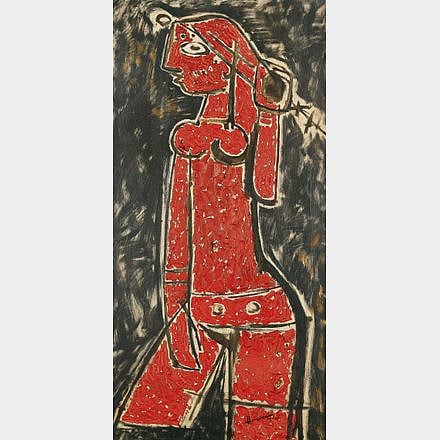
MF Husain's 'The Red Girl' |
About 'The Red Girl'
At the centre of The Red Girl painting is a young female figure rendered in vivid red. She appears bare-breasted, wearing a broad ornamental girdle around her hips and a prominent chatulatika tikka on her forehead.
According to Pundole’s catalogue description, the painting initially brings to mind the yakshi figures associated with classical Indian sculpture, particularly the traditions of Mathura and nearby regions. The earthy red treatment of the figure echoes the appearance of the sandstone used in such sculptures, while the jewellery also recalls elements of classical sculptural imagery.
The unusual cut-off treatment of the lower limbs adds another layer. The catalogue connects this visual decision to the fragmentary appearance of ancient stone sculptures that Husain encountered during a visit to the National Museum in New Delhi with artist F.N. Souza.
More than a classical reference
However, the painting is not simply a recreation of an ancient Indian sculptural form. A closer reading reveals important departures from that tradition.
The figure has a noticeably rigid stance rather than the fluid, voluptuous posture commonly associated with classical yakshi imagery. Her proportions also differ, particularly in the placement and scale of the breasts, while the figure does not possess the fuller, broader form associated with fertility sculptures.
Instead, the work appears to bring together several visual influences. Pundole’s catalogue describes this combination as part of the development of a new artistic vocabulary that would eventually become central to Husain’s distinctly Indian modernist language.

