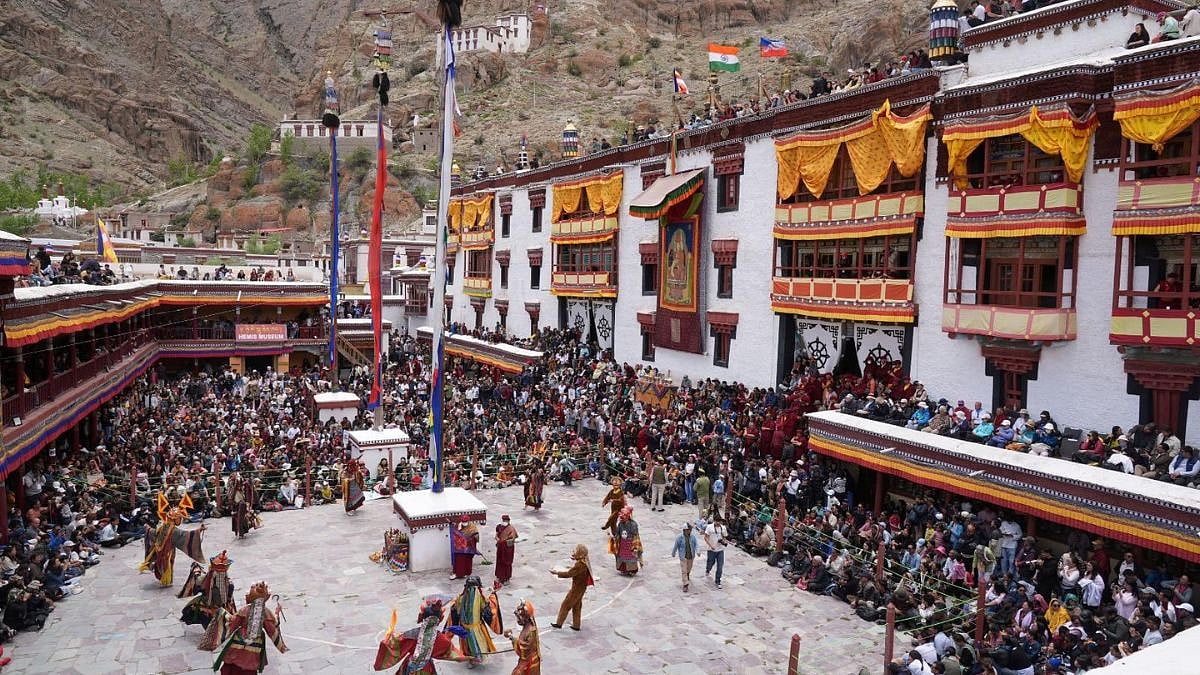
The vibrant Hemis Festival, also known as Hemis Tsechu, is being celebrated with great enthusiasm at the Hemis Monastery in Ladakh. According to the Tibetan lunar calendar, the Hemis Festival is celebrated in June or July. The festival is one of the most important and vibrant Buddhist celebrations which marks the birth anniversary of Guru Padmasambhava. The two-day celebration is held every year and this year it commenced on June 24 and it will end on June 25. Guru Padmasambhava, also known as Guru Rinpoche, is revered as the founder of Tibetan Buddhism.
Ladakh celebrates Hemis Festival
The Union Territory of Ladakh is celebrating the spiritual festival, Hemis, which began on Wednesday, June 24, 2026 and it will continue until Thursday, June 25, 2026. The inauguration of the festival was witnessed by Lieutenant Governor of Ladakh, V.K Saxena. The festival takes place at the historic Hemis Monastery which is situated in Hemis village of Ladakh. It is also considered the largest and wealthiest Buddhist monastery in Ladakh. The monastery, which is nestled amid the scenic mountains, has transformed into a hub of spiritual devotion, cultural performances, and traditional rituals during the festivities.
Rituals and celebrations
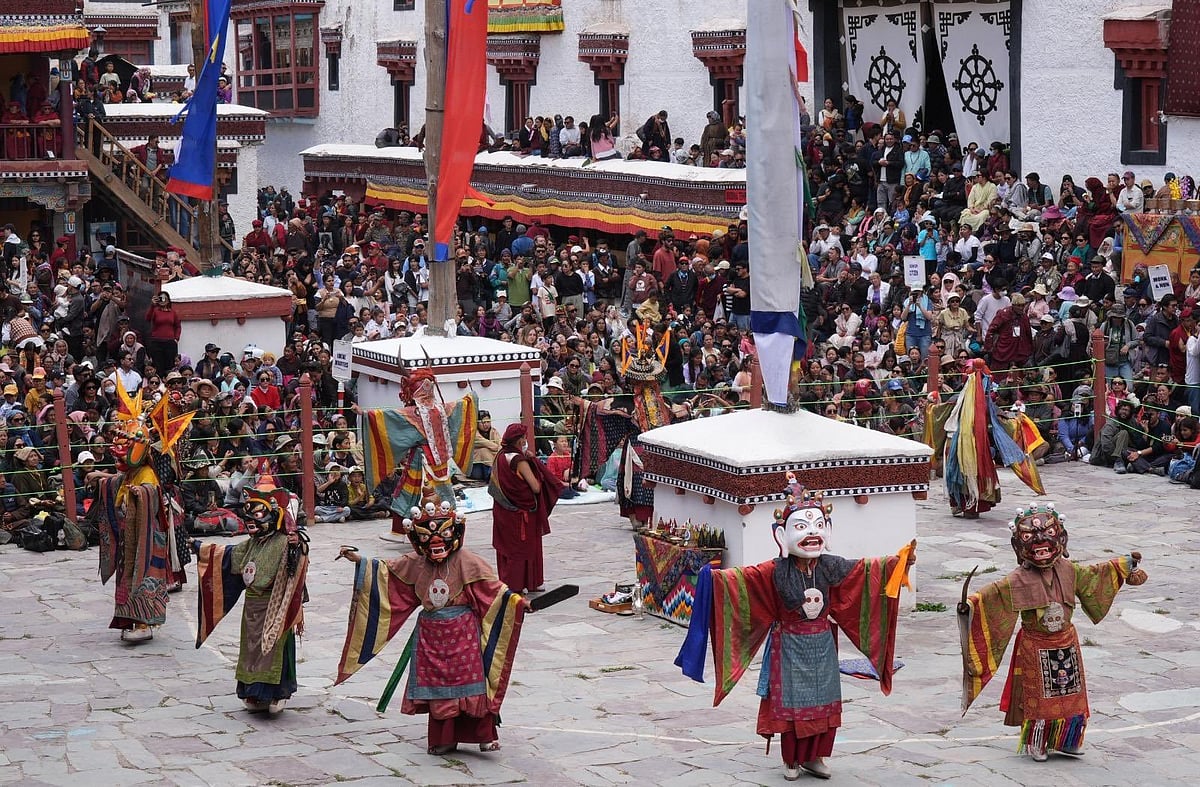
The celebrations commences with traditional religious rituals, prayers, and the famous Cham dance. It is a sacred masked dance performed by Buddhist monks dressed in colourful silk robes and elaborate masks. These ritualistic dances symbolise the triumph of good over evil and are believed to bring blessings, prosperity, and protection to those who witness them.
The monastery courtyard comes alive with the sounds of traditional music, including drums, cymbals, and long horns, creating a deeply spiritual atmosphere. Monks perform prayers and ceremonies while devotees seek blessings for peace, happiness, and well-being. The festival also features Thangka paintings.
Cultural significance
Apart from its religious significance, the festival offers visitors a glimpse into Ladakh's rich cultural heritage. Local artisans and traders display traditional handicrafts, jewellery, textiles, and regional delicacies, making it a major cultural attraction.
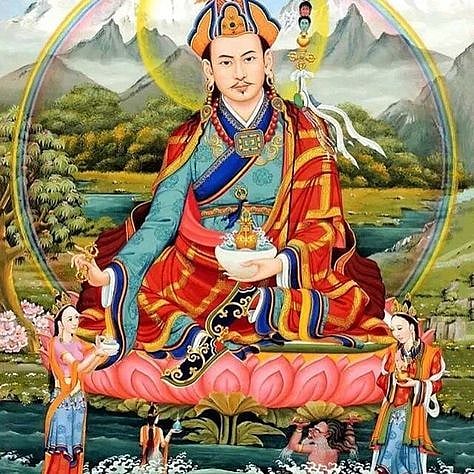
Guru Padmasambhava | Pinterest
Guru Padmasambhava
Guru Padmasambhava, also known as Lotus Guru, is regarded as the founder of the Nyingma tradition. It is the oldest of the four major schools of Tibetan Buddhism. Guru Padmasambhava was known as one of the founding fathers of Tibetan Buddhism.

