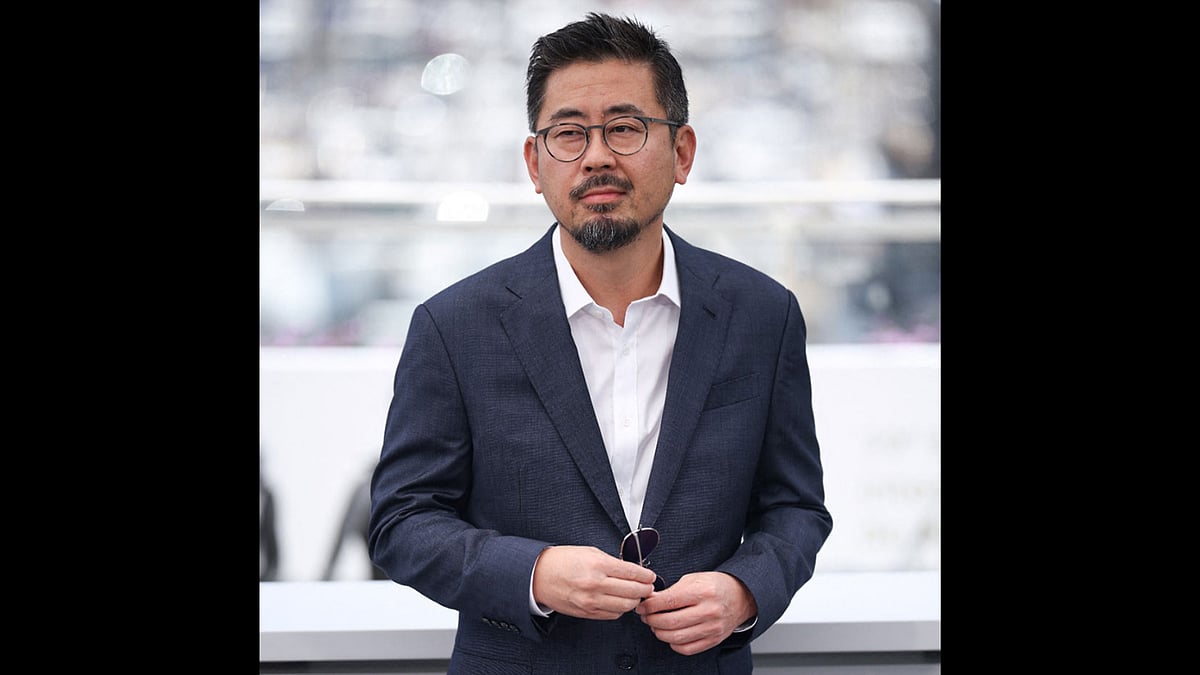
Seven minutes. That is how long the audience at the Grand Lumière Theatre stood and applauded after the world premiere of Hope, the long-awaited new film by Korean director Na Hong-jin. Ten years after The Wailing left festival audiences shaken and sleepless, Na has returned to Cannes, this time with a 160-minute science fiction epic about an alien invasion of a rural South Korean village, a cast that spans two continents, and a sequel already written and ready to be put in motion.
At the official press conference held the following afternoon at the Palais des Festivals, Na Hong-jin sat alongside his ensemble of Korean stars Hwang Jung-min, Zo In-sung, and Jung Ho-yeon, as well as Hollywood actors Michael Fassbender, Alicia Vikander, and Taylor Russell. The mood was light, almost disbelieving, as if the cast themselves were still processing the scale of what they had made.
Na described how the film began with a single image that came to him around 2017 or 2018 while eating at a restaurant. From that seed grew an entire mythology. Hope is set in Hope Harbor, a remote village near the Demilitarised Zone, where local police chief Bum-seok, played by Hwang Jung-min, and his colleagues find themselves confronted with something that defies explanation when what is first thought to be a tiger turns out to be something far more dangerous. Aliens from a planet called Gh'ertu have crash-landed, and they bring with them their own class divisions, hierarchies, and ferocious instinct to survive.
“As the story naturally extended, it went all the way to space,” said Na Hong-jin. “I wanted it to be a primitive film, not a contemporary film. Like something you might have seen a long, long time ago.” When it came to persuading his cast to endure the punishing physical demands of the shoot, he was more candid: “I managed to trick them into joining.”
The casting of Fassbender, Vikander, and Russell as CGI alien characters — members of the invading family from Gh'ertu — is one of the film's most striking choices. Alicia Vikander explained that her love of Korean cinema began when she attended the Busan Film Festival early in her career. After watching The Wailing, she tried to develop a different project with Na Hong-jin, which eventually gave way to something far bigger. “He reached out two or three years later and said, ‘I have some aliens,’ and I was intrigued,” she added. As for Fassbender, who is married to Vikander, he added, “Alicia told me to do it.”
Taylor Russell, who said Alicia Vikander had also introduced her to the project, spoke with genuine feeling about what drew her in. “The dream is to work in a different country, on foreign-to-me language films, and to work with an auteur. Director Na is an auteur who makes incredible cinema. I wouldn't even cast myself in any of his films; it feels inconceivable. So, when the call came and he made me laugh the entire time, I thought this would be a very fun ride.” She added, with characteristic warmth, that she hoped to do more Korean films and perhaps even learn the language.
Beneath the genre thrills, Na Hong-jin and his cast were clear that Hope carries serious weight. Fassbender noted that both the human villagers and the alien invaders are driven by the same fundamental impulse: protecting their young and protecting the future of their children. “The similarities between us and aliens is what we look at in the film,” he said, pointing to recent real-world reports of unidentified aerial phenomena as a reminder that the question of what lies beyond is no longer purely fictional.
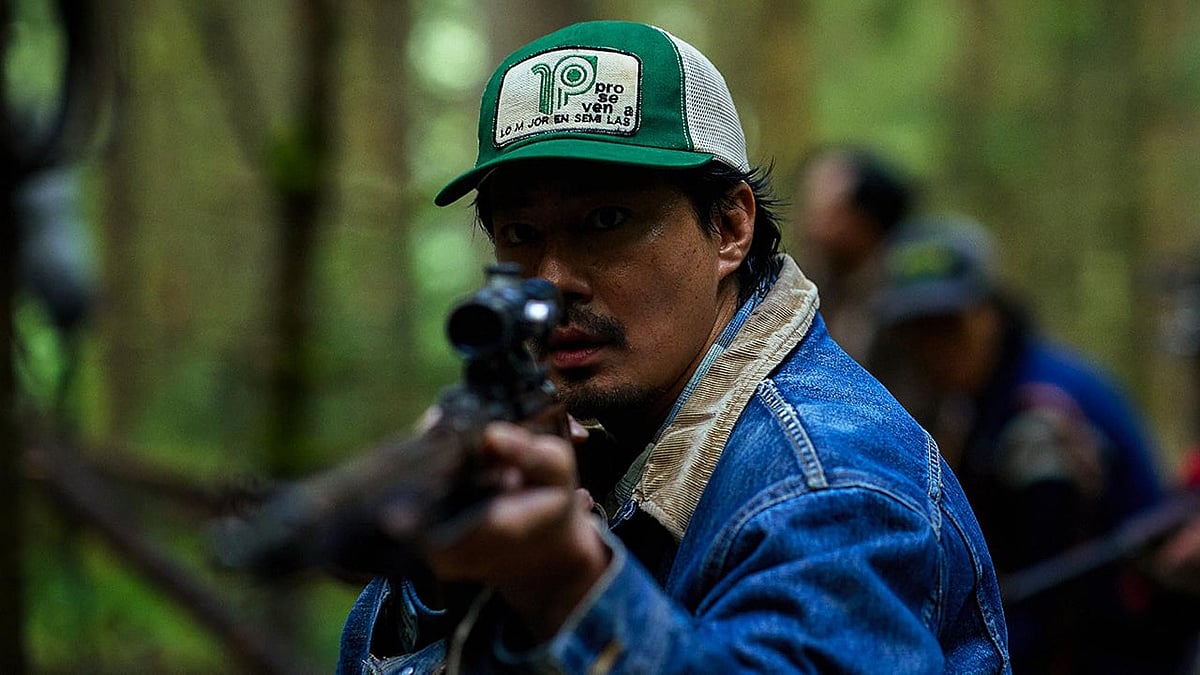
The director was more philosophical. “The film really deals with problems of violence, contemporary phenomena, and why all these phenomena exist and continue to exist. Maybe there's a kind of faith, religious or otherwise, that will help us.”
Zo In-sung, who apparently ran through forests for the film despite recovering from knee surgery — a fact Na revealed with barely concealed mischief — described the emotional toll of the shoot as the greater challenge. “Creating something new requires courage,” he said. “The script was filled with the desire of a filmmaker who wanted to show a new vision. More than the physical hardship, the emotional state was harder — how to convey fear, how to express the human heart's desire to survive.”
Perhaps the most startling announcement of the afternoon was Na's confirmation that a sequel is already written and waiting. “When you watch this film, I think you can readily imagine a sequel,” he said through a translator. “There is a story and a script that has already been written that I would like to shoot. If I have the opportunity, I will indeed make a sequel.”
Hope is the fourth Na Hong-jin film to screen at Cannes, following The Chaser in 2008, The Yellow Sea in 2011, and The Wailing in 2016. It is also the first South Korean film in the main competition since Decision to Leave by Park Chan-wook in 2022. With a budget reportedly higher than any previous Korean production, distribution already secured through Neon for North America and MUBI handling multiple European territories, and a standing ovation that lasted longer than most short films, Na Hong-jin has not merely returned from a decade away — he has arrived in style.

