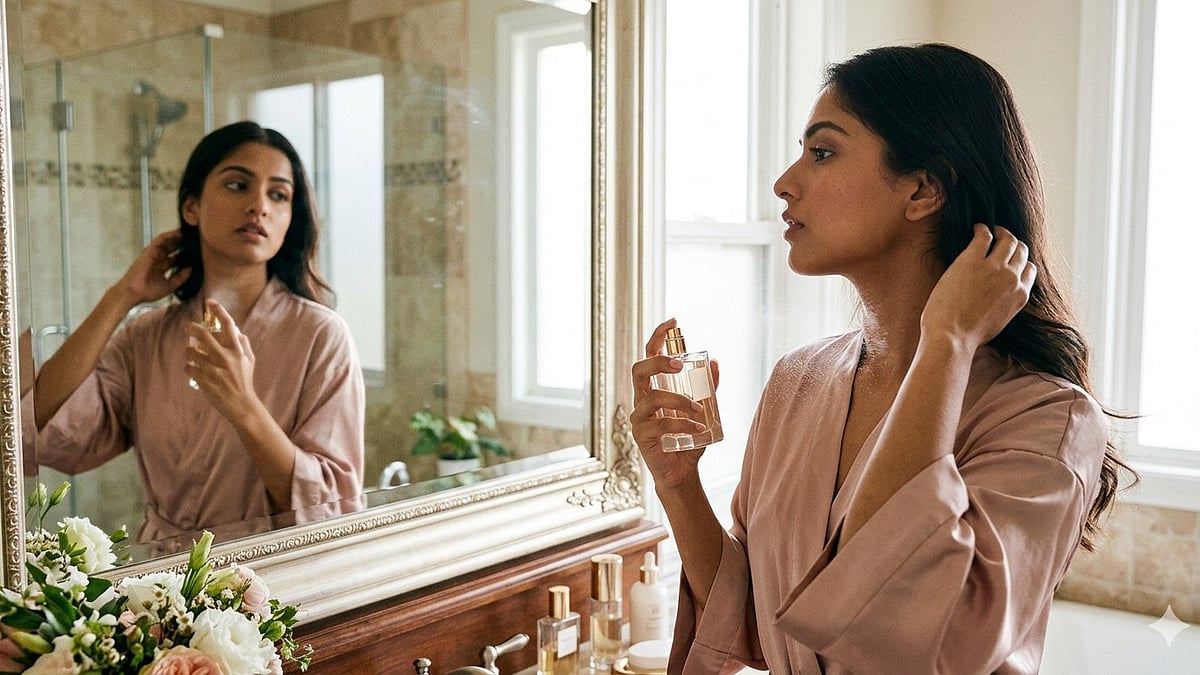
Spraying perfume on the neck has always felt like the ultimate finishing touch. A quick mist behind the ears, one near the collarbone, and suddenly you feel expensive, polished, and ready to step out. It’s a beauty ritual almost everyone follows without thinking twice. But now, skin experts are raising red flags about this long-standing habit, and their reasons might make you reconsider where you spray your signature scent.
Neck isn’t built for it
The skin on the neck is far more delicate than most people realise. It is thinner, softer, and constantly exposed to heat, sweat, sunlight, and pollution. Add alcohol-heavy perfume into the mix every single day, and the skin can slowly start reacting.
What starts as slight dryness can, over time, turn into irritation, itching, or even stubborn pigmentation. Because these changes develop slowly, the connection to perfume often goes unnoticed.
As Dr. Bindu Sthalekar, MD (Skin), DVD, MSc (UK – Facial Aesthetics) celebrity dermatologist, cosmetologist, trichologist & Founder & Medical Director of Skin Smart Solutions points out, “Daily application of alcohol- and fragrance-based perfumes directly on the neck can potentially lead to irritation, dryness, pigmentation, and increased skin sensitivity over time, especially in individuals with sensitive skin. The neck area has relatively delicate skin, and frequent exposure to fragrance chemicals, along with sun exposure, may trigger conditions like dermatitis or post-inflammatory hyperpigmentation. It is always advisable to apply perfumes on clothing or pulse points with minimal friction and to opt for skin-friendly, dermatologically tested formulations whenever possible.”
Sun & perfume clash
That luxurious floral or musky scent may smell incredible indoors, but under direct sunlight, things can change. Certain fragrance ingredients react to UV rays and can trigger pigmentation or sensitivity on exposed skin.
This is why many people notice tanning or uneven skin tone exactly around the areas where they spray perfume most often. Since the neck gets maximum sun exposure throughout the day, it naturally becomes more vulnerable.
‘Too much perfume’ problem
There’s another reason experts are moving away from neck application — you end up inhaling the fragrance constantly. When perfume sits too close to the nose, the scent lingers around you all day long, whether you notice it or not.
Strong fragrances in particular can sometimes trigger headaches, dizziness, or discomfort, especially in warm weather or crowded places. What smells luxurious for five minutes can start feeling overwhelming by the afternoon.
It’s not always the fragrance sometimes it’s simply where they sprayed it.
What’s inside the bottle?
The concern isn’t just where you apply it but what’s actually inside the bottle. Some fragrance formulas include ingredients that have been studied for potential endocrine-disrupting effects (EDCs). The most widely discussed are phthalates. Research suggests certain phthalates may interfere with hormones like testosterone, estrogen, and thyroid hormones, which play key roles in metabolism, mood, and reproductive health.
Other compounds, such as parabens and synthetic musks, are also under observation. The challenge is that many perfumes list ingredients simply as ‘fragrance’ or ‘parfum,’ without revealing their full chemical composition.
This lack of transparency makes it difficult for consumers to know exactly what they are applying daily.
Some newer brands, however, are moving toward cleaner formulations and are often marketed as being free from endocrine-disrupting chemicals.

Smarter choices
You do not have to give up perfume. In fact, fragrance often lasts longer when applied correctly.
Instead of spraying directly on the neck, apply perfume lightly on clothes, wrists, scarves, or the back of the shoulders. Fabric holds scent well and allows it to diffuse more naturally.
Another simple trick is moisturised skin, it helps perfume last longer, reducing the need for repeated sprays.
Comfort defines luxury
Perfume is personal. It carries memories, moods, confidence, and identity in just a few drops. But sometimes, even small beauty habits deserve a second thought.
Changing where you spray your fragrance may seem minor, but it can make a meaningful difference over time — both for your skin and overall comfort.

