A few days back, one of my cousins made me sit through the movie ‘Sunny Sanskari Ki Tulsi Kumari’, starring Varun Dhawan, Janhvi Kapoor, and others. If the name itself is not bizarre enough, what turned out was more than two hours of an excruciating snoozefest. This movie has nothing that we have not already experienced in countless other Bollywood pieces. In that perennial optimistic quest of finding something innovative, not only was another hackneyed output encountered, but Bollywood again proved that age old clichés are its forte.
Unfortunately, this was not the only disappointing movie of this year. But every release further stamps the impression that the mainstream Bollywood industry is somehow determined not to evolve. The films here carry clichés galore, and in spite of the majority tanking at the box office, the makers are hell-bent on using them. Every new movie seems to be rehashed from bits and pieces of previous productions. “Bollywood movies have become too repetitive over the years, with certain motifs and plot points used over and over again. This is only driving away viewers from theatre halls,” says the popular television and cinema actor Indranil Mullick.
Appeal of the cliches
If one wonders about the reason, the only logical explanation could be that some of these movies indeed do well, and sometimes with mind-boggling numbers. Hence, with so much at stake, a set formula seems a safer option for many. However, we have found over time that these movies fail more than they deliver. But any earlier success retains its more substantial impression upon the memory. When Shyam Benegal once stated that popular Hindi cinema works towards getting a predictable response from the audience, he couldn’t be further from the truth.
Common tropes
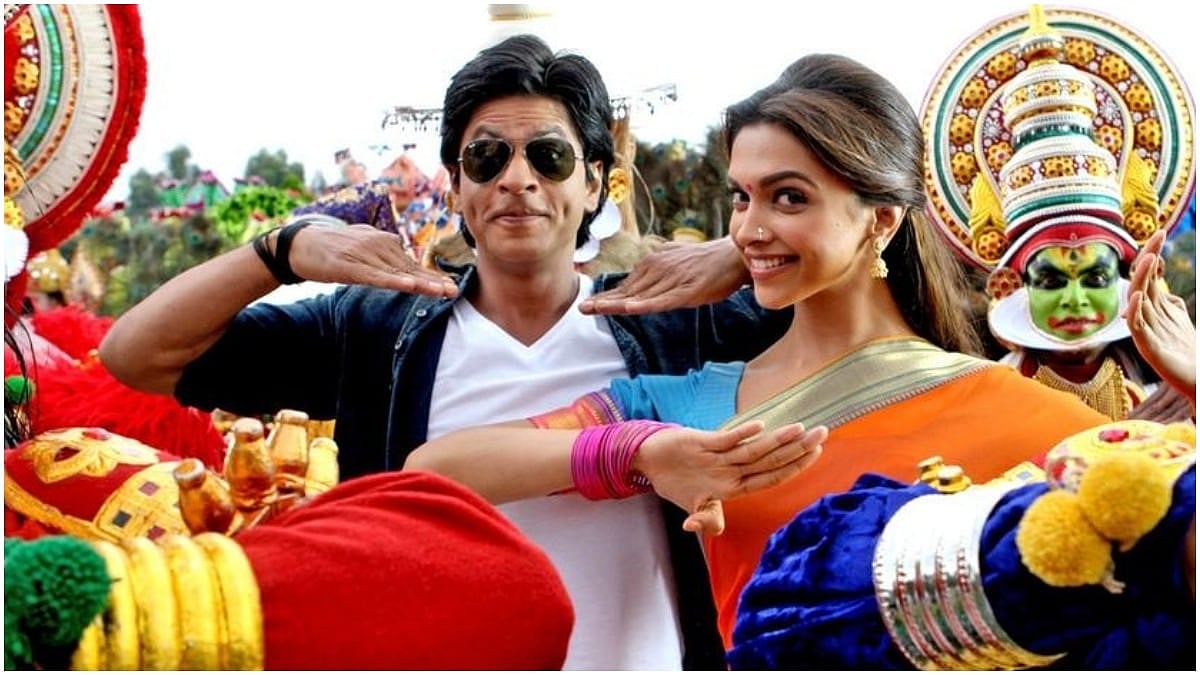
Haven’t we already come across these? A hero makes an entry like an ancient Roman emperor and goes on to beat up anybody like a superman; a coy and demure girl suddenly gets the courage to even die with her boyfriend for love; most of the characters come from North India, with amazing dancing skills; the hero and heroine abruptly break into a song around trees and mountains in Switzerland, in numbing cold with the heroine scantily dressed in chiffon sarees; a heroine shown belonging to the South of India, inexplicably speaks in a funny and exaggerated accent, (cases in point are Deepika Padukone’s character in ‘Chennai Express’ and Janhvi Kapoor’s in ‘Param Sundari’) – the clichés are so numerous that they could turn into a book. According to Arindom Ghosh, renowned writer and thespian from Kolkata, “The clichés are actually overused in Bollywood movies, which makes the plots predictable and limits the creativity. The over-the-top drama, melodious songs, and predictable happy endings are an escape route to be in a comfort zone rather than experimental and innovative ways of storytelling.”
Trend continues unabated
In the movie mentioned in the opening paragraph, a situation comes in the story when the protagonists barge into a grand wedding to try and win their love back. Sounds familiar? Come on Bollywood, how many times would you use this same motif? And we are not even invoking DDLJ and SRK. In addition, one wonders why there always has to be a grand wedding in the backdrop? Why can’t love just happen in everyday circumstances? This is where filmmakers find clichés convenient. We know that weddings are intrinsically embedded into the psyche and culture of every Indian. Weddings also provide a filmmaker with ample opportunities to add as many songs and dances as possible in numerous colorful backgrounds. These in turn give every film a greater acceptability to the wider audience. While we may expect something new and creative, mainstream Bollywood likes to stick to the tried and tested. Unfortunately, this does not work every time, as in the case of this movie.
At this moment, most of our superstars, the Khans, Kumar, etc., who had blossomed in the nineties, are reaching or have reached the bracket of senior citizenship. Although, to their credit, they still churn out hit after hit. But their habit of romancing heroines almost half their age now is another intolerably persisting cliché. Surely, a case of patriarchy is at play: to continue a male-star driven narrative. Let us take the film ‘Raid 2’, which has Ajay Devgn and Vaani Kapoor as husband and wife. Ajay Devgn plays the role of a brave Indian revenue officer in a middle-class setting with a housewife. While in real life, Ajay’s age is around mid-fifties, Vaani is in her mid-thirties. This kind of age gap is hardly visible in a middle-class Indian married couple, except in rare cases.
Another such instance is the 2025 movie ‘Sikandar’ that completely bombed at the box office. This movie has an almost sixty-year old superstar romancing a heroine who is not even thirty. It looks so bizarre that the matter does not even merit another discussion. In the same way, everybody remembers the Hindi ‘Drishyam’, where Ajay Devgn’s older daughter is shown to be his adopted child. The implication here again is quite clear.
The case of clichés simply doesn’t end here. Just like the previous years, two thousand twenty-five was no better. If you look at the overall list of movies released this year, it will be hard to separate the wheat from the chaff. Of course, there were exceptions. But the general trend has not changed. Amborish Roychoudhury, a national award winning author from Mumbai beautifully sums this up, “Clichés in Hindi cinema stem from viewing habits of our audiences. Some of them survive because audiences favour them, while others linger because the industry is too scared to let them go. Both are equally problematic, and we all must share the blame.”
Concluding thoughts
There is scant hope of any tectonic change in the future too. However, at the end of the day, one must remember never to take the viewers for granted. Time and again, they have let their rejection be known by not turning up enough for these movies. Therefore, it is time that Bollywood directors too, find new ways to tell their stories.

