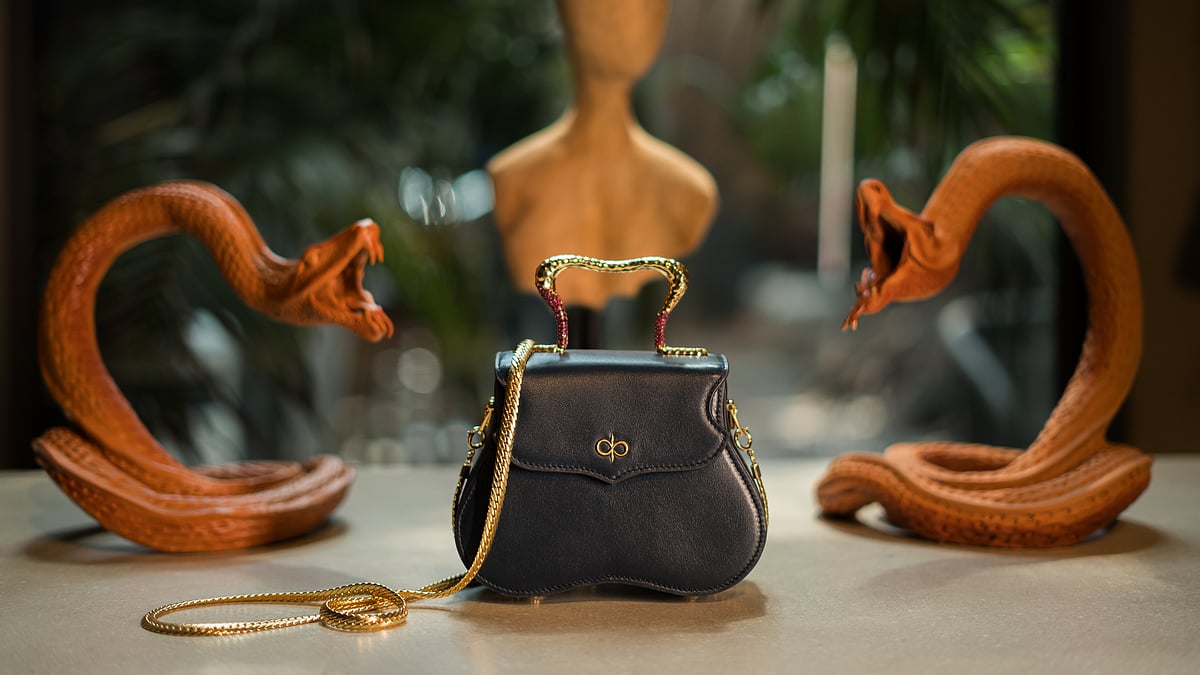
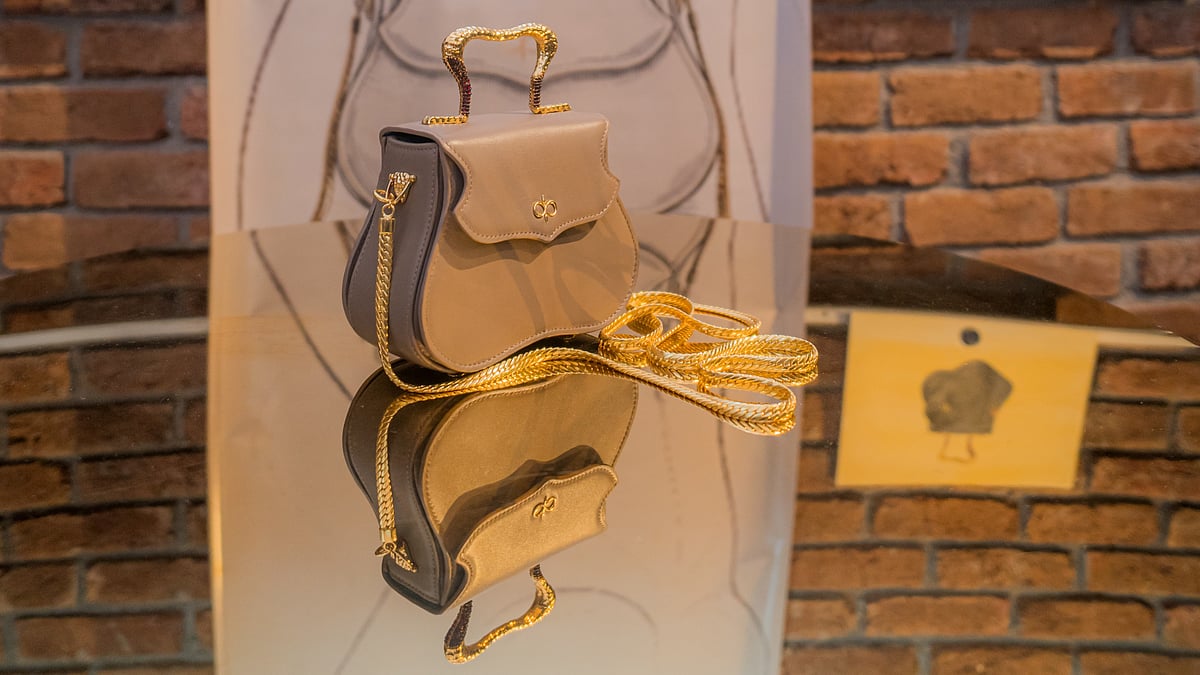
If you have wondered why a country that excels in craft, from intricate textiles to centuries-old metal craft, hasn’t yet produced a homegrown bag label that can stand beside the likes of Chanel or Dior, the answer may lie in perception. Indian consumers have long gravitated towards Western brands or their dupes to feel noticed. Enter KĀLI, a contemporary luxury label founded by Mansi Saxena, which might be inching towards bridging this gap. Minimalist, sculptural, and devoid of logos, it’s a nod to quiet luxury that is finding favour amongst modern luxury buyers. Clean silhouettes, marked by subtle curves and structure, and jewelled hardware, make these bags quietly distinctive. Bespoke and made to order, the debut collection, Ebb and Flow, inspired by serpent and fire, offers a palette of four neutral colours and a strong signature curve that channels the transformative symbolism of the goddess Kali into its design philosophy.
“KĀLI began with a question that stayed with me for a long time: why were India’s own design knowledge, material culture and craft traditions so rarely part of the global luxury conversation at the highest level? This led me back to travel and research across India, spending time in workshops, studying different craft traditions, and looking at the thinking behind them, from metallurgy and geometry to temple architecture and design philosophy. KĀLI emerged from that journey,” says Saxena.
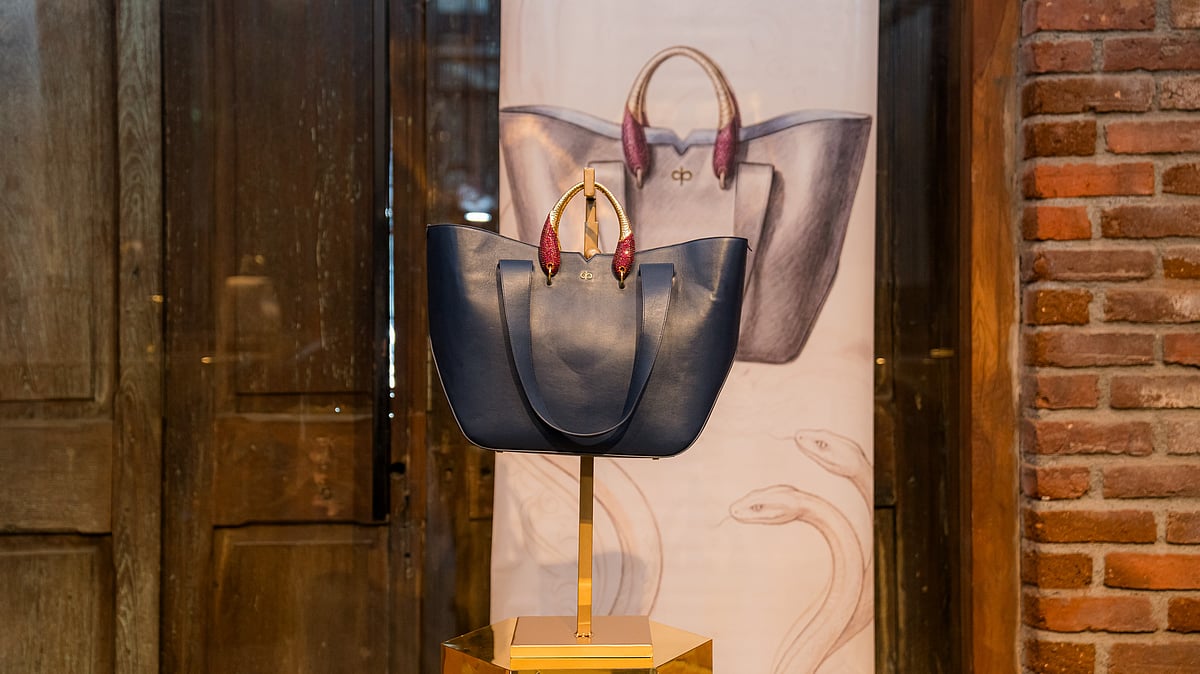
The debut collection introduces five sculptural silhouettes in smooth-grain Italian nappa leather and gold-plated hand-sculpted brass handles set with semi-precious lab-grown stones. Maya, our favourite pick, is a statement bag in suede inspired by the contours of a woman’s bosom, with serpent-inspired brass handles set with over 500 lab-grown rubies. We asked Saxena why she chose Italian nappa leather over Indian leather, and she says, “Nappa lends itself beautifully to give the right touch feel and the kind of thickness we wanted for the shapes of our collection. We experimented with a lot of Indian leather before opting for Italian nappa.”
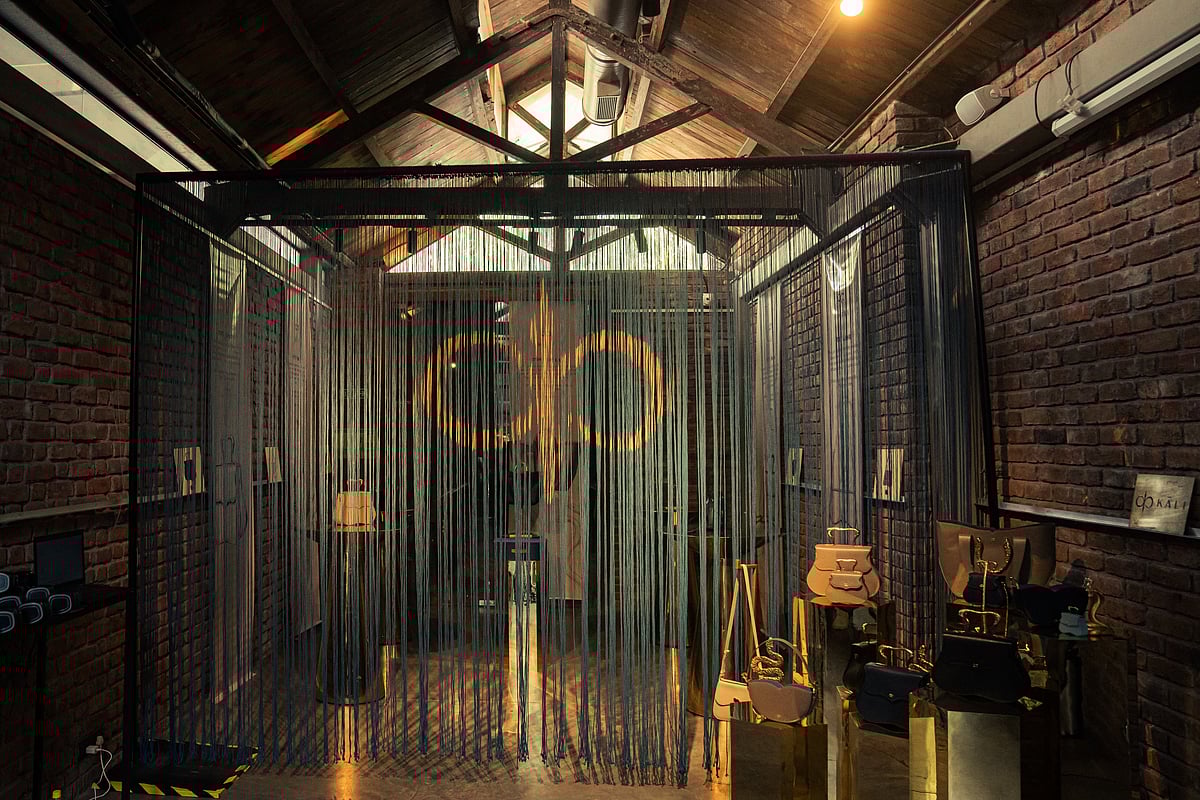
Positioned at the intersection of heritage, craft, and contemporary luxury, Saxena envisions the label as a design house, producing creations that are design objects, crafted with longevity in mind, rather than seasonal fashion cycles. With just one collection planned every year, the bags can be customised with the buyer’s choice of stones, depending on the availability. Handcrafted with some pieces requiring more than 200 hours of craftsmanship, KĀLI India draws from India’s five-millennia-old metalworking traditions—from temple craft to the bronze Dancing Girl of Mohenjo-daro—to create objects that speak to a new generation of luxury collectors. Made in India through a network of specialised workshops and artisans, the brand works with different makers for leather, metal work, fragrance, or other parts that come with a KĀLI box.
Is India ready for a homegrown luxury handbag label? Saxena responds, “As for timing, I would say not just India, the world is ready. The signals are all around us. Consumers are increasingly looking for authenticity and cultural depth, and there is a visible openness, including in Europe, to new luxury voices and new narratives. Global fashion has, for some time now, drawn from India’s craft, colour and visual language. It felt like the right moment for India to enter that conversation in its own voice.” If not now, then when, she rightly asks.
With prices starting at ₹1.9 lakh, Saxena acknowledges that winning over Indian luxury buyers will take time. “Our price reflects not only the quality of the materials and the handwork involved, but the depth of development behind each piece. Some of our products take hundreds of hours to create, and that level of detail is entirely intentional. We are building KĀLI with the rigour, patience and attention to detail that define the world’s great luxury houses. Consumers today respond to authenticity and quality. I’m confident Indian consumers are proud to carry India when it is built with that level of integrity. Across generations, and especially among younger buyers, more people are choosing homegrown.”
For now, KĀLI represents more than a new bag label; it’s a test of whether Indian luxury consumers are ready to champion a homegrown brand with the same pride they reserve for global maisons.

