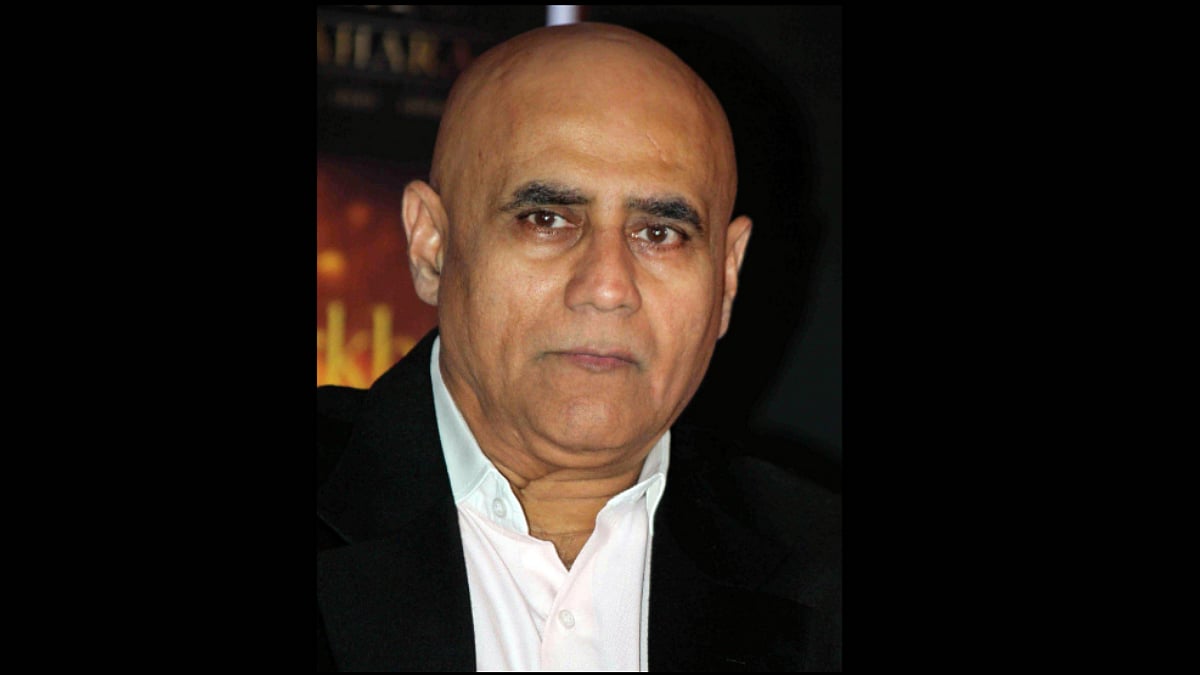
Dr. Rahi Masoom Raza and my father (director Sudesh Issar) had collaborated on Main Tulsi Tere Aangan Ki, but I remember him from my audition for Rocky a year later. I was in the same batch as Sanjay Dutt and Sunny Deol at Roshan Taneja’s School of Acting. They were private students, but I partnered them during improvisation and diction classes and a camaraderie developed. On Sanjay’s recommendation, Sunil Dutt saab agreed to screen test me for the villain’s role in his son’s debut film, Rocky, which he was producing and directing.
Back then, we had to perform live. Having read Mirza Ghalib, Dr Iqbal, Meer Taqi Meer, I recited their verses. Raza saab, who was at that audition, was impressed by my Urdu pronunciation and asked if I could also recite something in Hindi. When I recited Maithilisharan Gupt’s epic poem Jaydrath Vadh, he asked my name, then wondered if I was related to Sudesh Issar. When I admitted he was my father, even Dutt saab was impressed.
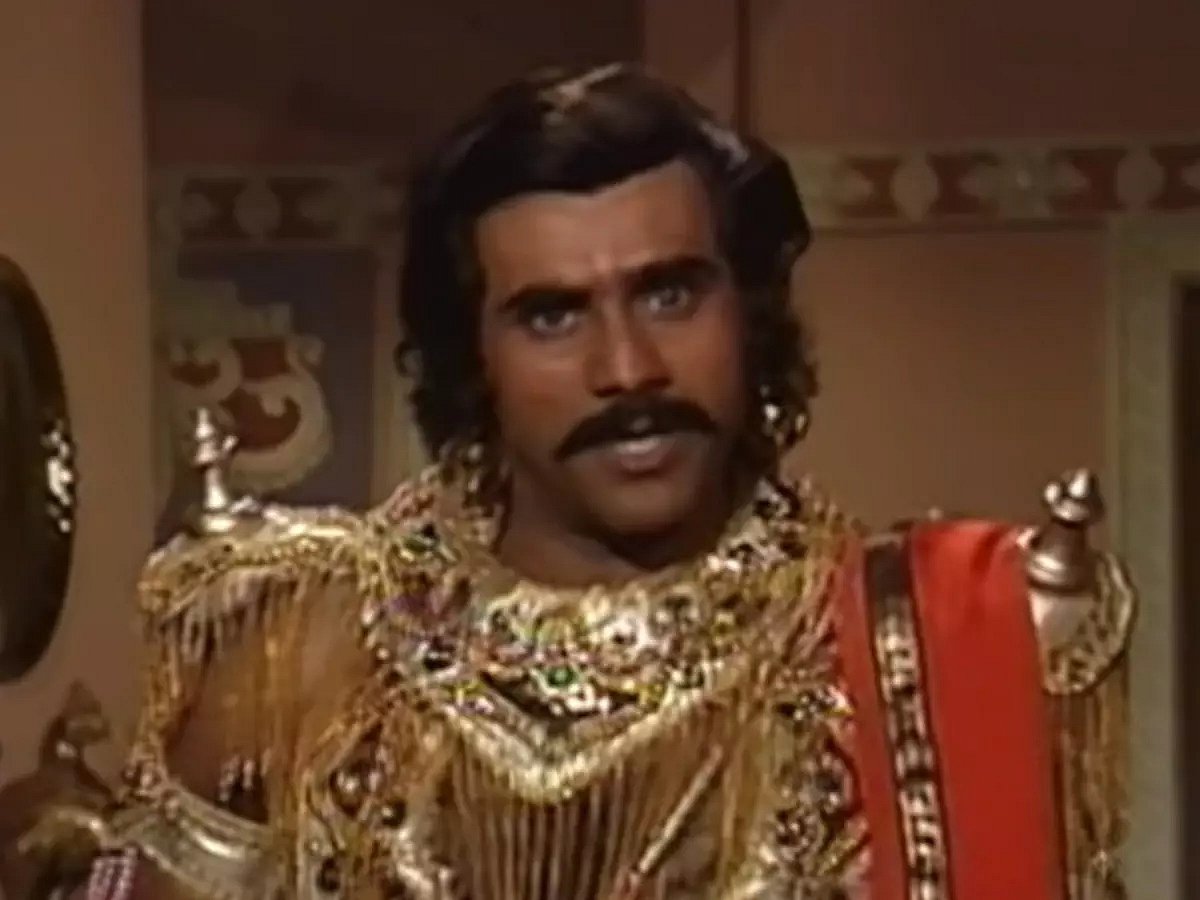
Puneet Issar as Duryodhan in the TV show Mahabharat |
I didn’t get Rocky, but I was cast as the main baddie in Coolie. The dream debut however turned into a nightmare when I accidentally hit Amitabh Bachchan. He was seriously injured, I was dropped from many big projects and ended up as the villain’s sidekick, small, inconsequential roles that were quickly forgotten. Even hits like Purana Mandir and Zakhmi Aurat didn’t benefit me professionally, and I was typecast as a 6-feet-3-inches, Black Belt fighter.
Six years later, when I learnt that BR Chopra was auditioning for his mega serial, Mahabharat, looking for actors who could work with him exclusively for three years, I hopped across. Raza saab was at this audition too, with Chopra saab and fellow writer Pandit Narendra Sharmaji. They remembered me as the Coolie boy, but pointed out I’d have long dialogues. I told them I’d taken diction classes. Going by my height and build, they offered me Bheem’s role. But I had read Bhasa’s Urubhangam and was impressed with Duryodhan’s indisputable logic that he’s not blind like his father Dhritarashtra, and unlike his cousins who are the sons of Kunti and not even Pandav putras, he’s the eldest of the Kauravas and so, the rightful heir to the throne. Desperate to prove myself as an actor with a multi-layered character, I surprised them by asking to play Duryodhan.
Chopra saab laughed, “We want to make you the hero and you want to play the villain!” But when, on the urging of Raza saab, I recited Jaydrath Vadh—without him admitting to knowing my father or having heard me recite the maha kavya earlier—my request was unanimously accepted. Once the show started airing on Doordarshan, my career finally took off. I believe it was destiny that I be a part of television history.
Through the three years that we shot for Mahabharat, I’d often go to Raza saab to borrow his writings or ask for recommendations. I would memorize these and recite these as a self-improvement endeavour. He was always encouraging. After watching my scenes before each telecast, he’d compliment me on my histrionics and the fervour with which I spoke lines like, “Yeh Hastinapur ka singhasan aur iska ek ek karn sirf and sirf Kauravon ka hai. Hum apni sui ki nok ke barabar bhi bhoomi Pandavo ko nahin doonga (Every but of Hastinapur’s throne belongs to the Kauravas and we won’t give even a needle-point worth of land to the Pandavas) saying appreciatively, “Beta bahut achcha kaam kiya tumne (Son, you did good work),” quietly placing his hand on my shoulder in a public gesture of support.

The unspoken bond continued till his demise. Whenever I was in Bandra where he lived, I would visit him even if it was for five minutes. My respect for him increased with the years. He penned kamaal ka (amazing) dialogue for the 1986 vigilante film, Aakhree Raasta, which had Amitabh Bachchan in a double role. The father, David D’Costa, a murder suspect, who after serving a 24-year sentence for a crime he didn’t commit, is believed to be targeting the real culprits, sits across from his lookalike son James, now Inspector Vijay Shandilya, and points to a number, asking him what he sees. When told it’s a 6, he quips, “I see a 9, it depends on your perspective.” The dialogue is an eye-opener, underlining that be it David or Duryodhan, no one is all bad.
Despite his laughing objection, I always addressed him as Pandit Rahi Masoom Raza. ‘Pandit’ means ‘vidwaan’ which can be translated as ‘one who is knowledgeable’. And that he was. Respect to the great soul in his centenary year.

