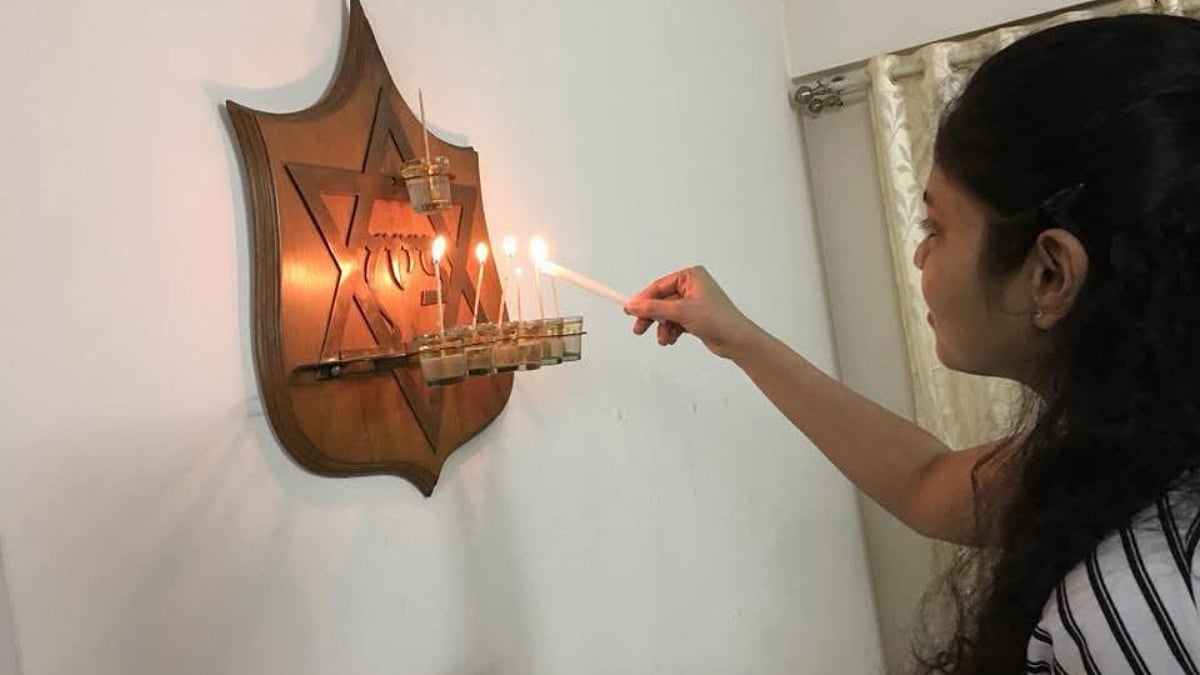
December is around the corner, and everyone is excited as two major festivals will take place this month. First comes Hanukkah, and soon after that comes Christmas. The Jews celebrate Hanukkah for eight days. Hanukkah is an important festival in the Jewish community as it means Dedication. Abraham Yehuda, who is a Trustee at more than a century-old Kenesseth Eliyahoo Synagogue (Blue Synagogue) at Kala Ghoda and also says prayers at synagogues, gives insight into how and why this festival is significant, “The word Hanukkah stands for Dedication, as in dedicating a Synagogue or a new house or a school. At all
synagogues, we have a perennial lamp. We add oil to the lamp if the light diminishes. This ritual is absolutely essential.”
Difference between Christians and Jews
Christians and Jews both believe in Jerusalem as a holy place. Yehuda explains, “But they are two different religions. The Bible of the Christians was written 300 years after the passing away of Christ. The Catholic faith was actually adopted by the Romans from that time. Jesus Christ lived and died as a Jew. The Last Supper was the celebration of Passover. Christians pray in Churches. There are several churches with various denominations of Christianity in Israel. They visit their Churches and practice their culture and religion freely in Israel.”
He adds, “But the history of the Jews has come down from the time of Abraham and earlier, to Moses, King David, and King Solomon. Christianity and Judaism, therefore, were separated at that time, although Christians follow both the Old and the New Testaments”.
Jews learn about Hanukkah
The community took refuge in India to escape persecution. Many perished en route to India, and around seven couples landed at the shores of Alibaug. Yehuda says, “The word Hanukkah dates back to the time when the Holy Land was conquered by Antiochus III, of the Greek Syrian dynasty. The ancient Indian Jewish community are called Bene Israel Jews, or sons of Israel, who fled the Holy Land, Israel, at the time of the reign of Antiochus. They fled on boats, and most did not survive the journey.
Although Hanukkah has been celebrated for thousands of years, Bene-Israelis did not know about this festival. Yehuda shares how Indian Jews started celebrating the occasion, “We discovered the festival of Hanukkah due to the arrival of a visiting Rabbi — Rabbi David. He landed on the shores of India 350 years ago and discovered the Bene Israel community — that they were observing Kashrut (a law of what can be eaten and not eaten) and keeping the weekly Shabbath (The day of rest that begins on Friday before sunset and ends on the following evening after nightfall). But they didn’t know about Hanukkah. He taught them the prayers for Hanukkah and other Jewish prayers that are said on Rosh Hashanah, Yom Kippur (these are the holiest days for Jews) and other festivals.” He further educated his fellow Jews of India: “Rabbi taught us the prayers; we became more educated. He helped us read, write, and translate Hebrew into Marathi. So we finally had our prayer books. ”
Menorah
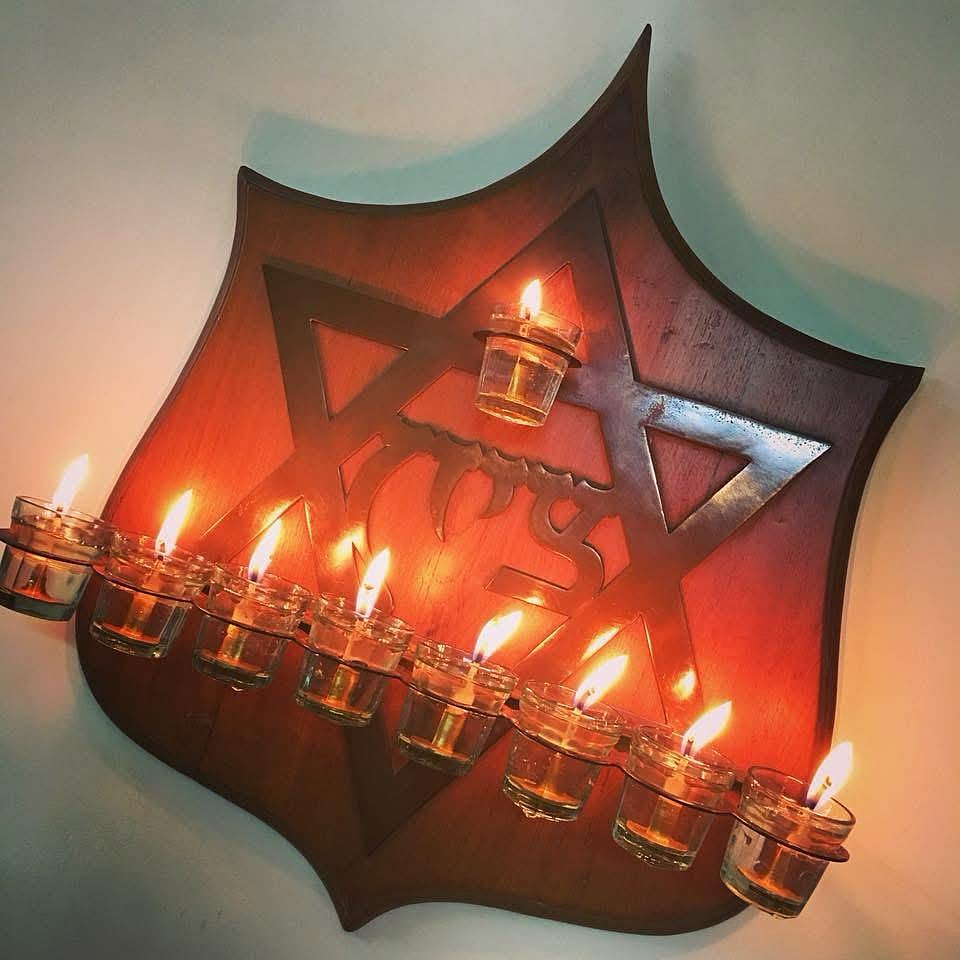
The community tends to make a lot of dishes that are deep-fried during Hanukkah, and there is a reason behind it. Yehuda explains by sharing an interesting story. He says, “The Jews overthrew the army of Antiochus IV and re-entered the Holy Temple, which by then was almost destroyed by the Greek Armies. They managed to find the 'menorah' (one of the most important symbols of Judaism), which is a collection of oil lamps. They found out that only one of the receptacles had some olive oil, so they lit that. Miraculously, although that oil was enough for only one day, it remained lit for eight days, and from that day the festival of Hanukkah has been observed.”
Yehuda gives an insight about the menorah: “It is like a candelabrum, which has seven different holders or cups, in which lights are lit. This is kept in a holy place like a synagogue.”
Since oil had played an important role in this miraculous and historical incident, the community celebrates the occasion by eating delicacies that are deep-fried or those that require oil.
The preparations of the soft sugar-coated doughnut-like 'Sufganiyot' stuffed with jelly cream and grated potato fritters start in every Jewish household. Esther Sassoon Joseph, a home chef who also runs a catering service for the Jewish community, says, “Special dishes like latkes or fried grated potatoes are prepared. We also make puri bhaji or chole bhature and many such deep-fried food items.”
Celebration
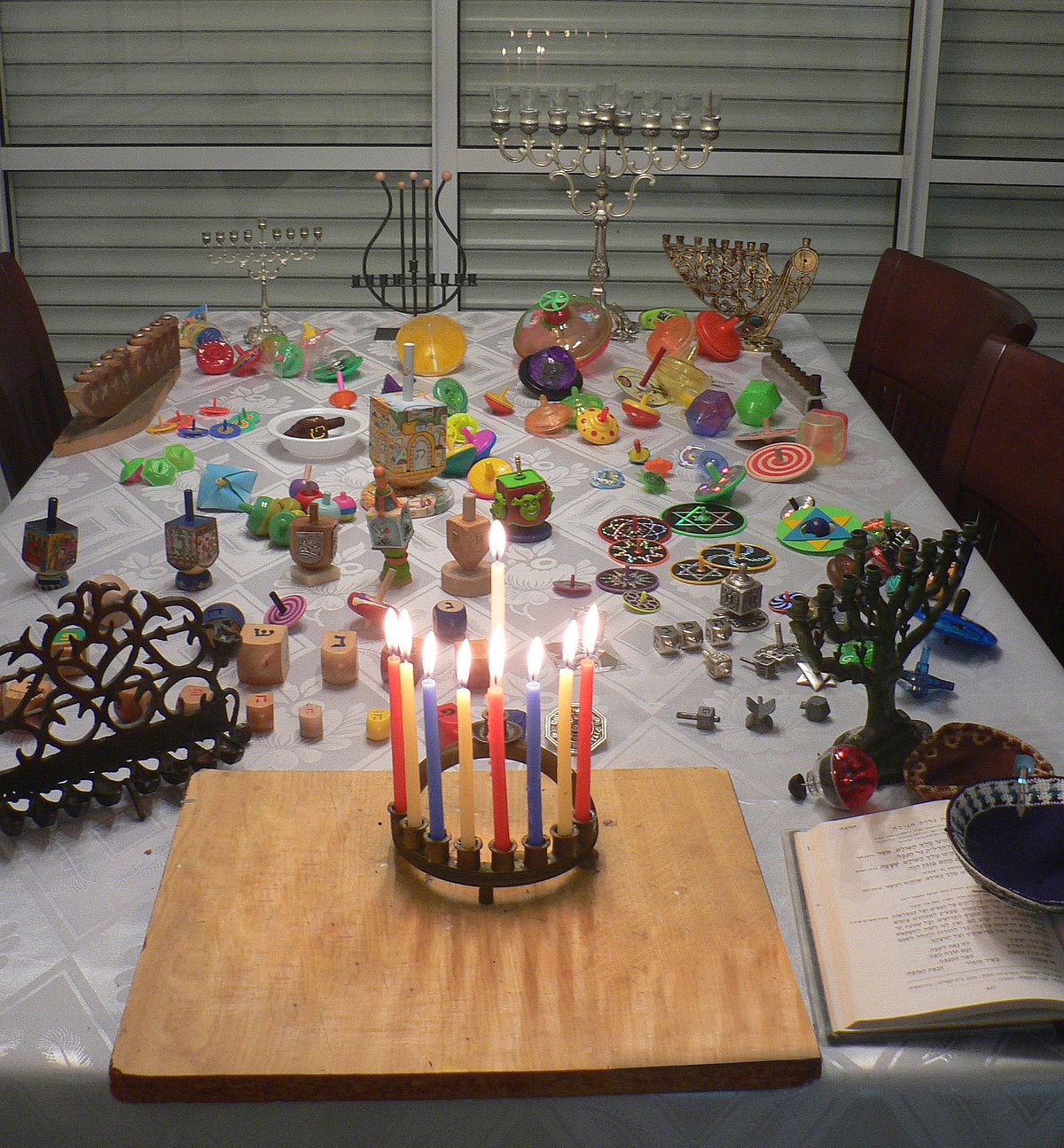
Lights for Hanukkah | Pic: Wikimedia Commons
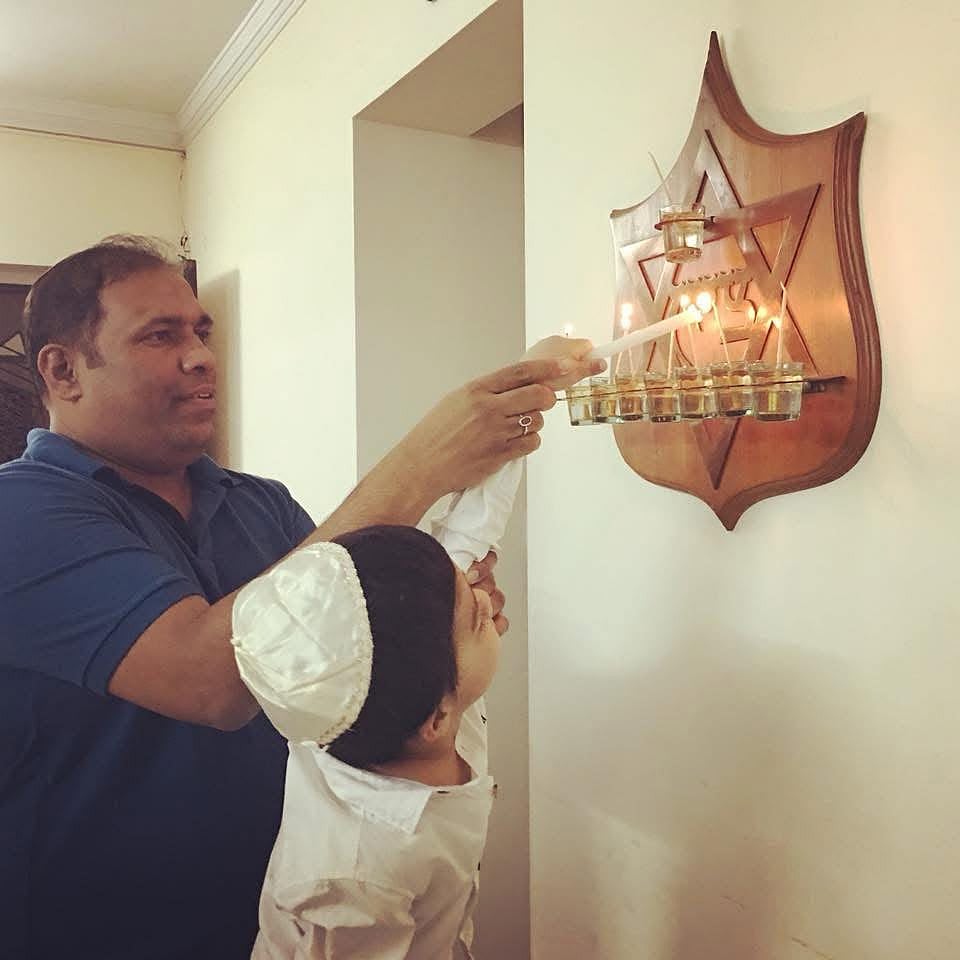
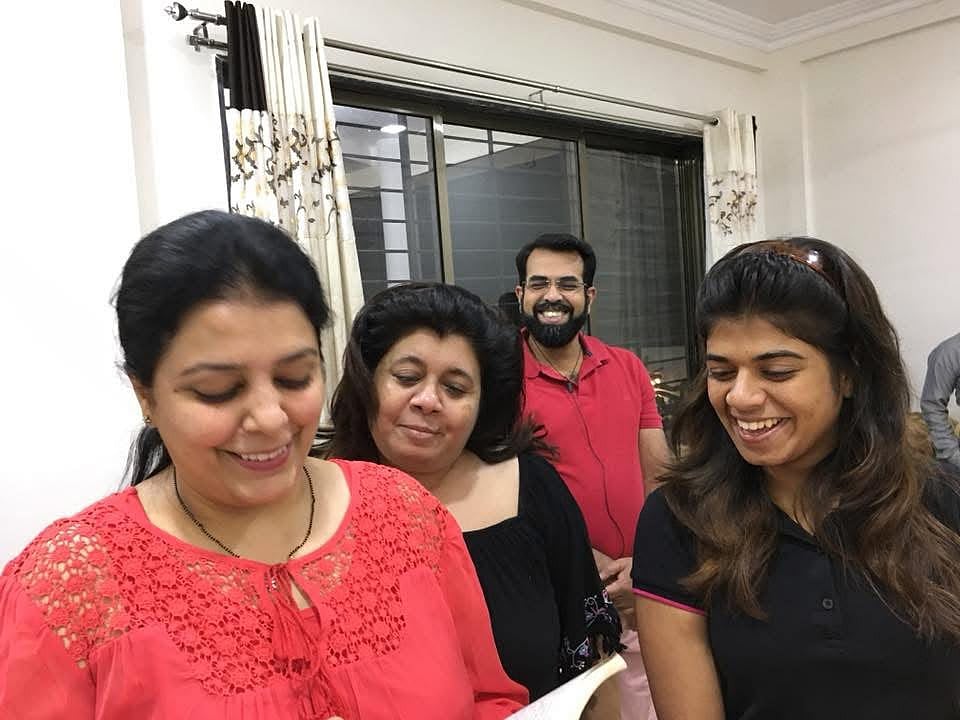
Diana Haeems, an active member of the Jewish society, celebrates the festival with enthusiasm and zest, “These eight days of Hanukkah are joyous. Celebrating the festival gives a lot of positivity. Apart from lighting candles every year, we also have a family get-together. We also have a community get-together."
Sharona Haeems is also an active member of the Jewish society of Mumbai. She says, “I was born in Karachi, Pakistan, and moved to India after Independence. We were staying in Shimla, and since Shimla did not have a synagogue, we would travel to Delhi during Hanukkah. My family and I were very religious. Sometimes we would celebrate Hanukkah at home itself. We also had a large Hanukkiah or menorah at our home, which we donated to a synagogue.”
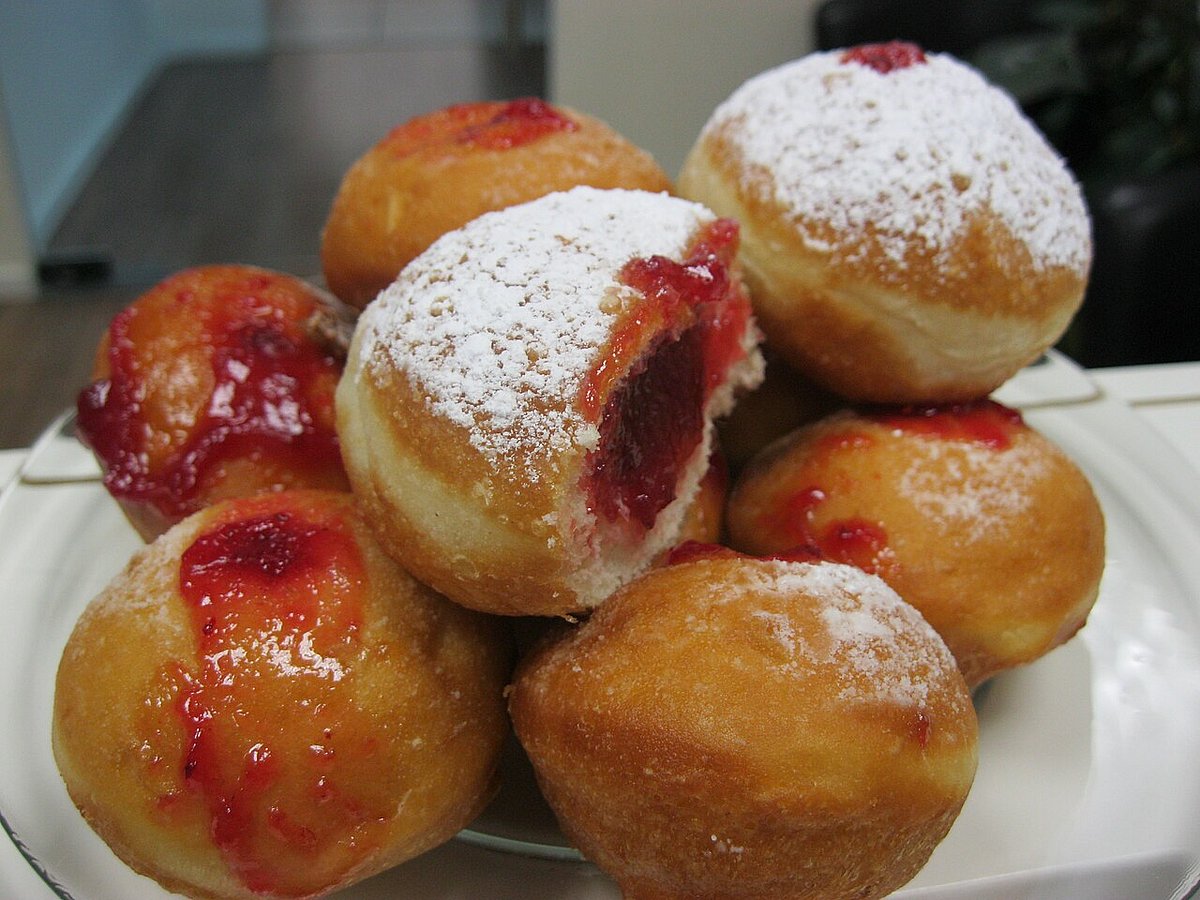
Dreidel | Pic: Wikimedia Commons
Sinora Kolatkar, head of a prominent synagogue in Mumbai, speaks about what Hanukkah means to her: "To me, Hanukkah represents faith, courage, hope, resilience and the victory of light over darkness. What I find particularly beautiful about Hanukkah is that it is the miracle of the oil: A small quantity of oil, which was expected to last only one day, miraculously lasted eight days. It's the time when family gathers and sings songs, eats traditional dishes and plays Dreidel (a four-sided top)."
This year, Hanukkah will be celebrated from December 4 to 12.

