Fans of Hollywood superstar Bruce Willis were startled to see their onscreen invincible action hero doddering and looking disoriented in a recently posted video on social media. The actor was first diagnosed with primary progressive aphasia (PPA) in 2022, which developed into FTD in the following year, inducing severe physical and mental deficiencies for him.
Unbox the brain box
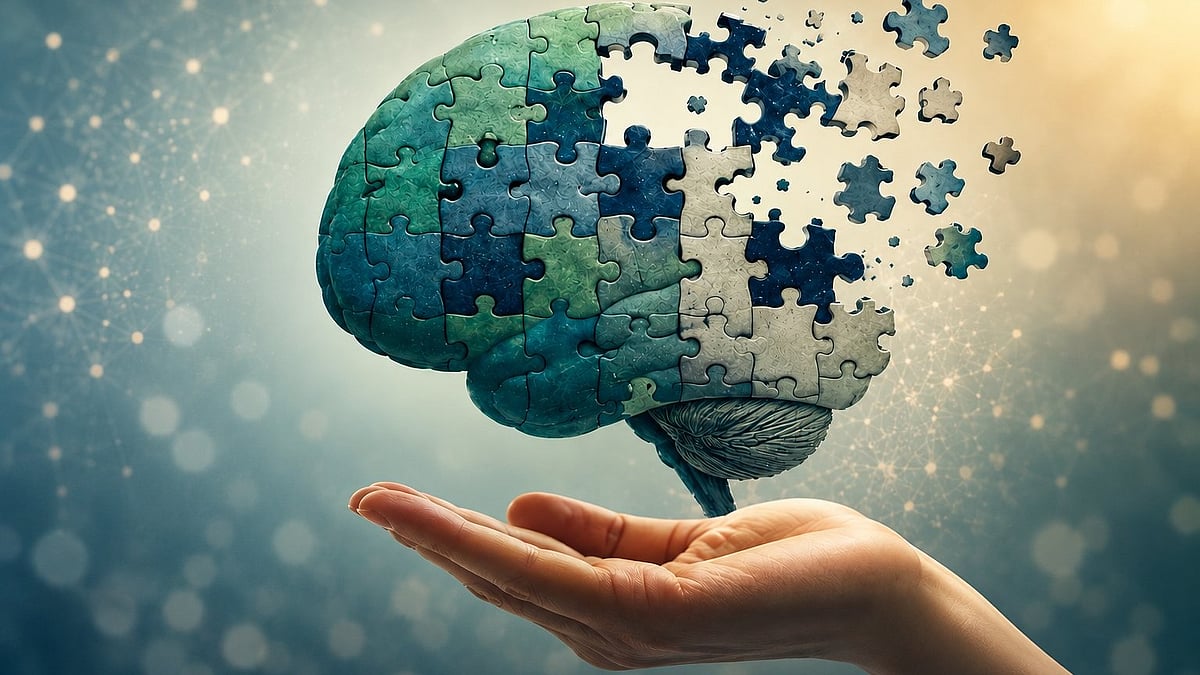
Neurologists say this brain disorder is different from Alzheimer’s. “Frontotemporal dementia (FTD) is a progressive neurodegenerative malady that mainly affects and wears away the frontal and temporal lobes of our grey matter. These areas regulate behaviour, personality features, emotions and language. Unlike more common types of dementia, FTD may not immediately start with the memory loss syndrome. Instead, it often commences with changes clearly noticed in a person’s attitude, communication or decision-making aptitude,” defines consultant neurologist Dr. Aniruddha More from Jupiter Hospital, Thane.
For the unversed, the frontal lobe manoeuvres voluntary movement, executive functions (like planning and reasoning), personality and speech, while the temporal lobe processes auditory information, language comprehension and memory. Both lobes denote the principal regions of the cerebral cortex, the external crumpled layer of the brain’s cerebrum (the largest and the topmost zone of the human brain).
Diagnosis and tests
Walking us through the diagnosis of this disease and its related tests, consultant neurologist Dr. Prashant Makhija from Wockhardt Hospitals in Mumbai Central said that “the detection of FTD totally relies on clinical evaluation. This includes a detailed history from the suffering patient and his/her caregivers as any behavioural anomaly or episodic alterations in routine mannerisms often emerge as the first signs of warning. Brain imaging like MRI (magnetic resonance imaging) can show atrophy in the frontal and temporal lobes. PET (Positron Emission Tomography) scans analyse shrunken brain activity in these regions. Neuropsychological assessments are important for gauging cognitive, interactive and linguistic functions.”
Is full recovery possible?
Deliberating on FTD’s prognosis, Dr. Makhija adds that “the discussed issue is an exacerbating neurodegenerative ailment, which means symptoms intensify over time. Right now, there is no proven cure as scientific studies are still ongoing. So chances of complete restoration are slim at the moment. However, medications, behavioural therapy and supportive care from healthcare attendants as well as patient parties can help manage symptoms, curb functional failure and improve the patient’s quality of life.”
Geriatric survival rate
It’s a common probe whether elderly patients can withstand the onslaughts of FTD since they already reach a ripe age. As experts suggest that there is currently no mending process for FTD at any given age, so that minimises the scope for a marked betterment. Therefore, “among older patients, the focus is chiefly laid on maintaining independence as far as it is possible and for as long as it looks feasible. This includes addressing behavioural symptoms and providing a solid assistance by professionally-trained caregivers,” informs Dr. Makhija.
Is FTD hereditary?
FTD can sometimes run in one’s pedigree due to inherited genetic mutations. If there is a significant family record of the concerned sickness, then genetic counselling and testing may be a few options at one’s disposal to calculate the perils looming on.
Exploration
It’s a vital question to ask that if a patient with this condition donates his/her brain, can it benefit the medical science community to make a progress in its research, clinical trials and treatment?
“Yes, brain donation is crucial for advancement in research and discovery. Studying brain tissue from affected individuals helps scientists understand the disease mechanisms at a cellular level. This investigation can lead to identifying biomarkers or signature molecules (existent in blood, tissue or fluids, these facilitate diagnosis, examine disease progression and forecast treatment reactions) and developing targeted treatments,” reports Dr. Makhija.
Misconception
Frontotemporal dementia (FTD) is often misunderstood. Its initial symptoms can be mistaken for depression or mental illness instead of amnesia. “Unlike Alzheimer’s disease, FTD usually impacts behaviour, speech and social interactions first. This makes early diagnosis difficult for the families involved and delays medical attention,” shares consultant neurologist Dr. Sheetal Goyal from Wockhardt Hospitals (Mumbai Central), conveying her worries.
Low alertness
“Sad but true, awareness of FTD is still tepid, especially in India,” she rues. “This can decelerate neurological evaluations. Timely recognition, systematic caregiving, cognitive aid and regular counselling can greatly help patients and families contain the acute emotional and practical effects of the disease,” she further expands.
Indicators
Symptoms can differ amid individuals but there are some indications to determine FTD development.
Inappropriate social conduct, dwindling interest and excitement, poor sense of hygiene, reduced understanding and rationality, inferior judgment and feeble planning or remaining always unsorted and sloppy could ring the alarm bells.
Some patients may be incapacitated to express properly — facing issues to find the correct words or comprehend speech with ease.
In certain cases, movement-related defects might as well emanate from FTD.
Causes
The gradual deterioration of nerve cells in specific parts of the brain is the root of this illness.
This state of apparent palsy is often linked to the abnormal buildup of certain proteins that harm the cerebral cells over time.
Some patients fall a victim to genetic factors too, where massive shifts in particular genes may increase the risks of FTD.
Vulnerable age bracket
People aged between 40 years and 65 years are worst hit by FTD. This explains the chief reason behind the arrival of early-onset or young-onset dementia. However, the disease can strike individuals outside this age group in exceptional cases.

Male versus female ratio
One wonders if FTD mostly occurs to men. “Well, FTD can affect both men and women. Although some data reveals a slight male predominance in certain subtypes, overall, the condition does not show any strong gender preference,” confirms Dr. More.
FACTOID
FTD was recently in news following media reports claiming that retired American Hollywood actor Bruce Willis is struggling with the condition at 71. Reports confirmed that the ace Die Hard series, The Sixth Sense, Pulp Fiction actor was first diagnosed with aphasia in 2022 and only the next year, it developed into FTD, inducing severe physical and mental deficiencies for him. In the beginning of this month (May 2026), Willis’s family reportedly announced plans to donate his brain for the scientific research of frontotemporal dementia after his demise. This initiative is backed by his current spouse Emma Heming Willis and his ex-wife-cum-popular actress Demi Moore.

